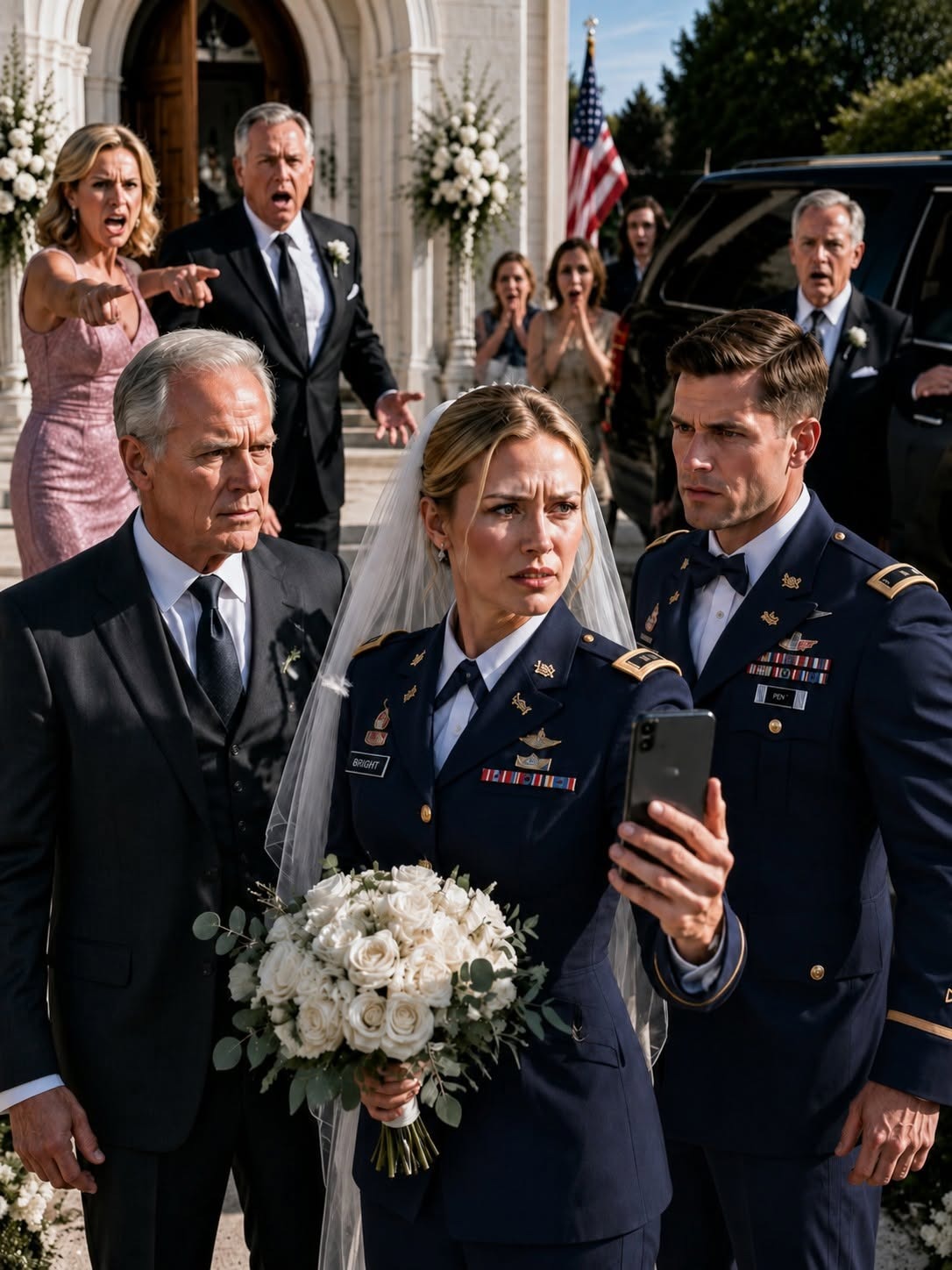

A senator's daughter marries a mechanic, defying her family's expectations
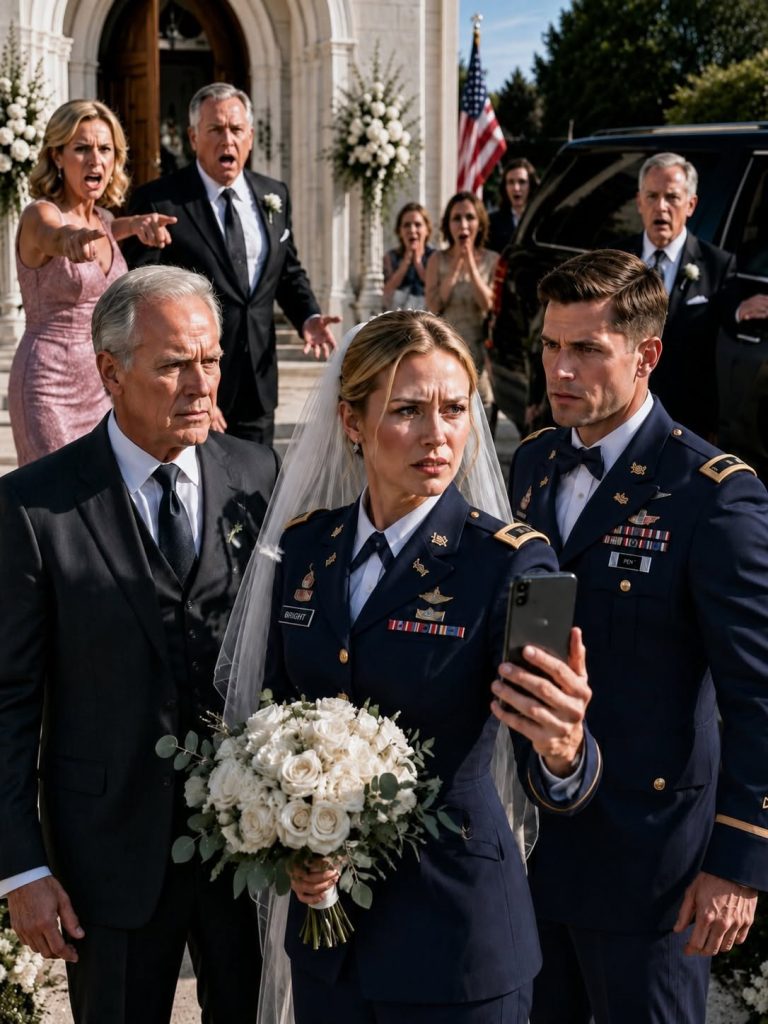
By Wednesday afternoon, the political earthquake in Washington had graduated from a quiet institutional tremor to a full-scale catastrophe for Senator Richard Mayer.
The front page of The Washington Post didn’t feature a photo of Richard shaking hands with veterans or standing tall at a podium. Instead, it carried an investigative splash with a sharp, uncompromising headline: “The House of Mayer: How a Senate Dynasty Was Built on Stolen Patents, Ruined Lives, and Corporate Sabotage.”
Inside the sprawling estate in Chevy Chase, the silence was deafening.
There were no staffers rushing through the halls with clipboards. There were no lobbyists waiting in the foyer with checks and strategic memos. The phones had stopped ringing entirely—not because the crisis had passed, but because everyone in Washington knew Richard Mayer was politically radioactive.
In the formal drawing room, Richard sat in a stiff armchair, staring blankly at a cold cup of tea. His Brioni suit looked crumpled, as though he had slept in it. His silver hair, usually immaculate, was disheveled.
His wife, Eleanor, stood by the tall arched window, her hands trembling slightly as she clutched a designer silk scarf. Her face had gone chalk white.
“They’re calling for a special ethics committee hearing,” Eleanor said, her voice shaking with disbelief. “The Majority Leader won’t even take your calls, Richard. Thirty years of work… gone because of a mechanic and that ungrateful girl.”
Richard didn’t move. He didn’t defend himself. He didn’t rage. For the first time in his life, the armor had cracked all the way through, revealing the hollow, paranoid ambition beneath it.
“It wasn’t just the mechanic, Eleanor,” Richard said, his voice hollow, like dry leaves scraping across concrete. “It was Daniel. All this time, we thought we left him with nothing. But we didn’t destroy him. We just forced him to go underground, building an empire bigger than our own right under our noses.”
The heavy oak doors swung open.
Standing in the entryway was Claire, her designer blazer mismatched, her blonde hair pulled back in a frantic, loose clip. She looked like a woman whose entire world had dissolved into mist.
“Mom! Dad!” Claire cried, her voice cracking. “My internship with the Treasury Department was just terminated. They sent an email ten minutes ago citing ‘conflict of interest and integrity concerns.’ And my friends… nobody is answering my texts. Our social circle has completely vanished.”
Eleanor turned from the window, her expression hardening into a familiar, toxic reflex. “We need to issue a public statement disowning Nola completely. We tell the press she’s mentally unstable, that she fell in with a fraudulent criminal element—”
“Stop it, Eleanor,” Richard whispered, raising a hand slowly.
Claire stared at her father, appalled. “Dad? Are you just going to sit there and let them destroy us? Do something!”
“There is nothing left to do,” Richard said, closing his eyes as a single, bitter tear traced a path down his cheek. “Nola didn’t just beat us. She proved that everything we built was built on sand.”
Back in Fayetteville
Four hundred miles away, the autumn air was crisp, carrying the scent of burning leaves and pine needles.
Inside the office behind Ethan’s garage, the atmosphere was entirely different. There were no hushed whispers of despair, only the steady click of a keyboard, the hum of an old refrigerator, and the rich aroma of fresh French press coffee.
Uncle Daniel sat at a sturdy oak desk, reviewing corporate ledger sheets alongside Captain Hayes, who had taken a week of emergency leave to help audit the legal filings.
“The SEC filings are locked in,” Daniel said, adjusting his glasses. “The congressional ethics committee has formally frozen Richard’s campaign accounts pending a full federal investigation into the misappropriation of defense subsidies.”
I sat across from them, wearing a faded mechanics jacket with CARTER stitched in white thread across the chest. My hands were resting on the desk—hands that had once held rifles in dusty combat zones, hands that had scrubbed grease off engine blocks, and hands that were now drafting the foundational bylaws for a new veterans’ employment initiative funded by Carter Industrial Systems.
The door opened, and Ethan walked in carrying a heavy cardboard box. He set it down on the floor with a dull thud.
“What’s in the box, babe?” I asked, looking up.
Ethan wiped his hands on his jeans and offered a warm, steady grin. “Federal mail delivery. Sent straight here from a courier service in Washington. Addressed to you, Nola.”
I raised an eyebrow, walking over to the box. I used my pocketknife to slice through the packing tape and pulled back the flaps.
Inside lay a collection of heavy leather-bound photograph albums, old family records, and a stack of legal documents tied with faded red ribbon. On top was a handwritten letter on custom Senate stationery, bearing my father’s sharp, aggressive handwriting.
I pulled the letter out and unfolded it.
Nola,
I never taught you how to play the game because I thought you were too soft for it. That was my mistake. You inherited your uncle’s stubbornness and my ruthlessness, wrapped in a uniform I never respected enough to understand.
I am resigning from the Senate effective midnight. The house in Chevy Chase is on the market. Your mother has gone to stay with relatives in Boston. Claire has gone to ground.
Enclosed are the original deeds to Daniel’s properties and the unredacted patents from thirty years ago. He won them back. You won them back.
Tell your husband his company builds good machinery. Tell yourself… you survived.
— Richard
I stared at the paper for a long moment. There was no apology. No plea for forgiveness. Just an admission of defeat from a man who had spent his entire life believing power was the only currency that mattered.
Ethan stepped up behind me, wrapping his large, warm hands around my waist, resting his chin gently on my shoulder.
“You want to read it?” Ethan asked softly.
“No,” I said.
I folded the letter in half, tossed it into the metal wastebasket beside the desk, and pushed the lid down.
“That chapter is closed,” I said, turning around to face him.
Uncle Daniel looked up from his desk, a quiet, profound pride shining in his eyes. He stood up, picked up one of the old photo albums from the box—the one with his own picture on the cover, rescued from a fireplace thirty years ago—and handed it to me.
“Some families are defined by what they bury,” Daniel said softly, smiling. “Ours is defined by what we build from the ashes.”
I looked down at the photo album, then up at Ethan, whose calloused fingers laced securely through mine. The heavy boots on the old wooden floor, the smell of engine oil and roasted coffee, the laughter of my squad echoing from the yard outside—this was my reality.
I didn’t need a title, a Senate seat, or a golden inheritance. I had a life earned with honest sweat, a love built on absolute truth, and a future that belonged entirely to us.
