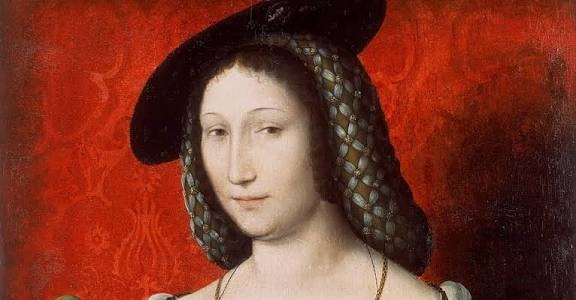

A Royal Wedding That Promised Peace
On August 18, 1572, Margaret of Valois married Henry of Navarre in Paris. The wedding was intended to represent reconciliation between two religious factions that had divided France for years. Margaret was a Catholic princess from the ruling Valois dynasty, while Henry was one of the most prominent Protestant leaders in the kingdom.
The marriage brought together two powerful families and offered hope that the French Wars of Religion might finally move toward a lasting peace.
But the celebration would soon become associated with one of the most violent episodes in French history.
Just six days after the wedding, on August 24, the St. Bartholomew’s Day Massacre began in Paris. Protestant leaders were targeted, and the killings spread through the city before reaching several other French towns in the following weeks.
Margaret’s new husband survived, but their marriage became entangled in a political and religious crisis that neither celebration nor royal status could prevent.

Margaret of Valois: A Princess Raised in a Divided Kingdom
Margaret of Valois, also known as Marguerite de Valois, was born on May 14, 1553. She was the daughter of King Henry II of France and Catherine de’ Medici, making her a member of one of the most influential royal families in Europe.
She grew up in a court where political ambition, family rivalries, and religious disagreements shaped everyday life. Her three brothers, Francis II, Charles IX, and Henry III, would all become kings of France.
Margaret was raised as a Catholic, but the country surrounding her was becoming increasingly divided between Catholics and Protestants. French Protestants, particularly followers of the Reformed tradition associated with John Calvin, were commonly known as Huguenots.
The conflict was not simply a disagreement over religious beliefs. It involved noble families, regional interests, political authority, and competing ideas about the future of the French monarchy.
By the time Margaret reached adulthood, France had already experienced several periods of civil war. Religious distrust had become deeply rooted, and attempts to establish peace repeatedly faced opposition.
As a royal princess, Margaret’s marriage was therefore more than a personal decision. It could serve as a political instrument in a kingdom struggling to remain united.
The Marriage to Henry of Navarre
Henry of Navarre, born Henry of Bourbon, was a leading Protestant nobleman and a member of the Bourbon dynasty. His mother, Jeanne d’Albret, was Queen of Navarre and an important supporter of the Protestant cause.
The proposed marriage between Henry and Margaret was designed to improve relations between the Catholic royal court and the Huguenot leadership.
The idea had considerable political importance. By joining the Valois and Bourbon families, the monarchy hoped to create a stronger connection between the rival factions and reduce the possibility of renewed warfare.
For Catherine de’ Medici and the French royal court, the marriage offered an opportunity to strengthen the monarchy’s position. For the Protestant nobility, it appeared to provide recognition and a chance to secure a more stable future.
However, the arrangement did not mean that religious disagreements had disappeared. Margaret remained Catholic, while Henry was Protestant. Their union brought together two sides that still distrusted one another.
On August 18, 1572, the wedding ceremony took place in Paris, near Notre-Dame Cathedral. Protestant nobles and supporters travelled to the capital for the celebrations.
For a brief moment, the royal marriage appeared to offer a hopeful alternative to years of conflict.
Yet the atmosphere surrounding the ceremony was more complicated than the public festivities suggested. Political tensions remained high, and the presence of so many Protestant leaders in a predominantly Catholic city created an uneasy situation.

The Assassination Attempt Against Admiral Coligny
One of the most influential Protestant figures attending the wedding celebrations was Admiral Gaspard de Coligny.
Coligny was a respected military leader who had become increasingly important at the royal court. His influence over King Charles IX worried several powerful figures, particularly those who feared that the monarchy might become too closely aligned with the Huguenot cause.
On August 22, just four days after Margaret’s wedding, Coligny was attacked while returning to his residence in Paris.
A gunman fired at him, leaving the admiral wounded. Although he survived the initial attempt, the attack created an immediate political crisis.
Coligny’s Protestant supporters demanded an investigation and punishment for those responsible. Many feared that the assassination attempt was part of a larger effort to eliminate their leadership.
The incident also intensified tensions within the royal court. Suspicion, fear, and competing political interests made an already fragile situation even more dangerous.
The king’s response and the discussions taking place among powerful members of the court would soon have devastating consequences.
August 23–24: The Beginning of the Massacre
During the night of August 23–24, 1572, decisions were made to eliminate several leading Huguenot figures.
Coligny was among those targeted. In the early hours of August 24, he was killed, and violence against Protestant nobles began spreading through Paris.
The killings did not remain limited to the original political targets.
As the violence expanded, other Huguenots became victims of attacks by Catholic crowds and armed groups. Homes were entered, people were hunted through the streets, and fear spread throughout the city.
The date August 24 was the feast day of Saint Bartholomew, which gave the event its familiar historical name: the St. Bartholomew’s Day Massacre.
The scale of the killings remains a subject of historical debate. Estimates vary depending on the sources and the geographical area being considered. Thousands of people are believed to have died in Paris, while further massacres took place in other French towns over the following weeks.
The event became one of the most notorious episodes of religious violence in sixteenth-century Europe.
It also demonstrated how quickly political decisions, religious hostility, and popular violence could combine to produce a catastrophe.
Margaret and Henry: A Marriage Caught in the Violence
For Margaret, the massacre unfolded within the same royal environment where her marriage had been celebrated only days earlier.
Her husband, Henry of Navarre, survived the violence. However, his position was extremely dangerous because he was a prominent Protestant prince surrounded by a Catholic royal court.
Henry and another Protestant nobleman, Henry I de Bourbon, Prince of Condé, were spared, but they faced intense pressure to abandon Protestantism.
Henry of Navarre was forced to convert to Catholicism and remained under close supervision at the French court. His survival did not mean that he was free to return to his former political and religious position.
The marriage that had been intended to bring the two factions closer together was now associated with an event that had deepened their hostility.
For Margaret and Henry, their relationship became part of a much larger struggle involving royal authority, religious identity, and the survival of powerful noble families.
Margaret later described events surrounding the massacre in her memoirs. Her account offers a rare perspective from someone who was both a member of the royal family and directly present at the court during this turbulent period.
A Troubled Marriage and Henry’s Rise to the Throne
Margaret and Henry remained married for many years, but their relationship was far from peaceful.
Their political positions, religious differences, and personal lives created repeated tensions. Henry eventually escaped the restrictions imposed on him at court and returned to the Protestant cause.
In 1589, following the death of King Henry III, Henry of Navarre became King Henry IV of France.
His accession marked a major change in French royal history. As the first Bourbon king of France, he inherited a kingdom still deeply affected by decades of religious conflict.
In 1593, Henry converted to Catholicism, a decision that helped him consolidate his position as monarch in a predominantly Catholic country.
In 1598, he issued the Edict of Nantes, which granted French Protestants important rights and established a framework for a more stable religious settlement, although tensions did not disappear entirely.
By then, Margaret and Henry’s marriage had become increasingly distant. They had no children together, and their relationship had long been marked by separation and political complications.
In 1599, their marriage was formally annulled.
The decision ended a union that had once carried enormous expectations for the future of France.
Margaret of Valois: More Than a Symbol of a Tragic Wedding
It would be easy to remember Margaret only through the dramatic contrast between her wedding and the massacre that followed.
However, her life extended far beyond those six days in August 1572.
She remained an important figure in French royal and cultural history. She was known for her education, literary interests, political awareness, and later memoirs, which provide valuable insight into the royal court during the French Wars of Religion.
Her writings also reveal the difficulties of living within a royal family where personal relationships were inseparable from political interests.
Margaret lived through the reigns of several French kings, the continuing struggles between Catholics and Protestants, and the rise of the Bourbon dynasty.
She died in Paris on March 27, 1615, at the age of sixty-one.
Her reputation has often been shaped by romanticized accounts of her marriage and the violence of 1572. Yet her historical importance deserves a broader view. She was not simply a princess whose wedding became overshadowed by tragedy, but a woman who lived through one of the most turbulent periods in French history and left behind her own account of the events.
The Wedding That Could Not Unite France
Margaret of Valois married Henry of Navarre with the hope that their union could help reconcile a deeply divided kingdom.
The wedding on August 18, 1572, brought Catholic and Protestant nobles together in Paris and appeared to offer a new possibility for peace.
But the assassination attempt against Coligny on August 22, followed by the killings that began on August 24, transformed the meaning of the celebration.
The St. Bartholomew’s Day Massacre did not end France’s religious conflicts. Instead, it intensified divisions that would continue for years.
Henry of Navarre eventually became King Henry IV, and Margaret’s marriage to him was annulled in 1599. Their union had failed to achieve the lasting reconciliation its political architects had hoped for.
History remembers Margaret’s wedding not only for its royal magnificence, but also for the tragedy that followed. It remains a powerful reminder that even the most carefully arranged political alliances cannot guarantee peace when distrust, ambition, and religious hostility remain unresolved.