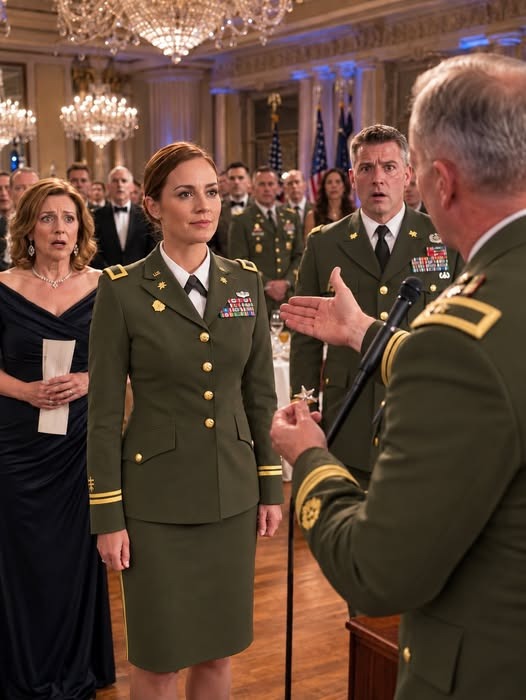

"THE LIEUTENANT COLONEL SLOWED, STARED AT MY RIBBONS, AND WALKED AWAY WITHOUT A WORD
The morning after the gala, the autumn air in the capital was sharp and clear, carrying the crisp scent of fallen leaves and distant rain. I stood on the balcony of my temporary quarters, holding a mug of black coffee that tasted just as bitter and comforting as the brews Marcus Green used to complain about.
My phone vibrated against the wooden railing—a text from Rebecca: “Car is downstairs in ten. Don’t keep a Sergeant Major waiting, Colonel.”
I smiled, finished the last swallow of coffee, and grabbed my jacket. The whirlwind of the promotion ceremony was behind me, but the real work—the quiet, unglamorous aftermath of redefining a life—was just beginning.
Returning to active duty after a milestone promotion always feels like stepping back into a well-oiled machine. The gears turn whether you are emotionally ready or not. My days quickly filled with the familiar, grounding cadence of military administration: operational reviews, staff syncs, budget allocations, and mentoring junior officers who sat across my desk with wide eyes and notebooks clutched tightly to their chests.
Yet, something fundamental had shifted.
For years, I had carried an invisible weight—the persistent, gnawing need to prove my worth to people who viewed my service through the distorted lens of family politics. Walking out of that ballroom hadn’t just liberated me from my family’s old expectations; it had liberated me from my own internal friction. I no longer measured my success by whether my achievements fit neatly into someone else’s narrative.
About two weeks after the gala, a package arrived at my office. It wasn’t marked with official Pentagon letterhead or a formal defense contractor logo. It was wrapped in heavy brown paper, addressed in my mother’s careful, looping handwriting.
I sat at my desk, turning the package over in my hands. For a moment, I hesitated. In the military, you learn to inspect unfamiliar packages for potential hazards. This hazard wasn’t explosive, but it carried emotional shrapnel.
With a small pair of utility scissors, I sliced through the packing tape and pulled back the paper.
Inside was a single, weathered photo album bound in faded blue leather—an old family album from my childhood that I thought had been lost during one of my early deployments. Resting on top of the album was a handwritten note from my mother.
Emily,
I spent thirty years looking at your life through a keyhole and wondering why the room looked so small. Thank you for leaving the door open.
Mom.
I opened the album slowly, turning the heavy paper pages. There were pictures of Daniel and me as kids—muddy knees on bicycles, awkward school portraits, birthday parties with lopsided cakes. But as I flipped further, I noticed something remarkable. Past pages that used to be exclusively filled with Daniel’s Little League games and academic awards, there were newer additions tucked carefully into the corners.
Printed photographs of me in uniform.
A snapshot of my promotion to major, taken from a grainy digital file I had never shared with them. A printed news clipping from an operational commendation years ago that my father must have secretly clipped out of a regional paper. And right at the back, a freshly printed 8×10 photograph of me standing on stage with General Hayes and Rebecca, my fingers resting on the new insignia of my rank.
She hadn’t just accepted the truth; she was actively learning how to archive it.
I set the album down on the corner of my desk, right beside the framed photo of Marcus Green grinning over his terrible coffee. They sat side by side, bridging the gap between the person I used to be and the officer I had become.
That evening, I called her.
It wasn’t a long, emotional conversation filled with dramatic declarations. It was simple, grounded, and real. We talked about the weather in her neighborhood, how her garden was holding up against the early frost, and whether I was remembering to eat vegetables instead of living entirely on gas-station snacks.
When she tentatively asked if I might have free time for Thanksgiving, I didn’t hesitate.
“I’ll be there, Mom,” I said. “And I’ll bring the pie.”
She laughed—a light, genuine sound that I hadn’t heard in years. “Just don’t try to bake it yourself, Emily. Let me handle the food.”
“Deal.”
Life in the upper ranks of the military is a strange juxtaposition of high-level strategy and profound solitude. As a colonel, your decisions ripple across thousands of lives, shaping deployment schedules, operational safety, and institutional culture. You spend your days managing crises, reviewing after-action reports, and ensuring that the men and women downrange have the resources and leadership they deserve.
Six months after my promotion, I was invited to speak at a leadership seminar for newly commissioned company commanders—young captains and lieutenants stepping into their first major leadership roles.
The auditorium at Fort Leavenworth was packed with hundreds of bright-eyed, ambitious officers eager to learn how to climb the ladder, execute missions flawlessly, and earn their first stars.
When I stepped up to the podium, I looked out over the sea of camouflage and crisp uniforms. I could see the familiar tension in their postures—the desperate desire to prove themselves, to never show weakness, to carry the entire weight of their units on their own shoulders without cracking.
I adjusted the microphone, looked down at my prepared notes, and then pushed them aside.
“When you take command,” I began, my voice echoing clearly through the hall, “you will be told a hundred different ways how to be a leader. You’ll be given manuals on tactics, logistics, risk management, and strategic communication. But none of those manuals will prepare you for the hardest part of wearing those bars on your shoulders.”
The room went completely silent.
“The hardest part isn’t dealing with a hostile adversary across a border,” I continued, pacing slowly across the stage. “The hardest part is managing the battles you fight inside your own head—the pressure to perform, the fear of disappointing your superiors, and the dangerous illusion that your worth as a human being is tied directly to your next promotion or the approval of people who refuse to understand your sacrifice.”
I paused, letting my gaze sweep across the young officers.
“For a long time, I believed that being a strong leader meant absorbing every blow in silence. I thought endurance meant hiding your scars, suppressing your exhaustion, and pretending that authority automatically grants you respect. I was wrong. True leadership doesn’t come from a title, and it certainly doesn’t come from demanding that the people around you shrink themselves so you can feel taller.”
I told them about Marcus Green. I told them about what it means to carry the responsibility of bringing people home safely. And yes, without naming names, I touched briefly on what it means to navigate a family that measures your value by the yardstick of someone else’s achievements.
“When you step into a leadership role,” I told them, “your job isn’t to demand applause. Your job is to build an environment where the people under your command don’t have to hide who they are to feel safe. If you want to know if you’re succeeding, don’t look at the stars on your shoulder or the applause in a ballroom. Look at how you treat the people when you believe they have nothing left to offer your career. That will tell you everything you need to know about who you actually are.”
When I finished, the applause didn’t erupt immediately. There was a beat of heavy, thoughtful silence—the kind of silence that happens when people are actively rearranging their own internal frameworks—before the room rose as one.
After the seminar, as I packed my tablet into my briefcase, a young captain approached the edge of the stage. She was wearing intelligence insignia, her hands slightly trembling as she clutched a notebook.
“Colonel Carter?” she asked hesitantly.
“At ease, Captain. What’s your name?”
“Maya, ma’am. Maya Vance.” She swallowed hard. “Thank you for what you said about… about the internal pressure. About not letting other people define your worth.”
“It’s a hard lesson to learn, Captain, but an essential one,” I said, stepping down to meet her eye-to-eye. “Is everything alright at your unit?”
She looked down at her boots, then back up. “I’ve been struggling a lot with my family back home. Every time I get a promotion or deploy, they act like it’s a distraction from what I ‘should’ be doing—settling down, fitting into a mold they chose for me. Sometimes I feel like I’m fighting two wars at once: one downrange, and one every time I call home.”
I placed a gentle hand on her shoulder, feeling the rigid tension in her muscles.
“Listen to me, Maya,” I said softly. “You cannot spend your life auditioning for people who refuse to watch your play. Do your job with integrity, take care of your people, and let the results speak for themselves. If they choose to listen, great. If they don’t, you keep marching anyway.”
A profound sense of relief washed over her face, like she had just dropped a heavy rucksack after a grueling twenty-mile march. She smiled, saluted crisply, and thanked me again before walking away.
Watching her go, I felt an overwhelming sense of closure.
Every struggle, every broken expectation, every lonely night in the field and every cold silence in my family’s dining room had led me to this exact place. The uniform I wore wasn’t just a symbol of military rank; it was the armor I had forged in the fire of self-reliance.
Later that afternoon, I walked back across the post toward my quarters. The sun was beginning to dip below the horizon, painting the western sky in brilliant shades of amber, violet, and gold.
I pulled my phone out of my pocket, opened my messages, and scrolled down to a contact I used to avoid calling. I tapped the screen and pressed the phone to my ear.
“Hey, Daniel,” I said when he answered on the third ring.
“Hey, Em,” he replied, sounding genuinely surprised. “Everything okay?”
“Everything is better than okay,” I smiled, looking out across the vast expanse of the military base as the evening lights began to flicker on. “Are you and Mom free for dinner next weekend? My treat.”
There was a brief pause on the other end of the line—just a second of hesitation before the old habits tried to creep in. But then he laughed, a warm, easy sound.
“We wouldn’t miss it. What time?”
“Six sharp,” I said. “And don’t worry—I’m not bringing any PowerPoint presentations.”
“Good,” Daniel chuckled. “Because Mom is making pot roast, and she threatened to interrogate me if I talk about work for more than ten minutes.”
“Sounds like progress.”
“Yeah,” my brother said softly. “It really does.”
I hung up the phone, slid it back into my pocket, and continued walking down the tarmac. The road behind me had been long, steep, and often freezing cold. But as I looked ahead toward the horizon, the path was wide open, brilliantly clear, and entirely my own.
