
How Many Doves Are in the Picture? The Answer Is 15
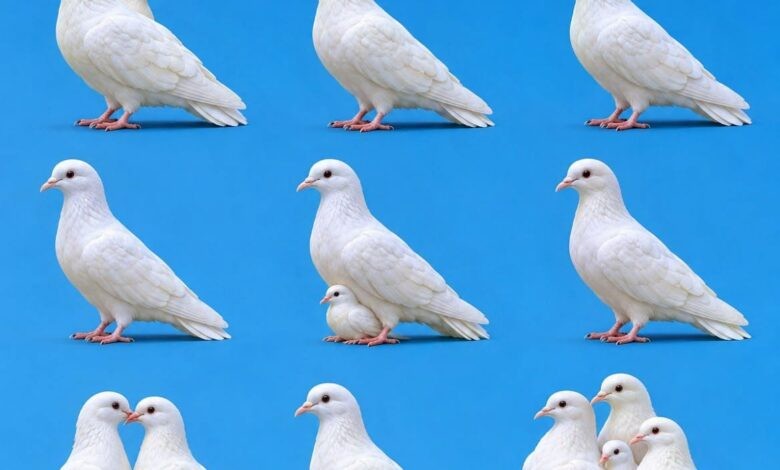
A picture puzzle asking viewers to count doves may look simple at first glance, especially when the image is arranged as a familiar three-by-three grid. Many people quickly arrive at nine because they see one large bird in each square. That first answer is understandable, but it does not account for the smaller or partly concealed doves placed among the larger birds.
The correct total is 15 doves. The puzzle is solved by looking beyond the most obvious outline in every panel and counting individual heads, bodies, and partially hidden birds. The image contains four doves across the top row, four in the middle row, and seven in the bottom row.
These visual challenges are popular because they encourage people to slow down and reconsider an initial impression. Rather than being a test of intelligence or eyesight, a counting puzzle usually depends on attention, viewing strategy, and the way the human brain organizes similar shapes into a quick overall pattern.
Why Many Viewers First Count Nine Doves
The image is structured around nine visible positions. When people scan a grid, they often expect each position to contain one main object. This is an efficient shortcut: the eyes move from left to right and from top to bottom, registering a dove in each of the nine sections. For a fast first pass, the brain may treat each square as a single unit rather than inspecting every detail within it.
That quick interpretation becomes especially likely when the main birds have similar white feathers, comparable poses, and overlapping outlines. Repetition helps viewers recognize the subject quickly, but it can also make small differences between panels less noticeable. In this puzzle, the extra birds are positioned in ways that blend into the larger dove shapes or appear close to the lower edge of a panel.
Researchers who study visual perception have long noted that attention is limited. People do not process every part of a scene with equal detail at the same moment. Instead, the visual system prioritizes features that seem most prominent, such as a large object in the center of a frame. Smaller objects, overlapping features, and details near the edges may require a deliberate second look.
This does not mean that anyone who initially counts nine has made an unusual mistake. It simply shows how a familiar visual layout can influence expectations. The puzzle is designed to invite a quick answer and then reward careful rechecking.
Count the Top Row: Four Doves
The top row contains four doves in total. The center and right panels each show one dove, which makes those two positions relatively straightforward. The extra bird appears in the upper-left panel.
At first glance, the upper-left image may look like a single large dove. A second dove is partly hidden behind the bird in front, with its head visible above or beside the larger bird’s body. Because the feathers overlap, the two bodies can appear to form one continuous shape. Counting the separate heads is the clearest way to confirm that two birds are present.
For this row, the calculation is simple once the hidden head is noticed: two doves in the left panel, one in the center panel, and one in the right panel. That makes four doves across the top.
This first hidden pair demonstrates one of the puzzle’s main techniques: overlap. When similar objects are placed close together, viewers may visually group them as a single object. Pausing to look for separate heads, eyes, beaks, or feet can help distinguish one bird from another.
Count the Middle Row: Four More Doves
The middle row also contains four doves. The left panel shows one bird, while the right panel shows another single dove. The key detail is in the center panel, where a smaller dove is positioned close to the feet of the larger bird.
The smaller bird is easy to overlook because it sits low in the frame. Many viewers naturally follow the tall outline of the main dove and then move their attention to the next square. As a result, they may not inspect the area near the bottom edge closely enough to notice the extra figure.
Once the low-positioned dove is identified, the row can be counted as one bird on the left, two in the middle, and one on the right. The middle row therefore contributes four doves to the final answer.
The placement of this smaller dove is different from the hidden bird in the top-left panel. The first is concealed by overlap at a higher level, while the second is located lower down. Using different hiding locations makes the puzzle more engaging because viewers cannot rely on just one method of searching. A careful solution requires examining the full area of every panel.
Count the Bottom Row: Seven Doves
The bottom row contains the largest number of birds and is the most important part of the puzzle to inspect carefully. There are seven doves in this row.
In the bottom-left panel, two doves face one another. Their position can make them look like one broad shape at a quick glance, but the two separate heads make the pair clear when viewed slowly. The bottom-center panel contains one dove.
The bottom-right panel is the most crowded section of the image. It contains four doves grouped closely together. One bird appears toward the front, another can be seen behind the group, another is visible to the side, and a smaller dove is tucked lower within the cluster. Since their feathers and outlines overlap, the group can seem to contain fewer birds than it actually does.
The bottom row can therefore be calculated as two doves on the left, one in the center, and four on the right. Together, that produces a total of seven doves.
Crowded images often benefit from a methodical counting approach. Rather than estimating the total based on the number of visible bodies, identify one distinct head at a time. Then check whether each head belongs to a separate body. This approach reduces the risk of counting the same bird twice or overlooking a bird whose body is partly obscured.
The Full Answer: 4 + 4 + 7 = 15 Doves
The most reliable way to solve the image is to count each row separately:
- Top row: 4 doves
- Middle row: 4 doves
- Bottom row: 7 doves
Adding the three row totals gives the final result:
4 + 4 + 7 = 15 doves.
Breaking a visual puzzle into smaller sections is useful because it lowers the chance of losing track of what has already been counted. A three-by-three grid is naturally suited to this technique. Instead of trying to hold the full image in mind at once, viewers can verify one row, move to the next, and compare their results afterward.
How Visual Perception Affects Counting Puzzles
Counting puzzles often make use of ordinary features of human perception. The brain is highly efficient at recognizing familiar objects and broad patterns. That efficiency is useful in everyday life, but it can lead to quick assumptions when an image contains repeated objects, camouflage-like overlap, or deliberately unexpected scale differences.
In this dove image, the large, prominent birds establish a repeated visual pattern. Once a viewer sees several similar doves in separate squares, it becomes natural to expect the same arrangement in the remaining squares. The extra birds disrupt that expectation. Some are behind a larger dove, while others are smaller or placed in a densely populated cluster.
Psychologists sometimes describe a related effect as inattentional blindness: people can fail to notice a visible item when their attention is focused elsewhere. The concept does not suggest that an object is invisible. Instead, it highlights that noticing depends on where attention is directed. In a puzzle, viewers may be focused on locating one prominent bird per panel and therefore fail to search for additional ones.
Visual grouping also matters. The brain tends to organize nearby or similar objects together. When white birds overlap against a similar background, their shapes may be perceived as one larger form. Looking for separate beaks, heads, legs, and eye positions helps reverse that grouping and reveal the individual doves.
Tips for Solving “How Many Animals Do You See?” Images
Whether the subject is doves, cats, butterflies, or another repeated object, several practical strategies can make visual counting challenges easier and more enjoyable.
Scan in a Consistent Direction
Start in one corner and move systematically across the image. For a grid, scan left to right across the top row, then repeat for each row below. A consistent route helps prevent skipped panels and reduces accidental double-counting.
Count Distinct Features
When objects overlap, count a feature that should appear once for each individual animal, such as a head or face. In the dove puzzle, separate heads are more dependable than broad feathered shapes because bodies may merge visually.
Check the Edges and Lower Areas
Small objects are often placed near corners, feet, borders, or the bottom of an image. After identifying the most obvious subject, briefly inspect the remaining space before moving on.
Divide a Crowded Panel Into Smaller Zones
If a panel contains a cluster, examine the front, back, left, right, and lower portions separately. This can reveal birds partly hidden behind others and can make a complicated group easier to count accurately.
Verify Your First Answer
A second scan is often the difference between an estimate and a confirmed answer. Try counting by rows first, then count by panels. If both methods produce the same total, confidence in the result increases.
A Lighthearted Way to Share the Dove Puzzle
This kind of puzzle works well as a conversation starter because people often notice different details first. One person may immediately spot the small dove near the larger bird’s feet, while another may quickly recognize the hidden bird behind the upper-left dove. The crowded group in the lower-right panel may be the final challenge for many viewers.
If sharing the image with friends, family, or colleagues, it is best to let everyone inspect it before revealing the answer. Ask participants to point to each bird they counted rather than simply naming a total. That makes the activity collaborative and shows exactly where different interpretations occurred.
A person who answers 14 may have located nearly every hidden dove but missed one member of the lower-right cluster. Someone who says 13 may have overlooked both a concealed bird and a small bird near the bottom of another panel. Comparing answers can be more interesting than the final number itself because it shows how differently people scan the same image.
Why Simple Visual Puzzles Remain Popular
Visual puzzles are accessible because they need little explanation. They can be enjoyed in a few moments, shared easily, and revisited after the answer is known. The appeal comes from the contrast between a quick first impression and the more careful observation that follows.
The dove puzzle also uses a familiar symbol. Doves are widely associated with peace and are often used in art, literature, and public imagery. In this context, however, the image is simply a counting challenge. Any playful caption about who may be “by your side” should be treated as a social prompt rather than a factual prediction. The measurable part of the puzzle is the number of birds in the image: 15.
Once viewers know where the extra doves are located, the image becomes easier to read. The hidden heads and compact groups that were initially difficult to notice may suddenly seem obvious. That shift is part of the pleasure of a well-designed observation puzzle: it encourages a fresh look at details that were present all along.
Sources
Disclaimer: This content is intended for entertainment purposes only and is not based on real events.