

He looked at her plain black fleece and assumed she was nobody.
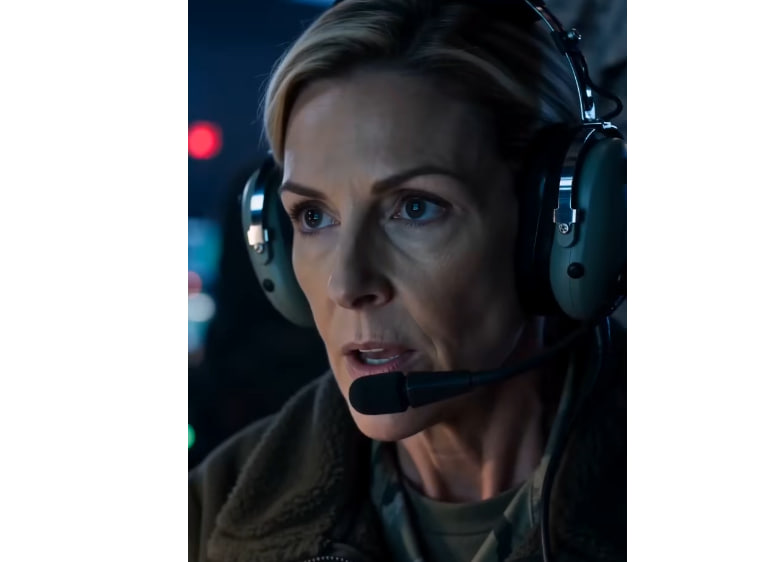
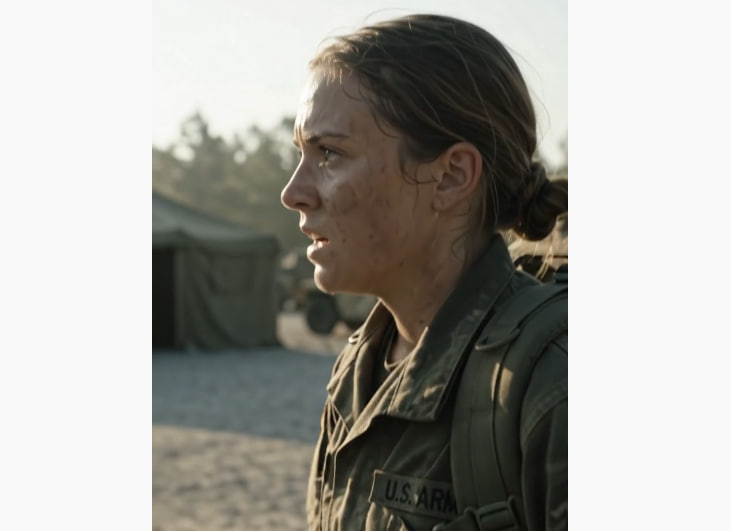
Rebuilding a life after you have legally attended your own memorial service is a strange, disorienting experience. For weeks, the media circus surrounding Gavin and Clint’s arrest dominated local and national headlines. Investigative journalists tore into their financial records, exposing a tangled web of forged beneficiary documents, hidden debts, and secret offshore accounts funded by my military insurance policies.
The trial itself was swift, aided by the ironclad physical evidence I brought back from the cabin—including the heavy padlock, which still bore traces of Gavin’s fingerprints and tool marks. When the judge handed down consecutive federal sentences for fraud, conspiracy, and attempted premeditated murder, neither Gavin nor Clint looked at me. They sat shoulder-to-shoulder in their orange jumpsuits, defeated not by the military or the legal system, but by the simple fact that I refused to stay buried.
Yet, despite the courtroom victory, the hardest part wasn’t dealing with the legal fallout. It was dealing with the silence that followed.
When you spend your entire adult life inside the rigid structure of the armed forces, your identity is deeply tied to your unit, your mission, and your uniform. Once I was medically retired and officially discharged—with a stack of commendations and a chest full of ribbons that suddenly felt entirely symbolic—I found myself standing at a crossroads. The military had given me the survival skills to break out of a locked cabin in the freezing wilderness, but it hadn’t prepared me for the quiet emptiness of civilian life.
I spent my days pacing around my empty house, jumping at the sound of the refrigerator humming or the floorboards creaking. The psychological scars of the betrayal ran far deeper than any frostbite. Every time I looked at a door, I saw a deadbolt. Every time someone smiled too warmly or offered an unexpected gift, my instincts screamed at me to brace for impact.
One evening, about six months after the trial concluded, I packed my truck, drove deep into the rugged backcountry of Montana, and rented a small cabin just thirty miles away from the very place where Gavin had tried to erase me.
Standing on the porch at dusk, watching the sun dip behind the jagged peaks of the Rocky Mountains, I realized something important. The mountains hadn’t tried to kill me; human greed had. The wilderness, harsh and unforgiving as it was, remained completely honest. It didn’t wear a mask, it didn’t whisper sweet promises while plotting your demise, and it never pretended to be something it wasn’t. It simply demanded respect, resilience, and adaptability.
That realization became the spark for my next mission.
I knew I couldn’t be the only woman who had ever looked across the dinner table at someone she trusted with her entire heart, only to realize she was standing on thin ice. Abuse, betrayal, and financial exploitation don’t always happen in combat zones or dark alleyways; often, they happen behind closed doors, disguised as marriage, family loyalty, or love.
I started small. I invited a close friend from my old unit—a brilliant combat medic named Sarah who had recently transitioned to civilian life—to join me for a weekend. We cleared out an abandoned forestry camp near the edge of the national forest, repaired the weather-beaten cabins, and set up a makeshift obstacle course.
Within a year, that small experiment evolved into what we officially named the Summit Resilience Initiative.
Our program wasn’t a traditional spa retreat or a standard counseling center. It was a rigorous, immersive wilderness recovery camp specifically designed for women rebuilding their lives after surviving severe emotional, physical, or financial abuse. We taught them the exact same principles that kept me alive in that freezing cabin: how to regulate your nervous system under extreme stress, how to trust your instincts when your mind tells you to freeze, how to build practical survival skills, and, above all, how to reclaim personal agency.
Every month, a new group of women would arrive at our gates. Many of them stepped out of their cars looking like shadows of themselves—timid, hesitant, and constantly scanning their surroundings as if waiting for the next blow to land. Some had lost their savings to manipulative partners; others had been isolated from their families, told they were incompetent, or made to feel entirely powerless.
I remember our very first official cohort. There were eight women, ranging in age from early twenties to late fifties. Among them was Clara, a former corporate accountant who had escaped a multi-year marriage where her husband systematically drained her accounts, forged her signatures, and convinced her that she was mentally unstable. When Clara first arrived, she couldn’t maintain eye contact for more than three seconds. Her hands shook whenever someone raised their voice, and she jumped every time the wind slammed a shutter against the cabin wall.
On the third day of the program, we scheduled a basic orienteering and shelter-building exercise in the lower valley. A sudden spring squall rolled in, bringing a heavy downpour and dropping temperatures rapidly. The wind whipped through the pines, and panic instantly rippled through the group. Several women retreated toward the shelter of the main cabin, overwhelmed by the sudden shift in the weather.
Clara, however, froze near the edge of the tree line. I saw the familiar look in her eyes—the exact same look I had seen in the mirror on the day Gavin locked me away. It was the terrifying realization that you are entirely on your own against the elements.
I walked over to her, keeping my movements slow and deliberate, matching her pace.
“Clara,” I said calmly, cutting through the noise of the rushing wind and rain. “Look at your hands. What are you holding right now?”
She blinked, looking down at the heavy canvas tarp and stakes gripped tightly in her fingers. “A tarp,” she whispered.
“Good. Now, are you worried about the storm rolling in over the entire mountain range?”
She shook her head slowly.
“Good. Because we aren’t fighting the whole mountain today. We are just securing this one corner. One peg at a time. What’s your next step?”
Clara took a deep, shuddering breath. The panic in her eyes receded, replaced by a sudden, fierce flash of determination. She knelt down in the mud, drove the first metal stake into the wet earth with a heavy mallet, and secured the corner grommet. Within twenty minutes, she and her partner had built a completely functional, weather-tight shelter that easily withstood the squall.
That evening, sitting around the campfire as the rain cleared and the stars began to pierce through the mountain sky, Clara spoke up during our evening circle. It was the first time she had shared her story with the group.
“For years,” Clara said, her voice steady and clear, reflecting the flickering firelight, “I thought I was weak because I couldn’t stop the storm my ex-husband created around me. I thought the damage he did was permanent. But out here, standing in the mud while it rained… I realized the storm doesn’t define how strong my shelter is. I do.”
Listening to her, a profound sense of peace settled deep into my chest. For a long time, I had viewed my own survival as an act of defiance against Gavin and Clint. I wanted to prove them wrong; I wanted to show them that they couldn’t bury me without a fight. But sitting there by the fire, watching these incredible women reclaim their autonomy, I realized that survival wasn’t just about escaping a trap. It was about what you chose to build once you finally stepped back into the light.
Today, the camp runs year-round. We’ve expanded our programs to include legal advocacy workshops, financial literacy seminars, and vocational training, partnering with specialized organizations across the country to ensure our participants have a safety net when they leave the mountains.
I still live in the cabin near the edge of the timberline. My phone doesn’t ring often, and I prefer it that way. Whenever the winter winds begin to howl against the windowpanes, carrying the crisp scent of pine and snow, I sometimes walk over to the workbench in my office. Sitting right there in plain view, resting on a small wooden pedestal, is the heavy iron padlock Gavin used to lock me away.
It’s no longer a symbol of betrayal or fear. It’s simply a reminder of how resilient the human spirit can be when it refuses to quit. The road out of the dark is never easy, and the climb up the mountain demands everything you have—but once you reach the summit, the view belongs entirely to you.
