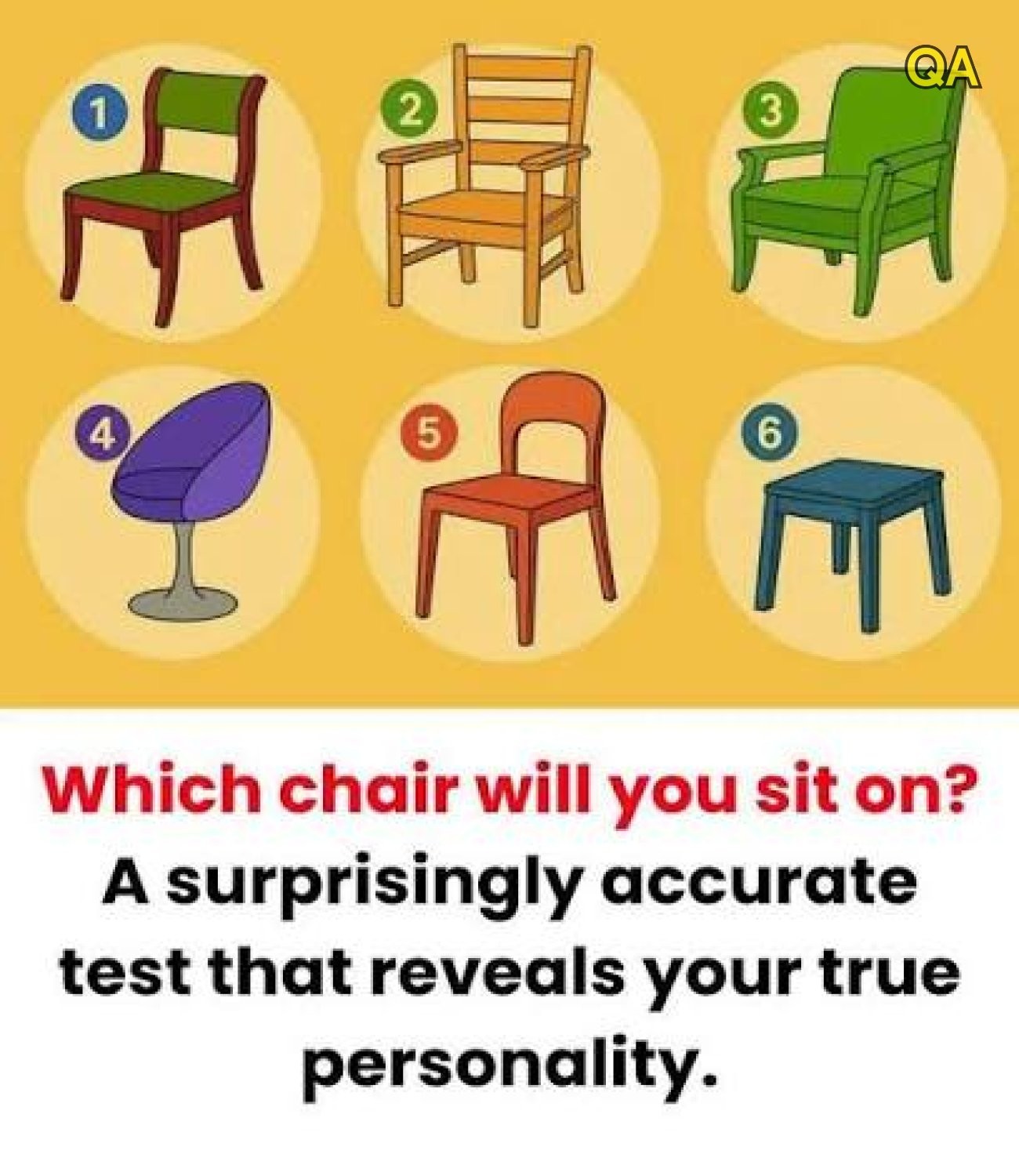

Imagine entering a room where six very different chairs are arranged in front of you. One appears sturdy and traditional, another looks bold and commanding, while others may seem artistic, comfortable, unusual, soft, or minimalist. If asked to choose immediately, many people would make a selection in seconds.
That quick response is the appeal behind visual personality quizzes. They turn an everyday preference into an invitation to reflect: Do you look for security, comfort, novelty, status, beauty, practicality, or connection? While a chair choice cannot provide a clinical assessment or definitively reveal a person’s character, it can be a useful starting point for considering the values and preferences that influence daily decisions.
It is important to approach these quizzes with perspective. Personality is complex, shaped by biology, upbringing, culture, relationships, education, work, and life experience. A single image or first impression does not measure personality in the same way as a validated psychological assessment. Still, choosing a chair can prompt an interesting and harmless moment of self-reflection—especially when the interpretation is treated as a possibility rather than a verdict.
Why Do Chair Personality Quizzes Feel So Accurate?
People are naturally interested in understanding themselves and others. Personality quizzes offer a fast, accessible form of self-exploration, often using familiar objects and simple choices. A chair is especially effective because it represents more than seating. It can suggest rest, safety, authority, hospitality, style, independence, or belonging.
When someone sees several options, they may respond to visual cues such as color, materials, shape, size, perceived comfort, or familiarity. A person who has spent a demanding week may choose the chair that looks most restful. Someone who enjoys design may be drawn to an unconventional shape. Another person may select a formal chair because it appears supportive, dependable, or professional.
These reactions are influenced by context. The same individual might choose a different chair in an office, a restaurant, a waiting room, or their own home. Mood, physical comfort, prior experiences, cultural associations, and practical needs can all affect the decision. For that reason, a chair-choice quiz should never be used to label, diagnose, judge, or make important decisions about someone.
What Psychology Says About Personality and Preferences
Modern personality research often examines broad patterns of thought, emotion, and behavior. One widely studied framework is the Five-Factor Model, sometimes called the “Big Five.” It describes personality through five broad dimensions: openness to experience, conscientiousness, extraversion, agreeableness, and neuroticism, which is also described in some research as emotional stability at the opposite end of the spectrum.
These traits are generally measured through carefully developed questionnaires and large-scale research, not through a single visual choice. Such assessments are designed to compare multiple answers over time and to evaluate whether the questions consistently measure the intended traits.
Visual quizzes are sometimes loosely linked to the idea of projective methods, in which people respond to ambiguous material. Historically, psychologists have explored whether responses to images or stories might provide insight into thoughts and feelings. However, many projective techniques have faced substantial questions about consistency, accuracy, and scientific validity. In professional settings, qualified clinicians rely on evidence-based methods, personal history, interviews, and validated tools rather than social-media-style quizzes alone.
That does not mean a light quiz has no value. It can encourage people to pause and ask useful questions: What did I notice first? What features made me feel comfortable? What does that preference tell me about my present needs? The most meaningful insight often comes from the reflection itself, rather than from a fixed description assigned to a particular chair.
Chair 1: A Preference for Stability and Support
If you were drawn first to a chair that appears solid, balanced, and dependable, you may place a high value on reliability. You might appreciate routines that make life easier to manage, relationships built on trust, and decisions made with care rather than haste.
This preference may also reflect a practical mindset. In many situations, people choose objects that seem durable and useful because they want confidence that their needs will be met. In personal or professional life, this can translate into appreciating preparation, follow-through, and steady progress.
There is no reason to assume that a preference for stability means avoiding all change. Instead, it may indicate that you like change to be thoughtful, manageable, and connected to a clear purpose. People who value dependable foundations can still be flexible, creative, and open to new experiences.
Chair 2: A Preference for Presence and Direction
A chair that looks prominent, structured, or authoritative may appeal to people who enjoy taking initiative. You may feel comfortable making plans, setting goals, organizing a group, or moving a project forward when others are uncertain about the next step.
Leadership, however, is broader than being the loudest person in a room. Research and workplace experience alike show that effective leadership can include listening carefully, communicating clearly, recognizing other people’s strengths, and sharing responsibility. A person may lead through calm expertise, dependable service, imaginative problem-solving, or the ability to create cooperation.
If a commanding chair appealed to you, consider whether you are motivated by achievement, responsibility, visibility, or the satisfaction of helping a group reach a goal. The answer may be more revealing than the chair itself.
Chair 3: A Preference for Originality and Creative Possibility
An unusual, expressive, or visually striking chair may attract someone who enjoys fresh ideas. You may be interested in design, art, music, writing, technology, entrepreneurship, or simply finding a new way to solve an ordinary problem.
Creativity is not limited to artistic talent. It can include noticing connections that others miss, asking thoughtful questions, adapting to unexpected circumstances, or imagining alternatives to familiar routines. People with a strong interest in novelty may enjoy learning about unfamiliar subjects and experimenting with different approaches.
In the Big Five model, this kind of curiosity is often related to openness to experience. Openness can involve imagination, intellectual curiosity, aesthetic sensitivity, and willingness to consider new perspectives. Yet it is only one part of personality, and a person can be highly creative while also valuing tradition, structure, and security.
Chair 4: A Preference for Exploration and New Experiences
If the chair that looked most distinctive, mobile, modern, or adventurous caught your attention, you may be energized by variety. New places, unfamiliar foods, changing routines, fresh challenges, and conversations with people from different backgrounds can all be rewarding for those who enjoy exploration.
Curiosity can support lifelong learning. Trying new activities can help people build skills, discover interests, and gain confidence in unfamiliar situations. At the same time, healthy exploration does not require constant risk-taking or dramatic change. It can be as simple as reading about a new subject, taking a class, visiting a local museum, or meeting someone with a different perspective.
People who prefer new experiences may also benefit from balancing curiosity with rest and reflection. A full schedule is not the same as a meaningful life. The most sustainable growth often comes from choosing opportunities that align with personal values and practical circumstances.
Chair 5: A Preference for Comfort, Care, and Connection
A soft, welcoming, or comforting chair may resonate with people who value emotional warmth and supportive relationships. You may be attentive to how others are feeling and may find satisfaction in listening, helping, or creating a calm environment for friends, relatives, colleagues, or neighbors.
Empathy is an important social skill. It can help people understand another person’s experience, respond with kindness, and build stronger relationships. Compassion does not require solving every problem. Often, it means being present, listening without rushing to judgment, and acknowledging what another person is going through.
People who care deeply about others also need boundaries. Constantly taking on other people’s stress can become exhausting. Maintaining personal time, seeking support when needed, and recognizing the limits of one’s responsibility are healthy ways to protect emotional well-being. Caring for yourself supports your ability to care for others over the long term.
Chair 6: A Preference for Simplicity and Calm
If you preferred a simple, understated, or practical chair, you may appreciate calm, authenticity, and ease. You might prefer meaningful conversations over constant attention, choose quality over excess, and feel most comfortable when your surroundings are orderly and uncomplicated.
This preference can reflect a desire for emotional balance. In a busy world filled with notifications, advertising, and competing demands, many people are drawn to spaces and routines that reduce unnecessary pressure. Simplicity can create room for rest, concentration, gratitude, and stronger connections with the people who matter most.
A calm approach should not be mistaken for a lack of ambition or passion. Quiet people can have strong convictions, deep loyalty, and significant influence. They may contribute through patience, careful observation, consistency, and an ability to keep perspective when circumstances become stressful.
How to Use Personality Quizzes Responsibly
Chair-choice quizzes are best viewed as entertainment and conversation starters. They can be enjoyable when they encourage curiosity, but they should not replace professional guidance or evidence-based assessment. Avoid using any quick quiz to decide whether someone is trustworthy, compatible, capable, mentally healthy, or suitable for a job or relationship.
If you want a more grounded way to learn about your personality, look for assessments based on established research and interpret the results with care. It can also help to ask people who know you well about the strengths they see in you. Their observations, combined with your own reflection, may offer a more complete picture than any single test.
For concerns about stress, mood, relationships, or mental health, speaking with a qualified healthcare professional or licensed mental health provider is more appropriate than relying on online personality content. Reputable health organizations emphasize that mental health information should be accurate, compassionate, and tailored to the individual’s circumstances.
The Real Meaning Behind Your First Choice
Whether you chose the reliable chair, the bold chair, the creative chair, the adventurous chair, the comforting chair, or the simple chair, your selection does not define you. Human personality cannot be reduced to one instinctive preference.
Still, the choice may reveal something valuable about what appeals to you at this moment. Perhaps you are looking for security, inspiration, comfort, challenge, recognition, or quiet. Those are meaningful needs to notice. Rather than asking, “What does this chair prove about me?” try asking, “What drew me to it today?”
That question creates space for honest self-awareness. It acknowledges that people change, circumstances matter, and every person contains many different qualities. A chair may not tell your whole story, but it can begin a thoughtful conversation about the kind of environment, relationships, and experiences that help you feel most like yourself.
Sources
Disclaimer: This content is intended for entertainment purposes only and is not based on real events.