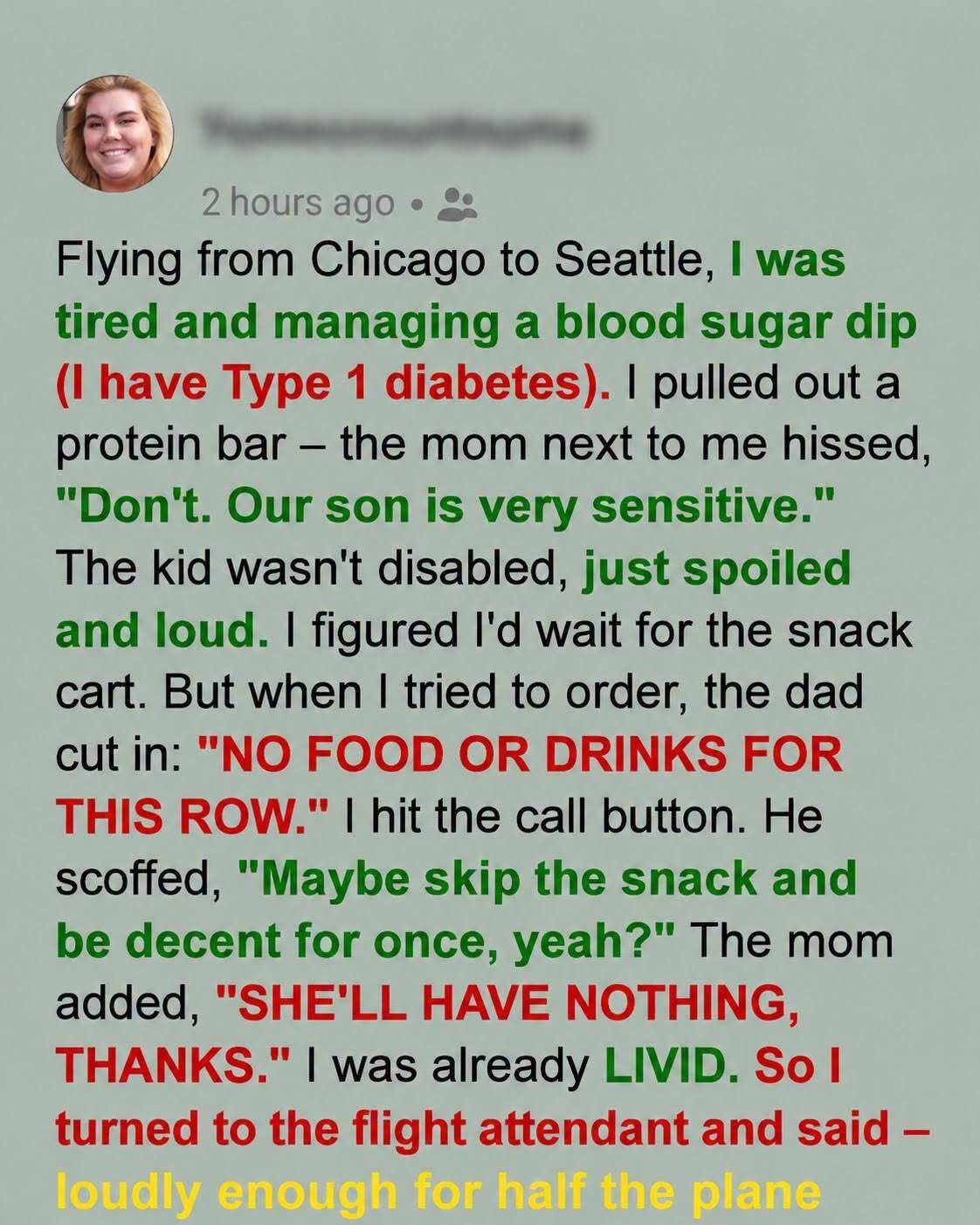

My Health Comes First, and I Will Never Apologize for Taking Care of It
Travel can require careful planning for anyone, but for people living with Type 1 diabetes, preparation is an essential part of staying safe. Airport delays, changes in meal schedules, unfamiliar food options, stress, dehydration, and long periods of sitting can all affect blood glucose management. When symptoms of low blood sugar appear, timely treatment should take priority over social discomfort or routine travel etiquette.
The account of a passenger needing to eat during a flight reflects a broader and medically important issue: people with diabetes may need immediate access to glucose, snacks, water, medication, and diabetes technology while traveling. Although individual experiences on aircraft vary and cannot always be independently verified, the underlying health guidance is clear. A person experiencing hypoglycemia should not be expected to delay treatment because of inconvenience, embarrassment, or another traveler’s preferences.
Type 1 diabetes is an autoimmune condition in which the body produces little or no insulin. Insulin is a hormone that helps glucose move from the bloodstream into cells for energy. People with Type 1 diabetes need insulin therapy every day, alongside regular monitoring of glucose levels. The condition can be managed successfully, but it requires ongoing attention and quick decision-making in situations where blood sugar becomes too low or too high.
Why Low Blood Sugar Requires Prompt Action
Hypoglycemia, commonly called low blood sugar, occurs when glucose levels fall below a healthy range. The U.S. Centers for Disease Control and Prevention notes that a reading below 70 milligrams per deciliter is generally considered low for many people with diabetes, though individual care plans may differ. Symptoms can include shakiness, sweating, hunger, dizziness, anxiety, weakness, irritability, confusion, headache, and difficulty concentrating.
Not every person experiences symptoms in the same way. Some people use continuous glucose monitors, or CGMs, which can alert them when glucose is falling quickly or has reached a low threshold. These alerts can provide valuable warning, but they do not replace the need to respond promptly. A person who feels symptoms of hypoglycemia may need to consume fast-acting carbohydrates immediately, following the guidance provided by their healthcare professional.
Standard diabetes education often refers to the “15-15 rule” for mild or moderate low blood sugar: consume about 15 grams of fast-acting carbohydrate, wait 15 minutes, and recheck glucose if possible. Suitable options may include glucose tablets, glucose gel, regular juice, regular soda, or certain candies. A protein bar may be useful as a longer-lasting snack after initial treatment, but foods containing protein, fat, or fiber can raise blood glucose more slowly than pure fast-acting carbohydrates. Each person’s plan may be different, especially if they use insulin pumps, injections, or other treatments.
Severe hypoglycemia is a medical emergency. It can cause confusion, loss of consciousness, or seizures and may require help from another person. Glucagon, an emergency medicine prescribed to some people with diabetes, can raise blood glucose rapidly in severe situations. Fellow travelers and crew members should seek urgent assistance if someone becomes unable to safely treat themselves.
Managing Type 1 Diabetes During Air Travel
Frequent travelers with Type 1 diabetes often develop routines that reduce the risks created by changing schedules. Carrying supplies in hand luggage rather than checked baggage is one of the most important steps. Checked bags can be delayed, exposed to temperature extremes, or become inaccessible during a long journey. Essential items should remain within reach throughout the flight.
A well-prepared travel kit may include a glucose meter or CGM supplies, insulin, an insulin pump backup plan where appropriate, test strips, lancets, alcohol wipes, glucose tablets, snacks, water, medical identification, and a copy of a prescription or clinician’s letter when useful. The Transportation Security Administration states that passengers may bring diabetes-related supplies and medications through airport security. Travelers should notify screening officers about medically necessary liquids, gels, and equipment, which may receive additional screening.
It can also be helpful to pack more supplies than expected. Flight delays, cancellations, missed connections, and diversions happen, and an itinerary that appears straightforward can become much longer. Diabetes organizations commonly advise travelers to carry at least twice the amount of medication and consumable supplies anticipated for the trip, where practical.
Meals on planes may be limited, delayed, or unavailable, particularly on shorter routes. For that reason, travelers should not rely exclusively on airline service for managing blood glucose. A small supply of fast-acting carbohydrates and familiar snacks can provide reassurance and practical protection when food service is delayed or when a glucose monitor indicates a developing low.
Passenger Courtesy and Medical Needs on a Flight
Air travel involves shared spaces, and passengers are generally expected to be considerate of one another. That may include minimizing noise, keeping personal belongings contained, and being mindful of strong odors. However, courtesy should not be confused with a requirement to postpone medically necessary care.
A passenger who needs to eat or drink to address possible low blood sugar is responding to a health need. In most situations, a brief explanation to a flight attendant can help. Cabin crew members are trained to respond to medical issues and can assist within the limits of their procedures and available resources. They may help locate a beverage, provide a snack if available, make space for the passenger, or seek additional medical support if symptoms worsen.
Other passengers may have their own needs, including sensory sensitivities, anxiety, food allergies, or the challenges of traveling with children. These needs deserve respect. Yet they do not erase another person’s right to take reasonable steps to protect their health. Constructive solutions are often possible: using headphones, redirecting a child’s attention, changing a seat when available, or asking cabin crew for assistance can reduce conflict without placing someone at medical risk.
It is also important to distinguish a food allergy from discomfort about seeing or hearing someone eat. Food allergies can be serious, and airlines may have policies intended to reduce exposure to particular allergens. Even then, travelers should speak directly with airline staff rather than attempting to manage another passenger’s medical choices. A person treating hypoglycemia should inform the crew if they can, but should not delay urgent treatment while waiting for a social disagreement to be resolved.
Self-Advocacy Is Part of Diabetes Care
Living with a chronic condition often requires self-advocacy. This can mean explaining why a snack is necessary, requesting access to medication, asking for time to check glucose, or telling someone that a health-related task cannot wait. Such conversations can feel uncomfortable, particularly in public settings where people may not understand diabetes.
Clear, concise language can be useful. A traveler might say, “I have diabetes and my blood sugar is low. I need to eat or drink something now.” This statement communicates urgency without requiring someone to disclose more personal information than they wish to share. If symptoms are becoming more significant, the next step should be to notify a flight attendant immediately.
Medical identification can also help in an emergency. A bracelet, wallet card, phone medical ID, or other form of identification may allow first responders and bystanders to understand a person’s condition if they become confused or unable to communicate. Travelers who use insulin pumps or CGMs may also benefit from discussing airport procedures and device-specific travel advice with their diabetes care team before departure.
Self-advocacy does not require hostility. It means recognizing that health needs are valid and responding to them appropriately. A person with Type 1 diabetes is not being inconsiderate by carrying snacks, checking a monitor, taking insulin, or treating low blood sugar. These are routine elements of responsible diabetes management.
How Families and Fellow Travelers Can Respond Supportively
Public understanding of diabetes can make travel safer and less stressful for everyone. Families traveling with children may face fatigue, disrupted routines, sensory overload, and limited space, but children also benefit when adults model empathy toward others’ health needs. A calm explanation that another passenger needs food or medicine can be an opportunity to teach compassion and practical awareness.
Fellow passengers do not need medical expertise to be helpful. Giving someone room to access their bag, allowing them to speak with a flight attendant, and avoiding unnecessary confrontation can make a meaningful difference. If a person appears confused, faint, or unable to care for themselves, alerting cabin crew promptly is the appropriate response.
It is also wise to avoid assumptions. Diabetes is not always visible, and people may have medical reasons for eating, drinking, taking medication, or using a device. Respecting privacy while making space for basic health care supports a more inclusive travel environment.
Planning Ahead for a Safer Flight With Diabetes
Before traveling, people with Type 1 diabetes can review their plan with a qualified healthcare professional, especially if they are crossing time zones, changing insulin schedules, or beginning a new treatment. Time-zone changes can affect when insulin is taken and how meals are timed. Personalized medical advice is especially important for long international flights.
Practical preparation may include checking airline policies, bringing snacks that are easy to access, keeping fast-acting glucose separate from ordinary food, charging diabetes devices, and carrying backup batteries or charging equipment. Hydration, regular movement when it is safe to do so, and attention to glucose trends can also support comfort during a trip.
Travelers should remember that this information is educational and does not replace individualized medical guidance. A clinician who understands a person’s medication regimen, glucose targets, history of hypoglycemia, and travel plans is best placed to offer specific recommendations.
Health Needs Should Never Be Treated as an Inconvenience
Managing Type 1 diabetes is a continuous responsibility, whether someone is at home, at work, or seated on an airplane. The need to treat low blood sugar is not optional, and it should not be delayed to avoid drawing attention or to satisfy an unreasonable request.
Compassionate travel depends on recognizing that people may have needs others cannot immediately see. For passengers with diabetes, carrying food and medication, monitoring glucose, and responding to symptoms are not special favors. They are necessary measures that help prevent a manageable health issue from becoming more serious.
Prioritizing one’s health is not selfish. It is a responsible decision grounded in medical reality. With preparation, respectful communication, and support from airline staff and fellow travelers, people with Type 1 diabetes can travel with greater confidence and safety.
Sources
- Centers for Disease Control and Prevention: Low Blood Sugar Treatment
- American Diabetes Association: Hypoglycemia
- Transportation Security Administration: Medical Conditions and Disabilities
- National Institute of Diabetes and Digestive and Kidney Diseases: Type 1 Diabetes
- Mayo Clinic: Hypoglycemia
- World Health Organization: Diabetes Fact Sheet
Disclaimer: This content is intended for entertainment purposes only and is not based on real events.