
Hidden Face Optical Illusion: How Visual Perception Shapes What We See
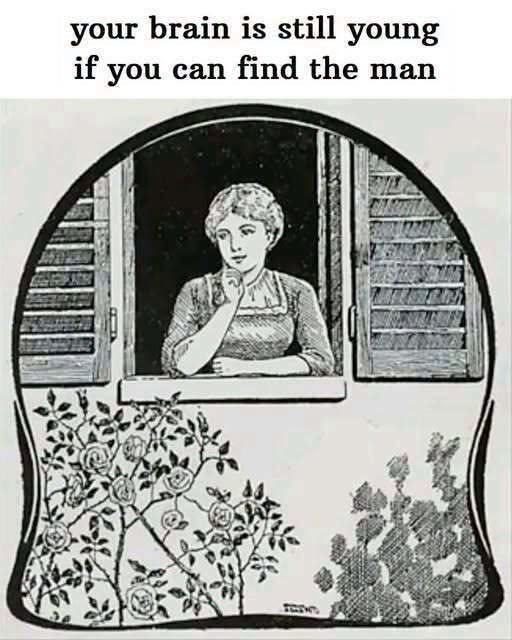
At first glance, this detailed black-and-white illustration appears to show a young woman standing beside an open window. She is surrounded by flowers, branches, leaves, curved lines, and decorative elements that create the look of an ornate vintage drawing. The woman is the most immediate and recognizable subject, so most viewers naturally focus on her face, clothing, and the window scene around her.
However, the illustration contains another image that is less obvious: a man’s face concealed within the wider arrangement of lines, shadows, empty spaces, floral shapes, and architectural details. The hidden face is not presented as a separate person standing in the scene. Instead, it emerges when viewers stop examining each item individually and begin to see how the components work together as a single larger pattern.
This type of image is commonly described as an optical illusion or hidden-image puzzle. Its appeal comes from the moment of recognition: once the second face becomes visible, many people find it difficult to understand how they missed it initially. The effect offers a useful example of how human perception depends not only on what the eyes receive, but also on how the brain organizes visual information.
What Is a Hidden Face Optical Illusion?
A hidden face optical illusion is an image designed to support more than one interpretation. In this case, viewers may first see a woman by a window and later detect a male face created from surrounding objects. The image remains unchanged, but the observer’s interpretation changes. This is one reason such puzzles can feel surprising: the new image was present from the beginning, yet it was not consciously recognized.
These illustrations are related to a broader category of perceptual images known as ambiguous figures. An ambiguous figure can be understood in more than one valid way, depending on where a viewer directs attention or how the visual system groups shapes and contrast. Famous examples include drawings that can appear to show either a young woman or an older woman, as well as images in which a vase can become two profiles facing one another.
In a hidden-face illustration, the artist usually relies on familiar visual signals. A curve may suggest a forehead or cheek. Dark shading may function as an eye socket or a shadow beneath the nose. A cluster of flowers can become hair, while the edge of a window frame may help define the outline of a face. Each component still belongs to the original scene, but it also serves a second purpose within the concealed portrait.
Why the Woman Is Usually Seen First
People tend to recognize the woman first because the image is organized around a familiar scene. Human vision is highly efficient at identifying faces, bodies, and everyday objects. When an illustration includes a clearly drawn person in a central position, the brain generally gives that figure priority over less obvious combinations of shapes.
This process is partly explained by selective attention. The visual environment contains far more information than people can consciously process at one time. Attention helps the brain decide which details are most relevant. In an image containing a prominently positioned woman, the window, flowers, and decorative details may initially be treated as background information rather than as elements of another face.
Context also matters. A woman beside a window is a coherent visual story. The setting immediately makes sense, so viewers have little reason to search for an alternative interpretation. The hidden face may only become apparent when a person deliberately shifts from reading the image as a scene to reading it as a collection of outlines, shadows, and negative spaces.
How the Brain Organizes Visual Information
Visual perception is not a simple recording of the world. The eyes gather light, color, contrast, and movement, but the brain must interpret these signals. It rapidly groups separate marks into meaningful objects, identifies edges, distinguishes foreground from background, and compares what it sees with previous experience.
Psychologists often refer to principles associated with Gestalt perception when discussing this process. Gestalt theory emphasizes that people tend to perceive organized wholes rather than isolated details. For example, the brain may connect incomplete lines into a recognizable outline, group nearby objects together, or interpret a set of shapes as one face instead of several unrelated forms.
Several principles are especially relevant to hidden-image puzzles:
- Figure-ground organization: The brain separates a main object, or figure, from its background. In this illustration, the woman may first become the figure while the decorative setting remains background. Later, those same background elements may form the hidden face.
- Closure: People can recognize a shape even when its outline is incomplete. A few carefully positioned lines and shadows may be enough for the brain to infer facial features.
- Similarity and proximity: Elements that look alike or sit close together are often perceived as belonging to the same group. Flowers, leaves, and shadows can therefore merge into a larger visual structure.
- Pattern recognition: Humans are especially sensitive to face-like arrangements, including two eye-like marks above a nose-like shape and a mouth-like line.
These tendencies are useful in everyday life. They help people identify faces quickly, navigate complex surroundings, and recognize partially obscured objects. In an optical illusion, however, the same efficient shortcuts can cause a viewer to overlook an alternative image hidden within the design.
Why a Face Can Seem to Appear Suddenly
Many people experience a sudden “aha” moment when they find the concealed face. This does not mean their eyesight has changed. Instead, their interpretation of the image has shifted. Once the brain identifies a likely face pattern, it begins to organize nearby details around that interpretation. The outline that previously looked like branches or decoration may now appear to be hair, a brow, or the profile of a cheek.
This change is sometimes called perceptual switching. With ambiguous images, attention can alternate between competing interpretations. A viewer may move back and forth between seeing the woman at the window and seeing the larger hidden face. The ability to switch is a normal feature of visual processing and does not indicate anything unusual about a person’s vision or intelligence.
The effect can be strengthened by viewing distance. When a person sits close to a screen, fine details may dominate attention. Moving farther away can reduce the importance of individual lines and make the larger arrangement easier to see. Similarly, narrowing the eyes slightly, looking away for a moment, or viewing a smaller version of the picture may help emphasize the overall structure.
Tips for Finding the Hidden Man’s Face
If the hidden face is difficult to spot, it can help to approach the puzzle differently rather than repeatedly searching for individual features. The key is to view the illustration as a whole composition.
- Step back from the image: Increase the viewing distance or reduce the image size on a screen. This can make broad outlines and areas of contrast more noticeable.
- Look at the outer shapes: Instead of concentrating only on the woman, examine how the flowers, branches, window edges, and blank areas connect.
- Search for face-like proportions: Look for a possible forehead, eye area, nose, mouth, and chin arranged across a larger section of the drawing.
- Notice negative space: Empty white areas can be as important as the dark lines. Artists often use blank spaces to suggest facial contours.
- Take a short break: Looking away briefly may reduce fixation on the most obvious figure and make another pattern easier to recognize upon returning.
There is no need to rush. Hidden-image puzzles are designed to reward patient observation. Some viewers spot the concealed face almost immediately, while others need more time. Both responses are entirely normal because attention, viewing conditions, familiarity with this kind of artwork, and image quality can all influence the experience.
Do Optical Illusions Measure Intelligence or Personality?
Online posts sometimes claim that finding a hidden face quickly can reveal a person’s intelligence level, age, personality traits, eyesight, or observational ability. Such statements should be treated with caution. There is no established scientific basis for using a single visual puzzle as a reliable assessment of intelligence, mental health, character, or cognitive ability.
Formal psychological and cognitive assessments are developed through extensive research and standardization. They use carefully designed tasks, comparison groups, and validated scoring methods. A social-media image or entertainment puzzle does not meet those standards. How quickly someone notices the hidden face may depend on many ordinary factors, including screen size, lighting, visual attention at that moment, prior exposure to similar puzzles, and whether someone was told what to look for.
Optical illusions can be valuable educational tools because they demonstrate that perception is active and interpretive. They can encourage people to think about attention, expectation, visual context, and the difference between seeing an image and understanding it. But they should remain a source of entertainment and curiosity rather than a diagnostic test.
The Cultural Appeal of Hidden Images and Ambiguous Art
Hidden pictures have appeared in art, magazines, children’s books, advertising, and puzzle collections for generations. Their enduring popularity reflects a simple human enjoyment of discovery. They invite viewers to participate rather than passively observe. The image becomes a small visual problem, and recognition provides an immediate sense of reward.
Artists have long explored double images and visual ambiguity. Some historical works use faces made from fruits, plants, books, animals, or household objects. Other artists use shadows, landscapes, or architecture to produce secondary portraits. These works often demonstrate technical skill, but they also raise broader questions about perspective: what one person sees first may not be what another person notices.
In the modern digital environment, hidden-face illusions are widely shared because they are easy to understand across languages and can prompt conversation. One viewer may identify the face in seconds, while another may need a clue. This shared process of searching, comparing, and eventually seeing the same image differently is a central part of the puzzle’s appeal.
What This Optical Illusion Teaches About Perception
The hidden man’s face in this black-and-white illustration is a reminder that perception is shaped by attention and context. The visual elements do not change, yet the meaning people assign to them can change dramatically. At first, the image may seem to be a straightforward portrait of a woman near an open window. With a different perspective, flowers, branches, shadows, and open spaces combine to reveal another human face hidden in plain sight.
That shift does not mean the first interpretation was wrong. Both images are part of the design. The woman is visible because the drawing provides clear visual cues for her presence. The man’s face is visible because the same artwork also contains a second arrangement of cues. The puzzle succeeds because it uses the brain’s normal tendency to prioritize the most obvious and coherent interpretation.
Ultimately, hidden-face optical illusions are entertaining examples of the remarkable efficiency of human vision. They show how quickly the brain makes sense of complex scenes, while also revealing that there may be more than one meaningful way to look at the same information. Whether the hidden face appears immediately or only after a closer look, the experience highlights the value of changing perspective and paying attention to details that first seemed unimportant.
Sources
- National Institute of Neurological Disorders and Stroke — background information on brain function and information processing.
- American Psychological Association — discussion of visual illusions and perception.
- Encyclopaedia Britannica — overview of Gestalt psychology and perceptual organization.
- National Center for Biotechnology Information — scientific reference material on visual pathways and visual processing.
- Verywell Mind — accessible overview of Gestalt principles, with references to psychological research.
Disclaimer: This content is intended for entertainment purposes only and is not based on real events.