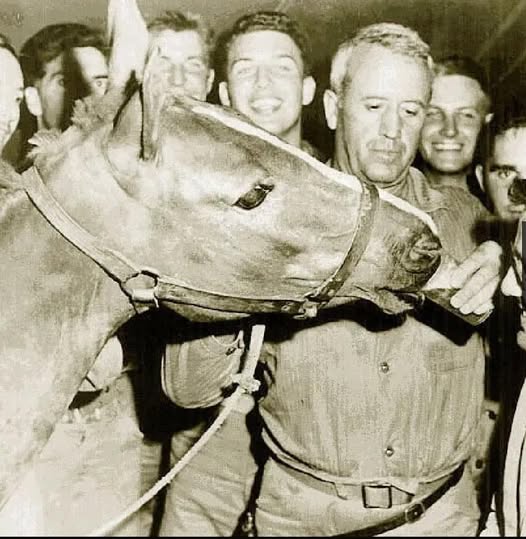

A Story Begins in Quiet Simplicity
In the late 1940s, on Jeju Island off the coast of Korea, a small mare entered the world without any hint that her path would one day be remembered far beyond the fields she grazed as a foal. She was part of the traditional Jeju pony breed, known for their resilience, intelligence, and ability to adapt to harsh landscapes. Standing just around thirteen hands tall, she was modest in size and unassuming in nature.
Her Korean name was believed to have been Ah Chim Hai, meaning “Flame of the Morning.” The name itself carried a sense of brightness and promise, though at the time she was simply a hardworking pony living a quiet life. She was never known for racing or holding prestigious titles. Instead, she was a companion, a worker, and a reflection of the rural life of the period.
It was a young stable boy who made the decision that changed her life. He agreed to sell the little mare for the equivalent of 250 dollars—funds raised by a thoughtful group of U.S. Marines stationed nearby. They pooled money from their own pockets to help the boy purchase mobility aids for his sister, who had experienced an accident that affected her ability to walk. The mare’s sale was an act of compassion on both sides, and it became the first step toward a story that would one day be woven into history.
The Marines took the pony in, intending at first to use her as a pack animal, helping transport equipment across terrain that vehicles could not easily navigate. Her journey with them would soon become a symbol of teamwork, trust, and resilience.
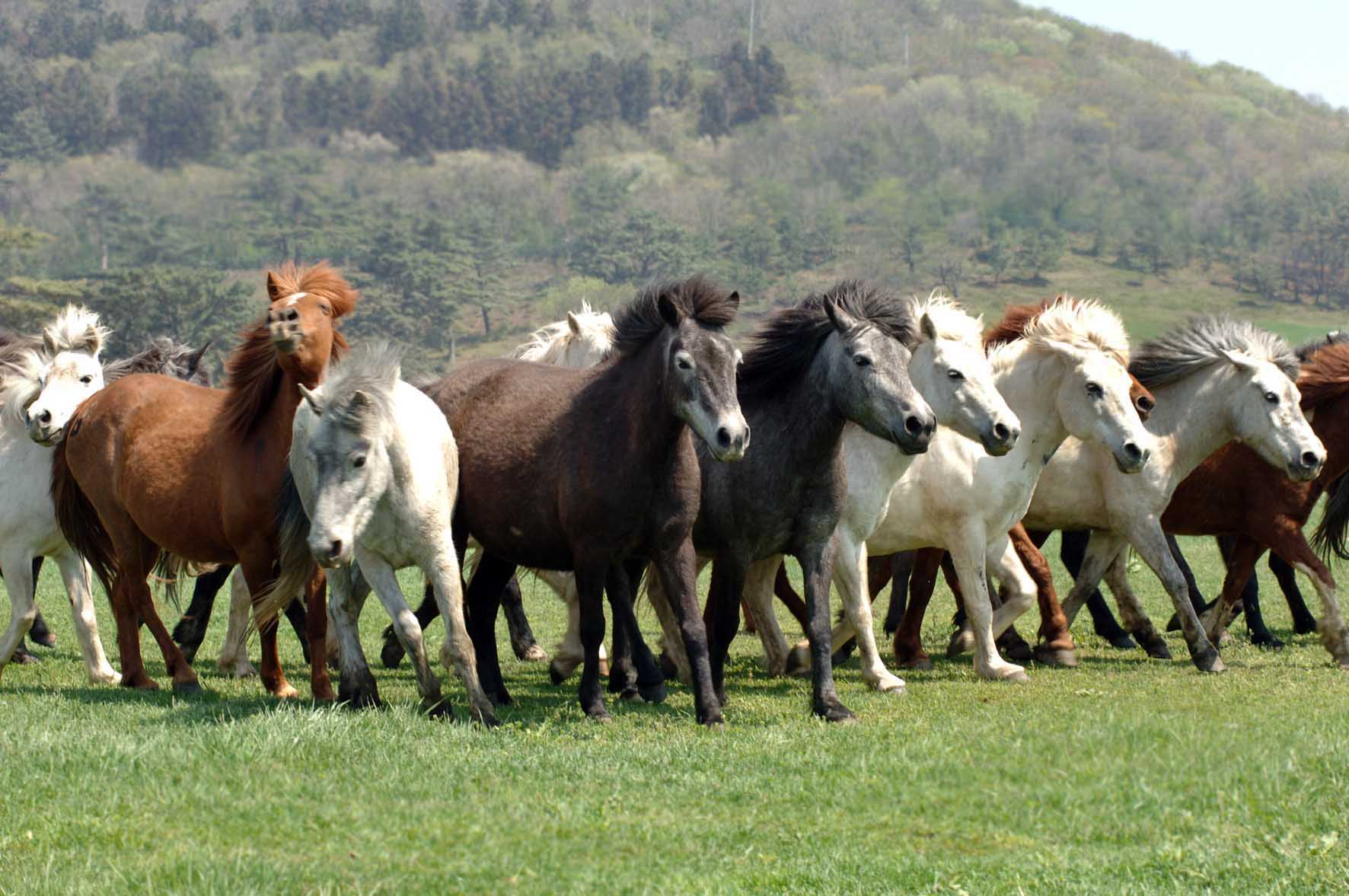
How a Small Pony Became Part of a Larger Story
The mare quickly gained a new nickname among the Marines: Reckless. It was a playful title reflecting her spirited personality, not an expectation of daring behavior. They trained her to carry supplies along narrow paths and up steep hillsides. The conditions were often challenging, but Reckless proved highly adaptable.
One of the most astonishing parts of her story—often retold with admiration—was her ability to learn tasks with unusual speed. She responded to spoken cues, recognized familiar routes, and eventually could make certain journeys without a handler. Marines described her as perceptive, noting that she seemed to sense when she needed to pause, move forward, or find shelter. These abilities appeared exceptional at the time, though modern science provides insight into why animals like her may develop such intuitive responsiveness.
Reckless’s contributions during periods of intense military activity were valued not only for their practical impact but also for the emotional support she offered to those around her. Her presence created moments of calm during stressful conditions. She provided comfort simply by being herself—approaching soldiers gently, resting near them, and becoming a familiar, grounding presence.
Although later retellings sometimes added dramatic flair, many historians emphasize that Reckless’s real significance came from her reliability, her gentle companionship, and her ability to lift spirits during difficult times. Her role was not defined by dramatic heroics but by steady, consistent support when it was most needed.
A Day That Became Part of Her Legacy
One of the events most frequently mentioned in connection with Reckless is a day in March 1953, during a period of intense military pressure on a location known as Outpost Vegas. Contemporary descriptions refer to the site as extremely active and demanding, requiring continuous transport of supplies over long distances.
Reckless was credited with making dozens of trips in a single day, carrying essential materials up steep paths and returning with equipment or assisting however she could on the way back down. Each round trip was physically demanding, yet she continued with determination.
The Marines later said that she provided crucial support during that time, helping maintain supply lines during a period of high pressure. Although some accounts describe dramatic conditions, many historians today frame the story more calmly: Reckless worked tirelessly, offering assistance in a way that demonstrated her remarkable loyalty and strength. She became a symbol of perseverance, not because of extraordinary physical feats, but because of her consistent willingness to serve alongside her human companions.
Her service earned her several commendations, including honorary promotions within the Marine Corps. Over time, she rose to the rank of staff sergeant—making her one of the few animals in U.S. military history to be recognized in this way. Publications later celebrated her, calling her one of the most notable horses connected to military service in the twentieth century.

A Lighter Side: The Personality That Won Hearts
Beyond her historical accomplishments, what many people loved most about Reckless was her personality. Stories collected from Marines and researchers reveal a pony with a vibrant spirit and an unmistakable sense of curiosity.
She was known to wander into tents, nudging soldiers for attention or investigating snacks left out on tables. Some recalled her gently sampling food at gatherings or standing near groups of service members as if she belonged among them. She became a companion not just in work, but also in the small moments of rest.
Reckless also shared affectionate interactions with the people around her. She often rested near troops during quiet hours or allowed them to stroke her neck as they spoke softly to her. These moments created a bond that many veterans remembered for the rest of their lives.
![Visual History of Korea] Jeju horses, natives of ancient Tamna Kingdom - The Korea Herald](https://wimg.heraldcorp.com/content/default/2022/04/14/20220414000245_0.jpg)
Returning Home and Finding Peace
At the end of her service overseas, Reckless was brought to the United States, where she received a warm welcome. Parades were held in her honor, and she was introduced at various events, where onlookers admired her gentle nature and curious expression.
She eventually settled into a peaceful retirement at Camp Pendleton in California. There, she enjoyed open pastures, regular care, and the company of Marines who visited her often. Some veterans returned years later to see her again, reflecting on memories from their youth and the comfort she once brought them.
Reckless lived a calm and content life until her passing in 1968. She was honored by those who knew her, and her story continued to be shared across generations.
Cultural Significance: Why Horses Like Reckless Are Remembered
Horses have appeared in legends, folklore, and history across countless civilizations. They often symbolize loyalty, endurance, or partnership, reflecting qualities that humans admire. From the strong, compact Jeju pony to the noble Arabian horse or the sturdy mustangs of North America, horses have shaped human life in agriculture, travel, and companionship.
Reckless’s story aligns with this long tradition. Although she began life as an ordinary farm pony, her relationship with the Marines elevated her from a working animal to a partner in shared experience. Stories about her capture the same universal themes found in myths: the small stepping forward to achieve the unexpected, the humble becoming meaningful, and the power of quiet strength.
Her tale has inspired books, documentaries, and monuments across the United States. Six national memorials honor her, each one a reminder of the way animals can shape human history and memory.
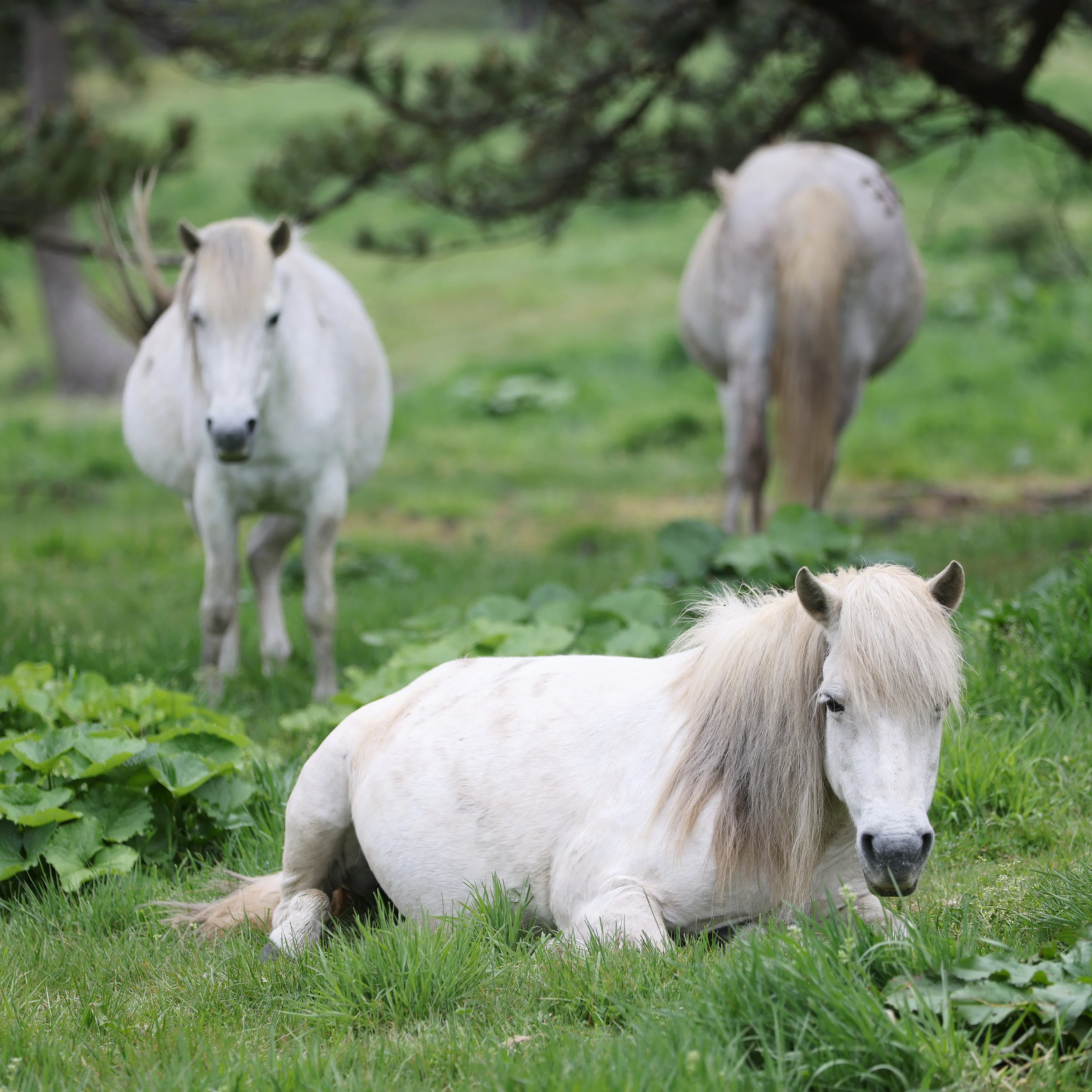
Scientific Perspectives on Her Abilities
Modern research helps explain many traits that seemed extraordinary in Reckless during her service years. Scientists studying horse cognition have discovered several key insights.
Equine Learning and Memory
Horses are capable of learning complex tasks through repetition, association, and social observation. Research indicates they remember routes, sounds, and human cues with impressive accuracy. Reckless’s ability to travel familiar paths on her own fits well within this scientific understanding.
Emotional Sensitivity
Horses respond to human emotion, vocal tone, and body language. Studies from the University of Sussex and other institutions show that horses can differentiate between calm and tense human expressions. Reckless’s comforting presence among her handlers may have been influenced by this emotional attunement.
Physical Resilience
Breeds like the Jeju pony evolved to handle rugged terrain and sparse resources. Their natural endurance and efficiency made them uniquely suited for carrying loads over long distances. Reckless’s stamina, while often described as remarkable, is consistent with traits observed in her breed.
Reflection: Why Stories Like Hers Inspire Human Curiosity
Reckless’s journey captures something timeless. It shows that even the smallest, most unassuming creature can influence lives in lasting ways. Her story bridges cultures, connects history with the present, and illustrates how empathy between humans and animals can shape remarkable experiences.
At its heart, this tale is not only about a mare who served alongside soldiers. It is about the connections that form between species, the quiet courage that emerges in unexpected places, and the human desire to understand the world through stories of companionship.
Curiosity leads us to preserve these memories, explore their deeper meaning, and share them with future generations. Through stories like Reckless’s, we rediscover the beauty of partnership, resilience, and gratitude.
