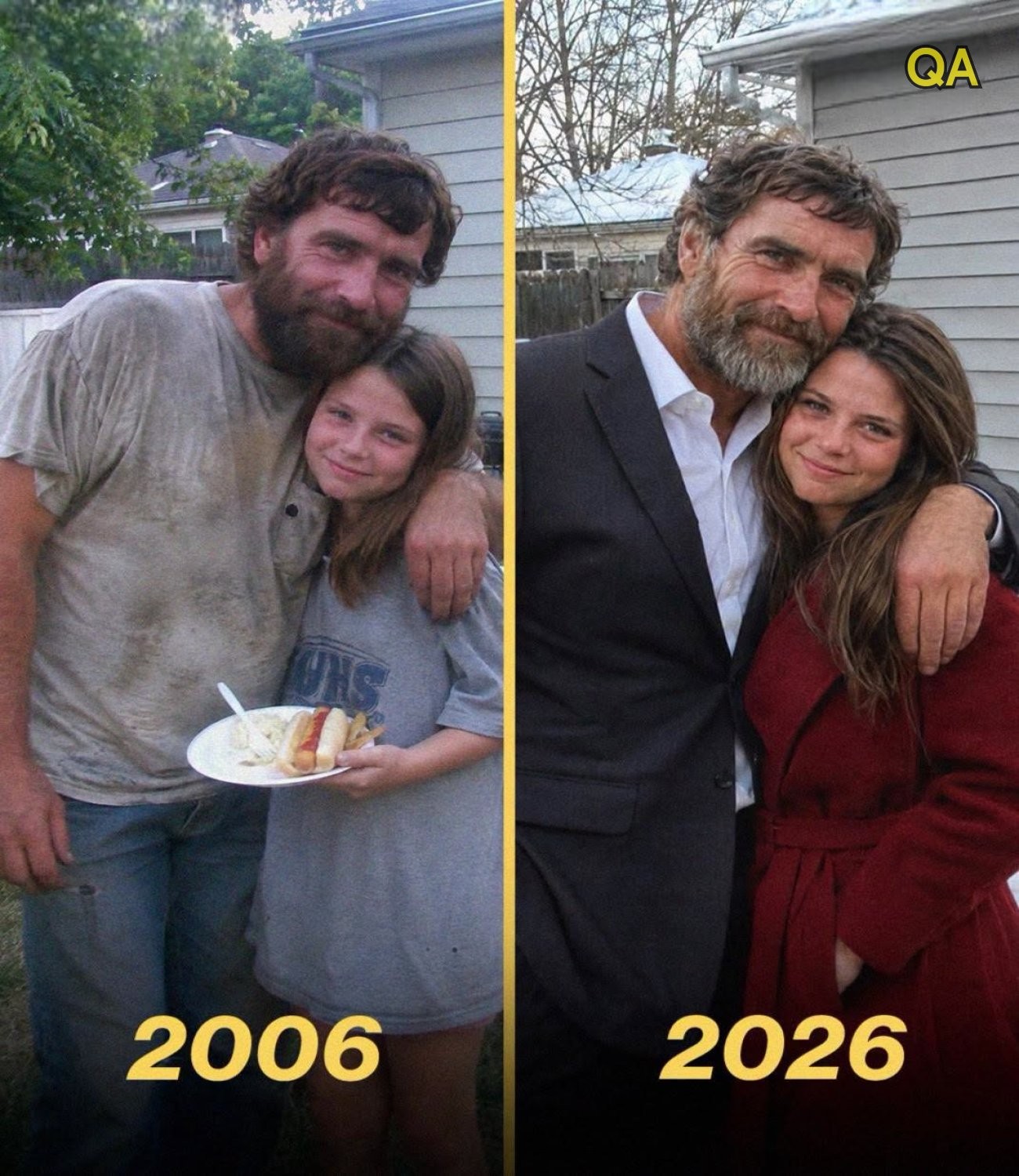

Secret Homeless Uncle: A Story About Family, Homelessness, and Compassion
Editor’s note: The names, events, and family history in this article are presented as a fictional narrative. The wider information about homelessness, stigma, health, and support services is based on reporting and research from established organizations.
For much of her childhood, Fiona saw Victor as the quiet man who lived behind her family’s home. Her mother, Stephanie, regularly brought him meals despite the family’s limited income. To Fiona, who noticed overdue bills, worn shoes, and cold winter evenings, the arrangement felt unfair. She did not understand why her mother seemed so determined to care for a person she described only as someone who “needed help.”
Years later, after Stephanie became seriously ill, Fiona learned that Victor was not a stranger at all. He was her mother’s older brother, a man who had been pushed to the margins of the family through poverty, illness, shame, and long-running conflict. The revelation changed how Fiona understood the meals on the kitchen table, the quiet repairs around the house, and her mother’s reluctance to explain the past.
This fictional story of a “secret homeless uncle” reflects real issues that affect many families: housing insecurity, estrangement, stigma around homelessness, caregiving under financial pressure, and the difficulty of rebuilding trust after years of silence. It also raises a simple but important question: what do people miss when they judge someone’s circumstances without knowing their history?
A Family Secret Hidden Behind the House
In the story, Stephanie prepares three lunches each day: one for herself, one for Fiona, and one for Victor. Fiona sees the third meal as evidence that her mother values Victor more than she values her own daughter. Stephanie, however, is carrying knowledge that Fiona does not have. Victor is her brother, and she believes that helping him is both an act of love and a promise she cannot break.
Such misunderstandings are common in families where difficult subjects are avoided. Parents may withhold information because they want to protect children from conflict, addiction, illness, financial insecurity, or painful family history. Yet secrecy can have consequences. When children see actions without context, they often fill the gaps with their own explanations.
Fiona’s anger is therefore understandable within the fictional narrative. She is a child living in a household with little money. She sees a man outside receiving food while her own needs sometimes go unmet. She does not know that Victor once protected Stephanie when they were young, or that family members had treated him as a source of embarrassment rather than a person in need of support.
The story does not excuse every decision Stephanie makes. Instead, it shows how fear can make people believe they have only bad choices available. Stephanie wants to care for both her daughter and her brother, but she feels unable to openly connect them. Her silence leaves Fiona feeling overlooked, while Victor remains isolated just steps away from the home where he belongs.
Understanding Homelessness Beyond Stereotypes
Homelessness is not a single experience, and people lose stable housing for many different reasons. Financial hardship, high housing costs, job loss, family breakdown, disability, mental health conditions, domestic instability, and inadequate access to services can all contribute. A person may be sleeping outside, staying in temporary accommodation, living in a vehicle, or moving between friends’ and relatives’ homes.
In the United States, the U.S. Department of Housing and Urban Development publishes an annual Point-in-Time count that provides a snapshot of homelessness on a single night. While the count is useful, experts caution that it cannot capture every form of housing insecurity. People who are temporarily staying with others or avoiding formal shelters may be especially difficult to count.
The character of Victor should not be viewed as a representative portrait of every unhoused person. No fictional character can do that. However, his circumstances illustrate a broader reality: a person experiencing homelessness may still have family ties, practical skills, memories, relationships, and a desire to contribute. Housing status does not define a person’s value or erase their place in a community.
Stigma can make homelessness harder to address. When people are treated as dangerous, irresponsible, or beyond help solely because they lack housing, they may become less likely to seek services or reconnect with relatives. Public discussions are more constructive when they recognize individual dignity while also focusing on practical solutions, including affordable housing, healthcare, employment support, and outreach services.
The Impact of Shame and Family Estrangement
At the center of Fiona’s story is not only homelessness, but shame. Victor has been defined by an old family accusation and by the idea that he is a burden. In Stephanie’s letter, she describes how a childhood incident became a permanent label. Whether the accusation was fair or not, it shaped how relatives viewed Victor for years afterward.
This is a familiar pattern in family conflict. A person may become known as “the difficult one,” “the irresponsible one,” or “the one who causes trouble.” Once these labels take hold, every later action can be interpreted through them. Positive efforts may be ignored, while past mistakes are repeatedly used as evidence that the person cannot change.
In the fictional account, Victor quietly repairs a porch step, clears snow, and finds replacement boots for Fiona. These small acts do not erase hardship or solve the family’s larger problems. They do, however, challenge Fiona’s assumption that he is simply taking from her mother. They reveal someone trying to care from a distance because he does not believe he is allowed closer.
Estrangement is often painful for everyone involved. It can develop after conflict, illness, financial disputes, bereavement, or disagreements over caregiving. Reconciliation is not always appropriate or safe, particularly where there has been abuse, coercion, or ongoing harm. But where it is possible, honest information, boundaries, and support from trusted professionals can help relatives make more informed decisions than silence alone allows.
Why Children Need Age-Appropriate Truth
Stephanie’s decision to hide Victor’s identity is portrayed as a decision made under pressure. She fears judgment and believes that revealing the relationship could threaten her daughter’s stability. Her intentions may be protective, but the long-term result is confusion and resentment.
Family communication experts often encourage caregivers to share difficult information in age-appropriate ways. That does not mean giving children every adult detail. It means offering clear, reassuring explanations that help them understand what is happening around them. A child may not need to know the full history of a relative’s health or financial difficulties, but they can be told that a family member is having a hard time and deserves kindness.
Open communication can also help children understand household limits. In a situation like Fiona’s, Stephanie might have explained that helping another person did not mean Fiona mattered less. She could have acknowledged Fiona’s worries about money and made space for her feelings. The absence of that reassurance is what allows Fiona’s resentment to deepen.
The story’s emotional turning point comes when Fiona finds the locket and reads her mother’s letter. The object becomes a symbol of memory and connection: proof that Victor and Stephanie had shared a life before Fiona was born. It also reminds Fiona that her mother’s choices were shaped by experiences Fiona could not see.
Housing Is a Foundation for Health and Stability
Stable housing is closely connected to physical health, emotional well-being, safety, education, and employment. People without reliable housing can face significant barriers to keeping medication secure, attending appointments, maintaining work schedules, storing personal documents, and getting adequate rest. These challenges can become self-reinforcing, making it harder to regain stability without coordinated support.
Health organizations have long recognized that social conditions, including housing, influence health outcomes. Access to safe and stable housing can make it easier for people to manage chronic conditions, remain connected to care, and recover from crises. This is one reason many policy experts emphasize housing-focused approaches rather than relying only on temporary emergency responses.
Effective assistance may include emergency shelter, permanent supportive housing, rental assistance, mental health care, substance-use treatment where wanted and appropriate, legal aid, job support, and help replacing identification documents. The right combination differs from person to person. A respectful approach starts by listening to the individual and recognizing that homelessness is a housing problem with many related causes.
What Compassion Looks Like in Practice
Fiona’s final decision to invite Victor inside is a powerful fictional image, but real-world support often requires more than one household’s goodwill. Families may want to help a relative but lack space, money, knowledge, or the ability to manage complex health needs. Compassion should not mean expecting individuals to solve systemic problems alone.
People who want to help can begin by learning about reputable local organizations. Community groups may provide meals, hygiene supplies, case management, shelter access, housing navigation, healthcare referrals, or transportation. Monetary donations to established providers can sometimes be more useful than unrequested items because organizations can direct resources where needs are greatest.
Respect also matters in everyday interactions. Using person-first language, such as “people experiencing homelessness,” helps avoid reducing someone to a condition. Listening without assuming a person’s history, avoiding demeaning stereotypes, and supporting evidence-based housing policies are practical ways to contribute to a more humane public conversation.
For families, compassion can include asking direct but respectful questions: What kind of help would be useful? What boundaries are needed? Are there local services that can assist? Does anyone need medical, legal, or crisis support? These questions do not guarantee an easy outcome, but they replace assumptions with communication.
Lessons From Fiona and Victor’s Story
The fictional story of Fiona, Stephanie, and Victor is ultimately about the cost of leaving someone outside a family’s circle. Fiona spends years believing Victor is a stranger who takes from her household. Victor lives close enough to help but too far away to be acknowledged. Stephanie tries to protect both of them, yet her fear prevents the honesty they need.
When Fiona learns the truth, she cannot change the years that have passed. She can, however, choose what happens next. Calling Victor “Uncle” and offering him a chair at the kitchen table represent more than a single meal. They represent recognition, accountability, and a willingness to see a person beyond the story others told about him.
The broader lesson is not that every family conflict has a simple resolution. Some relationships require firm boundaries, professional support, or distance. Rather, it is that people experiencing homelessness should not be treated as invisible, and difficult family histories should not automatically become lifelong sentences of exclusion.
Behind every housing crisis is an individual life shaped by circumstances that outsiders may not fully understand. Compassion does not require ignoring real risks or challenges. It requires responding with facts, dignity, and the belief that every person deserves to be seen as more than their hardest chapter.
Sources
- U.S. Department of Housing and Urban Development: Annual Homeless Assessment Report
- National Alliance to End Homelessness: Homelessness in America
- Centers for Disease Control and Prevention: Social Determinants of Health
- World Health Organization: Social Determinants of Health
- Reuters: U.S. News and Public Policy Coverage
- BBC News: Society and Global Affairs Coverage
Disclaimer: This content is intended for entertainment purposes only and is not based on real events.