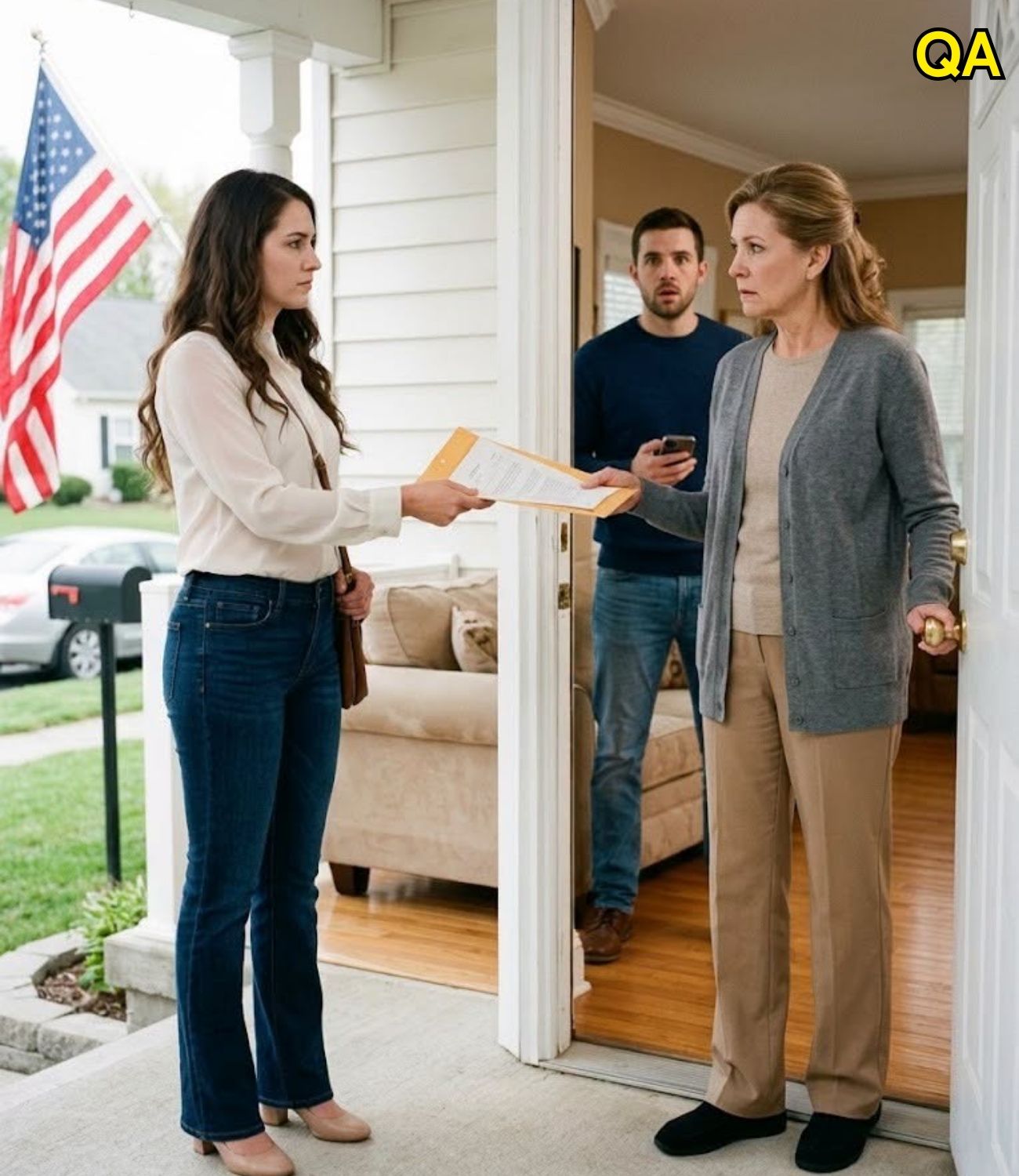

PART 3: The Broken Altar
My brother, David, stepped around the coffee table, his expression shifting from casual annoyance to sudden, guarded tension as he took in the scene. He looked at the thick envelope clutched in my hand, then at our mother, who had retreated another half-step toward the kitchen island.
“What is this about?” David asked, his voice carrying that familiar, practiced tone of family peacekeeping—the one he always used when he wanted to sweep a crisis under the rug before it disrupted his schedule.
I didn’t answer him immediately. I stepped past the threshold, closing the front door firmly behind me. The heavy click of the latch seemed to anchor the room in a sudden, suffocating reality.
Unmasking the Deception
I walked straight to the dining table, pulled out a chair, and laid the settlement documents flat across the polished wood.
“Come look at this, David,” I said, my voice dangerously steady. “Since you and Mother are so invested in how the family’s assets are managed, you should see the paperwork that apparently bears my name.”
David hesitated, glancing nervously at our mother, who finally found her voice.
“Don’t you dare bring him into this, Sarah,” she snapped, her posture rigid. “David has a career, he has a family to think about—he doesn’t need your theatrical tantrums over a piece of paper.”
“It’s not just a piece of paper, Mother. It’s fraud. Someone impersonated me in Iowa, forged my signature before a notary, and funneled the proceeds of my inheritance directly into your bank account.” I turned my gaze back to my brother. “David, look at the signature date. It was last Tuesday at 10:00 AM. Where was I last Tuesday?”
David walked over slowly, his eyes scanning the first page of the closing statement. He didn’t look at the forged signature right away; instead, his eyes locked onto the line indicating the destination account number.
The color drained from his face.
The Silent Confession
“You knew,” I whispered, the realization hitting me like a physical blow. The missing pieces suddenly locked into place—why my mother had tried to block the door, why David’s car was here in the middle of a workday, and why the silence on the phone had been so deafening earlier.
David looked away, swallowing hard. He didn’t deny it. He didn’t demand proof, and he didn’t ask what I was talking about.
“She said it was temporary, Sarah,” David muttered, finally looking at the floor. “The mortgage was drowning her, and the equity… she needed a bridge loan until her retirement fund cleared. She said she’d put your name back on the secondary deed once the refinance went through.”
“With whose permission?” My voice cracked, the betrayal burning hot in my throat. “I earned that property. I maintained it. And you helped her coordinate it, didn’t you? You’re the one who recommended the title agency down the street.”
David didn’t answer, which was all the confirmation I needed. My mother lunged forward, her hands trembling as she tried to gather the papers.
“We did what we had to do!” she cried out, her facade finally cracking into raw desperation. “You’re single, you’re stable, you have your career! We are your family! A family shares its burdens!”
“No,” I said, pulling the envelope out of her reach and sliding the rest of the file back inside. “A family doesn’t steal identities, forge documents, and commit felonies behind each other’s backs.”
I turned toward the door, my hand gripping the handle of the envelope.
“My attorney already has copies of everything, and the title company has flagged the transaction,” I said, looking back at both of them one last time. “You have twenty-four hours to reverse the funds and contact the notary who signed off on a ghost. Otherwise, the police will be paying you a visit tomorrow morning.”
As I stepped back out into the afternoon sunlight, the heavy door closed behind me for the last time, sealing the fate of a family built on lies.
PART 4: The Paper Trail
The drive back to my office felt entirely surreal. The physical world looked normal—traffic lights turned green, pedestrians crossed the street with coffee cups in hand, and the radio played in the background—yet everything in my life had shifted on its axis.
By the time I parked in the garage, my phone was already buzzing in my pocket. It wasn’t my mother or David. It was Marcus, the real estate attorney.
“I received the complete file you dropped off,” Marcus said, his tone crisp and professional. “And I’ve already spoken with the title company’s legal counsel. We have a severe compliance breach on our hands.”
“What does that mean for the sale?” I asked, leaning against the cold metal of my car door.
“It means the transaction is fraudulent from the ground up,” Marcus replied. “A fraudulent deed is void ab initio—meaning from the beginning. It legally transfers zero rights, regardless of whether a subsequent buyer is involved. Furthermore, the notary who verified a ghost in Iowa is facing severe civil liability and criminal license revocation.”
Key Legal Protection: Under property law, a forged deed cannot pass valid title to anyone. Even if the property was sold to an innocent third party, the original owner retains their legal rights.
The Counter-Strike
“My brother admitted—indirectly, through silence and excuses—that they orchestrated it to bail out her mortgage,” I told Marcus, my voice firm. “He knew about the account routing.”
Marcus let out a sharp sigh on the other end of the line. “That changes everything. It moves this from a simple civil property dispute into a multi-party conspiracy involving identity theft and wire fraud. Your brother is an accessory, if not a co-conspirator.”
“What is our immediate next step?”
“Three things,” Marcus outlined clearly:
-
Emergency Injunction: We file an emergency lis pendens on the property immediately to freeze any further transfers or encumbrances.
-
Bank Subpoena: We issue a freeze notice to the receiving bank account to prevent your mother from draining or shifting the proceeds.
-
Law Enforcement Referral: We package the forged notary acknowledgment, your badge-entry timestamps, and the title records for the local prosecutor’s economic crimes bureau.
“Do it,” I said without hesitation. “Give them the twenty-four hours I promised, but prepare the filings to drop the moment the clock runs out.”
The Final Warning
As I walked into my office building, my phone vibrated with a text message. It was an image of a handwritten note from my mother, sent via text by David:
“Please don’t do this to your mother. She is putting the house back into a holding trust tomorrow morning. Just call off the lawyer.”
I stared at the screen, watching the blue typing bubbles appear and disappear as David tried to send follow-up justifications. I didn’t reply.
They thought they could fix it quietly once the threat became real, just like they had swept everything under the rug my entire life. But the file was already closed on forgiveness. The legal machinery had started turning, and there was no turning back.
