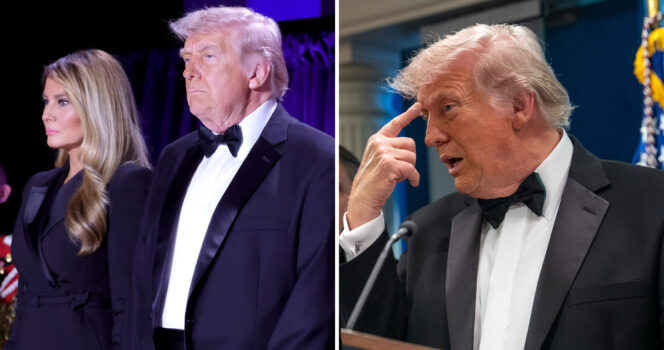

The quiet, underground ballroom of the Washington Hilton was alive with the low hum of conversation and the clinking of silverware on a Saturday evening in April 2026. Hundreds of the nation’s most prominent journalists, celebrities, and political leaders had gathered for the annual White House Correspondents’ Dinner. As the spring pea and burrata salad was being served, the atmosphere of celebration was suddenly shattered. A series of sharp pops echoed through the subterranean halls—sounds that President Donald Trump later admitted he initially mistook for a falling tray.
But the reality was far more severe. Within seconds, Secret Service agents swarmed the stage, shouting for guests to get down. For the first time in over forty years, the halls of the “Hinckley Hilton” were once again a crime scene, linking two American presidents across a span of decades in a manner no one had anticipated.
On the night of April 25, 2026, a 31-year-old former teacher and NASA intern named Cole Tomas Allen allegedly attempted to breach the security checkpoint outside the Washington Hilton’s ballroom. Armed with a shotgun, a handgun, and multiple knives, Allen reportedly exchanged gunfire with law enforcement near the magnetometers. During the struggle, a Secret Service agent was struck by a bullet, though his life was fortunately saved by a ballistic vest.
Inside the ballroom, the scene was one of controlled chaos. Journalists and cabinet officials, including the Secretary of State and the Vice President, ducked under linen-covered tables as security personnel stood guard with rifles drawn. President Trump and First Lady Melania Trump were swiftly evacuated through a secure motorcade, returning to the White House to monitor the situation. While the suspect was quickly apprehended, the event was immediately canceled, leaving the world to grapple with the unsettling parallels to a day in 1981.
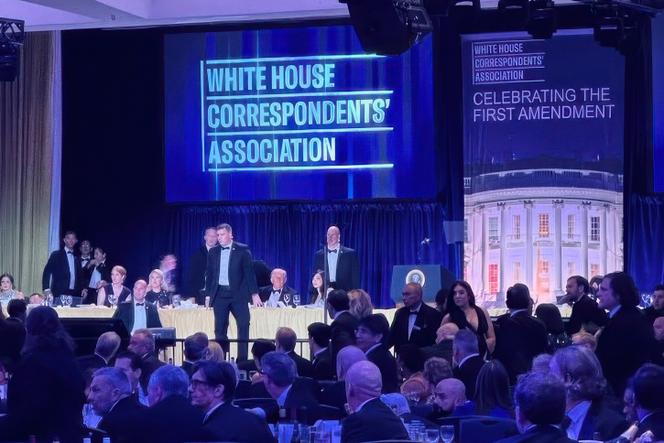
The most “disturbing detail” noted by viewers globally was the location itself. The Washington Hilton is historically synonymous with the assassination attempt on President Ronald Reagan. On March 30, 1981, as Reagan exited the hotel’s T Street NW entrance—a passage now colloquially known as “President’s Walk”—John Hinckley Jr. opened fire with a .22 caliber revolver.
The 1981 incident was a defining moment of the decade. A single bullet ricocheted off the presidential limousine, striking Reagan under his left arm and puncturing his lung. The attack also left Press Secretary James Brady permanently disabled, a tragedy that eventually led to significant shifts in U.S. gun control legislation. The fact that another high-profile security breach occurred at the exact same venue 45 years later has led to widespread historical reflection.

From a scientific and statistical standpoint, is it truly “disturbing” that two incidents occurred at the same venue, or is it a matter of probability? Data analysts often look at Environmental Vulnerability. The Washington Hilton is a logistical mainstay for large-scale federal events in D.C. due to its unique subterranean layout and proximity to the White House.
Because the hotel hosts the White House Correspondents’ Dinner and the National Prayer Breakfast annually, it naturally becomes a high-visibility target. Psychologists also note a phenomenon known as Copycat Ideation or the Lucifer Effect, where historical sites of significant events can exert a “gravitational pull” on individuals seeking notoriety. While there is no evidence to suggest Cole Tomas Allen was specifically mimicking Hinckley, the shared geography ensures that the two events will be forever linked in the public consciousness.
In the aftermath of the 2026 attempt, investigators turned their attention to the suspect’s background. Cole Tomas Allen, a Caltech graduate and independent game developer, had allegedly traveled by train from Los Angeles to D.C. for the attack. Preliminary reports indicate he left behind a “manifesto” that targeted administration officials.
Modern forensic science allows authorities to reconstruct a suspect’s journey with pinpoint accuracy. By analyzing train ticket purchases, hotel registration logs, and digital communications, the FBI was able to determine that Allen had checked into the Hilton as a guest just days before the event. This “inside-out” approach to security—where a threat originates from within the hotel’s own guest list—highlights the evolving challenges of protecting high-profile figures in the 21st century.
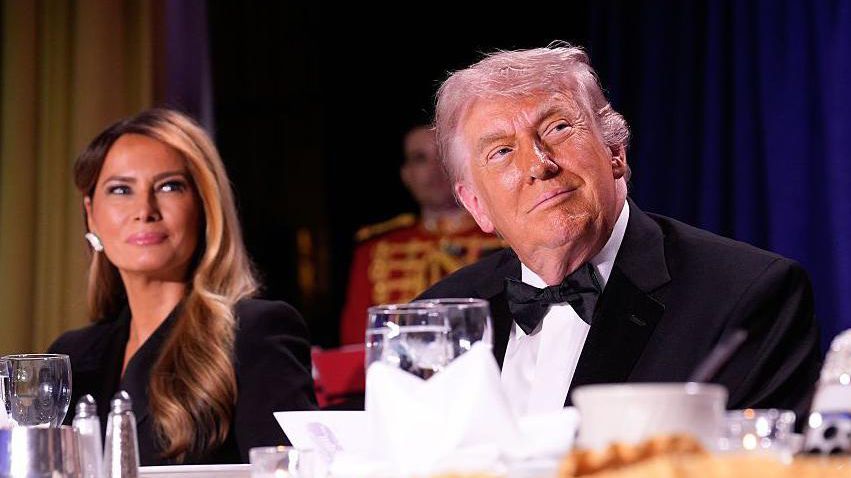
President Trump characterized the response to the shooting as a “massive security success story.” From a tactical perspective, the Secret Service’s ability to neutralize an armed suspect before he reached the ballroom doors is a testament to the improvements made since the Reagan era. In 1981, Hinckley was able to stand among a crowd of bystanders just feet from the President; in 2026, the suspect was stopped at a fortified perimeter.
However, the cultural weight of the incident cannot be ignored. The sight of a unified room of political rivals and journalists taking cover together served as a stark reminder of the underlying tensions within the modern landscape. The resilience of the Secret Service agent, saved by his vest, provides a glimmer of scientific progress in protective gear that was not as advanced in 1981.

As we look back on the events at the Washington Hilton, we are left to wonder why history seems to repeat its most harrowing chapters. Is it a flaw in our security, or a reflection of the deep-seated complexities of the human condition? Our curiosity drives us to look for patterns, to find meaning in the “irony” of the location, and to seek answers in manifestos and forensic data.
Ultimately, the story of April 2026 is one of resilience. It is a story of brave men and women who stood between chaos and order, and a nation that, for a few moments of uncertainty, found unity under the same tables. We continue to study these moments not out of a desire for the shocking, but out of a profound need to ensure that the “President’s Walk” remains a path of peace rather than a walk of peril.
Sources and References
-
The Ronald Reagan Presidential Library: Official archives on the 1981 assassination attempt and James Brady’s legacy.
-
The Guardian (US News): Detailed reporting on the evacuation of Donald and Melania Trump (April 2026).
-
Associated Press (AP): Identification and professional background of suspect Cole Tomas Allen.
-
Kensington Palace & White House Briefings: Official statements regarding the safety of administration officials.
-
LiveMint / Indian Express: Historical comparisons between the 1981 and 2026 Hilton security incidents.
-
Journal of Forensic Sciences: Research on “lone wolf” behavior and the impact of historical sites on criminal motivation.
The following video discusses the 1981 assassination attempt on Ronald Reagan at the Washington Hilton, providing the historical context for the hotel’s long-standing security challenges
