
The Chair You Choose Might Reveal More About You Than You Think
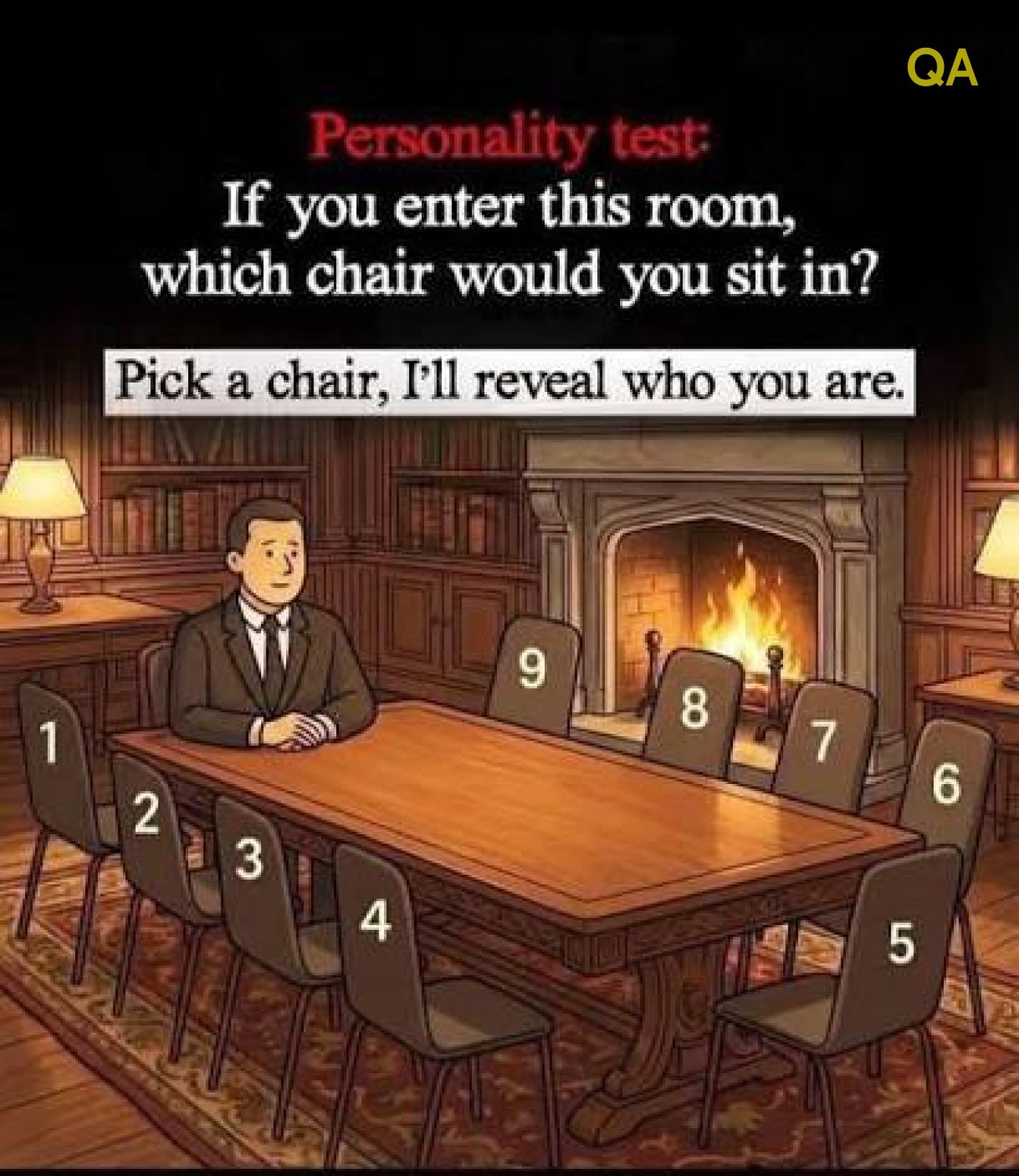
Imagine entering a quiet room with a long table, a softly lit fireplace, several empty chairs, and one silent stranger already seated. Before anyone says a word, you are asked to choose where to sit.
Would you take the chair nearest to the other person? Choose a seat a little farther away? Sit near the fireplace? Or select the position directly opposite them?
Many people make this kind of decision almost instantly. The choice can feel intuitive rather than calculated, shaped by the room’s layout, the presence of another person, a desire for comfort, and the social situation at hand. That instinct can be interesting to reflect on, but it is important to be clear: a single seating choice cannot accurately diagnose a personality type, predict behavior, or reveal hidden truths about someone.
What it can do is open a useful conversation about personal space, social preferences, nonverbal communication, and the ways environments influence everyday decisions. Environmental psychology and communication research suggest that people often respond to physical settings in meaningful ways. Distance, orientation, warmth, visibility, and perceived privacy can all affect how comfortable people feel.
Why Seating Choices Feel Meaningful
Choosing a chair may seem trivial, but seating is part of nonverbal communication. In social settings, people use space to manage closeness, signal attention, protect privacy, and create conditions that feel manageable. Researchers often refer to this as proxemics, the study of how people use interpersonal distance.
Psychologist Edward T. Hall’s work on proxemics helped establish the idea that physical distance can communicate social expectations. People commonly keep different distances depending on whether they are speaking with a close friend, colleague, unfamiliar person, or authority figure. These preferences also vary across cultures, individual temperaments, accessibility needs, and circumstances.
For example, a person may sit close to someone they know well but choose more distance from a stranger. The same person might select a seat near an exit when tired, a central seat during a meeting, or a quieter corner when they need to concentrate. None of these choices should be treated as a fixed label. They are situational responses.
Still, noticing what draws you to a particular seat can be a practical form of self-awareness. It may help you identify the conditions in which you feel engaged, relaxed, focused, or socially at ease.
What Influences Where People Sit?
A seating decision is rarely based on one factor alone. The physical layout of a room matters, as does the purpose of the interaction. A person attending a job interview, family dinner, classroom discussion, or medical appointment may choose very differently in each setting.
Several common influences can shape the decision:
- Interpersonal distance: Some people prefer more room when meeting someone new, while others feel comfortable with closer interaction.
- Conversation goals: Seats beside or diagonally across from another person may feel more collaborative, while seats directly opposite can feel more formal or focused.
- Comfort and temperature: A fireplace, window, natural light, or quiet area may naturally attract attention.
- Visibility and control: Some people prefer to see the door, the rest of the room, or the person speaking.
- Culture and experience: Social norms differ widely, and previous experiences can influence what feels safe or polite.
- Current mood: Stress, fatigue, confidence, curiosity, and the need for solitude can all change a choice on a given day.
For these reasons, personality quizzes based on a chair diagram should be approached as entertainment or a prompt for reflection, not as psychological assessment. Meaningful personality evaluation requires validated methods, trained professionals, and consideration of patterns over time.
Choosing a Seat Near Another Person: Connection and Engagement
If you would choose a chair near the stranger, you may be open to interaction in that moment. Sitting nearby can make conversation easier because it reduces physical distance and may create a more informal atmosphere. In group settings, people who want to participate often choose positions that allow them to hear clearly, make eye contact, and respond naturally.
That does not necessarily mean you are an extrovert. Introverted people can value close, thoughtful conversation, while highly social people may still need space around unfamiliar individuals. A nearby seat may simply indicate that you are curious, attentive, or willing to make the interaction less distant.
In workplaces and classrooms, seating arrangements can influence participation. Research on communication environments suggests that physical proximity may increase opportunities for interaction, although the quality of a conversation depends on much more than where people sit. Mutual respect, psychological safety, clarity, and listening are far more important than a chair position alone.
Choosing a Nearby but Less Direct Seat: Observation and Balance
A chair that is close enough for conversation but not immediately beside or directly opposite another person can feel balanced. Many people prefer an angle or moderate distance when meeting someone new. This arrangement can support communication without creating the intensity of sustained face-to-face eye contact.
You may choose this kind of seat because you like time to observe before speaking. Perhaps you prefer to understand the tone of an interaction, listen carefully, or decide how involved you want to be. These are not signs of being detached; they can reflect a deliberate communication style.
Angled seating is often used in informal conversations because it can feel less confrontational than sitting directly across a narrow table. Counselors, healthcare professionals, and workplace facilitators may also consider room layout when trying to create a welcoming environment. However, individual preferences should always take priority over assumptions about what feels comfortable.
Choosing a Seat Farther Away: Personal Space and Independence
Selecting a chair farther from the stranger may suggest a preference for personal space in an unfamiliar setting. It can also be a practical decision: perhaps the farther seat offers a better view, more room, less noise, or an easier route to leave when needed.
People sometimes interpret distance as a lack of interest, but that conclusion can be misleading. A person may be highly engaged while still preferring physical space. Others may sit farther away because they are managing anxiety, sensory sensitivity, cultural expectations, or simple comfort.
Healthy independence includes recognizing one’s own boundaries. Knowing that you recharge alone, prefer smaller gatherings, or need quiet after a busy day can help you make choices that support well-being. At the same time, respecting another person’s space is an essential social skill. A comfortable interaction is one in which neither person feels pressured into more closeness than they want.
Choosing a Seat Near the Fireplace: Comfort, Warmth, and Environment
A seat near a fireplace may be appealing for obvious reasons: warmth, soft light, and a sense of physical comfort. People are influenced by their surroundings, and environmental features can affect mood, attention, and perceived relaxation.
Research on restorative environments has explored how pleasant settings, natural elements, adequate light, and opportunities for comfort may support stress recovery and attention. A fireplace is not a clinical treatment, and not everyone finds the same environment soothing, but choosing a comfortable place can be a reasonable way to support calm and concentration.
If you are drawn to the warmest or quietest part of a room, it may be worth asking what you need at that moment. Do you want to feel settled? Are you avoiding distraction? Would you prefer a familiar sensory environment? Such questions can be more useful than trying to assign yourself a permanent personality category.
Choosing the Chair Directly Opposite: Focus and Direct Communication
Sitting directly across from another person often creates a clear conversational arrangement. It can make eye contact easier and may be useful when the goal is a focused discussion, interview, negotiation, or shared meal. In some contexts, people experience this position as confident and direct.
Yet direct seating is not automatically a sign of leadership or assertiveness. For some people, it is simply the most practical place to sit. For others, facing someone across a table can feel formal or intense. The meaning depends on the relationship, the size of the table, the cultural setting, and each person’s comfort level.
Effective communication is not defined by eye contact alone. It includes listening, asking clear questions, leaving room for others to speak, and responding respectfully. A confident conversation can happen from any chair when participants feel safe and heard.
Why One Choice Cannot Define Your Personality
Human personality is complex and changes across situations. Psychologists typically study personality through broader patterns of thoughts, emotions, and behavior, often using validated models such as the Five-Factor Model. Even then, personality traits describe tendencies rather than rigid destinies.
A person can be sociable at a celebration, reserved in a new workplace, direct with close friends, and quiet when exhausted. These differences are normal. They demonstrate adaptability rather than inconsistency.
It is also important to avoid making judgments about others based on where they sit. Someone who chooses the far end of a room may be tired, hard of hearing, seeking better lighting, respecting personal boundaries, or simply preferring that chair. Assumptions can create unnecessary misunderstandings.
Using Seating Preferences for Self-Awareness
Instead of asking, “What does this chair prove about me?” consider asking more open-ended questions:
- What makes this seat feel comfortable to me?
- Do I prefer closeness, quiet, visibility, warmth, or an easy exit?
- Would I choose differently with friends, colleagues, or strangers?
- How does my energy level affect my social preferences?
- What can I do to make shared spaces more welcoming for others?
These questions can build emotional awareness without turning ordinary behavior into a label. They can also encourage empathy. In homes, offices, schools, and community spaces, offering varied seating options can help more people feel included. Some may want to sit near the group; others may benefit from a quieter position or additional personal space.
Final Thoughts on Seating, Space, and Social Style
The chair you choose may not reveal a secret personality type, but it can reflect a real moment of preference. Perhaps you want conversation, calm, warmth, privacy, a clear view, or simply the most comfortable place in the room.
Small choices are shaped by who we are, where we are, and what we need at the time. Paying attention to them can help us understand our own boundaries and communicate more thoughtfully with others. The most valuable conclusion is not that one seat is “better” than another, but that people experience shared spaces differently.
So return to the imagined room: the long table, the fireplace, and the silent stranger. Where would you sit today? Your answer may say less about a fixed identity than about what helps you feel comfortable, present, and ready to connect.
Sources
Disclaimer: This content is intended for entertainment purposes only and is not based on real events.