
What Does the “M” Mean on a Wedding RSVP Card …The Little Detail That Confuses So Many Guests
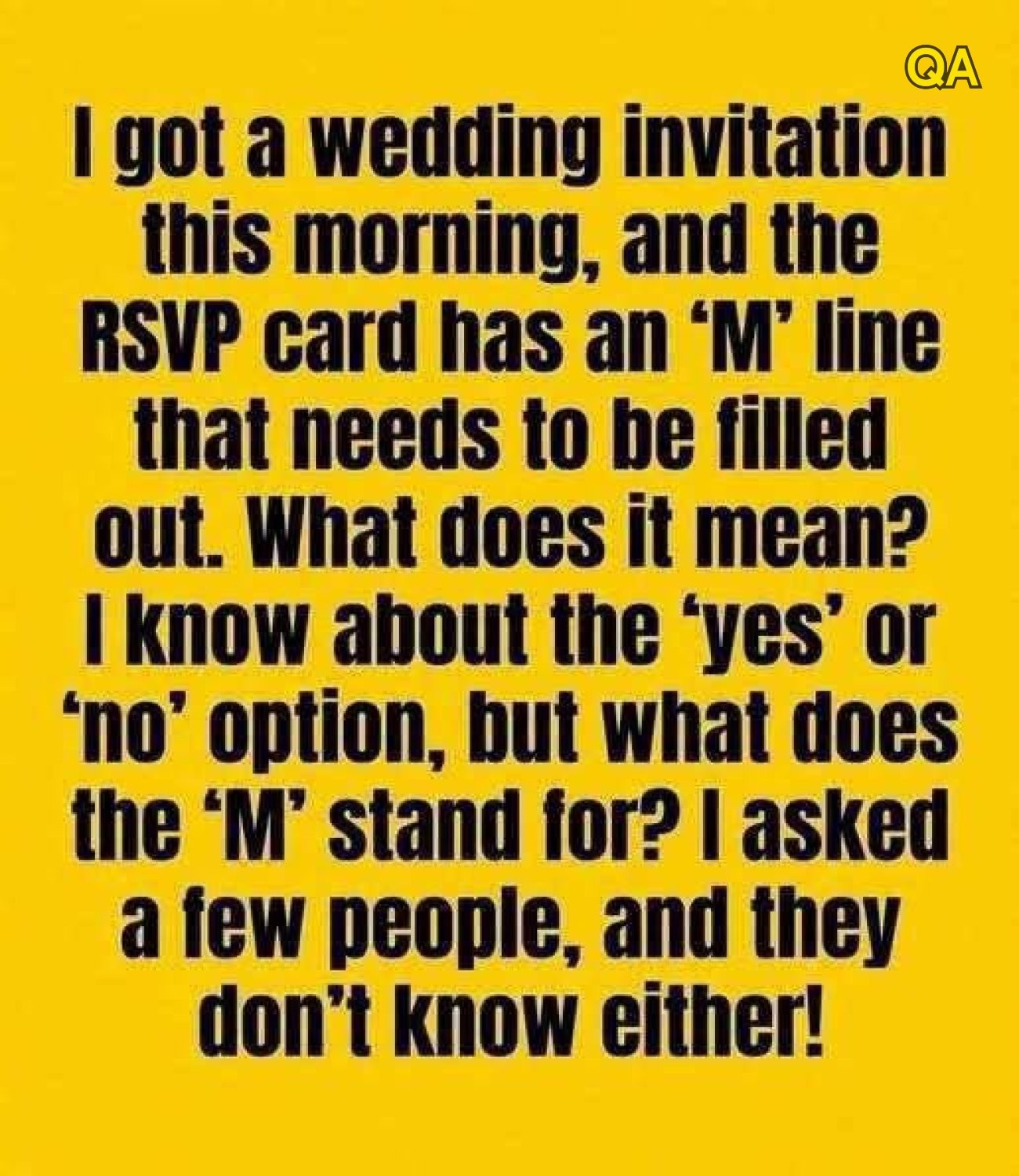
A wedding invitation can include many details that feel unfamiliar, from dress codes and reception locations to RSVP deadlines and meal selections. One small feature that regularly causes confusion is the letter printed before a blank line on a response card:
M __________________
Guests often wonder whether the “M” refers to marriage, a meal choice, or another instruction. In traditional wedding stationery, however, its meaning is much simpler. The letter is the beginning of a courtesy title. It is intended to help the guest write a formal name on the RSVP card.
Although this convention remains common on formal printed invitations, it is less familiar in an era of online RSVPs, wedding websites, QR codes, and casual communication. Understanding the purpose of the “M” can make it easier to respond correctly and helps guests avoid unnecessary uncertainty when completing an invitation.
What the “M” on a Wedding RSVP Card Means
On a traditional wedding RSVP card, the printed “M” is meant to begin a title such as Mr., Mrs., Ms., or Miss. The guest completes the title and then writes their name on the line.
For example, a guest named Jordan Lee who uses “Mr.” might write:
Mr. Jordan Lee
A guest named Taylor Morgan who uses “Ms.” could write:
Ms. Taylor Morgan
The convention developed because several common English courtesy titles begin with the letter M. On formal stationery, printing that first letter was once seen as an elegant and space-saving way to prompt guests to identify themselves properly.
In practical terms, the line serves one important purpose: it tells the hosts exactly who is responding. Couples and their planners use returned RSVP cards to prepare guest lists, seating charts, catering counts, place cards, transportation arrangements, and other event details. Clear names matter far more than strict adherence to an old stationery custom.
Why Traditional Wedding Invitations Use an “M” Instead of “Name”
The “M” line comes from formal correspondence and long-standing wedding invitation traditions. Historically, social stationery often followed specific conventions for titles, names, addresses, and wording. A wedding invitation was not only an announcement but also a formal piece of correspondence, and the reply card reflected that style.
Using courtesy titles was more widespread in everyday written communication in the past. Rather than printing a general “Name” field, stationers often used the “M” as a prompt for a full formal identification. This approach worked easily when the expected titles were Mr., Mrs., Miss, and later Ms.
Modern wedding etiquette is more flexible. Many couples now choose wording such as “Name(s),” “Please respond by,” or “Kindly reply.” Digital RSVP forms may simply ask guests to enter their names and confirm whether they will attend. Still, some couples choose classic printed cards because they appreciate the visual style and ceremonial quality of traditional stationery.
As a result, the “M” remains a familiar feature of some invitation suites, even if many guests no longer recognize it immediately.
Does the “M” Mean Meal Choice?
No. The “M” on an RSVP card does not refer to food, menu selections, or the number of meals requested. If the hosts need guests to choose an entrée or note dietary requirements, the card will typically include a separate section.
That section may list options such as:
- Chicken or fish
- Vegetarian entrée
- Vegan meal
- Children’s meal
- Dietary notes or allergy information
Meal selection is usually marked with a check box, initials, a number beside each option, or a written choice. The “M” line should be used for names only. Guests should read the entire response card carefully, since some couples ask attendees to place initials next to each entrée choice so catering staff can match meals to guests at the table.
Does the “M” Ask Whether You Are Married?
The letter is not a question about marital status. Although “Mrs.” and “Miss” have historically carried associations with marital status, the printed “M” is simply a traditional title prompt. It does not require a guest to disclose personal information or select a title they do not use.
“Ms.” is widely used by adults regardless of marital status, while many people use professional, gender-neutral, or personal titles that better reflect their identity and preference. Contemporary etiquette generally emphasizes addressing people respectfully and using the names and titles they choose for themselves.
The essential rule is straightforward: write your name in a way that clearly identifies you to the hosts. A wedding response card is an organizational tool, not a test of formality.
How to Fill Out an RSVP Card With an “M”
When completing a traditional RSVP card, begin by considering the title you normally use. If it naturally follows the printed “M,” complete it and add your full name. For example:
- Mr. Alex Rivera
- Ms. Priya Shah
- Mrs. Morgan Ellis
- Miss Ava Thompson
If you are replying for two invited people, list both names clearly. The exact format can depend on the invitation’s formality and each person’s preferences. Examples include:
- Ms. Priya Shah and Mr. Daniel Brooks
- Mr. Alex Rivera and Ms. Jamie Chen
- Mrs. Morgan Ellis and Mrs. Casey Ellis
Write legibly, especially if the couple is collecting replies by mail. Couples may have sent dozens or even hundreds of invitations, and a clearly written response prevents confusion when they compile their final attendance list.
If the RSVP includes an attendance line, respond directly. Common wording includes “accepts with pleasure” and “declines with regret,” though modern cards may simply ask guests to check “will attend” or “will not attend.” Return the card by the date requested, whether or not you can attend.
What If Your Preferred Title Does Not Begin With “M”?
Not every guest uses Mr., Mrs., Ms., or Miss. Some people use titles such as Dr., Professor, Rev., or Mx.. Others prefer to use no title at all. Modern etiquette supports using a name and title that accurately reflects the individual.
If the printed “M” does not work for you, do not feel obligated to force your response into that format. You can write your preferred title and name clearly on the line, even if that means writing over, before, or after the printed letter. For example:
- Dr. Sam Patel
- Mx. Robin Green
- Chris Nguyen
Some guests may choose to cross out the printed “M” discreetly before writing their name. Others simply write their name in a readable way. Either approach is generally reasonable. The hosts’ priority is knowing who has accepted or declined the invitation.
For couples planning their own wedding, a label such as “Name(s)” is often the clearest and most inclusive option. It avoids assumptions about titles and makes completing the card easier for every guest.
Who Should Be Included on the Wedding RSVP?
Only people named on the invitation, or included through an explicitly offered guest allowance, should appear on the RSVP card. The envelope and invitation wording usually indicate who has been invited.
For instance, an invitation addressed to “Ms. Priya Shah” generally means the invitation is for Priya alone unless it also says “and Guest” or names another person. An invitation addressed to “Mr. and Mrs. Jordan Lee” is intended for both named guests. If children are invited, their names may appear separately or be included in the envelope wording.
It is best not to add an uninvited partner, friend, child, or family member to the response card. Wedding guest counts affect venue capacity, catering invoices, table layouts, transportation, and budgets. If the wording is unclear, a polite question to the couple or a designated member of the wedding party is preferable to making an assumption.
Why RSVP Replies Matter So Much
RSVP comes from the French phrase répondez, s’il vous plaît, commonly translated as “please respond.” The phrase is an invitation to confirm attendance, not merely a suggestion to reply if convenient.
A timely response helps the hosts make decisions that often must be finalized weeks before the wedding. Caterers need reliable meal counts. Venues may require a final guest total. Couples need to arrange chairs, tables, place cards, favors, shuttle seats, and reception layouts. In some cases, attendance numbers also affect safety plans and contractual costs.
Guests should respond by the date shown on the card. If a conflict arises after accepting, it is considerate to notify the couple as soon as possible. Likewise, a guest who cannot attend should still send the reply card rather than leaving the hosts to follow up.
Prompt communication is a practical courtesy. It reduces the administrative work placed on couples during an already busy period and allows them to plan a welcoming event for the people who can attend.
Traditional Etiquette and Modern Wedding Communication
Wedding customs continue to evolve. Formal letterpress invitations and handwritten reply cards exist alongside online guest portals, email confirmations, messaging apps, and QR-code links. None of these methods is inherently more polite than another; the best choice depends on the couple’s preferences, guest list, budget, accessibility needs, and event style.
Traditional stationery may appeal to couples who value design, keepsakes, and formality. Digital RSVPs can be efficient, lower-waste, and easier to update when travel details or schedules change. Hybrid systems are also increasingly common, with a printed invitation directing guests to a wedding website for responses and practical information.
The “M” line illustrates how older etiquette conventions can remain visible even as social expectations change. For guests, understanding the tradition can remove confusion. For couples, choosing clear and inclusive wording can make responding simple for everyone.
The Simple Answer to the Wedding RSVP “M”
When you see M __________________ on a wedding RSVP card, the “M” is traditionally the first letter of a courtesy title, such as Mr., Mrs., Ms., or Miss. Complete the title if it fits your preference, then write your name clearly.
It does not mean meal selection, marital status, or the number of guests attending. If you use another title, or no title, write the name that best represents you. Then confirm attendance, make any requested meal selection, include only invited guests, and return the card by the deadline.
Ultimately, thoughtful wedding etiquette is about clear communication and consideration. The small “M” may be an old-fashioned detail, but its purpose remains practical: helping the hosts know exactly who will be celebrating with them.
Sources
Disclaimer: This content is intended for entertainment purposes only and is not based on real events.