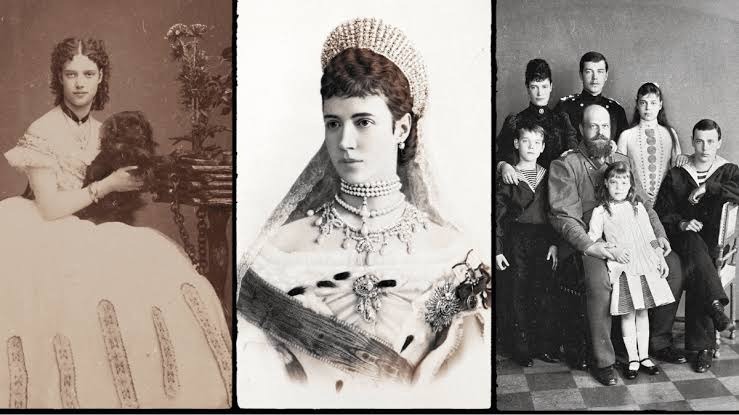

From a Danish Princess to the Empress of Russia
Maria Feodorovna had once lived at the centre of one of the most powerful royal families in Europe. Yet the final chapter of her life would be marked not by imperial ceremonies or royal celebrations, but by exile, uncertainty, and the loss of the sons she had loved.
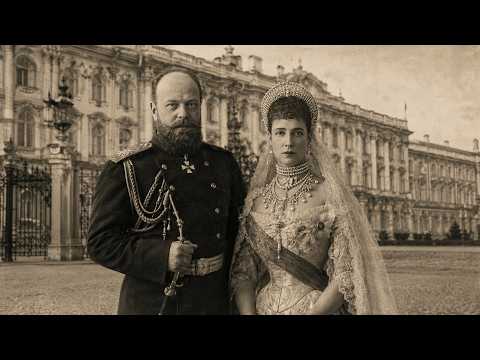
Born Princess Dagmar of Denmark in 1847, she became part of the Russian imperial family when she married the future Alexander III in 1866. After her husband’s accession to the throne in 1881, she became Empress of Russia.
For many years, Maria was a prominent figure in the Romanov court. She was the mother of six children, including the future Emperor Nicholas II and Grand Duke Michael Alexandrovich. Her position connected her to the political and royal life of Russia, a country that gradually became her home.
Although she had been born in Denmark, Maria spent more than five decades in Russia. Her marriage, family, public responsibilities, and life at court tied her deeply to the country. Few could have imagined that she would eventually be forced to leave it under such extraordinary circumstances.
The Russian Revolution Changed Everything
The beginning of the 20th century brought growing instability to the Russian Empire. Political unrest, economic difficulties, and the pressures of the First World War weakened the monarchy.
In March 1917, Nicholas II abdicated the throne following the February Revolution. His decision brought an end to centuries of Romanov rule and transformed the future of the imperial family.
For Maria Feodorovna, the fall of the monarchy was also a personal catastrophe. Her eldest son had lost his throne, and the family that had once represented the heart of the Russian Empire was now living under increasingly dangerous circumstances.
Maria eventually took refuge in Crimea, where she stayed with other members of the Romanov family. However, the political situation continued to deteriorate. The Bolsheviks gained control over more territory, and the safety of those associated with the former imperial regime became increasingly uncertain.
Despite the danger, Maria was initially reluctant to leave Russia. She had spent most of her adult life there and did not want to abandon the country she considered home.
The Deaths of Her Sons and the Collapse of Her Family
The situation became even more devastating in 1918.
In June, Maria’s younger son, Grand Duke Michael Alexandrovich, was murdered after being taken into custody by Bolshevik authorities. His death was part of the growing violence against members of the former imperial family.
Then, on July 17, 1918, Nicholas II, his wife Alexandra, and their five children were executed in Yekaterinburg.
The killings destroyed what remained of the immediate imperial family. Yet news did not reach every relative in a clear or reliable way. Communication was disrupted, reports were contradictory, and the political situation made it difficult to establish what had happened.
Maria was far from the events in Yekaterinburg. The uncertainty surrounding her family’s fate left room for hope, even as increasingly disturbing information emerged.
She struggled to accept that Nicholas and his children had been killed. Accounts of her later life indicate that she continued to reject the reports of their deaths. She also did not acknowledge Michael’s murder.
For a mother who had already lost her husband years earlier, accepting that both of her sons were gone would have meant confronting a loss almost impossible to comprehend.
HMS Marlborough: The Ship That Carried Her Away from Russia
By 1919, the danger in Crimea had become too serious to ignore.
The British royal family, particularly King George V, became involved in arranging the evacuation of Maria and other surviving members of the Romanov family. A British battleship, HMS Marlborough, was sent to Crimea to provide a route to safety.
Maria did not immediately agree to leave. Historical accounts describe her reluctance and her concern for other people whose lives were also at risk. She reportedly insisted that additional refugees be evacuated rather than leaving while others remained in danger.
Eventually, she agreed to depart.
On April 7, 1919, Maria boarded HMS Marlborough at Yalta. The ship left the port on April 11, carrying her and other members of the former imperial household away from Russia.
The journey did not take her directly to Denmark. The vessel travelled through Constantinople before continuing towards Malta. Maria later reached Britain in May 1919.
The departure marked the end of her life in Russia. The country where she had lived for more than fifty years was now behind her, along with the imperial world that had once defined her existence.
Life in Exile: A Mother Who Could Not Accept the Truth
After arriving in Britain, Maria eventually returned to her native Denmark, where she spent the remaining years of her life.
Although she was physically safe, exile could not restore what the revolution had taken from her. Her husband had died in 1894, her sons were believed to have been murdered, and the Romanov dynasty had disappeared from power.
Maria remained connected to her surviving relatives, including her daughter, Grand Duchess Xenia Alexandrovna, and other members of the extended family who had escaped Russia.
However, the question of Nicholas and his family’s fate continued to haunt her.
Even as reports of the executions became increasingly difficult to dismiss, Maria refused to accept them. Her position reflected not only the confusion surrounding events in revolutionary Russia but also the emotional difficulty of believing that her son and grandchildren had been killed.
She never returned to Russia. The country that had once been her home remained associated with the greatest personal losses of her life.
Maria Feodorovna’s Final Years

Maria Feodorovna died in Denmark on October 13, 1928, at the age of 80.
Her death came almost a decade after her escape from Russia. By then, the Romanov dynasty had become a part of history, and the political world in which she had once lived no longer existed.
Her story was unusual even among the many tragedies of the Russian Revolution. She had witnessed the height of imperial power, the fall of the monarchy, the murder of members of her family, and the end of the world she had known for most of her life.
HMS Marlborough had carried her away from the danger in Crimea, but it could not bring back the sons she had lost. Nor could a safe home in Denmark erase the memories of the family and country she had left behind.
Maria Feodorovna survived the fall of an empire. Yet her final years were shaped by a more intimate tragedy: the separation from her children and the enduring hope that the reports of their deaths might somehow be wrong.
Her life remains a poignant reminder that behind the political upheavals and the collapse of royal dynasties were individuals who experienced the consequences as parents, spouses, and family members.
For Maria, the end of the Romanov Empire was not simply the fall of a monarchy. It was the loss of the world she had once called home.