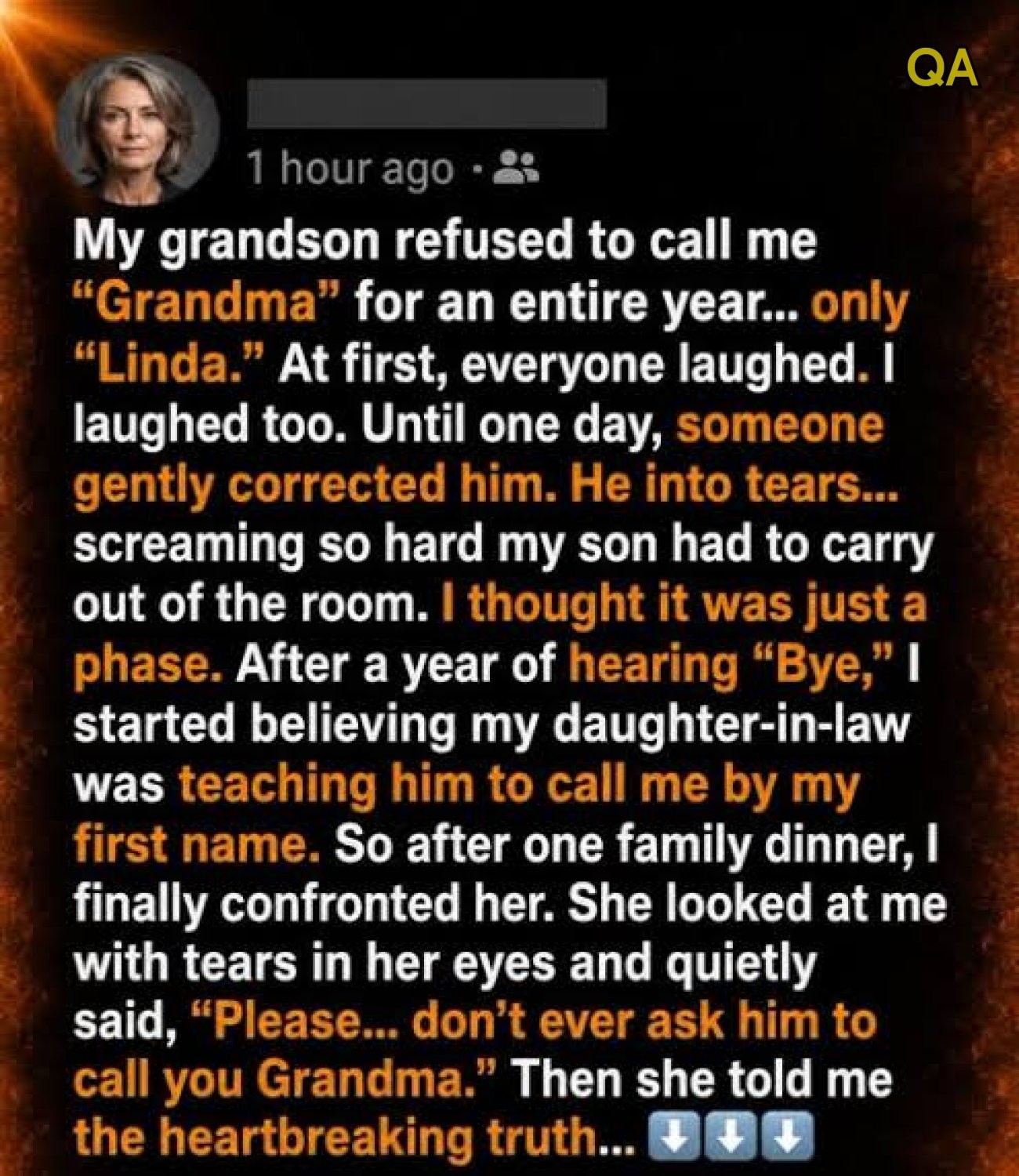

When a young child suddenly resists using a familiar family name, adults may initially feel confused, hurt, or concerned. A grandparent may wonder whether the child feels distant, has been influenced by someone else, or simply does not understand the relationship. Yet children’s behavior is often shaped by emotions they cannot fully explain, especially when they have heard conversations about illness, death, separation, or people “going away.”
The personal story suggested by this title is not independently verifiable, so it should be understood as an anecdotal example rather than a documented event. However, its central theme reflects a well-recognized aspect of early childhood development: preschool-aged children are still learning what words mean, how events are connected, and whether difficult experiences can happen to the people they love.
A child who avoids saying “Grandma,” “Grandpa,” or another emotionally important title may not be rejecting that person. In some circumstances, the behavior may reflect anxiety, grief, confusion, or an attempt to make sense of information that feels frightening. Responding with patience, reassurance, and age-appropriate honesty can help a child feel safe while preserving a close family relationship.
Why a Three-Year-Old May Attach Big Feelings to a Simple Word
At age three, children are developing language rapidly, but their understanding of abstract ideas remains limited. They may repeat words accurately without grasping their full meaning. They may also make connections that seem illogical to adults but make emotional sense from a child’s perspective.
For example, a child might hear that an older person died and overhear adults describe that person as a grandmother. The child may then begin to associate the word “grandmother” with absence, sadness, or the possibility that another loved grandparent could disappear. This does not mean the child understands death in the adult sense. Rather, the child may be responding to the emotional tone, unfamiliar language, and visible distress surrounding the event.
Young children commonly engage in what developmental specialists call magical thinking. They may believe that thoughts, words, wishes, or everyday actions can cause events to happen. A child might worry that saying a particular word could somehow make something bad occur. This is not deliberate misbehavior or manipulation. It is part of the way many young children try to create order in a world they are only beginning to understand.
Children may also use a person’s first name because it is what they hear most often from adults. In many families, this is simply a normal naming preference. A child may call a grandparent “Linda,” “Joe,” “Nana,” “Pop,” or a nickname invented by the child. The name itself is less important than the warmth, consistency, and security within the relationship.
Early Childhood Understanding of Death and Loss
Death can be especially difficult for preschool-aged children to understand. Experts generally note that very young children may recognize that someone is no longer present, but they often do not yet understand that death is permanent and universal. They may ask the same questions repeatedly, expect a person to return, or react in brief and unpredictable ways.
A three-year-old may hear that someone has “gone away,” “fallen asleep,” or “left forever,” then interpret those phrases literally. Euphemisms, although often well-intended, can create additional worry. For instance, a child who is told that a person “went to sleep and did not wake up” may become fearful of sleep. Similarly, a child who hears that someone “went away” may worry that a parent or grandparent will leave after an ordinary visit.
Child health organizations often recommend using simple, clear language when explaining death. Adults can say that a person’s body stopped working and that the person will not return, while also offering emotional reassurance and answering questions honestly at a level the child can understand. Families’ spiritual or cultural beliefs can be included, but they are generally most helpful when paired with concrete explanations that reduce confusion.
Children do not always show sadness in the same way adults do. They may cry, become quiet, cling to trusted adults, ask repetitive questions, play normally soon afterward, or focus on a seemingly unrelated concern. A child’s reaction can change from one moment to the next. This variability does not mean the child is unaffected; it reflects the gradual way children process unfamiliar feelings and experiences.
How Family Members Can Respond With Reassurance
If a child becomes upset when encouraged to use a particular family title, it is usually best to avoid turning the issue into a test or correction. Pressuring a child to say “Grandma” or repeatedly asking why they refuse may increase anxiety. Instead, adults can acknowledge the child’s feelings and offer calm reassurance.
A supportive response might sound like this: “You can call me by the name that feels comfortable right now. I love spending time with you.” If the child expresses fear, an adult can say, “It sounds like you are worried about me leaving. I am here with you today, and you are safe.” This approach validates the emotion without making promises that no person can guarantee.
It can also help to give children simple choices. A grandparent might ask, “Would you like to call me Grandma, Nana, Linda, or make a special name just for us?” Offering a choice restores a sense of control and reduces the pressure around a single word. Over time, children often adopt the name that feels most natural to them.
Consistency matters. Predictable visits, regular phone or video calls, familiar routines, and shared activities can strengthen a child’s sense of security. Reading a favorite book, baking together, drawing pictures, taking a short walk, or maintaining a small ritual at each visit can be more meaningful than insisting on a particular title.
Talking About Fear Without Dismissing It
Adults sometimes try to quickly reassure a worried child by saying, “Don’t be scared,” or “There is nothing to worry about.” Although this response is understandable, it can accidentally make the child feel unheard. A more helpful approach is to name the feeling first: “That sounds scary,” “You miss that person,” or “You are worried something bad might happen.”
After recognizing the feeling, adults can provide a short, truthful explanation. For example: “People use different names for grandparents. Calling me Grandma does not make anything happen. I am still the same person who loves you.” The explanation should be calm and brief. Young children benefit more from simple repetition than from long or complex discussions.
Adults should also be prepared for the child to revisit the subject. Asking the same question several times is common in early childhood. Repetition is often a child’s way of checking whether the answer remains stable. Responding patiently with similar wording can help establish emotional safety.
Children may communicate feelings through play rather than direct conversation. A child might use toys to act out someone leaving, returning, being cared for, or feeling frightened. Adults can observe without interrupting and gently join the play if invited. Statements such as “That teddy looks sad that his friend went away” can give the child language for emotions without demanding an explanation.
The Importance of Avoiding Assumptions Within Families
When a child’s behavior is confusing, family members may be tempted to assume that another parent, relative, teacher, or caregiver is responsible. This can lead to unnecessary tension, particularly if a grandparent feels excluded or hurt. Before drawing conclusions, it is useful to approach the child’s parents with curiosity rather than blame.
A respectful conversation may begin with observations: “I have noticed that he becomes upset when people call me Grandma. Have you noticed anything that might be worrying him?” This kind of question invites collaboration. Parents may have information about a recent loss, a conversation the child overheard, changes in routines, or other stressors that help explain the behavior.
Families can then agree on a consistent approach. They might decide not to correct the child’s preferred name for a time, use simple language when discussing death or separation, and let the child lead the pace of future conversations. A united, calm response is more likely to help than conflicting messages from different adults.
When Additional Support May Be Helpful
Most temporary fears and naming preferences in preschool children improve with reassurance, stable routines, and time. However, parents or caregivers may wish to speak with a pediatrician, child therapist, or qualified mental health professional if anxiety becomes persistent or significantly affects daily life.
Possible signs that a child may benefit from professional guidance include ongoing severe distress, major changes in sleep or eating, frequent nightmares, unusually intense separation anxiety, loss of previously developed skills, prolonged withdrawal, or fears that interfere with preschool, play, or family activities. Support can also be valuable after the death of a close family member or another major disruption.
A pediatrician can help families distinguish between typical developmental reactions and concerns that need further assessment. Mental health support for young children often includes guidance for parents and caregivers, because the adults around a child play an essential role in creating security and helping the child build emotional language.
What the Word “Grandma” Can Represent
For adults, “Grandma” may seem like a straightforward title connected to family history and affection. For a young child, however, it can carry layers of meaning shaped by memories, overheard conversations, routines, and fears. The child may not have the vocabulary to explain why one word feels difficult. Their behavior may be the only signal available to them.
This is why patience is often more important than correction. The strongest message a grandparent can offer is not that the child must use a certain name, but that love and safety do not depend on saying the right word. A warm embrace, a familiar voice, and dependable presence can communicate that message more effectively than any explanation.
Over time, children gain a clearer understanding of relationships, language, permanence, and loss. They learn that people can have several names, that difficult feelings can be discussed, and that trusted adults will listen. Whether a child eventually says “Grandma,” uses a first name, or invents a special nickname, the relationship can remain meaningful when it is built on kindness, trust, and emotional security.
Sources
Disclaimer: This content is intended for entertainment purposes only and is not based on real events.