
A Strange Metal Device Found Under the Bed: Understanding Old Veterinary Tools
Moving into a new house is often imagined as a clean beginning: new rooms, fresh routines, and the chance to make a space feel personal. Yet old homes can also contain reminders that the property had a life before its newest residents arrived. A forgotten object in a drawer, a dated note behind a cabinet, or an unusual item hidden beneath a bed can quickly turn an ordinary day of unpacking into a mystery.
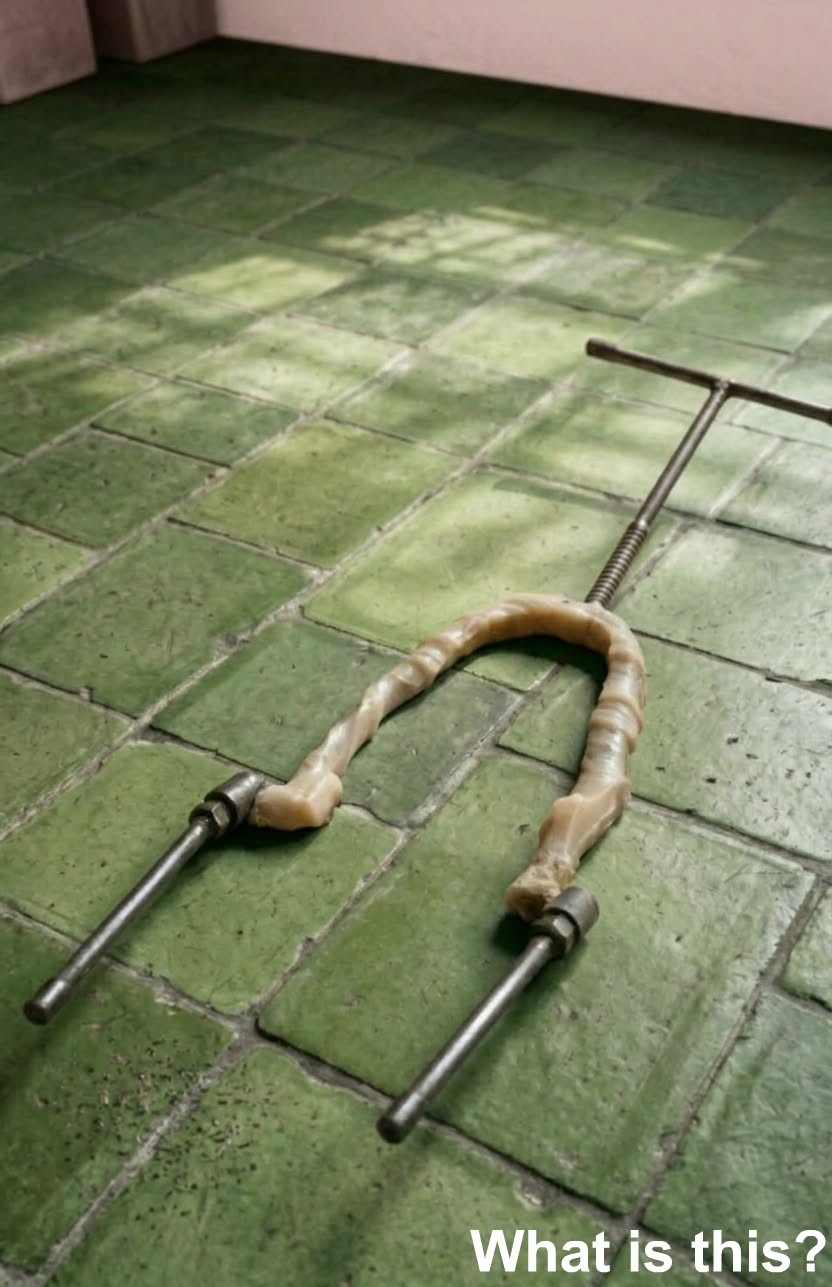
That was the feeling prompted by the discovery of a heavy metal device tucked far under a bed during an initial cleaning. Covered in dust and apparently placed out of sight, the object had a T-shaped handle and two metal rods that moved apart when the mechanism was turned. Without context, its design looked unfamiliar and unsettling. It was clearly not an everyday kitchen tool, a common household repair item, or a typical piece of furniture hardware.
Unknown objects can easily invite alarming assumptions, especially when they have mechanical parts and are found in an unexpected location. A few online searches, however, suggested a much more practical explanation: the tool resembled an older veterinary mouth gag or mouth speculum, a device designed to help keep an animal’s mouth open during examination or treatment.
The experience offers a useful lesson for anyone who finds unusual belongings in a newly purchased or rented home. Context matters. Antique and professional tools can look strange outside their original setting, and internet searches can produce inaccurate or sensational conclusions. Taking a calm, evidence-based approach is usually the best way to identify an unfamiliar object safely.
Why an Unknown Metal Tool Can Feel So Unsettling
Objects communicate through their shape, weight, condition, and location. A dusty device under a bed may appear more mysterious than the same device displayed in a workshop, stable, veterinary clinic, or museum collection. The place where an item is found can influence the story people imagine around it.
Mechanical tools are especially prone to misunderstanding. Older equipment was often built from steel, iron, brass, or other durable metals and may include screws, handles, hinges, clamps, or expanding components. These features can look intimidating when the tool’s original purpose is unknown. A device intended to hold, separate, measure, or stabilize may appear alarming when separated from the professional environment in which it was used.
Online image searches can be helpful, but they also have limits. Similar-looking tools may have very different functions, and mislabeled auction listings, social media posts, and copied descriptions can spread errors quickly. For that reason, a visual match should be treated as a starting point rather than definitive proof.
What Is a Veterinary Mouth Gag or Speculum?
In veterinary medicine, a mouth gag or speculum is broadly used to describe equipment that helps a clinician gain safe access to an animal’s mouth. The precise design varies according to the species and the procedure. Tools for horses, cattle, dogs, cats, and other animals can differ significantly in size, materials, and method of adjustment.
Veterinary oral examinations may be needed to assess teeth, gums, the tongue, jaw movement, oral injuries, or signs of disease. In modern clinical settings, these examinations are performed by trained veterinary professionals using appropriate equipment, safety procedures, and, where necessary, suitable pain management or sedation. The welfare of the animal and the safety of the veterinary team are central considerations.
Historical veterinary instruments often have more industrial-looking designs than their modern counterparts. Adjustable metal bars, threaded handles, and sturdy frames were made to withstand repeated cleaning and use. As veterinary medicine developed, equipment design increasingly reflected advances in animal welfare, ergonomics, infection control, and species-specific care.
It is important not to identify every adjustable metal device as a veterinary mouth gag. Some tools used in agriculture, dentistry, mechanical trades, medicine, and animal care can share visual features. A reliable identification depends on measurements, markings, materials, mechanism design, and comparison with authenticated museum or manufacturer records.
How to Identify an Old Veterinary Instrument Responsibly
If an unusual object is discovered in a home, garage, shed, attic, or storage area, the first step is to avoid rushing to a conclusion. A structured approach can help separate evidence from speculation.
Look for maker’s marks and numbers
Many older tools have stamped names, patent dates, serial numbers, initials, or manufacturing marks. These details may be located on the handle, frame, hinge, or underside of the object. Photographing any markings in clear light can make later research much easier. A manufacturer’s name may lead to catalogues, patent records, historical advertisements, or antique-tool references.
Document the object before moving it further
Take photographs from several angles and include a ruler or another object of known size for scale. Note where it was found, whether it was wrapped, and whether any other items were stored nearby. These details can provide useful clues. For example, an object found with animal-care supplies, old invoices, farm records, or professional equipment may be easier to place in context.
Use credible research sources
Reliable sources include museum collections, university veterinary schools, agricultural history archives, established auction houses that provide expert cataloguing, and professional antique-tool specialists. Historical patent databases can also be valuable when a patent number or company name is visible.
General image-search results and social media discussions should be used cautiously. They can provide useful leads, but they may not be accurate enough to confirm the purpose, date, or value of an object.
Ask a qualified expert when needed
A veterinarian with an interest in medical history, a curator of veterinary collections, or an experienced antiques appraiser may be able to offer a better assessment. Clear photographs, dimensions, and close-ups of markings are often enough for an initial opinion. If the object could have historical or financial value, obtaining more than one assessment is sensible.
Safety First When Handling Unknown Items
Most forgotten household objects are harmless, but it is still wise to handle unknown items carefully. Wear gloves if the object is rusty, dirty, oily, sharp, or has moving parts. Do not force a mechanism that is stuck, and keep it away from children and pets until its purpose is understood.
Some older objects may have residues from chemicals, lubricants, medical products, pesticides, or industrial materials. While a metal veterinary instrument is not automatically hazardous, its storage history may be unknown. If an item appears contaminated, has a strong chemical odor, contains a liquid, or is connected to wiring or ammunition-like materials, it should not be casually handled. Local authorities, property managers, or relevant waste-disposal services can advise on safe next steps.
For a potentially historical tool, avoid aggressive cleaning. Scrubbing, polishing, or removing corrosion can reduce its value and erase useful evidence such as markings or original finishes. A soft brush and careful dry dusting may be appropriate for photographs, but professional conservation advice is preferable for items believed to be old or valuable.
The History Hidden in a New Home
Finding an object left behind by former occupants can make a new home feel less anonymous. It does not necessarily reveal a dramatic story. In many cases, it simply reflects the ordinary realities of moving: people overlook storage spaces, forget rarely used possessions, or leave behind items that no longer seem useful.
A veterinary tool under a bed may suggest that a previous resident worked with animals, lived near a farm, collected antiques, inherited old equipment, or used the object as part of a workshop collection. It may also have been left by someone who had no professional connection to veterinary care at all. Homes often accumulate possessions across multiple owners, tenants, relatives, and decades.
That ambiguity is part of what makes these discoveries compelling. Objects can carry traces of prior lives without providing a complete narrative. The most responsible response is not to invent a story, but to acknowledge what can be known and remain open about what cannot.
Modern Veterinary Care and Animal Welfare
The discovery of an old veterinary device can also prompt questions about how animal care has changed. Modern veterinary practice places strong emphasis on evidence-based medicine, animal welfare, infection prevention, pain assessment, and informed communication with animal owners. Professional bodies and veterinary schools continue to develop standards for safe examination and treatment across many species.
Older instruments should therefore be understood in their historical context. Their appearance may be unfamiliar, but they reflect the practical needs and available technology of earlier periods. Today, veterinary professionals select tools based on the animal’s species, size, health condition, procedure, and welfare requirements. Equipment is also cleaned, maintained, and used within controlled clinical protocols.
For pet owners, the key message is simple: oral health and other veterinary procedures should be carried out by qualified professionals. Attempting to use historical equipment, improvised restraints, or unidentified tools on an animal can cause distress or injury. An old instrument is best treated as an object for identification, preservation, or display—not as equipment for home use.
What to Do With a Forgotten Veterinary Tool
Once an item has been reasonably identified, there are several options. If it has historical interest, a local agricultural museum, veterinary history collection, or antiques specialist may be interested in documenting it. If it has little monetary value but remains in sound condition, it may still be worth keeping as a conversation piece, provided it can be stored safely.
If the object is unwanted, do not place a potentially sharp or heavy metal tool loosely in household rubbish. Contact local recycling or household-waste services to ask about accepted metal items. If there are concerns about contamination or hazardous residue, explain those concerns before transporting it.
Most importantly, an unusual discovery does not have to overshadow the experience of settling into a new home. Once the object is documented and handled appropriately, it can become a small piece of local history rather than a source of ongoing unease.
Conclusion: Curiosity Is Better Than Assumption
A strange metal device found under a bed can initially seem unsettling, particularly when its purpose is unclear. But an object that appears mysterious in isolation may have a practical history. In this case, the design may be consistent with an older veterinary mouth gag or speculum used to assist animal examinations and treatment.
The most useful response to an unfamiliar object is careful curiosity: photograph it, check for identifying marks, research credible references, and consult an expert where appropriate. This approach protects personal safety, prevents misinformation, and respects the historical value that old tools may hold. Moving into a new house often means making room for the future, but occasionally it also means encountering a small, unexpected reminder of the past.
Sources
Disclaimer: This content is intended for entertainment purposes only and is not based on real events.