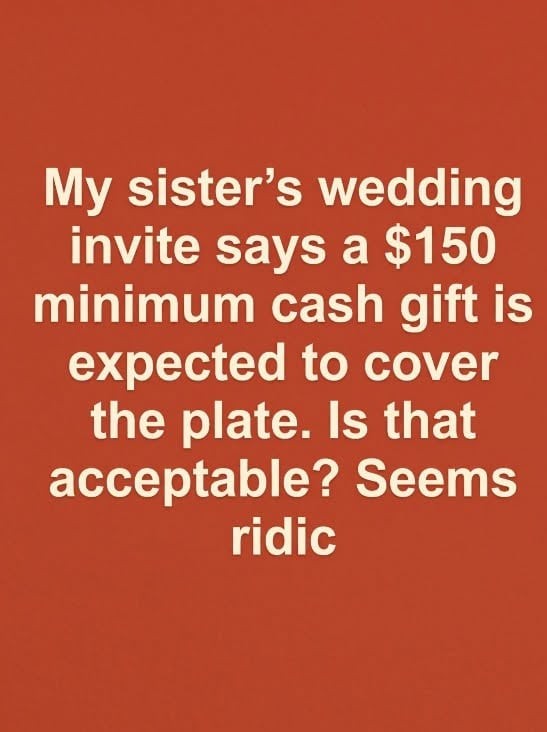

My Sister Sent Out Wedding Invites With a Note Saying a Minimum Cash Gift of $150 Is Expected to Cover the Cost of Our Plate: Is It Acceptable to Mandate a Specific Gift Amount?
A wedding invitation is usually understood as an invitation to celebrate a couple’s commitment, not as an invoice for the event. That expectation can make guests uncomfortable when an invitation includes a note requesting a minimum cash gift, particularly when the stated amount is intended to “cover the cost of the plate.” In this case, the proposed minimum is $150 per guest, a figure that may be manageable for some people but difficult for others.
Questions about wedding gifts can become especially sensitive when close family members are involved. Guests may want to support the couple while also protecting their own finances and avoiding resentment. The key issue is not whether cash gifts are acceptable. Cash gifts are common in many countries, cultures, and family traditions. The question is whether it is appropriate to require a particular amount as a condition of attending.
Traditional wedding etiquette generally draws a clear distinction between sharing gift preferences and imposing a mandatory contribution. Couples may communicate that they prefer cash, a honeymoon fund, or contributions to a registry. However, etiquette experts commonly advise against telling guests what they must spend or framing a gift as repayment for the meal they receive. A wedding is a hosted event, and the hosts typically choose the scale and cost of the celebration.
Why a Minimum Wedding Gift Request Can Feel Uncomfortable
For many guests, an invitation with a required cash amount changes the emotional meaning of the occasion. Rather than feeling welcomed, they may feel assessed according to their ability to pay. This can be particularly difficult for students, retirees, parents with young children, people between jobs, and relatives who must travel long distances to attend.
Wedding attendance often involves expenses beyond the gift itself. A guest may need to pay for transportation, accommodation, formal clothing, childcare, meals during travel, and time away from work. When those costs are added together, a fixed minimum gift can place real pressure on a household budget.
The phrase “cover the cost of our plate” can also create an unintended transactional tone. Couples may reasonably need to make choices based on venue prices and catering costs. Yet guests generally do not select the venue, menu, guest count, or event budget. They should not be made to feel responsible for balancing the wedding’s finances after those decisions have been made.
That does not mean a couple who makes such a request is necessarily trying to be unkind. Wedding planning can be stressful and expensive. Some couples may assume that a cash request is direct, practical, and culturally normal. Others may be trying to reduce uncertainty about their budget. Still, good intentions do not always eliminate the discomfort a mandatory amount can cause.
Cash Wedding Gifts Are Common, but Gifts Should Remain Voluntary
Cash gifts are an established tradition in many communities. In some cultures, money is the customary wedding gift and may be offered in envelopes, cards, or formal ceremonial presentations. Couples may use these gifts to start married life, pay for a honeymoon, furnish a home, or contribute to future plans.
There is also nothing inherently wrong with a couple stating a preference for cash rather than physical presents. A brief, polite message on a wedding website can help guests understand that preference. Some couples choose wording such as, “Your presence is the greatest gift; if you wish to give a gift, we would be grateful for a contribution toward our future together.”
That approach preserves choice. It communicates what the couple would appreciate without setting a price floor. Guests can decide whether to give cash, select a modest registry item, offer a personal card, or simply attend and celebrate within their means.
Etiquette guidance from organizations such as The Emily Post Institute emphasizes that gifts are not admission fees. A guest is not required to match the cost of a meal, and there is no universal formula requiring a wedding gift to equal a venue’s per-person expense. What a guest gives should depend on their relationship to the couple and their own financial circumstances.
Is It Acceptable to Mandate a Specific Wedding Gift Amount?
From a conventional etiquette perspective, requiring a specific minimum gift amount is generally not considered appropriate. Couples can suggest a preferred type of gift, but a gift loses much of its meaning when it is demanded. A stated minimum can also create division among guests, especially if people compare what they gave or feel embarrassed that they cannot meet the request.
There are practical concerns as well. A couple cannot reliably know every guest’s financial situation. A sibling may be facing debt, medical bills, recent job loss, family responsibilities, or other expenses that are not visible to others. Even financially stable guests may have different priorities and limits.
For this reason, a fixed request is more likely to be interpreted as an expectation than a preference. Guests may feel that declining the invitation is the only way to avoid an awkward conversation. In some cases, the request can harm relationships that the wedding was meant to celebrate.
It is also worth recognizing that family norms vary. In a family where cash gifts are routinely expected and openly discussed, a request may not seem unusual. In another family, mentioning gifts at all may be viewed as impolite. The most constructive response considers both general etiquette and the specific cultural context, while still respecting each guest’s right to set a budget.
How Guests Can Respond Without Creating Unnecessary Conflict
A guest who receives an invitation with a minimum cash request has several reasonable options. The best choice depends on their finances, the relationship involved, and whether they want to attend.
Attend and Give What You Can Comfortably Afford
If attending is important and the guest can contribute some amount, they can give an amount that feels appropriate to them rather than treating the stated minimum as binding. A thoughtful card and sincere congratulations can accompany the gift. It is not necessary to explain or defend the amount unless the couple directly raises the subject.
A wedding gift should never require someone to miss rent, borrow money, accumulate credit card debt, or sacrifice essential needs. Financial boundaries are valid, even when the person getting married is a close relative.
Ask for Clarification in a Calm, Private Conversation
When the invitation comes from a sister, brother, or another close family member, a private conversation may be helpful. The guest could say: “I’m excited for your wedding and I want to support you. I noticed the note about the $150 minimum. My budget is limited, so I wanted to check whether that is an expectation for every guest.”
This wording avoids accusation while making the concern clear. The couple may explain that the wording was poorly chosen, that the amount was meant as a suggestion, or that no guest will be excluded for giving less. A respectful discussion can prevent assumptions from turning into a larger family dispute.
Decline the Invitation Gracefully
Declining is also acceptable if the total cost of attending is too high or the invitation leaves a guest feeling uncomfortable. A simple response is sufficient: “Thank you for inviting me. I’m sorry I won’t be able to attend, but I wish you both a wonderful wedding day and a happy future together.”
Guests do not have to provide a detailed financial explanation. They may choose to send a card, a smaller gift, or their good wishes, but they are not obligated to do so. A warm and timely RSVP is usually the kindest approach.
Advice for Couples Planning a Wedding on a Budget
Couples facing high wedding costs may benefit from adjusting their plans instead of expecting guests to absorb those costs. This does not mean every wedding must be inexpensive. It means the budget should align with what the couple can reasonably afford without relying on uncertain gifts.
Possible ways to manage costs include reducing the guest list, choosing an off-peak date, selecting a less expensive venue, simplifying catering, holding a daytime gathering, or hosting a smaller ceremony followed by a casual celebration. These choices can preserve the spirit of the day while reducing financial pressure.
If a couple prefers cash gifts, tactful wording matters. They may list a cash fund on a wedding website or use language that clearly makes gifts optional. The most welcoming message emphasizes gratitude for guests’ presence rather than the cost of the event.
For example, a couple might write: “We are fortunate to have everything we need for our home. Your presence at our celebration means so much to us. For those who would like to give a gift, contributions toward our future plans are deeply appreciated.” This allows guests to participate voluntarily and without embarrassment.
Family Relationships Matter More Than Wedding Accounting
Weddings can bring longstanding family dynamics to the surface. A disagreement about a cash request may reflect broader issues involving expectations, communication, fairness, or money. That is why it helps to address the immediate issue with care rather than responding with anger in a group chat or public social media post.
For relatives, the goal should be to separate the relationship from the financial request. A sibling can love and support the couple while disagreeing with the wording or refusing to meet a required amount. Likewise, a couple can feel overwhelmed by wedding costs while recognizing that guests are not responsible for paying the bill.
Empathy should work in both directions. Couples should remember that an invitation is not a guarantee of attendance or a financial contribution. Guests should remember that wedding planning is demanding and that an awkward request may be the result of stress rather than malice. Honest, private, and respectful communication gives everyone the best chance of preserving the relationship.
The Bottom Line on Minimum Cash Gift Requests
A couple may prefer cash gifts, but mandating a minimum amount to cover the cost of a guest’s meal is generally inconsistent with widely recognized wedding etiquette. Guests are entitled to choose what they can afford to give, if anything, and they should not feel obligated to take on financial strain to attend a celebration.
In the situation described, $150 may be a meaningful sum. The most balanced response is to decide based on personal circumstances: attend and give a comfortable amount, discuss the issue privately, or decline with kindness. A wedding is ideally a gathering built on affection, community, and goodwill. Those values are better protected when gifts remain voluntary and every guest is treated with respect.
Sources
Disclaimer: This content is intended for entertainment purposes only and is not based on real events.
