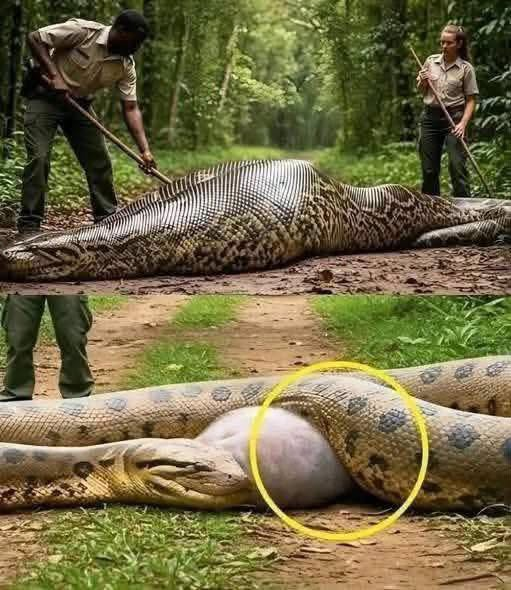

Park Rangers Rescue Anaconda After Shocking Discovery
Reports of a distressed anaconda found by park rangers can quickly capture public attention. These large snakes are often surrounded by myths, yet they are important native predators in the wetlands, rivers, and floodplains where they live. When a wild animal appears weak after swallowing an unfamiliar object, the situation requires calm decision-making, trained personnel, and a strong commitment to animal welfare.
The brief account of this incident describes rangers finding a large anaconda that was sluggish and apparently affected by a swallowed object. However, the available description does not identify the location, the species involved, the type of object, the veterinary team, or the eventual outcome. Those details matter. Responsible reporting on wildlife rescue should avoid assumptions and should rely on confirmation from park authorities, licensed veterinarians, or recognized conservation organizations.
What is clear is that situations involving distressed wild reptiles can be serious. A swallowed foreign object may interfere with feeding, movement, digestion, or normal behavior. Wildlife professionals are trained to assess whether an animal can safely recover without intervention or whether careful capture, examination, and rehabilitation are necessary.
Why Anacondas Matter in Wetland Ecosystems
Anacondas are among the world’s largest snakes and belong to the genus Eunectes. The green anaconda, Eunectes murinus, is the best-known species and occurs across parts of tropical South America, particularly in slow-moving waterways, marshes, seasonally flooded forests, and wetlands connected to the Amazon and Orinoco river systems.
These snakes are highly adapted to aquatic and semi-aquatic environments. Their eyes and nostrils are positioned toward the top of the head, helping them remain mostly submerged while observing their surroundings. Although anacondas are often portrayed as aggressive animals, they generally avoid people and rely on camouflage and stillness. Like many wild animals, they may defend themselves if handled, cornered, or stressed.
As predators, anacondas contribute to the balance of wetland food webs. They feed on a variety of animals depending on local habitat and available prey. Predators help shape ecosystems by influencing prey populations and animal behavior. Protecting them is therefore connected to protecting the wider wetland landscape, including water quality, native vegetation, fish, birds, amphibians, and other reptiles.
Wetlands also provide benefits far beyond wildlife habitat. They can store water, filter pollutants, support fisheries, reduce flood risks in some areas, and sustain local communities. When wetlands are degraded by pollution, uncontrolled development, habitat fragmentation, or climate-related changes, the consequences can affect both people and wildlife.
What Happens When a Wild Snake Swallows an Unnatural Object?
Snakes swallow prey whole and have flexible jaw structures that allow them to consume animals larger than their heads. This natural ability can sometimes create a dangerous misunderstanding: a snake’s capacity to swallow large prey does not mean it can safely process non-food materials.
Wild animals may encounter discarded plastic, fishing gear, packaging, household waste, or other debris near waterways. In some cases, an animal may mistake an item for food, ingest it while feeding, or become affected by human-made material in its environment. The exact risk depends on the object, its size, its shape, and where it has become lodged.
Signs that may concern trained wildlife responders include unusual lethargy, visible swelling, repeated unsuccessful attempts to regurgitate, difficulty moving, abnormal breathing, or a prolonged inability to feed. None of these signs alone can confirm a diagnosis. A veterinary examination is needed to determine whether the animal is injured, ill, digesting a normal meal, or affected by an obstruction.
Attempting to remove an object from a snake without training can cause significant harm to both the animal and the person involved. Large constrictor snakes are powerful, and improper restraint can lead to stress or injury. For that reason, members of the public who encounter a distressed snake should keep a safe distance and contact local park authorities, wildlife rescue groups, or environmental agencies.
How Park Rangers and Wildlife Experts Approach a Rescue
A professional wildlife response begins with safety. Rangers first assess the animal’s location, condition, and immediate risks. If an anaconda is near a road, residential area, fishing site, or heavily used trail, responders may need to protect both the animal and the public while arranging specialist assistance.
Handling a large snake is not a one-person task. Wildlife teams typically use appropriate containment equipment and follow protocols designed to reduce stress. The goal is not simply to move the animal, but to stabilize it for assessment. Depending on local regulations and available expertise, rangers may work with wildlife veterinarians, herpetologists, conservation officers, or licensed rehabilitation centers.
Veterinary assessment can include a physical examination and, where suitable, diagnostic imaging such as radiography or ultrasound. These tools may help determine whether a foreign object is present and whether intervention is needed. The treatment plan depends on the individual case. Some animals may be monitored while they recover naturally, while others may need specialized medical care.
Any decision to sedate, transport, treat, or release a wild snake should be made by qualified professionals. Wildlife medicine involves careful consideration of the animal’s welfare, the safety of staff, legal protections, disease-control procedures, and the chance of successful return to the wild.
Rehabilitation and Release: More Than a Single Rescue
Rescuing an animal is only the first stage of conservation work. If an anaconda receives treatment, rehabilitation teams must evaluate whether it can resume normal functions such as movement, feeding, hydration, and appropriate responses to its environment. They also need to consider whether the original habitat remains safe.
Release sites are usually chosen with care. A suitable location should provide appropriate wetland habitat, access to water, natural cover, and low levels of human disturbance. Releasing an animal too close to roads, settlements, polluted waterways, or busy fishing areas may increase the likelihood of another problem.
In some circumstances, wildlife staff may monitor a released animal where resources and permits allow. Monitoring can provide valuable information about survival, habitat use, and the success of rehabilitation. Even when tracking is not possible, documenting the rescue helps agencies understand common threats and improve future response plans.
The best outcome is always prevention. A rescue can help one animal, but cleaner waterways, well-managed protected areas, responsible waste disposal, and public education can reduce risks for many species over time.
Conservation Challenges Facing Anacondas and Their Habitats
Anacondas depend on healthy freshwater ecosystems. Across South America, wetlands and river systems face pressures that may include land-use change, deforestation in surrounding landscapes, water contamination, infrastructure development, fires, and changing rainfall patterns. The intensity and impact of these threats vary by region, but their combined effect can reduce habitat quality for aquatic wildlife.
Pollution is a particularly important concern because rivers and wetlands can collect waste from far beyond their immediate boundaries. Plastic and other debris may travel through drainage systems, accumulate along shorelines, or remain in floodplain vegetation. Reducing waste at the source is generally more effective than relying on cleanup after pollution has entered an ecosystem.
Illegal or unregulated wildlife trade can also threaten reptiles in some regions. Conservation policy, law enforcement, community participation, and public awareness all have roles in reducing pressure on wild populations. International frameworks such as the Convention on International Trade in Endangered Species of Wild Fauna and Flora, known as CITES, help regulate trade in listed species through a system of permits and protections.
Importantly, fear should not drive conservation decisions. Large snakes can make people uneasy, especially when misleading stories exaggerate their behavior. Education helps communities understand that anacondas are wild animals with ecological roles, not creatures that need to be harmed simply because they are large or unfamiliar.
How Communities Can Help Protect Wetland Wildlife
People do not need to work in a national park to support anaconda conservation and wetland protection. Everyday choices can reduce harm to wildlife. Properly disposing of rubbish, reducing single-use plastic, securing fishing equipment, and participating in approved local cleanup programs can all make a difference.
Visitors to wetlands and protected areas should follow park rules, remain on designated routes where applicable, avoid feeding wildlife, and never attempt to touch or move snakes. Taking photographs from a respectful distance is safer for people and less stressful for animals.
Residents who find a snake in an unusual location should contact local wildlife authorities rather than trying to capture it. A snake may simply be moving through its habitat, but officials can assess whether it is injured, trapped, or at risk. Sharing accurate location information and keeping pets away from the area can help responders act effectively.
Schools, tourism operators, and community organizations can also support coexistence by sharing evidence-based information. Respect for wildlife is compatible with public safety. The most effective approach is to recognize the value of native species while allowing trained professionals to manage difficult encounters.
Why Accurate Wildlife Reporting Is Important
Stories about dramatic animal rescues can raise awareness of environmental problems, but they can also spread quickly without adequate verification. In this case, the limited original account does not provide enough independently confirmed information to establish the exact circumstances or outcome. It would be inappropriate to add unverified claims about the object involved, the animal’s medical condition, or the final result of the rescue.
Reliable wildlife reporting should distinguish confirmed facts from incomplete information. It should identify the responsible agency where possible, avoid sensational language, and provide readers with useful context about conservation and public safety. This approach respects the people involved in rescue work and avoids turning a vulnerable animal into a source of misinformation.
The central lesson remains meaningful: healthy wetlands require sustained attention, and wildlife rescue is most effective when guided by expertise. An anaconda in distress is not merely an unusual news subject. It is a reminder that the condition of a single animal can reflect broader environmental challenges, including pollution, habitat disturbance, and the need for responsible coexistence.
Sources
Disclaimer: This content is intended for entertainment purposes only and is not based on real events.
