

As the search for 84-year-old Nancy Guthrie continues in Tucson, Arizona, a weekend discovery by volunteers briefly raised hopes of a meaningful lead. Community members searching areas near her neighborhood reported finding a torn black backpack inside a storm drain a short distance from her home. The find triggered a rapid response from local deputies, and within hours the item was collected and examined.
But investigators soon cautioned that the backpack does not appear to be connected to Guthrie’s disappearance. Officials said the bag seemed to have been outside far longer than the timeframe of the case and did not match the backpack seen in earlier surveillance footage that federal authorities have described as significant.
The episode reflects a pattern that has defined this investigation so far: intense public attention, fast-moving online speculation, and repeated reminders from law enforcement that only verified evidence can guide the case.
Why Volunteers Started Searching on Their Own
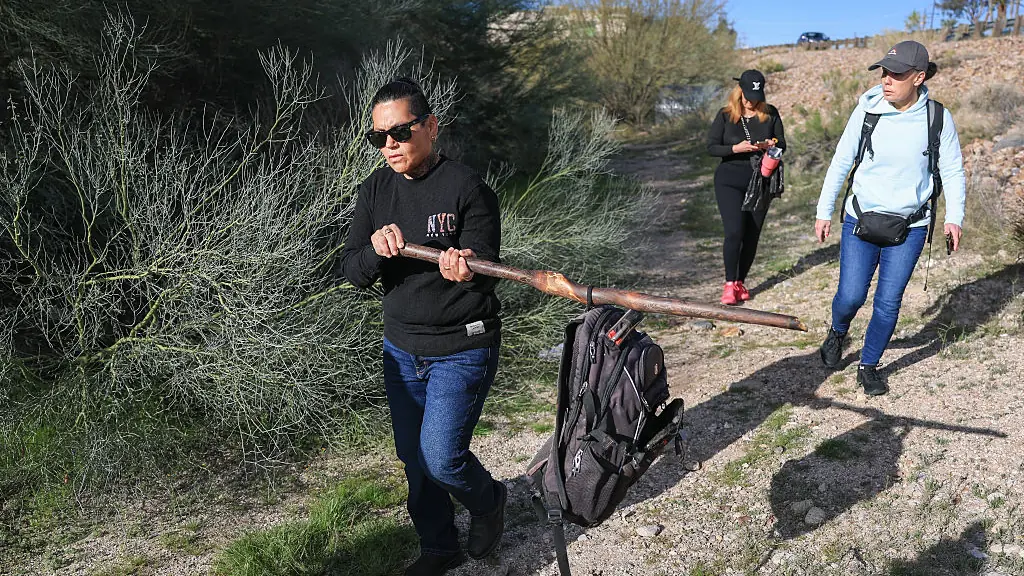
In recent days, local volunteers have organized informal searches near areas they believe could hold overlooked clues. Some searchers have focused on open desert edges, roadside drainage paths, and locations where personal items might end up over time.
The volunteer effort has grown partly because of frustration with the lack of public answers and partly because the case has drawn wide attention due to Nancy Guthrie’s connection to her daughter, NBC “Today” co-anchor Savannah Guthrie. Authorities have not said the official search is ending, but public reporting has indicated that the investigation is shifting into longer-term phases, which can include fewer highly visible search actions while detectives continue reviewing tips, footage, and forensic results.
It’s in that environment—high emotion, limited confirmed facts—that volunteer discoveries can feel especially important. But as investigators emphasized after the backpack was found, “found item” does not automatically equal “usable lead.”
The Backpack Discovery and What Police Confirmed
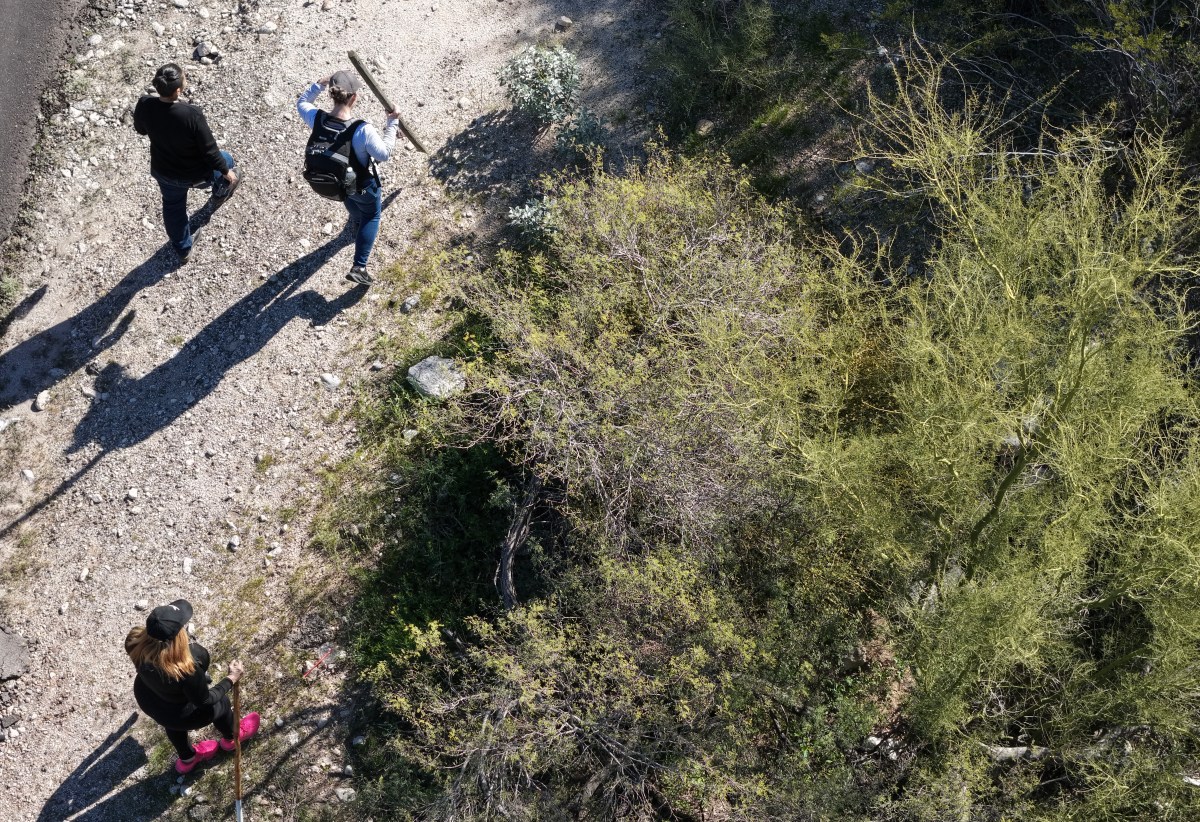
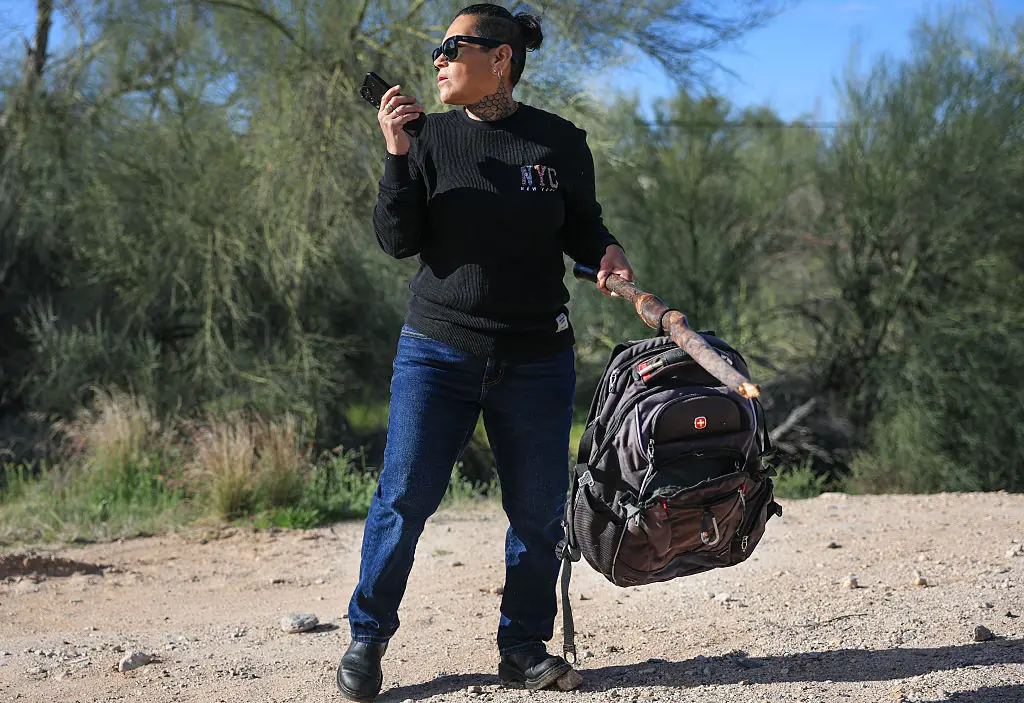
According to reporting that cited law enforcement statements, the backpack was found on Sunday morning, February 22, 2026, around two miles from Guthrie’s home, inside a storm drain that also functioned as a makeshift encampment area. A volunteer contacted the Pima County Sheriff’s Office, and a deputy arrived shortly afterward to collect the bag for examination.
The location described in coverage was near West Orange Grove Road and State Route 77, not far from the Catalina Foothills area north of Tucson. Photos published by outlets and wire services showed volunteers at the scene and later a deputy retrieving the item with gloves.
For a brief period, online discussion surged because earlier FBI materials had highlighted a black backpack as a key visual detail in doorbell camera footage connected to the case.
Investigators: The Backpack Doesn’t Appear to Match the Footage
After the bag was examined, a spokesperson for the sheriff’s department said it did not appear to be a “viable lead.” The department’s statement, quoted by multiple outlets, explained two main reasons:
- The backpack appeared to have been outside much longer than the period since Guthrie went missing.
- The backpack did not match the brand described in earlier surveillance footage releases.
- The backpack contained identification belonging to a minor.
That last detail mattered for two reasons. First, it reinforced the possibility that the bag had an unrelated history. Second, it raised privacy concerns—investigators did not publicly identify the minor or provide details, which is consistent with standard practice.
In short, officials treated the bag as a real piece of physical evidence worth collecting, then ruled it out as a meaningful connection after assessment.
Why “Not a Viable Lead” Is Still an Important Update
When investigators say an item is not a viable lead, some readers hear it as “nothing matters.” But in an investigation, ruling out possibilities is often part of narrowing the field.
This update does at least three things:
It reduces confusion around a high-visibility rumor. Once photos of the backpack circulated, many people assumed it was automatically connected.
It prevents wasted resources. If law enforcement believes the backpack is unrelated, they can redirect attention toward evidence with stronger links to the timeline.
It underscores an ongoing theme: officials are trying to limit speculation, especially when images and social posts spread faster than confirmed facts.
That matters in this case because earlier waves of online attention have repeatedly centered on interpreting partial visuals—blurry still images, short clips, or unverified claims attached to screenshots.
The Surveillance Footage and the Backpack Seen on Camera
Federal authorities previously released doorbell camera footage and images showing a masked individual near Guthrie’s home. Reporting described this person as a primary focus of the investigation, though officials have also cautioned they are not ruling out other possibilities.
In that footage, the backpack has been described as a specific retail model—an Ozark Trail Hiker Pack sold through Walmart. The backpack detail has become one of the most discussed elements of the public evidence because it is relatively distinctive compared to other clothing items.
That’s why the volunteer-found backpack created immediate attention: people saw “black backpack near the home” and connected it to “black backpack in the footage.” Investigators’ statement makes clear they do not believe the match holds up.
A Second Item: Reports of a Glove Found Nearby

Some coverage of the volunteer search noted that a glove was also found in the area and collected for review. Separately, law enforcement has previously discussed gloves as part of the evidence review process, including forensic examination.
What’s important here is that “glove found” does not mean “glove is connected.” In many missing-person investigations—especially those involving desert paths, roadside drainage systems, or open public areas—personal items can be common and unrelated.
In this case, investigators have indicated that forensic review and database checks are part of the process, while also being careful not to overstate what any single item means.
New Attention on Images Showing a Masked Person Without a Backpack
Another thread fueling online debate is a set of images that appear to show a masked person near Guthrie’s door without a backpack, in contrast to other footage where a backpack is visible.
CBS News reported, citing a law enforcement source, that the suspected individual may have appeared at the home earlier than the night Guthrie went missing. The report also noted uncertainty about exact timing and how the images should be interpreted.
Local authorities, however, have pushed back strongly on conclusions drawn from those images. The Pima County Sheriff, Chris Nanos, told People that there is “no evidence” the suspect was recorded at the home on an earlier day, and emphasized that claims about different days were speculative given missing timestamps.
This difference—national reporting based on sourcing versus local authorities insisting on strict timestamp verification—shows how easily a case can become two separate conversations: one based on what images “seem to suggest,” and another based on what can be proved.
Why Officials Keep Warning Against Speculation

In major investigations, especially those drawing national attention, speculation can create real problems:
It floods tip lines with noise. Authorities may receive tens of thousands of tips, many based on online theories rather than firsthand information.
It can misidentify people. Internet sleuthing sometimes points suspicion at innocent individuals, which can derail lives and distract investigators.
It can contaminate memory. When witnesses repeatedly see viral clips with captions, their recollection can shift toward what they read online.
That’s why officials repeatedly emphasize “verified evidence.” In this case, the sheriff’s department’s response to the backpack discovery—collect, examine, then rule out—illustrates that approach.
What We Know About the Investigation’s Current Direction
Authorities have not announced an end to the investigation. Major outlets report that law enforcement continues reviewing surveillance footage, examining physical evidence, and following leads.
Public reporting also indicates the FBI remains involved. In cases that receive federal attention—particularly those that may cross jurisdictional boundaries or involve broader security concerns—federal agencies can support local departments with forensic resources, video analysis, and tip processing.
At the same time, investigators have to balance transparency with operational reality. Revealing too much about evidence can compromise follow-up steps. Revealing too little can create a vacuum that speculation fills.
The backpack update is an example of a limited but useful disclosure: enough information to calm a rumor, not enough to expose sensitive case details.
The Family’s Public Appeals and the Expanding Reward

As the case has stretched on, Guthrie’s family has issued emotional public appeals, and reputable outlets report that a $1 million reward has been offered for information leading to her recovery. Reuters reported the family also made a significant donation to the National Center for Missing and Exploited Children as part of a broader effort to support missing-person work.
Associated Press coverage likewise described the reward and the continued hope for answers, noting the investigation has generated an enormous volume of tips.
Rewards can serve multiple purposes: encouraging hesitant witnesses to come forward, prompting people to re-check small details, and expanding public attention beyond a single local community. However, investigators typically still need verifiable information—time, place, video, witness confirmation—to turn a tip into evidence.
What the Backpack Update Does—and Does Not—Mean
It means volunteers found an item close enough to the area to be worth checking.
It means law enforcement responded quickly and treated it seriously.
It means the sheriff’s department reviewed it and does not believe it connects to the current timeline.
It does not mean the investigation is over.
It does not mean volunteers should stop searching, though any volunteer work should always be coordinated safely and reported responsibly.
And it does not mean that every object found near a case scene will have value. In fact, many won’t.
The public often experiences investigations as a series of big turning points. Real investigations are usually a long process of collecting, excluding, re-checking, and building a reliable timeline.
What Happens Next
The next phase likely looks less dramatic than viral posts suggest. Investigators will continue:
Reviewing and correlating surveillance footage from multiple sources.
Working through tips and filtering them for actionable detail.
Running forensic analysis and comparison checks where appropriate.
Coordinating across agencies while limiting public disclosure that could compromise the case.
Meanwhile, volunteer interest and public discussion will probably continue. The backpack discovery shows how quickly a single event can trigger a surge of attention—and how quickly it can be ruled out by a short, careful statement from investigators.
For now, the clearest confirmed takeaway is simple: the backpack found by volunteers near Guthrie’s home does not appear to be connected, and authorities are urging the public to stick to verified information.
Sources
- Reuters report on the family’s $1 million reward and ongoing investigation (Feb 24, 2026).
- Associated Press report on the reward, tips volume, and status of the case (Feb 24, 2026).
- People.com report quoting Sheriff Chris Nanos saying there is “no evidence” the suspect was recorded at the home on an earlier day (Feb 25, 2026).
- The Spokesman-Review report quoting the sheriff’s department statement that the volunteer-found backpack is not a “viable lead” and appeared older than the case timeframe (Feb 23, 2026).
- Newsweek update summarizing investigators’ conclusion that the backpack is not linked to the case and noting the broader evidence-review process (Feb 25, 2026).
- CBS News report citing a law enforcement source about images suggesting the suspect may have appeared earlier, alongside uncertainty about timing (Feb 24, 2026)
