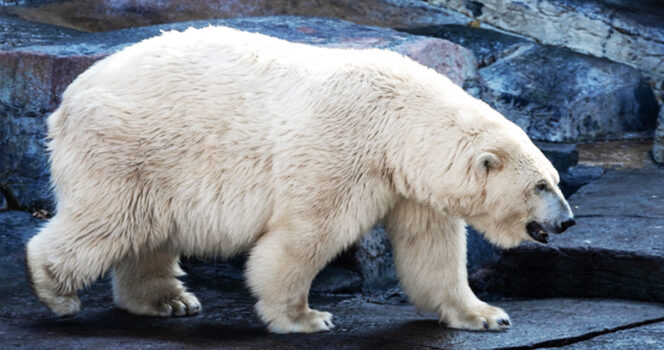

A visit to the zoo is usually a peaceful escape from everyday life — a chance to admire wildlife, enjoy time with family, and learn about animals in a safe environment. Yet on one spring afternoon in 2009, that sense of calm was shattered at Berlin Zoo, where hundreds of visitors suddenly found themselves witnessing a situation no one could have imagined.
It was during a routine polar bear feeding session — a popular attraction that normally draws crowds eager to watch the zoo’s massive bears enjoy their meal. What was meant to be a simple, structured demonstration turned into a scene that stunned guests, staff members, and people around the world.

A Routine Feeding Turns Into an Emergency
Berlin Zoo is home to several polar bears, and the scheduled feeding times are highlights for many visitors. Due to the size and strength of these animals, even trained keepers maintain a safe distance, tossing food into the enclosure from outside the protective barrier. The system is designed to protect both humans and animals — but on that day, something completely outside that system occurred.
Without warning, a 32-year-old woman climbed over the enclosure’s three-foot wall and jumped straight into the cold water below. The enclosure is designed to keep the bears safe and comfortable, not to allow people to enter, meaning the walls are steep and difficult to climb.
Visitors on the viewing platforms began shouting for help as they saw the woman swimming toward the large bears, who were gathered on a rocky ledge nearby. Most of the bears were focused on the food being tossed in by the keepers — except for one, who noticed her presence almost immediately.
What followed was a tense and frightening situation unfolding in clear view of visitors, many of them families with young children.

A Rapid Response From Zookeepers
As soon as the woman entered the water, zoo staff rushed to the enclosure. Animal care teams have strict emergency procedures for situations involving visitor safety, and those systems were activated within seconds.
Zookeepers threw life rings toward the woman to help keep her afloat, while others attempted to draw the bears’ attention away by offering additional food. Their goal was simple: give her something to hold onto while creating distance between her and the animals.
The rescue, however, proved incredibly difficult.
The woman tried several times to grasp the flotation devices, but the steep design of the enclosure made it nearly impossible for her to pull herself out. The water was cold, the walls were slippery, and she had no stable footing. Meanwhile, the polar bears noticed the commotion and became increasingly aware of her presence.
At least one of the animals entered the water, closing the distance between them.

A Life-and-Death Struggle
Although the bears were simply acting according to instinct, their sheer size and strength made the situation extremely dangerous. As staff members shouted instructions and continued throwing life rings, the woman attempted to swim toward safety, but the steep concrete edges offered no easy escape.
Witnesses later described the scene as chaotic, frightening, and surreal. Some parents shielded their children’s eyes; others stood frozen as the rescue team worked desperately to reach her.
Several times, a bear approached closely enough to cause serious harm, and each time, keepers tried to distract the animals with additional food, noise, and gestures from outside the enclosure.
At last, after several intense minutes, zookeepers managed to pull the woman to the side where a life ring allowed them to secure her. Working together, they quickly lifted her out of the enclosure and into the care of waiting medical personnel.
She was transported immediately to a nearby hospital for treatment.

The Aftermath: A Woman Who Faced Personal Struggles
Authorities later identified the woman as Mandy K., a 32-year-old mother from Herzberg. In the weeks following the incident, German media reported that she had been dealing with a series of personal challenges — among them job loss, financial difficulties, and a breakup.
While the details of her situation were private, many reports suggested that her emotional state had been fragile in the time leading up to the incident. Her daughter was with her father on the day of the event, leaving Mandy alone.
Police insisted that the animals were not at fault, emphasizing that polar bears are instinctive, powerful creatures and that entering their enclosure poses serious danger. “The woman climbed in on her own,” a police spokesperson explained at the time, noting that staff had done everything they could to help her during the emergency.
Zoo officials confirmed that none of the polar bears were punished, as they had behaved naturally within their environment.
A Question Many Still Ask: How Did This Happen?
Zoo enclosures are designed to protect both humans and animals, but they must also allow clear visibility. Barriers are meant to prevent accidental entry and discourage unsafe behavior, yet determined individuals may still find ways to bypass them.
In this case, the wall the woman climbed was not especially high, but it was not intended to be a challenge. For decades, the enclosure had functioned safely without incident involving visitors entering the space intentionally.
After reviewing the event, Berlin Zoo determined that reinforcing the enclosure would not necessarily prevent similar incidents in the future. As a spokesperson explained, “If someone is determined to enter, they will find a way, no matter how high the wall is.”
This Was Not the First Incident of Its Kind
The unusual nature of the event led many to recall another highly publicized moment at Berlin Zoo just a year earlier. In 2008, a 37-year-old man had climbed into the same enclosure to approach the famous young polar bear Knut, who at the time was a global sensation. The man survived, and Knut’s caretakers later emphasized that the bear had behaved like any young, curious animal.
These incidents sparked debates across Germany about zoo safety, mental health support, and the balance between public access and wildlife protection.
The Animals’ Perspective: Why Polar Bears React as They Do
Polar bears are among the strongest predators in the animal kingdom. In the wild, they live in harsh Arctic environments, relying on instinct, powerful senses, and physical strength to survive. Even in captivity — where they receive food and care — those instincts remain.
To the bears, a sudden splash, movement, or unfamiliar figure in their environment can appear as a sign of curiosity or potential threat. Their reactions are instinctive, not malicious.
Understanding this helps explain why experts and authorities stressed that the bears were not to blame. They were simply responding to their surroundings as they naturally would.
A Reminder of the Importance of Safety Around Wildlife
This incident serves as an important reminder of why zoos emphasize clear rules about visitor conduct. Barriers, signs, and designated viewing areas are not suggestions; they are essential protections for human safety and for the welfare of the animals.
While zoos provide opportunities to learn about wildlife, they also require guests to act responsibly. Approaching or entering an enclosure is never safe and endangers everyone involved.
The Role of Zoo Staff: Calm Under Pressure
One of the most remarkable aspects of the story is the quick, coordinated response by Berlin Zoo’s staff. Emergency protocols worked exactly as intended, allowing rescuers to reach the woman before the situation worsened.
Their actions prevented further escalation and ensured the safety of both humans and animals.
Zoo biologist Heiner Klos, who later spoke with German newspapers, expressed relief that their systems functioned effectively. His comment — “Our alarm system worked” — highlighted the importance of preparation, training, and teamwork.
A Story That Continues To Capture Attention
Even years later, the 2009 Berlin Zoo incident remains one of the most memorable zoo-related events in Europe. Not because of sensational details, but because it raises thoughtful questions:
-
What drives a person to take such a risk?
-
How can zoos balance visitor freedom with strict safety?
-
How can society better understand and support those who may be struggling emotionally?
While not all answers are simple, the event underscores the importance of compassion, awareness, and responsible behavior around animals.
A Day That Could Have Ended Differently
Thanks to the rapid efforts of zoo staff and emergency responders, the event — frightening as it was — ended with the woman being rescued and the animals unharmed.
It remains a powerful example of how quickly a normal day can change, how vital safety measures are, and how deeply interconnected human decisions and animal welfare can be.
