
The early morning began like any other for a quiet suburban neighborhood nestled at the edge of the foothills. Birds chirped, sprinklers hummed, and families prepared for the day ahead. But one home woke up to something truly unexpected. Their CCTV system, normally used to keep an eye on delivery packages and the occasional raccoon, had captured something that felt almost surreal.
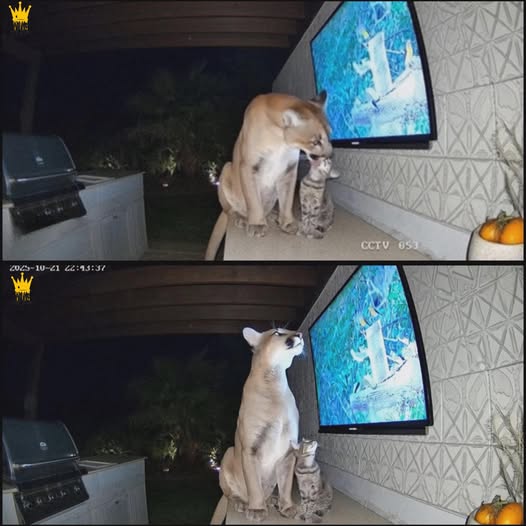
At first, the footage showed the family’s house cat wandering across the patio toward her favorite outdoor screen where she liked to sit and watch “cat TV.” Moments later, an unexpected visitor appeared: a mountain lion calmly climbing onto the backyard table. The big cat settled beside the small house cat, both animals staring peacefully at the screen as if they had arranged a morning viewing party.
But the moment that truly astonished neighbors came next. The mountain lion leaned in slowly and gently touched the house cat’s head with what looked like a soft, grooming-like gesture. For a second, the scene resembled a mother caring for her young, even though the two animals were from entirely different worlds.
This unusual interaction sparked conversation, fascination, and plenty of speculation. Wildlife experts suggested that the mountain lion might have briefly mistaken the smaller cat for a young member of her species—a possibility, though rare. The homeowners brought their cat inside for safety and peace of mind, anticipating that the large visitor might return to check on what she thought could be her “kitten.”
This incredible moment, captured in quiet morning stillness, opens a window into the complex relationship between wildlife, domesticated animals, and the thin borders where their worlds touch.
Understanding the Encounter: Why a Mountain Lion May Approach a House Cat
Behavioral Overlaps Between Big Cats and Small Cats
Domestic cats share ancestry with wild feline species, and although their habits differ, some instincts remain surprisingly consistent across sizes. Grooming-like gestures, relaxed body language, and curiosity-driven behavior can appear in both domestic and wild cats.
Scientific observation shows that felines rely heavily on scent and species-specific cues to distinguish one another. In a calm environment, especially during early morning or late evening hours when lighting and shadows soften visual details, it is possible—though not typical—for an animal to misinterpret what it sees.
Wildlife biologists note that mountain lions are cautious animals with strong maternal instincts. A mountain lion searching the area may briefly approach something that resembles a young feline shape or movement pattern. This does not mean that the lion intended any harmful interaction. Many such encounters are driven by curiosity rather than territorial behavior.
Why the Scene Looked So Gentle
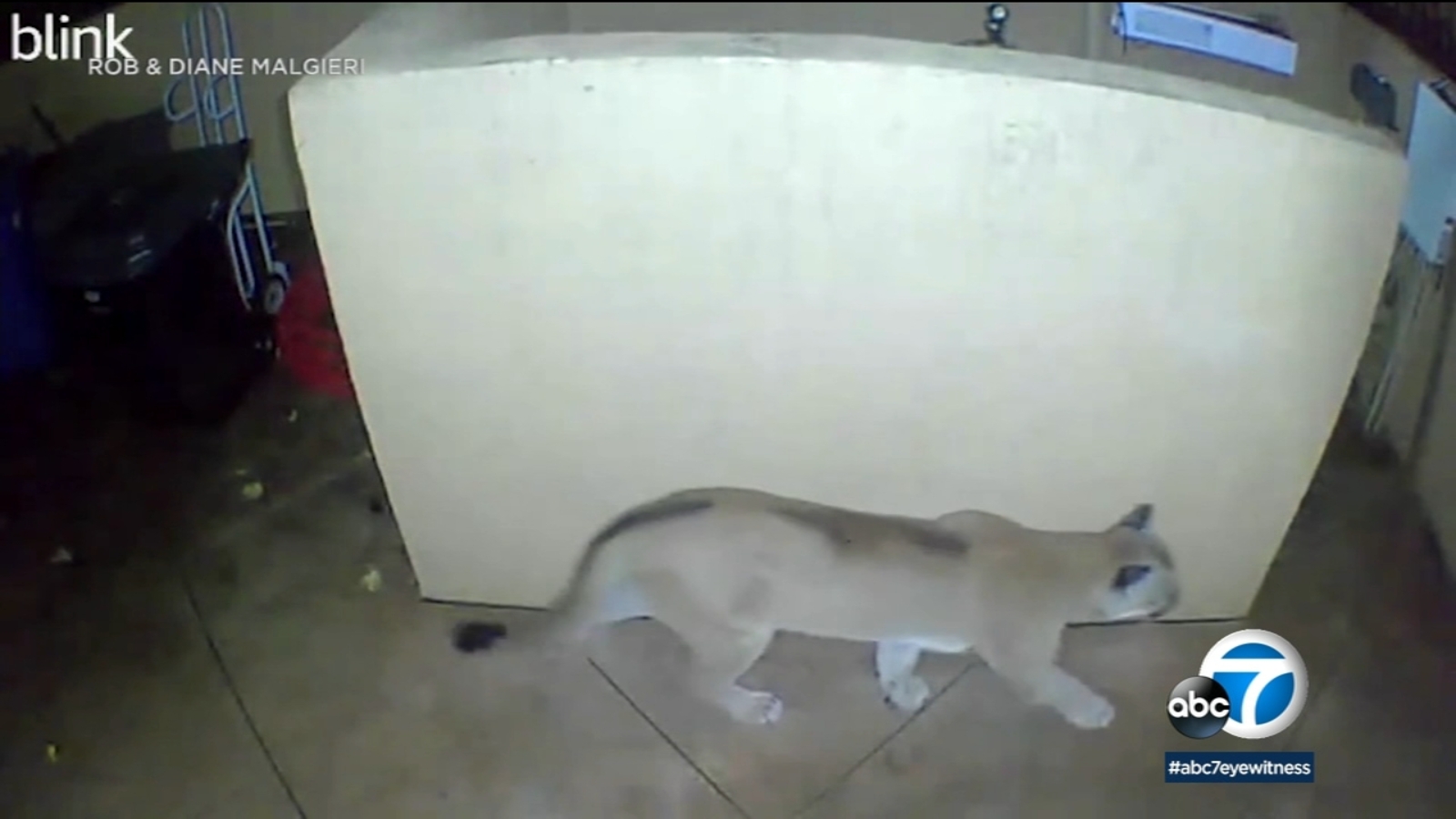
Footage of the moment showed relaxed postures in both animals. The house cat appeared calm, and the mountain lion showed no signs commonly associated with stress or defensive behavior. Grooming-like actions in felines are often associated with bonding, reassurance, or maternal instinct.
Experts emphasize that while such moments are extremely rare, they reflect the subtler, lesser-known side of wildlife: quiet observation, curiosity, and interaction shaped by instinct rather than intent.
Mountain Lions in Human Environments: A Look Through Myth and Culture
Cultural Stories and Symbolism
Throughout history, mountain lions have held a special place in the stories of many cultures. In several Indigenous traditions across North America, the mountain lion symbolizes strength, intuition, and guardianship. Some legends describe the animal as a protector of landscapes and a guide through difficult terrain. In other stories, the mountain lion is portrayed as a quiet, observant presence—an animal that moves with purpose but avoids unnecessary conflict.
Folklore from different regions often highlights the mountain lion’s ability to appear silently and leave just as quietly. This ability to move through the world with grace has inspired generations of storytellers. The recent backyard footage seems to echo some of those old stories, showing a moment of unexpected calm rather than fear.
While myths should not be taken as scientific evidence, they offer an interesting perspective on how communities have long seen the mountain lion as more than a symbol of the wilderness. Encounters like this one remind us why such stories endure.

Modern Interpretations and Human Fascination
Today, mountain lions still inspire a sense of wonder. Their rare appearances near residential areas often spark conversations about coexistence, habitat overlap, and the balance between human life and the natural world.
Moments like the backyard interaction show how myths of gentle guardianship can still resonate with people, even in modern suburban settings. While we must always rely on scientific understanding for safety and accurate information, cultural interpretations add depth to how we perceive and appreciate wildlife.

Scientific Perspectives on the Encounter
Wildlife Behavior and Unusual Interactions
From a biological standpoint, interactions between wild predators and domestic pets are uncommon. When they do happen, they are usually brief and shaped by instinctive caution. However, not all interactions align with assumptions. Many large predators, including mountain lions, spend significant time observing and evaluating situations before acting.
Experts reviewing the footage noted several key factors:
- There were no signs of aggression.
The mountain lion’s posture appeared relaxed, and the house cat showed no visible fear response. - The interaction likely stemmed from curiosity.
Wild animals often investigate unusual shapes, sounds, or behaviors, especially when they enter areas where humans live. - Maternal instinct may have played a speculative role.
If the mountain lion was a mother currently caring for young, her instincts might have temporarily influenced her interpretation of the small cat’s presence. - Environmental factors could have contributed.
Low morning light, scent patterns, or the stillness of the house cat might have encouraged the closer approach.

Why Bringing the Cat Indoors Was the Right Decision
While the captured moment was peaceful, wildlife organizations advise keeping pets indoors when a large animal is reported in the area. This protects both the pet and the wild animal, as any misunderstanding could cause unnecessary stress on either side.
The homeowners acted responsibly by bringing their cat inside and allowing the mountain lion to move on peacefully. This approach also reduces the chance of repeat close encounters, keeping the environment calm and safe.
The Intersection of Myth, Curiosity, and Ecology
This story sits at the crossroads of folklore, scientific observation, and human imagination. It shows how a single quiet moment can open the door to conversation about wildlife behavior, cross-species interactions, and the ways domestic spaces overlap with natural habitats.
The image of a mountain lion gently engaging with a house cat evokes emotions familiar across cultures: curiosity, care, and unexpected harmony. While science provides the framework for understanding such moments, myth and culture shape the stories we tell about them.
Coexistence With Wildlife: A Growing Conversation
As suburban neighborhoods expand into natural landscapes, encounters between humans and wildlife increase. Most wildlife organizations stress the importance of respectful coexistence, which includes understanding animal behavior, keeping pets safe, and allowing wild species to roam without interference.
The backyard footage serves as a reminder that wildlife behavior is often more nuanced than expected. Not every appearance is a sign of conflict; sometimes, it is simply a moment of curiosity or exploration.
Learning about these interactions helps communities build better strategies for peaceful coexistence, guided by scientific research and informed by cultural understanding.
Conclusion: A Moment That Sparks Human Curiosity
The peaceful encounter between a mountain lion and a house cat captured in a quiet backyard is more than a surprising video clip. It is a story that encourages thoughtful reflection about wildlife, instinct, connection, and the boundaries between human homes and natural habitats.
Moments like this remind us that curiosity is one of humanity’s most enduring qualities. We continue to seek understanding, ask questions, and explore the mysteries of the world around us. Whether through science, culture, or simple observation, these experiences invite us to look closer and appreciate the remarkable variety of life that shares our environment.
