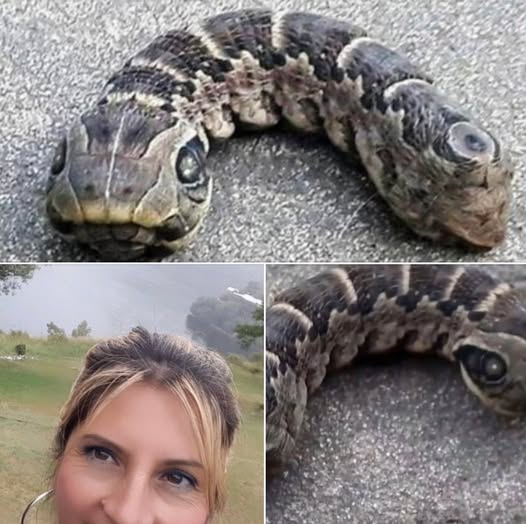

Gardens are often places of calm. They hold blooming flowers, quiet corners, and the gentle rhythm of nature. But sometimes, the natural world surprises us with something so unusual that it feels like a moment straight out of a storybook. That’s exactly what happened when a woman in Santa Fe, Argentina, stepped into her yard and encountered a creature unlike anything she had seen before.
What began as a moment of startle quickly turned into fascination. A small creature, barely the length of a finger, appeared to resemble a miniature serpent — complete with two striking “eyes” and the posture of something far more intimidating. But as she looked closer, she realized the truth was far more extraordinary.
This unusual moment became a reminder of nature’s breathtaking creativity and the power of mimicry, one of the oldest survival strategies on Earth.
A Startling Discovery in an Ordinary Garden
A Moment of Surprise
On an ordinary afternoon, 46-year-old Lujan stepped into her garden expecting nothing more than the usual quiet. Instead, her eyes locked onto something curled on a leaf — a creature that appeared to have the shape and coloring of a small snake. It lifted its front section slightly, giving the illusion of a raised head.
Instinctively startled, Lujan yelped in surprise, a reaction shared by many who suddenly encounter an unexpected animal. Her neighbors rushed over, eager to see what had caused the commotion.
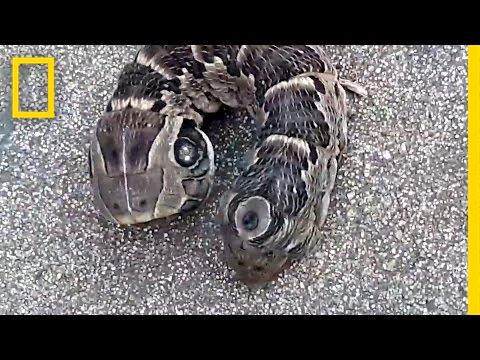
The creature had the size of a caterpillar, yet the face of something else entirely. At first glance, it looked like a double-headed serpent. But its tiny, smooth body and unusual markings suggested something more complex.

Curiosity Replaces Alarm
As the neighbors gathered, questions filled the air. Was this a rare species? A local curiosity? Something unusual passing through the region?
Lujan decided to record the encounter and share it online, hoping someone could identify the mysterious garden visitor. Within hours, the video sparked discussions across the internet. Many viewers were equally puzzled, amazed, or simply intrigued.
What they would soon learn is that this surprising creature was not a serpent at all — but a remarkable example of the natural world’s ability to protect itself through illusion.
The Truth Revealed: A Master of Disguise
Experts Step In
As the video circulated, biologists and insect enthusiasts began offering explanations. The creature was eventually identified as a caterpillar belonging to a species of moth known for its incredible mimicry abilities.
Its most notable features were two spots behind its head that looked exactly like eyes. These markings, combined with its rounded posture, created the illusion of a much larger and potentially dangerous animal. This visual deception helps it avoid birds, reptiles, and other predators.

The Magic of Mimicry
Mimicry is a well-documented natural strategy. Instead of having sharp spines, strong jaws, or other traditional defenses, some species rely on visual tricks to stay safe.
In this case:
-
The caterpillar curls upward, imitating the defensive posture of a snake.
-
Large circular markings resemble eyes.
-
Its shape appears thicker, giving the illusion of size and strength.
This clever display is not designed to frighten humans, but rather to confuse predators in the wild. By looking like a creature that many animals instinctively avoid, the caterpillar increases its chances of surviving long enough to transform into a moth.
Why This Creature Captures Our Imagination
Cultural Perceptions of Serpent-Like Forms
Throughout human history, snake imagery has carried symbolic meaning. In some cultures, serpents represent protection and wisdom; in others, they are associated with mystery and transformation. For generations, people have crafted stories, myths, and art inspired by creatures that embody these qualities.
When someone stumbles across an animal that mimics a snake — even if it’s only a harmless caterpillar — it naturally triggers both curiosity and caution. The resemblance taps into deep cultural associations, making the encounter feel both surprising and meaningful.

The Appeal of Unexpected Encounters
People are fascinated by natural mysteries, especially those found in familiar places. The idea that something remarkable could be hidden in a backyard or garden captures the imagination.
Stories like Lujan’s remind us that even ordinary spaces can hold extraordinary surprises. They encourage us to observe rather than assume, and to appreciate how complex and adaptive ecosystems really are.
A Scientific Look at Nature’s Deception
How Mimicry Evolved
According to entomologists, mimicry in caterpillars serves several purposes:
-
Deterring predators: If something looks dangerous, predators hesitate.
-
Buying time: A moment of confusion allows the caterpillar to hide.
-
Camouflage: When not imitating a snake, the caterpillar can blend into leaves or branches.
This dual strategy — disguise plus deception — is a powerful survival tool.
Why the Snake Illusion Works
Predators in nature make quick decisions based on visual cues. Anything resembling a larger creature signals potential risk. Even the suggestion of a snake-like silhouette can be enough to discourage animals from approaching.
This means the caterpillar doesn’t need to defend itself physically. Its entire protection strategy relies on a clever illusion.
The Beauty of Biodiversity
A Reminder of Nature’s Creativity
Lujan’s discovery highlights just how diverse and surprising the natural world can be. Many caterpillars display unique colorings and patterns, but very few possess markings convincing enough to mimic an entirely different animal.
Such adaptations remind us that ecosystems are filled with species interacting in surprisingly strategic ways. Every creature, no matter how small, plays a role in maintaining balance.
Encounters That Inspire Respect
Rather than causing alarm, moments like this help deepen our appreciation for wildlife. They teach us to:
-
observe carefully
-
respect unfamiliar creatures
-
stay curious
-
learn from natural behaviors
When people understand the science behind surprising encounters, fear transforms into fascination.
A Viral Moment That Brought People Together
The Spread of Curiosity
Once Lujan posted her video online, thousands of comments poured in. People from different countries shared their own sightings, asked questions, or expressed wonder at the caterpillar’s design. Experts chimed in with explanations, transforming confusion into education.
What began as a surprising moment in a garden quickly became an opportunity for global learning.
Why These Stories Matter
In a world filled with fast-moving information, genuine stories of nature spark connection. They remind us that despite our modern technologies, the natural world remains full of surprises waiting to be discovered.
A Reflection on Human Curiosity
Encounters like Lujan’s reveal something universal: humans are naturally curious. When we face something unfamiliar, our instinct is to observe, question, and learn. Curiosity has shaped cultures, inspired science, and driven exploration for centuries.
Nature continues to surprise us with its complexity, reminding us that even the smallest creature can broaden our understanding of the world. The snake-like caterpillar is not just a fascinating example of mimicry — it’s a symbol of how much remains undiscovered in our everyday surroundings.
Stories like this encourage us to look closer, appreciate more deeply, and celebrate the remarkable diversity around us.
Sources
-
en.newsner.com
-
National Geographic – Research on caterpillar mimicry
-
“Mimicry and Camouflage in Insects,” Journal of Entomology
-
Encyclopedia of Life – Species profiles on moth caterpillars
