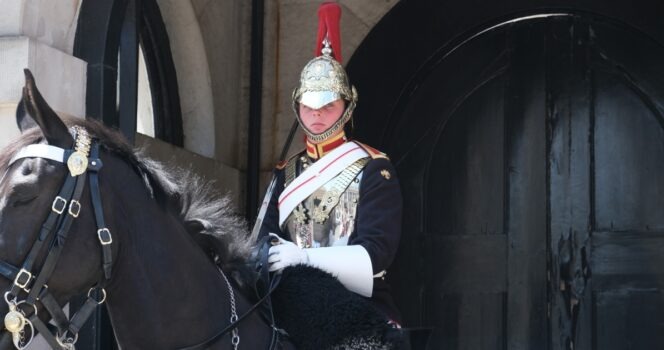

Tourist attractions often promise memorable experiences, especially when they involve iconic traditions, impressive uniforms, and majestic animals. In London, one of the most photographed sights is the King’s Guard — a symbol of history and ceremony that draws millions of visitors each year. Many tourists hope to capture the perfect picture beside the Guards and their horses, but sometimes excitement overshadows caution.
Recently, a viral video reminded the world why it is so important to respect both the animals and the people who serve in these ceremonial roles. The clip showed a tourist stepping too close to a King’s Guard horse and experiencing an unpleasant consequence. While the situation gained attention online, the deeper message is about understanding boundaries, safety, and the well-being of the animals involved.
This article explores the incident from both a cultural perspective and a behavioral-science viewpoint, offering insights into why such situations occur and how they can be avoided.

The Setting — A Historic Attraction in Modern Times
The Enduring Fascination of the King’s Guards
The King’s Guards are a longstanding symbol of ceremony and tradition in the United Kingdom. Their distinctive uniforms, stillness, discipline, and beautifully trained horses not only uphold tradition but also fascinate visitors from around the world.
Many tourists see the Guards as an essential stop, often hoping to capture a once-in-a-lifetime photo.
The horses, often towering and elegant, play an important role in ceremonial duties. Their presence adds grandeur to the setting, making them irresistible to visitors eager for photos — sometimes too eager.
Crowds, Cameras, and Close Encounters
The area around the Guards can become crowded quickly, especially on weekends. People wait for their moment beside the horse, often not realizing how sensitive animals can be to constant movement, noise, and unfamiliar gestures. Even the calmest horse can become stressed in a very busy environment.
This context sets the stage for what happened in the viral video.

The Viral Video That Sparked Conversation
What Happened During the Filming
A TikTok account documented a scene that rapidly gained millions of views. In the video, a group of tourists approached one of the King’s Guard horses for photos. The horse appeared visibly uncomfortable, likely from the steady flow of people moving closer than permitted.
One woman stepped too close, leaning toward the horse in an attempt to pose. In a moment that surprised onlookers, the horse reacted by biting her arm. The woman fell to the ground and received immediate assistance from those nearby.
Authorities and trained personnel responded quickly, ensuring she was safe and cared for.
Online Reactions and Public Debate
The video sparked a wave of online discussion. Many viewers emphasized that the horse had shown clear signs of discomfort beforehand. Comments pointed out that:
-
The horse appeared to shift its head repeatedly
-
Small signs of agitation were visible
-
Multiple visitors had moved too close before the incident
While social media reactions ranged from concerned to critical, many highlighted a broader issue: visitors sometimes underestimate how important it is to respect an animal’s space.

Cultural Significance — The Symbolism of the King’s Guard Horse
Why These Horses Are So Important
King’s Guard horses hold a special place in the United Kingdom’s ceremonial heritage. Carefully trained and well cared for, they participate in parades, state occasions, and public duties that represent centuries of tradition. They are not simple attractions; they are working animals with responsibilities that require focus, discipline, and comfort.
Culturally, interacting with them carries a sense of awe. Visitors often feel excited to be near such well-trained animals, but excitement must be balanced with respect.
Tourism and the Importance of Awareness
Tourist destinations that involve animals often highlight guidelines and signs explaining safe distances. These rules exist to protect both people and animals.
Despite reminders, some visitors may overlook them in the moment, especially when trying to capture a memorable photo.
This incident underscores how cultural attractions require shared responsibility — guests must stay aware, and facilities must continue to communicate guidelines clearly.
Scientific and Behavioral Insights
Understanding a Horse’s Warning Signals
Horses communicate primarily through body language. Behavioral experts emphasize that even mild signs may indicate discomfort. These can include:
-
Shifting weight
-
Moving the head away
-
Flicking ears backward
-
Tensing muscles
-
Slight nipping motions
To an untrained eye, these may appear insignificant, but for anyone familiar with horses, they are important signals.

Why Animals React in Certain Situations
According to equine behavior research, horses respond to sudden closeness as a protective measure. In crowded areas, they rely on cues from their environment. When people move too quickly or invade their space, a horse may react instinctively.
This reaction is not aggression — it is a form of communication. It signals discomfort or an attempt to regain personal space.
The Impact of Environment on Animal Stress
Scientists have long recognized that animals, especially large ones like horses, are sensitive to environmental factors such as:
-
Loud noises
-
Crowds
-
Continuous movement
-
Direct physical contact
Repeated exposure to these stimuli can increase stress levels, even in well-trained animals.
The video serves as an example of how environmental pressure can contribute to unexpected reactions.
Safety Guidelines for Interacting With Public Animals
What Visitors Should Keep in Mind
To ensure safe and respectful encounters, experts recommend the following:
-
Read posted signs carefully. They exist for a reason.
-
Maintain a safe distance. Even well-trained animals need personal space.
-
Avoid sudden movements. Calm, predictable actions help animals feel secure.
-
Never touch reins or equipment. These are part of the animal’s working gear.
-
Observe body language. If the animal looks uncomfortable, step back immediately.
These small actions contribute to a safer environment for everyone.

How Authorities Support Animal Well-Being
Organizations responsible for ceremonial animals follow strict care guidelines. Horses receive:
-
Professional training
-
High-quality nutrition
-
Veterinary supervision
-
Scheduled rest periods
Events like the one in the video often lead to renewed discussions about ways to further support animal comfort in busy public settings.
The Bigger Picture — Respecting Animals in Tourist Environments
Lessons Learned From Viral Moments
Viral videos can shape public understanding. While the clip of the King’s Guard horse drew attention for its dramatic moment, the underlying lesson is practical: animals deserve space, understanding, and respect.
These moments are reminders that even in places filled with excitement and tradition, emotional awareness and mindfulness are essential.
Shared Spaces Require Shared Responsibility
Tourists, staff, and authorities all play a role in maintaining a safe environment. When everyone follows guidelines and remains aware, interactions become more enjoyable and less risky.
This mindset supports the welfare of both animals and the people who come to admire them.
Conclusion: A Reflection on Human Curiosity
Humans are naturally drawn to animals, especially those connected to history and ceremony. Curiosity motivates us to approach, observe, and capture memories through photos. Yet true appreciation includes understanding the boundaries that keep everyone — people and animals alike — comfortable and safe.
The incident involving the King’s Guard horse reminds us that even the most majestic and well-trained animals have limits. By respecting those limits, we not only protect ourselves but also honor the traditions and creatures that make these experiences remarkable.
Curiosity is valuable when paired with awareness. When we explore the world thoughtfully, our memories become richer, our interactions more meaningful, and our respect for other living beings grows deeper.
Sources
-
Royal Household: Guidelines on Interacting With Ceremonial Guards
-
British Equine Veterinary Association: Equine Behavior Studies
-
Animal Welfare Institute: Stress in Working Animals
-
Tourism Safety Council: Best Practices for Animal-Related Attractions
-
Journal of Applied Animal Behaviour Science
