
A Moment That Changed the Forest
The forest was unusually quiet that morning. Sunlight filtered through the branches in soft patches, and a troop of langur monkeys moved slowly across the cliffside, grooming, playing, and chattering in their familiar rhythms. Hidden among the rocks, a small camera blinked silently from inside a lifelike robotic baby monkey—an invention created by wildlife filmmakers hoping to understand how these animals respond to the world around them.
What unfolded next felt like a scene from a storybook, the kind where nature reminds us of its gentle mysteries. The troop encountered the unfamiliar “infant,” and their reaction would go on to surprise scientists, filmmakers, and millions of viewers around the world.
This is the story of how a simple experiment turned into an emotional moment—one that continues to spark conversations about empathy, culture, and the fascinating similarities between humans and animals.

The Story Behind the Spy Monkey
Why Filmmakers Use “Robot Animals”
In recent years, wildlife filmmakers have increasingly turned to lifelike robotic replicas—called “spy creatures”—to observe animal behavior without disturbing natural routines. These devices are crafted with remarkable detail: soft features, realistic movement, and silent cameras that blend seamlessly into animal communities.
For the team behind the “Spy in the Wild” series, the goal was to capture intimate moments of wildlife social life. Among the various spy creatures introduced across different species, one of the most memorable was the robotic baby langur.

The Moment the Troop Found the Fake Infant
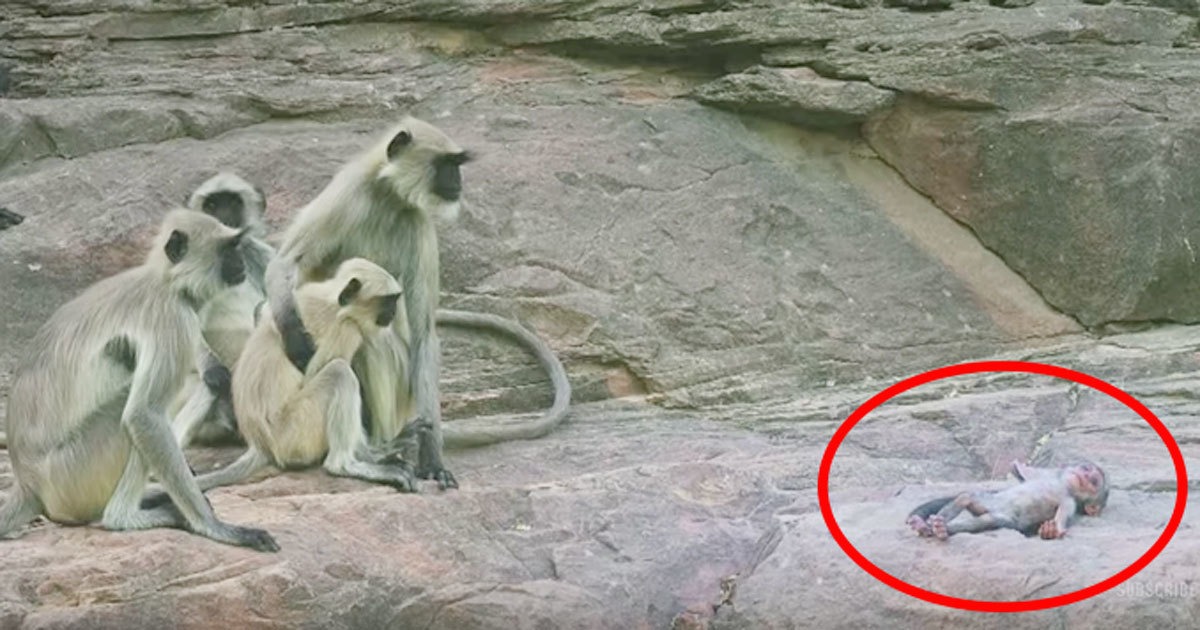
When the robotic infant was placed gently near the langur troop, something remarkable happened almost instantly. One female approached and carefully lifted it, as though welcoming a new little one into the group. Her movements were slow and mindful, almost instinctive—similar to the way human caregivers cradle a child.
Her attention drew interest from the rest of the troop. Individuals gathered around, observing with curiosity. They touched the fake infant, inspected it, and seemed to treat it as a newcomer who needed care.
A Sudden Shift in Mood
At one moment, the robot slipped from the arms of the langur holding it and landed softly on the ground. Because the device did not move, the troop seemed to interpret this stillness as a sign that something was not right.
Immediately, their behavior changed from curiosity to concern.
The langurs approached it again, surrounding the little figure in a quiet circle. They gently held it, pressed it close, and appeared to check for signs of responsiveness. Their movements reflected a form of communal caregiving—an instinctive behavior seen in many primate species.
Although the device was simply motionless machinery, the langurs reacted as though it were a real infant who needed their attention and support. What followed became one of the most touching moments ever captured in wildlife filmmaking.

Cultural and Mythological Significance of Langurs
Why Langurs Hold a Special Place in Human Imagination
Langurs have long been part of human culture, especially in regions where they live alongside communities. Throughout history, their expressive faces, strong family bonds, and playful behavior have inspired stories, artworks, and traditions.
In some cultures, the langur symbolizes:
-
Unity and family harmony, inspired by their cooperative social structure
-
Mindfulness and reflection, reflecting their calm moments of grooming and resting
-
Loyalty, seen through the way groups stick together
These interpretations—while not scientific—show how deeply people feel connected to animals that mirror aspects of human behavior.
Empathy in Folklore
Folktales across Asia often portray langurs as creatures with deep emotional lives. While these stories are imaginative, they highlight a long-standing belief that animals are capable of forming meaningful bonds. The moment captured by the spy monkey experiment felt, to many viewers, like living folklore—an echo of these cultural themes appearing in real life.
Scientific Perspective: Do Animals Experience Empathy?
Understanding Empathy in the Animal World
Scientists define empathy in several ways, ranging from simply noticing another’s feelings to actively providing comfort. While definitive conclusions are still debated, there is consensus that many species—especially social mammals—display behaviors that resemble empathetic responses.
Primates, including langurs, have been observed:
-
Comforting group members who appear distressed
-
Sharing food with infants and weaker individuals
-
Staying close to troop members who seem unwell
-
Offering gentle physical reassurance
These behaviors do not prove that animals experience emotions exactly as humans do, but they strongly suggest patterns of social sensitivity and nurturing instincts.

Why the Spy Monkey Experiment Matters
The reaction of the langur troop toward the robotic infant was unexpected even for experienced researchers. It appeared to mimic behaviors associated with caregiving and concern. Scientists, however, caution against drawing absolute conclusions: animals interpret cues differently, and their reactions may be based on instinct rather than complex emotional reasoning.
Yet even with scientific restraint, the moment remains meaningful. It highlights:
-
The strength of caregiving instincts
-
The role of social bonds in primate communities
-
The possibility that empathy-like behavior may be more widespread in nature than previously understood
These findings gently encourage further study while reminding us that science is a journey of continuous discovery rather than fixed answers.
How This Moment Touched Millions
Why the Video Resonated With So Many People
When the footage was released, viewers around the world shared a similar reaction: surprise, tenderness, and a sense of connection. Many people felt moved by the softness of the langurs’ response and the way the troop gathered together in quiet unity.
The video became widely shared not because of dramatic visuals but because of the emotions it suggested. In an age when news can feel overwhelming, moments of compassion—whether human or animal—stand out.

The Power of Storytelling in Wildlife Conservation
Emotional storytelling has become a powerful tool for wildlife conservation. When people see animals display relatable behavior, they often develop stronger feelings of respect and curiosity. The spy monkey experiment offered a glimpse into the emotional architecture of another species and reminded audiences that wildlife is rich with social complexity.
By humanizing animals—not through exaggeration, but through careful observation—filmmakers and researchers help build a bridge between viewers and the natural world.
What We Can Learn From the Langurs’ Reaction
A Reflection on Compassion
Although the robotic infant could not feel or respond, the langurs interacted with it as though it mattered. They treated it with gentleness, interest, and a kind of communal responsibility. These actions remind us that compassion is not a trait limited to humans alone. Whether driven by instinct, social structure, or something deeper, the langurs showed that caring behavior is woven into the fabric of life in many forms.
A Mirror into Ourselves
Moments like this encourage us to reflect on the nature of empathy. They ask us to question where compassion comes from and how it shapes our communities. If species separated from us by millions of years can show behaviors that feel familiar, perhaps empathy is more universal than we once believed.
This story does not provide definitive scientific answers—nor does it need to. Its value lies in sparking curiosity and inspiring appreciation for the world around us.

Conclusion: The Mystery That Connects Us All
The day the robotic baby langur met a real troop of monkeys, no one expected a quiet moment of tenderness to emerge from the forest. Yet it happened—naturally, spontaneously, and beautifully. The langurs reacted with a sensitivity that resonated across cultural borders and scientific fields.
This gentle encounter reminds us that the natural world is full of subtle wonders. It encourages us to keep asking questions, to stay curious, and to remain open to the possibility that empathy exists in many forms—seen and unseen, familiar and surprising.
In the end, the story of the spy monkey is not just about animals. It is about how every living community, human or otherwise, is connected by the simple, powerful instinct to care.
Sources
-
en.newsner.com
-
BBC Earth – Spy in the Wild series
-
Research on primate social behavior from Smithsonian Institution and National Geographic
