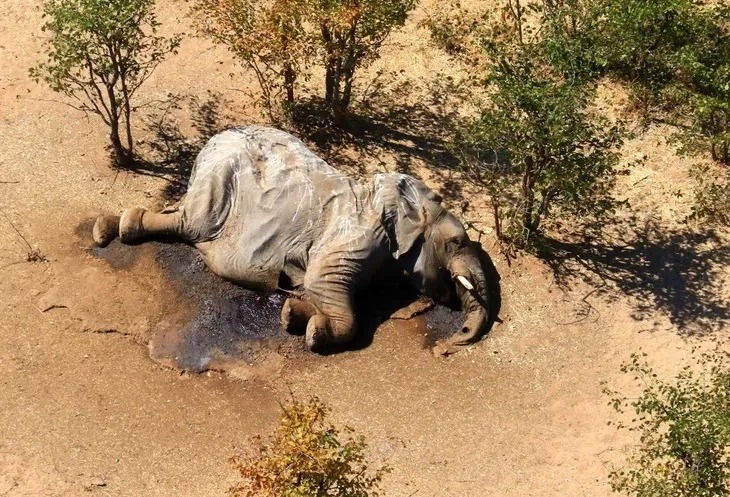

In the soft morning light of the Okavango Delta, a place often described as one of Africa’s most peaceful natural sanctuaries, local guides noticed something that stirred deep curiosity. Elephants, usually seen wandering in calm herds, appeared fewer in number. Tracks that once crisscrossed the sand felt strangely uninterrupted. Rumors began circulating through nearby communities about an unusual decline, raising quiet concern yet offering no clear explanation.
This mystery soon caught the attention of conservationists, researchers, and storytellers around the world. How could such majestic creatures experience a sudden shift in their presence? What forces of nature or environment could lead to such an unexpected change?
The search for answers grew into an international conversation, blending cultural symbolism, wildlife conservation, environmental science, and a fascinating mix of speculation and scientific reasoning. And through it all, one truth remained: the mystery invited people everywhere to look closer at the delicate balance between nature and humanity’s understanding of it.

Understanding the Setting: A Land Where Elephants Are More Than Wildlife
A Place of Deep Connection
Botswana is home to one of the largest elephant populations on Earth. For many local communities, elephants are not merely animals; they are woven into stories, traditions, and generational knowledge. The creatures symbolize wisdom, memory, unity, and resilience. To see them wandering across plains or bathing in river shallows is to witness a living emblem of the region’s cultural and ecological identity.
The Okavango Delta itself is a wonder. Each year, floodwaters from distant mountains transform a dry landscape into a vibrant oasis, attracting wildlife from all directions. Elephants thrive here because the land offers space, nourishment, and safety—a combination rarely found in an increasingly urbanized world.
So when guides and wildlife observers noticed unusual patterns among elephants in 2020, the cultural impact was as significant as the ecological one. It was not simply a matter of numbers; it was a disruption to a story that has been unfolding for centuries.

A Mystery That Sparked Global Attention
An Unexplained Decline
By mid-2020, local reports indicated an unusual number of elephants appearing inactive or absent across certain areas. While exact counts varied, the trend was consistent enough to raise questions. The situation intrigued scientists not because of any dramatic scenes, but because elephants are highly resilient animals. A sudden, unexplained change in their behavior or population distribution is rare.
Conservation groups called for investigation not through urgency but through curiosity—a desire to understand an ecological puzzle.
Because there were no clear indicators pointing to a single cause, speculation began to circulate. Researchers considered everything from natural environmental fluctuations to climate-related changes and possible ecological stressors.
Importantly, even early observers emphasized that no graphic conditions were noted, and the majority of elephants in the region continued to appear active and healthy. Still, the mystery encouraged deeper monitoring and collaboration among wildlife professionals.

Cultural Interpretations: Elephants in Stories, Symbols, and Memory
The Wisdom Keepers of the Land
Elephants hold a sacred place in many African cultures. Across Botswana and neighboring countries, they symbolize leadership and knowledge. They are seen as guardians of the land, able to remember routes, water sources, and safe paths across vast distances.
In folklore, elephants sometimes represent messages from ancestors or nature itself. When anything unusual happens involving them, local storytellers interpret it through a cultural lens, asking what lessons might be hidden behind the event.
Some elders suggested that the unusual elephant patterns could be a sign of environmental transformation—a gentle reminder that nature constantly shifts, and communities must remain attentive to its rhythms.

Myths of the Delta
Legends describe the Okavango as a place where water spirits and ancient guardians watch over the land. Elephants, in these stories, are the physical embodiment of protection. When observers noted the mysterious decline, some storytellers speculated that this shift might be nature’s way of signaling a new chapter for the region.
These interpretations are symbolic rather than literal, but they reflect how deeply elephants are woven into local identity. The mystery was not just a biological question; it was a moment of cultural reflection.
Scientific Perspectives: Searching for Answers in Nature’s Complexity
Environmental and Ecological Factors
Scientists approached the situation with careful, measured consideration. Environmental systems are complex, and elephant populations respond to a wide range of subtle influences, including:
• seasonal water supply
• vegetation changes
• migration shifts
• nutrient availability
• climatic variations
Researchers studying the Okavango highlighted how even minor fluctuations in water levels can alter elephant movement. If certain areas became temporarily less favorable due to water or vegetation cycles, elephants might naturally redistribute themselves.
This means the unusual patterns might not reflect a long-term issue at all, but simply a temporary ecological adjustment.

Speculation About Natural Phenomena
Some experts speculated about natural phenomena such as algae or minerals in certain water sources. These elements can appear seasonally and influence wildlife activity. Though no conclusive evidence confirmed this as a primary factor, researchers considered it a possibility worth exploring.
Other scientists studied patterns of natural foraging behavior. Elephants are highly intelligent and often modify their routes based on learning, resource availability, and social influences from matriarchs.
The Role of Climate and Weather Patterns
Climate change is known to affect ecosystems globally. Shifts in rainfall, temperature, and water cycles can subtly influence wildlife populations. While no direct link was established for the situation in Botswana, researchers acknowledged that broader environmental trends may contribute to unusual wildlife patterns worldwide.
Cross-Border Movement
Elephants often migrate across wide territories spanning multiple countries. It is possible that some herds simply relocated temporarily, as they have done for generations. Because many movements occur through remote areas, not all wanderings are immediately observed.
Balancing Culture and Science: A Harmonious Search for Meaning
The mystery surrounding Botswana’s elephants created a unique bridge between cultural storytelling and scientific investigation.
Community elders viewed the situation through a symbolic lens, reflecting on nature’s rhythms and the relationship between people and the land. Scientists approached it through data, observation, and careful analysis. Instead of conflicting, these perspectives complemented one another.
Cultural interpretations provided emotional grounding and historical context. Scientific inquiry provided structure, explanation, and methodology. Together, they painted a fuller picture of the mystery.
What emerged was not fear or alarm, but a collective appreciation for how much remains undiscovered in the world’s ecosystems.
What the Mystery Teaches Us About Elephants and the Environment
The Resilience of Elephants
Despite the unusual decline noted in 2020, elephants in Botswana remain one of the most resilient wildlife populations on the continent. Conservation efforts, community stewardship, and protected areas contribute to their long-term stability.
The event served as a reminder to continue monitoring environmental health and ensuring ecosystems remain balanced.
The Importance of Scientific Transparency
Researchers emphasized the value of open communication. By sharing findings and uncertainties with the global community, they encouraged transparent dialogue rather than speculation. This collaborative approach strengthened efforts to understand the situation without creating unnecessary concern.
Nature’s Complex Patterns
Perhaps the biggest lesson is that nature rarely follows simple narratives. Elephants, ecosystems, and environmental cycles are part of a vast, interconnected system. Understanding one piece requires studying many others.
Unusual events do not always signify crisis; sometimes they reveal hidden dynamics that prompt deeper learning.
Conclusion: The Enduring Pull of Mystery and Human Curiosity
The story of Botswana’s elephants remains one of nature’s gentle mysteries. It captivated the world not because it was dramatic or alarming, but because it reminded us how much we still do not know. Elephants continue to roam the Okavango Delta as symbols of strength, memory, and harmony. Their presence inspires awe, cultural reflection, and scientific inquiry all at once.
In the end, the mystery encouraged people to look more closely at the natural world. It showed that curiosity is one of humanity’s greatest strengths. When faced with questions we cannot yet answer, we explore, observe, learn, and appreciate the beauty of nature’s complexity.
Sources
National Geographic – Wildlife and Conservation Reports
BBC Earth – Environmental Coverage on African Ecosystems
Smithsonian Magazine – Scientific Explanations of Animal Behavior
IUCN African Elephant Status Reports
Botswana Department of Wildlife and National Parks Publications
