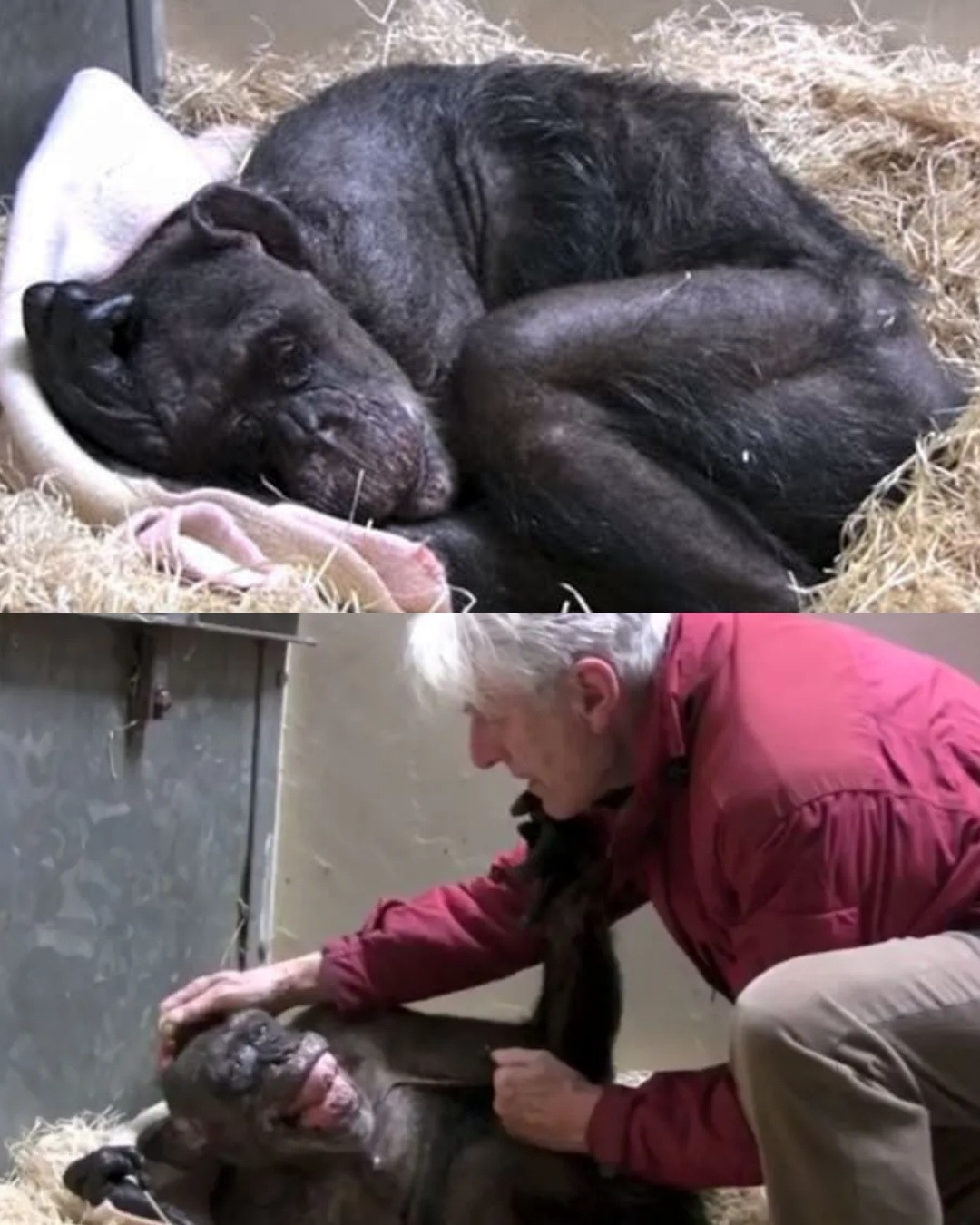

There are moments in the natural world that feel almost like quiet miracles—moments when an animal recognizes a familiar face, reaches out, and reminds us that connection can cross species lines. One such moment captured global attention: the joyful reunion between Mama, a beloved chimpanzee, and Jan van Hooff, the biologist who had known her for decades. Their interaction was tender, filled with trust built over many years, and it offered the world a rare glimpse into how deeply animals can remember, respond, and bond.
This story continues to inspire educators, scientists, nature lovers, and readers of all ages. It blends the warmth of personal connection with insights from primate research, cultural symbolism, and the emotional intelligence found throughout the animal kingdom. With a gentle tone and a focus on harmony, this article explores Mama’s legacy, the significance of that beautiful reunion, and what modern science suggests about the emotional lives of great apes.
A Story That Begins With Friendship
Mama was more than a member of her chimpanzee community—she was its guiding presence. For many years, she lived at the Royal Burgers’ Zoo in the Netherlands, where she served as a wise and stabilizing figure among the chimps. Her personality blended confidence, patience, and a remarkable ability to navigate relationships within the group. Caretakers often described her as charismatic and attentive, a natural leader who encouraged cooperation rather than conflict.
Her connection with behavioral biologist Jan van Hooff developed over decades of careful study, observation, and mutual respect. Jan, one of the founders of the Chimpanzee Colony at Burgers’ Zoo, had met Mama many years earlier. Over time, the two formed a bond built on familiarity, calmness, and gentle communication.
In many ways, their relationship reflected a broader story: when humans and great apes interact in ethical, respectful environments, they can form connections grounded in trust. Mama’s story reminds us that when we treat animals with patience, empathy, and dignity, they often respond with recognition and warmth.
The Day Mama Reached Out
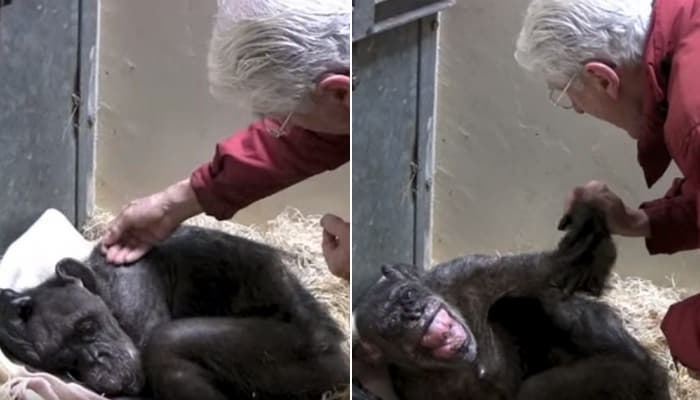
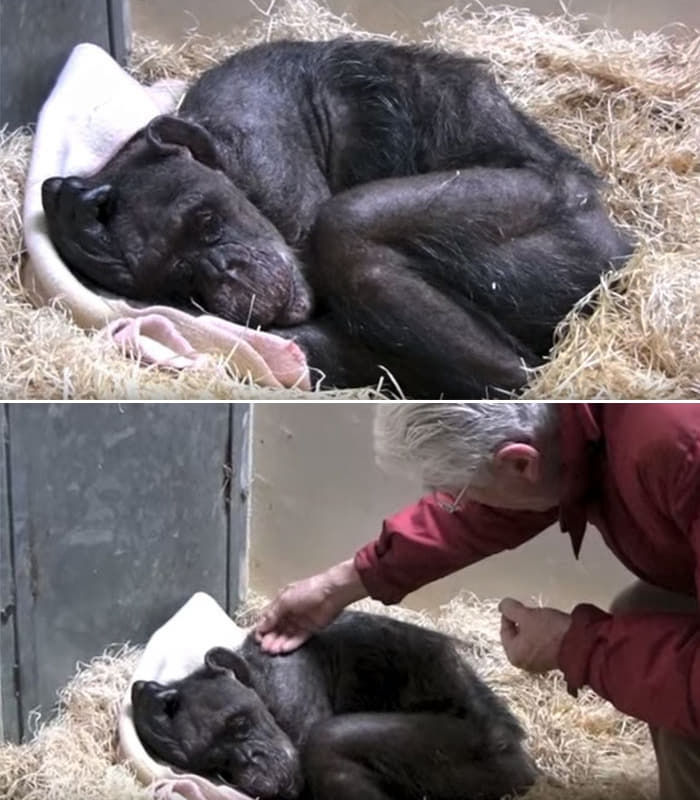
The touching moment between Mama and Jan was recorded during a visit that highlighted the strength of their long friendship. As Jan approached her, something remarkable happened. At first, she didn’t seem fully aware of who was near her. But as soon as Jan spoke softly and reached toward her, everything changed.
Mama recognized him.
With sudden brightness in her expression, she leaned forward and welcomed him with unmistakable joy. She touched his face, held his hands, and embraced him with a sense of familiarity that was both touching and profound. Her smile—gentle, full, and unmistakable—was one of the most unforgettable parts of the entire interaction.
This moment resonated with millions around the world not only because it was heartwarming, but because it reflected something deeply relatable: the comfort of seeing someone who has played an important role in your life. Many viewers described feeling as though they were witnessing an expression of gratitude and trust, conveyed through gestures rather than words.

Why This Moment Captivated the World
Mama’s reunion with Jan became a global symbol of emotional connection. People from different cultures and backgrounds felt drawn to the video because it evoked universal themes: memory, friendship, and affection.
Even without human language, Mama communicated clearly through touch, eye contact, and facial expression. Her reaction offered a reminder that emotions such as recognition, reassurance, and joy are not limited to human experiences.
Beyond its emotional impact, the moment also encouraged questions about how animals remember and understand the world around them. It became an opportunity to explore scientific perspectives on primate cognition and the capacity for meaningful relationships.
Cultural Significance: Chimpanzees in Human Stories
Across continents, chimpanzees have appeared in myths, folktales, and cultural narratives. While stories vary, many traditions portray them as clever, expressive beings capable of understanding social harmony.
In some African oral traditions, chimpanzees are symbols of community and cooperation. They appear as wise observers who demonstrate the importance of unity within a group. Other cultures tell stories that highlight the playful and curious aspects of primate behavior, mirroring the traits people often see in chimpanzees in real life.
Mama’s story fits beautifully into this broader cultural landscape. Like the symbolic figures in traditional tales, she became a reminder of how interconnected all living beings truly are. She invited us to look at the natural world with appreciation and kindness, celebrating the similarities we share with other species.
These cultural connections help us reflect on why certain animal stories resonate so strongly. When we see courage, friendship, or recognition in the animal kingdom, it awakens something familiar within us: a sense of empathy that has shaped human storytelling for generations.
Scientific Perspectives: What Research Says About Chimpanzee Emotion and Memory
While the emotional aspect of Mama’s reunion is uplifting, scientists also look at such moments through the lens of research. Thankfully, modern primatology offers substantial evidence that great apes possess rich inner lives, capable of memory and complex social behaviors.
Chimpanzee Emotional Intelligence
Studies suggest that chimpanzees can experience a wide range of emotions, including comfort, reassurance, curiosity, and contentment. Their facial expressions are remarkably nuanced, allowing them to communicate subtle feelings within their communities. The warmth Mama showed toward Jan aligns with research indicating that great apes can form long-lasting bonds with individuals they trust.
Recognition and Long-Term Memory
Scientific studies indicate that chimpanzees have excellent long-term memory, both visual and social. They can remember individuals, past interactions, and patterns of behavior for many years. Mama’s recognition of Jan fits naturally within this understanding of primate cognition.
Researchers have observed that chimpanzees:
-
recall familiar voices or gestures
-
remember companions even after long separations
-
respond differently to individuals depending on past interactions
Mama’s joyful response is consistent with these findings and highlights the continuity of social memory in great apes.
Touch as a Form of Communication
Touch plays a central role in chimpanzee social behavior. Grooming, holding hands, and leaning close are all ways in which they express reassurance and connection. When Mama reached out to hold Jan’s hands, her gestures aligned with the natural communication patterns found throughout chimpanzee communities.
Human–Animal Bonds in Care Settings
Studies in animal behavior suggest that when humans interact respectfully with animals over extended periods, bonds can form that resemble trusted companionship. Mama and Jan’s connection reflects decades of positive interactions, making their reunion not just emotional but scientifically understandable.
Mama’s Legacy: Leadership, Learning, and Lasting Inspiration
Mama’s influence reached far beyond her reunion moment. As a respected leader within her group, she demonstrated qualities that scientists continue to study and admire.
A Calming Presence
Within her chimpanzee community, Mama often helped maintain social stability. Her calm demeanor and authoritative presence made her a guiding figure, particularly for younger chimps learning how to navigate group relationships.
A Bridge Between Science and the Public
Mama became an ambassador for understanding the emotional world of great apes. Her story helped many people appreciate the importance of conservation, respectful care, and scientific study designed to protect wildlife with kindness and integrity.
An Enduring Symbol of Connection
For millions of viewers, Mama remains a symbol of the meaningful connections that can form between species. Her joyful recognition of Jan continues to inspire discussions about empathy, memory, and the responsibilities humans hold toward the natural world.
Why Stories Like Mama’s Matter
We live in a time when technology connects us instantly, yet stories from the natural world remind us of the deep emotional roots we all share. Mama’s story is peaceful, hopeful, and full of warmth—qualities that resonate far beyond the scientific or cultural aspects.
It encourages children and adults alike to ask questions such as:
-
How do animals form friendships?
-
What do they remember?
-
How can we better understand and protect them?
These questions guide not only research but also compassion.
Stories like Mama’s gently teach us to look at animals with greater respect. They remind us that patience and care can create bridges of understanding, and that kindness is a universal language.
Reflection: The Kindness We Recognize in Others
When Mama reached out to Jan, she reminded the world that recognition is one of the quiet gifts of life. Whether between humans or across species, the experience of being remembered and welcomed is profoundly moving. Her story encourages us to approach the world—both people and animals—with gentleness and empathy.
In observing Mama, we see a reflection of our own longing for connection. Her warmth invites us to celebrate curiosity, appreciate the emotional lives of other beings, and continue learning about the remarkable intelligence found throughout nature.
Sources
-
Royal Burgers’ Zoo information on chimpanzee behavior and care
-
Peer-reviewed primate cognition and emotional intelligence studies
-
Publications by Jan van Hooff and colleagues on chimpanzee social structure
-
Educational materials from reputable primatology institutions
-
Cultural studies examining the symbolism of primates in folklore
