
Deep inside the lush greenery of Costa Rica’s tropical forests, life often moves at a peaceful and unhurried pace. Tall trees filter soft sunlight onto the forest floor, and the sounds of nature blend into a calming rhythm. Yet even in such a serene environment, moments of uncertainty can occur — moments that remind us how deeply connected animal families are and how meaningful every life in the wild can be.
This story begins on what seemed like an ordinary day at Manzanillo National Park. Rangers were going about their routine when they discovered something unusual on the ground: a tiny three-fingered sloth, alone and calling out. Despite its small size and gentle voice, the baby sloth’s cry was unmistakably a call for its mother. What happened next became a beautiful example of teamwork between humans and nature, leading to an emotional reunion that touched hearts around the world.
A Baby Sloth in Need of Help
Discovery at Manzanillo National Park
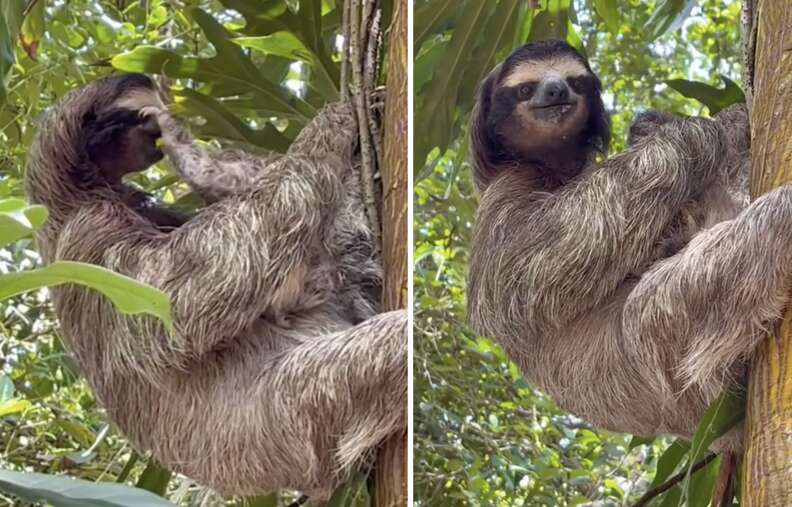
On October 10, staff at Manzanillo National Park came across a baby sloth lying on the forest floor by itself. The small animal was vocalizing, making sounds that suggested it was trying to find its mother. While sloths are known for their slow movements and calm nature, they are also deeply connected to their young, especially during the earliest stages of life. A baby sloth rarely leaves its mother’s side, which made this discovery especially concerning for the park rangers.
Understanding the situation required quick yet gentle action, the staff contacted the nearby Jaguar Rescue Center, an organization renowned for its compassionate work in wildlife care and rehabilitation.
A Safe Examination
When the rescue team arrived, they carefully transported the baby sloth to their veterinary area. The first priority was to ensure the young animal was healthy. After a complete check-up, the veterinarians confirmed that the baby sloth had no signs of injury or illness. This brought a wave of relief — physically, the baby was perfectly fine.
With its health secured, the focus shifted to the next and most important step: finding its mother.
A Clever Plan to Reunite Mother and Baby
Understanding Sloth Communication
Sloths may be quiet animals, but baby sloths use distinctive sounds to communicate with their mothers. These calls help the mother locate her young, especially when the baby becomes separated. The rescue team decided to use this natural behavior to their advantage.
They recorded the baby sloth’s call — a unique sound filled with emotion — and brought a speaker back to the exact area where the baby had been found. The idea was simple yet thoughtful: play the recording and hope the mother, if nearby, would recognize her baby’s voice.
Waiting in a Forest Full of Hope
As the recording echoed softly through the trees, the rescuers waited patiently. Tropical forests are full of sounds, but a mother sloth knows her baby’s voice better than anything else.
Minutes passed. Then more time. Nearly an hour went by before something remarkable happened.
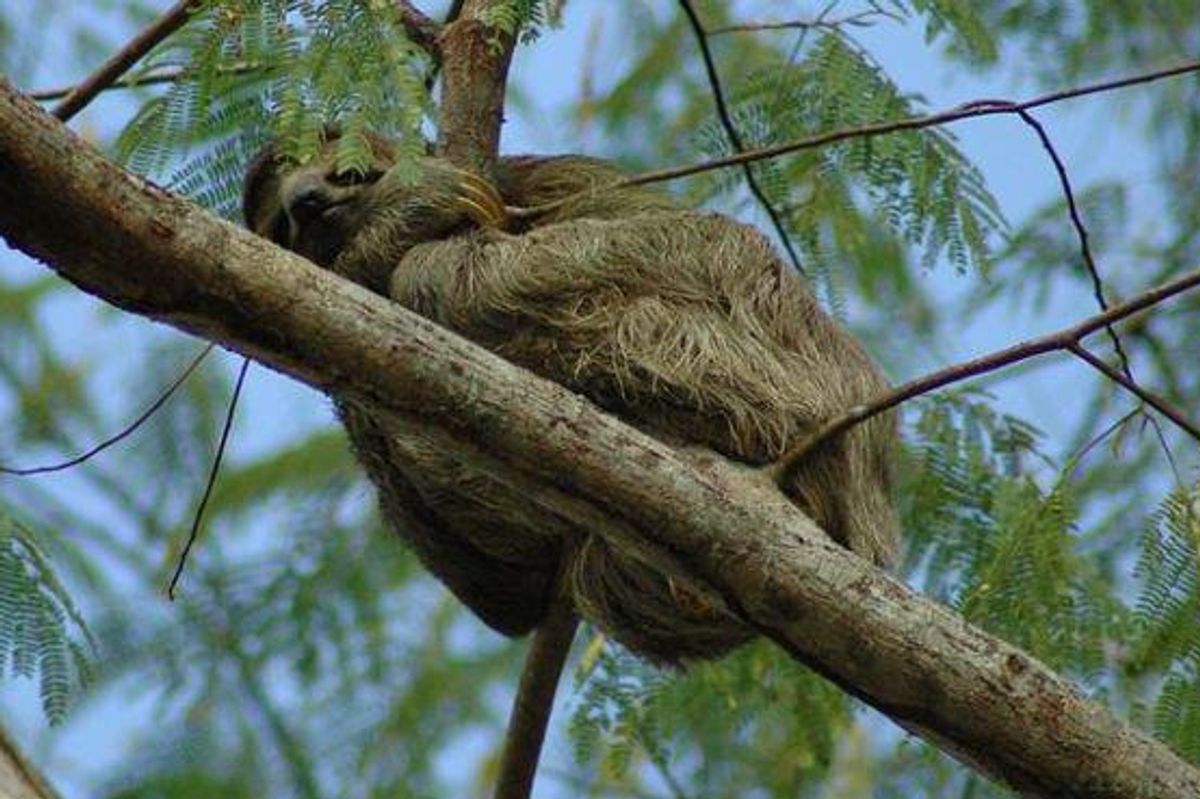
High in the branches above, a sloth began to move with intention. Slowly and steadily, a female sloth made her way downward. The rescue team watched quietly, hopeful that this was indeed the mother responding to her young.
Their patience was rewarded. The mother continued descending — drawn by the familiar cry she had undoubtedly been waiting to hear.
A Reunion Filled with Comfort and Connection
The Moment Mother and Baby Meet Again
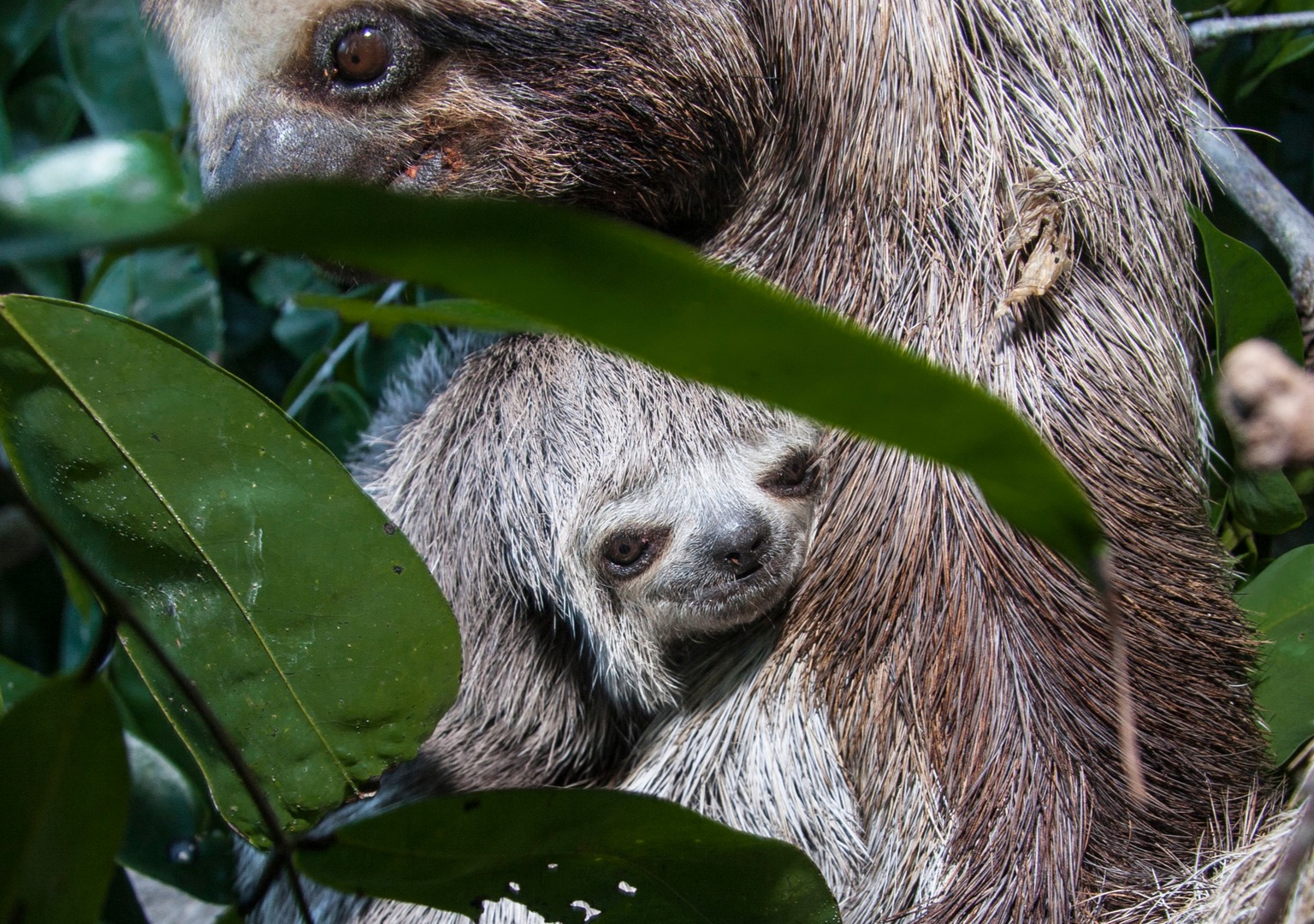
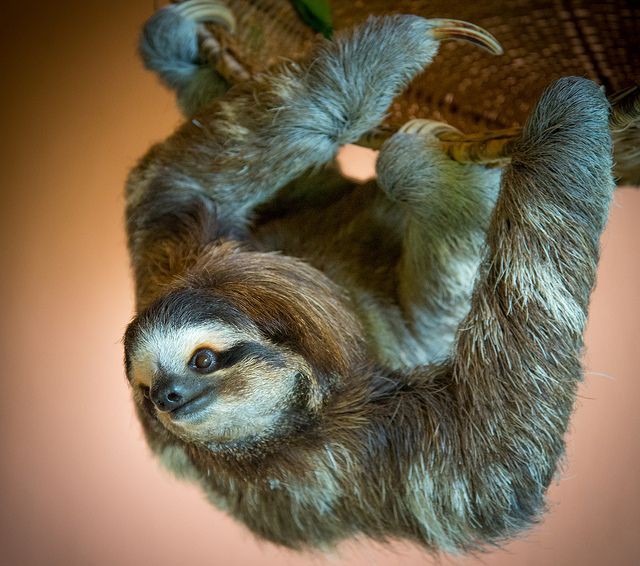
When the mother sloth finally reached a low enough branch, the rescue team gently presented the baby to her. Without hesitation, she extended her arms in the calm, deliberate way only sloths can. The baby nestled comfortably into her embrace, clinging to her just as sloths naturally would in the wild.
It was a moment that needed no words. The mother held her baby tightly, and the connection between them was unmistakable. The rescuers had succeeded — not through force or intervention, but through a thoughtful understanding of animal behavior and a deep respect for the bond between mother and child.
A Peaceful Return to the Trees
With her baby secured, the mother slowly climbed back up into the canopy. Sunlight filtered through the leaves, creating a warm glow around them. At one point, the mother appeared to pause and look toward the rescuers — a gentle moment many viewers interpreted as gratitude.
Whether or not it was a smile, the scene brought joy to everyone who witnessed it. Moments like these remind us of the tender relationships that exist in the natural world, relationships that deserve to be protected and celebrated.

Why This Reunion Matters
A Testament to Wildlife Rescue Efforts
Rescuing a wild animal requires skill, patience, and deep respect. The Jaguar Rescue Center team demonstrated all of these qualities by choosing a method that minimized stress for both animals and allowed nature to guide the process. Instead of removing the baby permanently or over-handling the situation, they supported the mother-infant bond in the most natural way possible.
How Technology Can Support Conservation
Using sound recordings may seem simple, but it highlights the growing role of creativity in wildlife rescue. Technology, even as modest as a portable speaker, can play a significant role in reconnecting animal families and supporting conservation science.
A Reminder of the Fragile Balance in Nature
Every species in the forest contributes to the ecosystem. Sloths help maintain healthy tree growth, support biodiversity, and play an important role in the environment. Their wellbeing reflects the wellbeing of the ecosystem itself.
Stories like this serve as a gentle reminder of the importance of protecting natural habitats and ensuring that animals — especially young ones — can thrive safely.

Lessons from a Baby Sloth’s Journey
The Power of Cooperation
This reunion would not have been possible without teamwork. Park rangers, veterinarians, wildlife specialists, and volunteers all played a role. Their combined efforts ensured the baby sloth could return to the life it was meant to live.
The Emotional Side of Wildlife Stories
While we often think of animals in scientific terms, stories like this highlight their emotional connections, their instincts, and their dedication to family. These moments resonate with people because they reflect universal themes: care, love, and the longing to be reunited with those who matter most.
Hope for Future Generations
As more people become aware of the importance of wildlife rescue and habitat protection, the future becomes brighter for animals like sloths. Education, awareness, and compassion can create lasting change — and stories like this one inspire that change.
Conclusion: A Gentle Reminder of Kindness in the Wild
The reunion between the baby sloth and its mother is more than just a touching moment — it is a celebration of life, compassion, and the quiet beauty of the natural world. It shows what can happen when humans choose to help with understanding and care. It also reminds us that even the smallest creatures deserve protection and respect.
In a world that often moves fast, this slow and tender reunion invites us to pause, breathe, and appreciate the simple miracles happening all around us.
Sources
-
Jaguar Rescue Center – Public updates and educational information
-
Manzanillo National Park wildlife observations
-
General sloth behavior research (Smithsonian Tropical Research Institute, National Geographic animal behavior notes)
