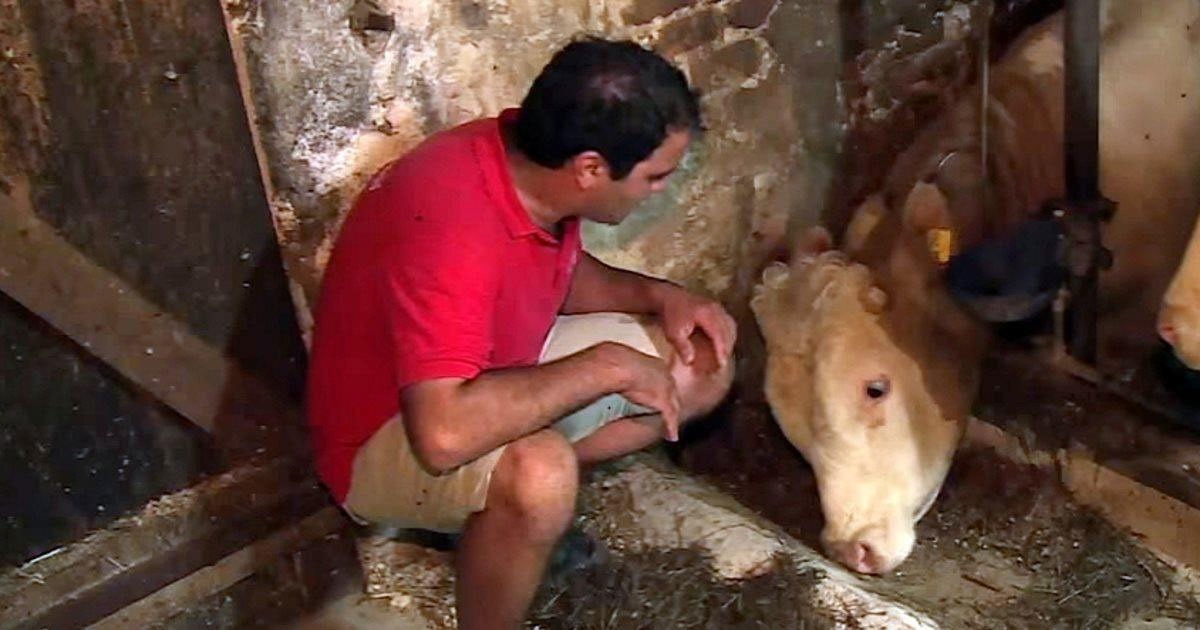

Animals have long been a source of inspiration, empathy, and cultural symbolism for humans. Across civilizations, they appear in mythology, folklore, and religious traditions, often representing strength, wisdom, and resilience. Yet despite our fascination and admiration, many animals are subjected to lives of restriction and suffering. The story of Bandit, a bull who spent much of his life in chains, highlights both the vulnerability of animals in captivity and the transformative power of compassion and human intervention.
In 2014, Bandit’s life was limited to a narrow cage where he could barely move or experience the natural world. He never walked on soft grass, never felt the sun on his back, and had likely grown accustomed to the monotony of confinement. His situation is sadly not unique, but it became a turning point when an animal advocate, Christian, learned of his plight and decided to take action. The rescue of Bandit, and his subsequent joyful response to freedom, offers both a moving story and an opportunity to explore broader cultural and scientific perspectives on animal welfare.

Understanding Cattle Behavior and Sensitivity
Cattle are often viewed simply as livestock, yet scientific research shows they are intelligent, sensitive, and socially complex animals. Studies conducted by Daniel Weary, a professor in the Animal Welfare Program at the University of British Columbia, have demonstrated that cows’ brains can be permanently affected by early-life trauma. Experiences such as early separation from their mothers or stressful handling can lead to long-term cognitive and emotional effects.
Weary’s research indicates that such experiences can create a negative cognitive bias in cows, similar to pessimism in humans. This manifests as heightened stress responses, avoidance behavior, and difficulty forming trust with humans later in life. Consequently, interventions that provide positive human contact, gentle handling, and the opportunity for natural behaviors can significantly improve both mental and physical well-being in cattle.

Bandit’s Life Before Rescue
Bandit’s early life and adulthood were marked by confinement. He spent years in a narrow cage, unable to turn freely or graze on grass. The repetitive environment, combined with physical restriction, likely limited his ability to develop normal social behaviors and experience environmental enrichment. From a scientific perspective, prolonged confinement can affect neural development, stress hormone regulation, and overall health in large mammals, making interventions that prioritize freedom and stimulation critical for recovery.
Culturally, the image of a restrained bull evokes themes of human dominance and control over nature. In folklore, bulls are symbols of strength, endurance, and fertility. They often represent vitality in festivals and mythology. The contrast between Bandit’s natural symbolic power and his constrained reality underscores the ethical questions surrounding the treatment of animals in captivity, particularly when human interests override natural behaviors.’
The Rescue Mission
Christian, an animal rights advocate volunteering with Gut Aiderbichl, an Austrian animal welfare organization, learned of Bandit’s situation and immediately began planning a rescue. Upon visiting Bandit for the first time, Christian approached with caution and care, signaling that he intended no harm. His approach demonstrated an understanding of bovine behavior: slow movements, calm voice, and gentle gestures to reduce stress and foster trust.
Initially, Bandit displayed signs of wariness, but over time he responded to Christian’s presence. In a remarkable display of recognition and trust, the bull began to softly lick Christian’s hand—a behavior suggesting comfort and acceptance. This moment marked a turning point, showing that positive human interaction can overcome years of neglect and fear.
The Moment of Freedom
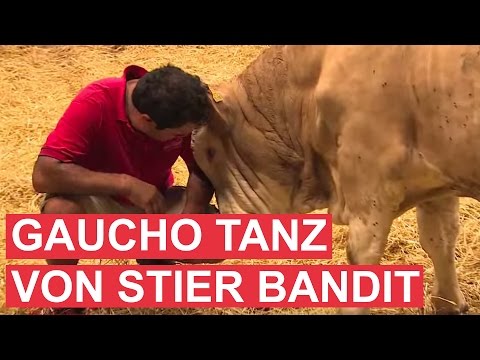
The rescue culminated in an unforgettable scene: Christian unchained Bandit, allowing him to step onto grass for the first time in years. Observers described Bandit’s reaction as a “freedom dance,” a jubilant display of movement that combined playful energy with visible relief. The video capturing this moment has since gone viral, reaching over 28 million views on YouTube.
Bandit’s joyful reaction illustrates the profound impact of freedom on animals previously subjected to restriction. From a behavioral standpoint, his movements reflected both the release of pent-up energy and the natural inclination to explore and engage with the environment. Such moments serve as powerful reminders of the importance of enrichment and autonomy in animal welfare practices.
Scientific Perspectives on Recovery and Rehabilitation
Recovering from prolonged confinement involves both physical and psychological rehabilitation. Animals like Bandit often experience muscle atrophy, joint stiffness, and behavioral inhibition due to restricted movement. Gradual exposure to natural habitats, combined with positive reinforcement and enrichment, can help restore normal activity patterns and confidence.
Psychologically, animals that have endured neglect may exhibit signs of anxiety, depression, or learned helplessness. In cattle, positive social interaction—either with humans or conspecifics—can stimulate natural behaviors and encourage recovery. Bandit’s responsiveness to Christian’s gentle guidance highlights the importance of patient, empathetic intervention in animal welfare.
Moreover, studies suggest that animals respond to cues of safety and predictability. By creating a structured and supportive environment, rescuers can help animals regain trust and experience pleasure in their surroundings. Bandit’s exuberant behavior upon freedom is a testament to the resilience of animals when provided the opportunity to heal.
Cultural and Ethical Reflections
Bandit’s story resonates not only as a scientific case study but also as a cultural symbol. Historically, humans have both revered and exploited animals. Bulls, in particular, have been central to rituals, festivals, and artistic representations, from the bull-leaping ceremonies of Minoan Crete to modern rodeos. These traditions often highlight the animal’s strength and spirit, yet they sometimes conflict with the welfare needs of the animals involved.
The narrative of Bandit’s rescue provides a modern counterpoint, emphasizing compassion and ethical responsibility. It aligns with evolving cultural attitudes that prioritize humane treatment, environmental enrichment, and freedom over mere utility or spectacle. In this context, Bandit’s story serves as a bridge between ancient symbolic reverence and contemporary ethical practice.
Lessons from Bandit’s Journey
Bandit’s experience provides multiple lessons for humans regarding our interactions with animals:
-
The importance of empathy: Understanding and responding to the emotional needs of animals can transform lives.
-
The power of rehabilitation: Even animals subjected to long-term confinement can recover with proper care and support.
-
Ethical responsibility: Humans have a moral obligation to provide environments that meet the physical, emotional, and social needs of captive animals.
-
Scientific insight: Research into animal cognition and behavior can guide best practices in rescue and rehabilitation efforts.
-
Cultural connection: Recognizing animals as sentient beings enriches both our moral perspective and cultural understanding.
These lessons highlight a growing recognition in society that the way we treat animals reflects our values and our capacity for compassion.
The Role of Advocacy and Organizations
Organizations such as Gut Aiderbichl play a pivotal role in rescuing and rehabilitating animals like Bandit. Their efforts encompass:
-
Rescuing animals from harmful environments
-
Providing medical care and rehabilitation
-
Creating enriching habitats that allow natural behaviors
-
Educating the public on animal welfare
-
Promoting volunteer and community engagement
Such organizations demonstrate that systemic efforts, combined with individual acts of compassion, can produce lasting positive outcomes for animals in need. Bandit’s rescue is a tangible example of this impact.
The Emotional Resonance of Freedom
Videos and stories of animals experiencing liberation, like Bandit, resonate deeply with human audiences. Witnessing a formerly confined animal express joy taps into our innate empathy and reinforces a sense of shared sentience. These stories also function as cultural touchpoints, reminding us of the ethical responsibilities embedded in human-animal relationships.
From a psychological standpoint, observing animals express unrestrained joy can produce measurable positive effects in humans, including reduced stress and increased emotional engagement. In this way, Bandit’s story benefits both the animal and the broader human audience, fostering empathy and awareness.
Reflection on Human Curiosity and Compassion
Bandit’s journey from confinement to freedom highlights the intertwined nature of human curiosity, empathy, and moral responsibility. Humans have long been fascinated by the natural world, from mythological depictions of animals to modern conservation efforts. Yet curiosity alone is insufficient; it must be accompanied by understanding, compassion, and ethical action.
Stories like Bandit’s remind us that human intervention can either harm or heal. By approaching animals with respect and patience, we honor not only their lives but also our shared capacity for empathy. The profound joy witnessed in Bandit’s “freedom dance” illustrates that positive change is possible when curiosity is paired with care.
Conclusion
The story of Bandit the bull offers a moving narrative of transformation, resilience, and hope. Scientific research confirms the sensitivity and intelligence of cattle, highlighting the impact of trauma and the potential for recovery through compassionate care. Culturally, Bandit embodies the symbolic strength and vitality historically associated with bulls, yet his rescue illustrates a modern emphasis on ethical treatment and freedom.
From narrow chains to open pastures, Bandit’s journey exemplifies the extraordinary outcomes that result when human empathy meets informed intervention. It challenges us to reflect on our relationship with animals, the responsibilities inherent in stewardship, and the joy that arises when creatures experience the liberty they naturally deserve.
In the end, Bandit’s story is not just about a bull; it is a testament to human curiosity, the transformative power of kindness, and the enduring bond between humans and the animal kingdom.
Sources
-
Newsner
-
Gut Aiderbichl
