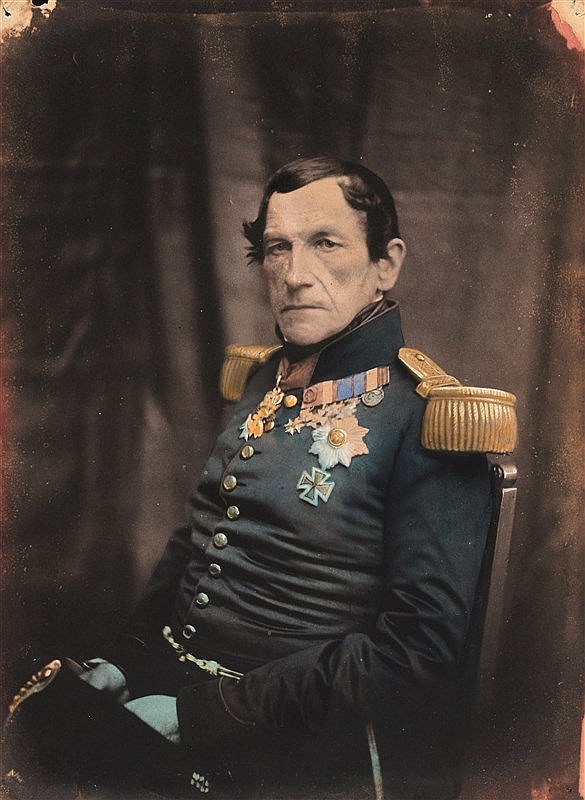

The 1700s often feel impossibly distant. We picture powdered wigs, candlelit halls, polished wooden carriages, and portraits painted in heavy oils. It is a century wrapped in formality—aristocrats sitting still for hours so that painters could capture every lace fold, every curl of their hair. That is the version of the 18th century we usually imagine: composed, staged, elegant, and slightly unreal.
So when a Reddit post went viral showing real photographs of people who were actually born in that century, the internet paused. It was a bridge we rarely get to cross—the chance to look into the eyes of someone who lived through events we only read about in textbooks: the American Revolution, the French monarchy, the final age of European courts, the rise of early republics, the Enlightenment, and the dawn of industrial change.
The idea alone was arresting:
People born under monarchs and muskets lived long enough to be photographed.
For many viewers, the shock wasn’t in the images themselves but in the sudden connection they created. These weren’t paintings or romanticized depictions. These were unfiltered nineteenth-century photographs of individuals whose childhoods belonged to the 1700s. And that simple shift—from painted representation to photographic reality—made history feel closer, more intimate, and unmistakably human.
Here is the story behind the viral post, why these images feel so powerful, and what they tell us about the strange overlap between two vastly different eras.
A Rare Window Into Two Centuries at Once
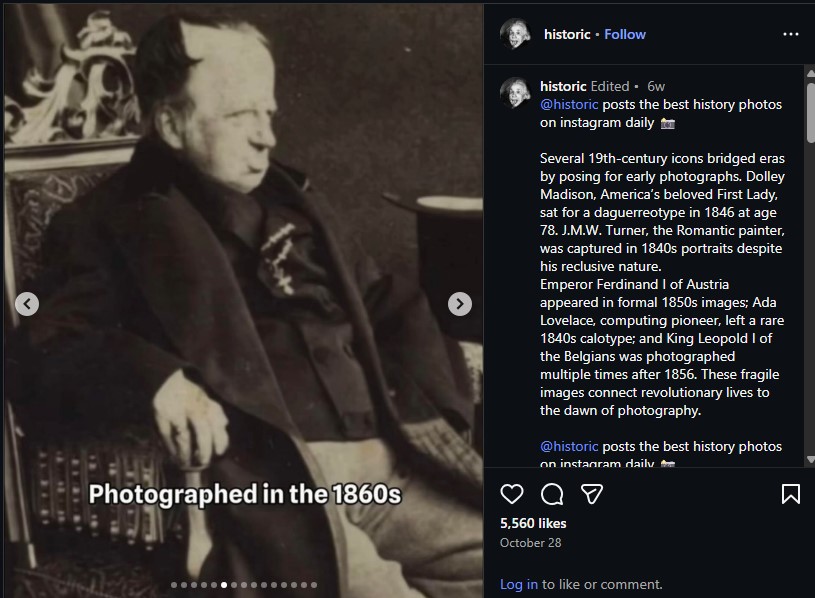
Photography arrived in the late 1830s and early 1840s. By then, many people born in the 1700s were already elderly, but some lived long enough to sit for daguerreotypes—the earliest form of photography.
Those images, with their silvered surfaces and haunting clarity, captured details that paintings could never preserve:
- Natural wrinkles and aging
- The true shape of a person’s face
- Their unpolished expression
- Their posture, clothing, and lived reality
Suddenly, people who had lived during the age of George Washington, Frederick the Great, or Marie Antoinette appeared not as distant historical concepts, but as real humans with complex lives.
The viral Reddit post curated ten of the most striking examples—photographs of individuals born between the 1700s and early 1800s who lived into the photographic era. Seeing them in authentic images rather than stylized portraits made the past feel unexpectedly close.
Why These Photos Captured the Internet’s Imagination
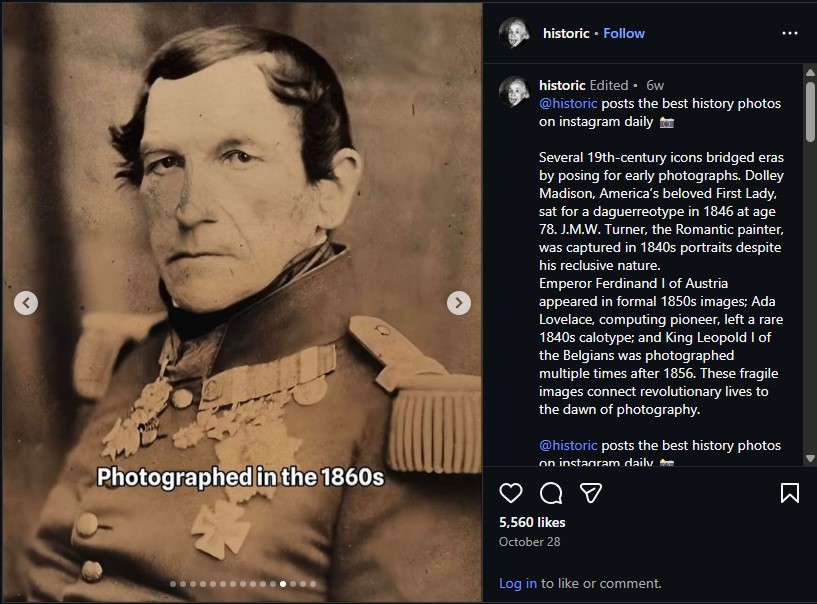
Part of the fascination comes from contrast: the 1700s feel like a world of powdered formality, while photography feels familiar, modern, and accessible. When those two worlds collide in a single image, something remarkable happens.
1. They break the illusion that the past is distant
When your eyes meet the gaze of someone born in 1780 or 1795, you suddenly realize that 300 years is not as far away as it sounds. These people lived through radical transformation, but in the end, they aged, posed, and looked into a camera much like you would today.
2. They humanize history
Portrait paintings often idealized their subjects. Photographs do not. They reveal imperfections, personality, and character. One man in the viral post sits in a heavy chair with a deep frown etched into his forehead; another stares into the lens with a calm but firm expression. These faces carry stories—fatigue, resilience, pride, or simple everyday realism.
3. They show the transition between eras
People born in the 1700s witnessed revolutions, wars, social change, industrial beginnings, and the early sparks of modernity. Their photographic presence becomes a symbol of continuity between the past and the present.
4. They remind us that history is not abstract
Every major event—political, cultural, scientific—was lived by real individuals. Seeing their faces often creates a deeper emotional reaction than reading about dates or wars.
The Most Striking Figures From the Viral Post

While the Reddit thread did not highlight celebrities or famous leaders, it focused on ordinary people whose long lives intersected with the arrival of photography. Their images stood out not because of fame, but because of authenticity.
A Veteran Whose Youth Belonged to the Revolutionary Era
One portrait featured an older man in military attire—sharp eyes, defined cheekbones, and a stern composure. Born in the late 1700s, he grew up during the era of revolutionary movements sweeping across continents. By the time this photograph was taken, he had lived through at least two major shifts in political identity: colony to nation, monarchy to republic, or similar transformations depending on his country.
The photograph captured both the discipline of a soldier and the fragility of age.
An Aristocrat Who Outlived the 18th-Century Court Life
Another image showed an elderly gentleman in formal clothing, seated in an ornate chair with a high wooden back. His expression was serious, almost contemplative. Born in a time when aristocracy ruled daily life, he lived long enough to see those systems fade or transform.
His posture and clothing evoked the last remnants of a world that no longer existed by the time his picture was taken.
Everyday Citizens Whose Lives Spanned Two Very Different Worlds
Some of the most fascinating portraits were of everyday people—teachers, craftsmen, farmers, or town elders. Born in the candlelit 1700s, they lived to see railways, factories, early photography, and shifting cultural landscapes.
Their faces tell stories without needing words:
- The worn hands of labor
- The steady eyes of someone who lived through quiet decades
- The hint of pride in a long life endured and completed
These individuals embody the transition between centuries.
The Emotional Impact of Seeing the Past This Clearly
The viral post didn’t go viral because of shock factor. It spread because it created a moment of connection—one that many people didn’t expect.
Here’s why the emotional response was so strong:
It changed how people imagine the 1700s
Instead of paintings, costumes, and fiction, we suddenly saw real wrinkles, real gazes, real humanity.
It collapsed time
Looking into the eyes of someone born 250 years ago creates a strange sense of closeness, as if the past is not behind us but beside us.
It invited curiosity
Viewers began imagining:
- What did these people see in their lifetime?
- What were their daily routines?
- What changes amazed or confused them?
- What stories did they tell their grandchildren?
The images sparked questions, not answers—an ideal formula for fascination.
It revealed the continuity of human expression
Even though centuries separate us, the expressions captured in those photos feel familiar: fatigue, determination, calm, pride, humor, sorrow. Human emotion has not changed as much as our technology has.
Why This Trend Reflects a Larger Cultural Shift
The popularity of this Reddit post taps into something deeper: modern audiences crave authenticity. They want history not as a distant academic subject, but as a living archive of real people.
This trend reflects:
- The rise of digital storytelling
- The accessibility of historical archives
- A growing interest in personal stories rather than grand narratives
- The desire to see ourselves in people of the past
In a world saturated with filtered images and curated content, these raw, unedited photographs feel grounding and honest.
A Reminder That the Past Is Never as Far Away as It Seems
The viral thread did more than display old photographs—it brought the 1700s into the present. By looking into the eyes of people who lived through revolutions, empires, and early industrial change, we are reminded that history is a chain of lived experiences, not just headings in a book.
These images serve as a quiet message:
Time moves forward, but humanity stays recognizable.
We laugh, age, hope, struggle, celebrate, and persevere just as they did centuries ago.
And sometimes, all it takes is one viral post—ten faces captured long after the age of portraits—to remind us that the past still looks back at us.
