
In the early decades of the twentieth century, Germany was undergoing profound transformation. Cities expanded, industrialization surged, and photography was becoming an increasingly accessible tool for documenting everyday life. Among the many surviving artifacts from this era is a category of images that continues to fascinate collectors, historians, and cultural researchers: the Siamese Twins Historical Print, often dated around the 1910s.
These prints—sometimes studio portraits, sometimes public exhibitions, and occasionally clinical documentation—captured individuals born with conjoined anatomy. But beyond the image itself lies a much broader story: how society perceived physical difference, how families navigated limited medical options, and how early photography shaped public understanding of rare conditions.
This article revisits that world—not through spectacle or exaggeration, but through a respectful historical lens.
The Rise of Medical Curiosity in Early 20th-Century Europe
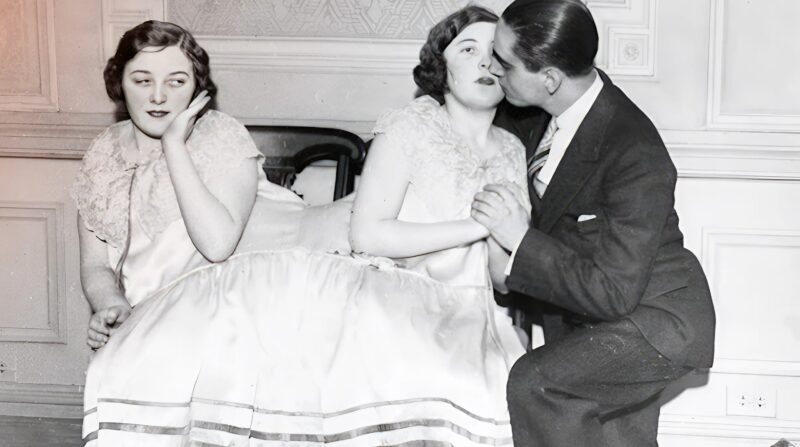
The early 1900s were a period marked by scientific ambition. Advances in surgery, anesthesia, and anatomy encouraged researchers to classify, measure, and understand the physical body with renewed rigor. In Germany, medical institutions in cities like Berlin, Munich, and Hamburg expanded their research capabilities, publishing academic papers and medical illustrations documenting unusual cases.
Conjoined twins—extremely rare and medically complex—were naturally of interest. With limited surgical technologies and high risks associated with separation, many twins lived their entire lives physically connected. Medical professionals sought to understand these formations, and families often cooperated with documentation because it provided clarity, financial assistance, or recognition from the medical community.
The historical prints from this period typically fall into two categories:
-
Clinical documentation created for hospitals or medical archives
-
Studio portraits produced for families or public exhibitions
The second category tends to be the most prominent in modern collectors’ markets, often showing twins posed formally, dressed in coordinated clothing, and photographed with care to preserve dignity.
Photography in the 1910s: A Tool for Memory and Display
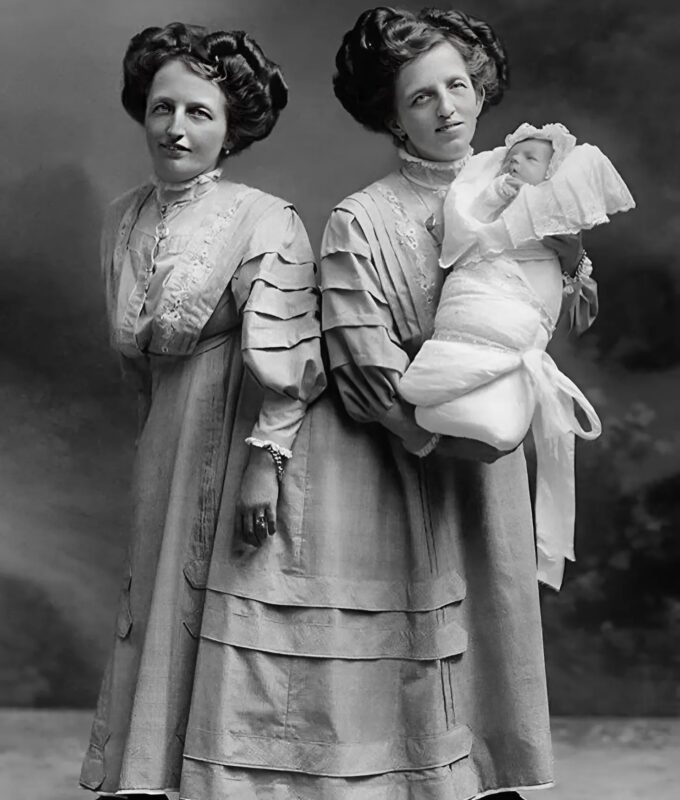
Photography in the 1910s was no longer the exclusive domain of wealthy elites. Improved film emulsions, portable box cameras, and the rise of commercial studios brought portraiture to the general public. Germany embraced this development enthusiastically.
Historical prints of conjoined twins from this era typically share distinct features:
-
Sepia or matte-finish black-and-white tones
-
Soft studio lighting creating a balanced composition
-
Formal seated or standing poses reflecting social norms
-
Hand-written notes or printed captions identifying the twins, location, or date
These prints were not just records—they were narrative artifacts, shaped by photographers who aimed to present their subjects with formality and clarity.
Public Perception: Between Curiosity and Compassion
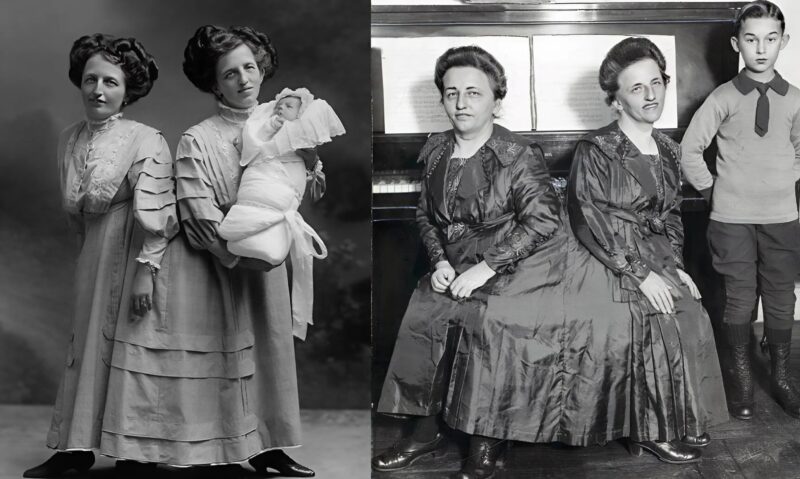
When examining early 20th-century imagery, it is important to consider societal perceptions at the time. Conjoined twins were rare, and medical knowledge about their conditions was limited. This often led to a mixture of curiosity, uncertainty, and sometimes mythologizing.
However, the idea that such individuals were universally treated as entertainment is misleading. In Germany, a strong ethos of academic documentation meant that many images were created through medical institutions rather than public spectacle. Families might collaborate with hospitals both for support and for the promise of improved care.
Some prints were used in educational lectures—where professors discussed developmental biology, embryology, or anatomical variation. In this sense, the images contributed to scientific progress and fostered a more evidence-based approach to understanding rare conditions.
A Glimpse Into Family Life
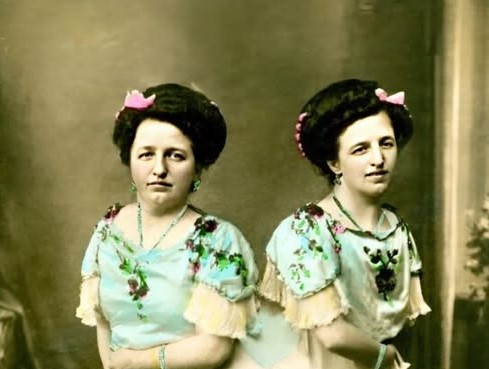
Historical prints showing Siamese twins from this period often have a striking emotional undertone. Despite their physical connection, many twins demonstrated strong individual personalities, expressed through posture, clothing choices, or subtle differences in expression.
Family involvement was crucial. Parents typically faced:
-
Limited surgical options
-
Social questions or curiosity
-
Concerns about long-term care and mobility
-
The challenge of balancing individuality with shared physical space
Many families photographed their children not because they sought publicity, but because photography allowed them to preserve a record of life—something any parent might do. These portraits humanize the twins, depicting them not as medical subjects but as children with families, stories, and unique identities.
Collectors and Historians: Why the Prints Matter Today
A century later, Siamese Twins Historical Prints from Germany have become valuable resources for historians, archivists, and collectors. Their significance lies not in rarity alone, but in what they reveal about cultural attitudes and medical history.
Researchers typically draw insights in three areas:
-
Medical History
The prints show how early physicians documented congenital conditions before modern radiology and imaging technologies existed. They offer clues about how anatomy was interpreted, categorized, and taught. -
Social History
These images capture how families presented their children publicly. Clothing, posture, and background props provide glimpses into fashion, household values, and the aesthetics of early photography. -
Photographic History
They showcase early portrait techniques, printing methods, and visual storytelling conventions.
Collectors often value the prints for their craftsmanship—hand-mounted cabinet cards, embossed studio stamps, or handwritten annotations. Museums see them as windows into an era when photography transitioned from a technical novelty to an everyday art form.
Ethical Considerations in Display and Study
With modern sensitivity toward privacy and individual dignity, the study of historical prints involving medical or physical differences requires careful consideration. Responsible researchers follow several principles:
-
Contextualization: Images must be presented with historical explanation, not as isolated curiosities.
-
Respectful language: Older terms may appear in archival captions, but modern writing avoids outdated or insensitive labels.
-
Educational purpose: The goal is understanding—not entertainment or shock value.
-
Protection of identity when appropriate: If names were never publicly released, historians avoid unnecessary identification.
These ethical standards help ensure that historical materials foster understanding rather than misunderstanding.
The Significance of the 1910s Print Today
Why does a single print—one photograph of conjoined twins taken in Germany more than a century ago—still resonate?
Because it encapsulates a transitional moment in history.
The early 1900s were a bridge between older traditions and modern medical science. Photography was developing, medicine was advancing, and cultural attitudes were gradually shifting from superstition toward empathy and scientific reasoning.
The print becomes more than an image; it is:
-
A record of human resilience
-
A testimony to evolving medical understanding
-
A marker of how society once perceived physical difference
-
A preserved moment of family life, frozen in time
When viewed today, it invites reflection. It encourages us to consider how far medicine has progressed, how cultural attitudes have changed, and how individuals with rare conditions deserve representation that emphasizes personhood, not spectacle.
A Legacy Preserved
Siamese Twins Historical Prints from 1910s Germany remain powerful artifacts of visual history. They remind us that even in an era of limited knowledge and limited technological options, families sought connection, documentation, and understanding. Medical professionals pursued knowledge with sincere if imperfect tools. Photographers attempted to portray their subjects with dignity, using the visual language of their time.
Above all, these prints underscore a simple truth: history is not abstract. It is human. And every photograph—no matter how old—carries the weight of real lives, real families, and real stories that continue to resonate across generations.
