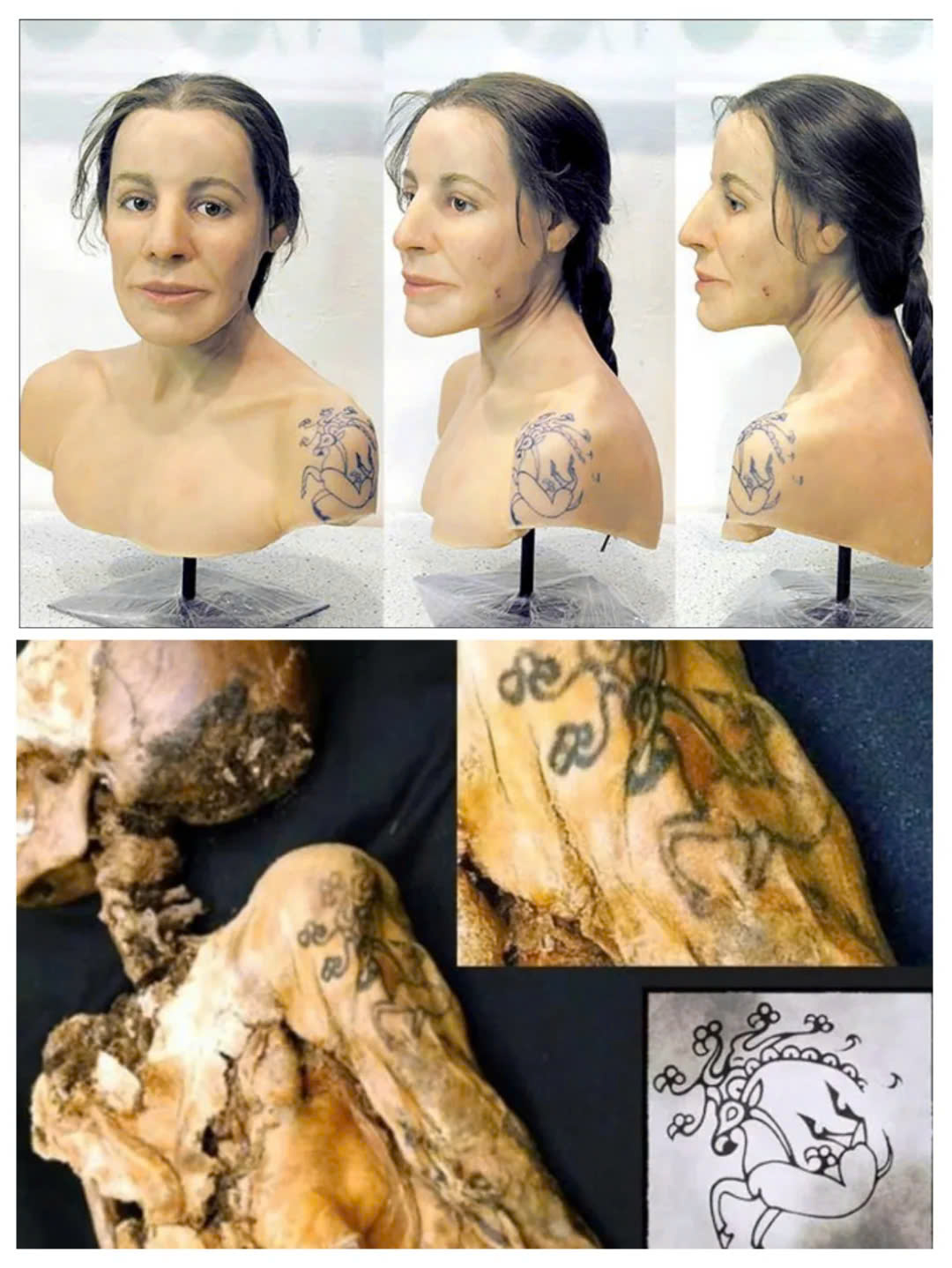

A Frozen Time Capsule from the Ukok Plateau
In the icy wilderness of Siberia’s Ukok Plateau, where Russia borders Mongolia, China, and Kazakhstan, archaeologists uncovered one of the most extraordinary finds of the 20th century. In 1993, Russian archaeologist Dr. Natalia Polosmak and her team made a discovery that would reshape the study of early Eurasian civilizations — the remarkably preserved remains of a 2,500-year-old woman, now famously known as the Siberian Ice Maiden or Princess of Ukok.
Her body, locked for millennia in the permafrost, offered an unparalleled glimpse into the world of the Pazyryk culture, a nomadic people known for their artistry, trade networks, and deep spiritual traditions.
A Life Preserved in Ice
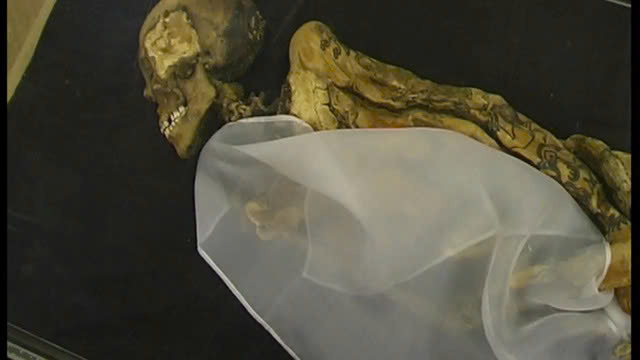
When the team opened the ancient wooden coffin buried deep beneath a mound of stones, they found not just a skeleton, but a body almost untouched by time. Her skin, clothing, and even the contents of her burial chamber were astonishingly intact, preserved by the frozen ground.
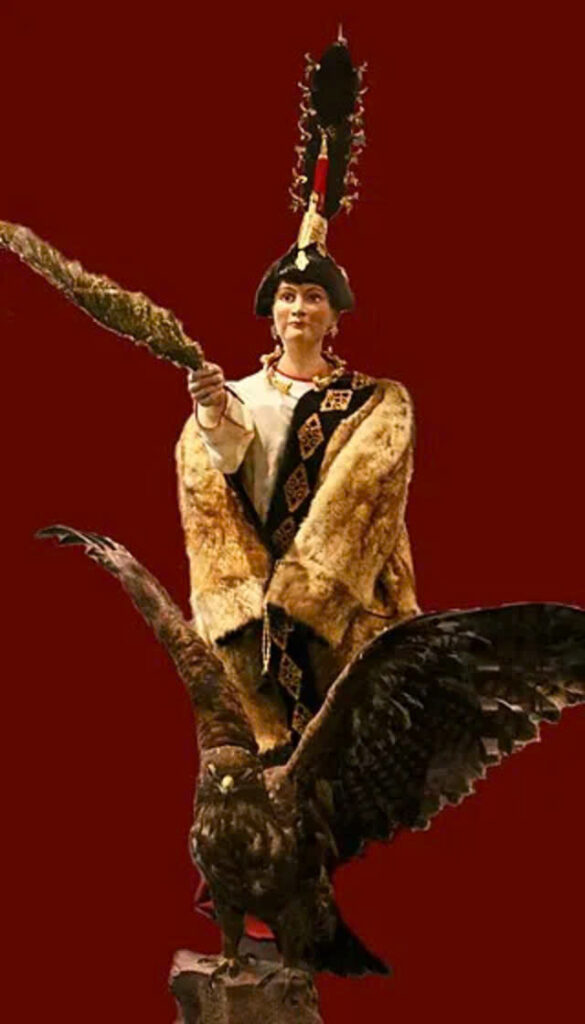
Inside lay a young woman dressed with striking care — wearing silk garments, felt stockings, and adorned with intricate jewelry. Around her were six horses, richly saddled and decorated, ready to accompany her into the afterlife.
These details revealed that she was no ordinary nomad. Every aspect of her burial — from the ornate headdress to the imported textiles — spoke of reverence and high social standing.
The Tattoos That Spoke Across Time
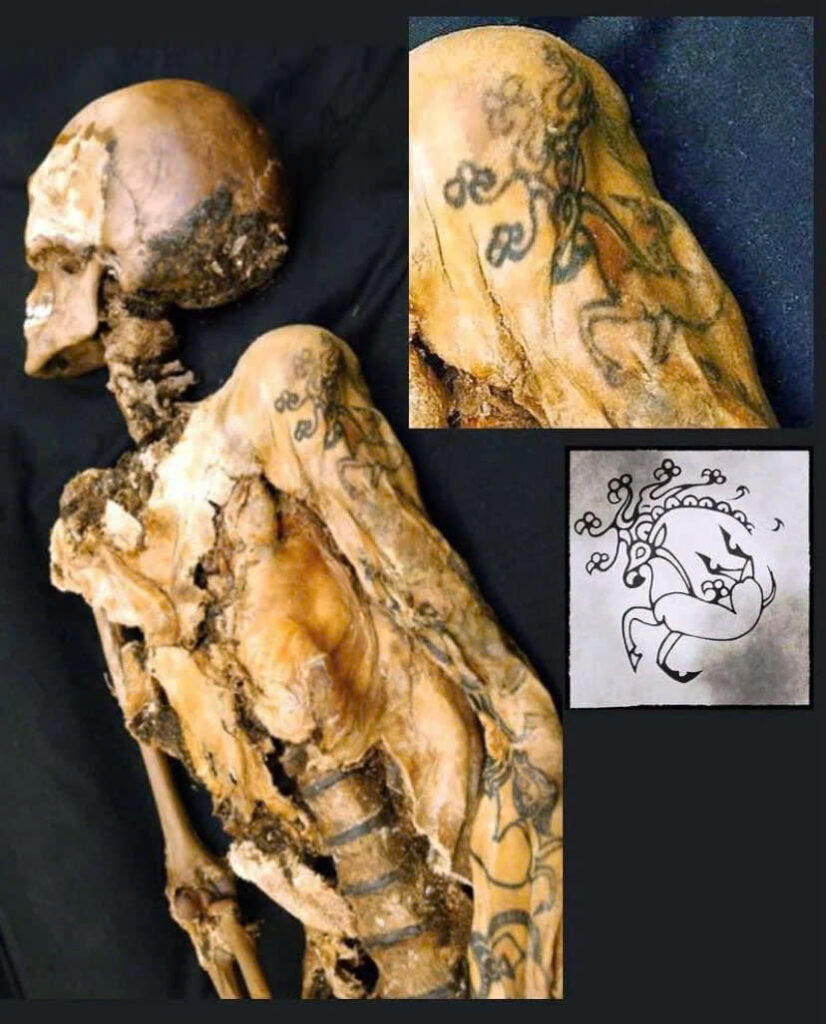
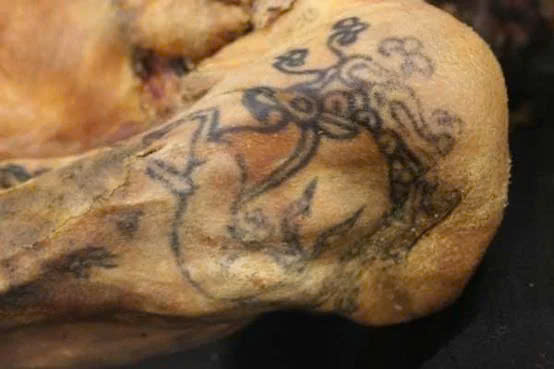
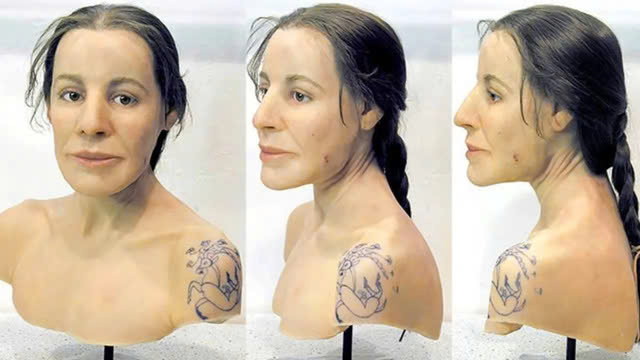
Perhaps the most breathtaking discovery, however, was visible on her skin. Etched in dark ink across her shoulder and arm were tattoos among the oldest ever recorded — swirling designs depicting fantastical deer with elongated antlers transforming into griffin-like creatures.
Archaeologists and anthropologists interpret these as powerful spiritual emblems. In Pazyryk culture, such tattoos were believed to serve as protection symbols and guides in the afterlife, marking the wearer’s identity and role within the tribe.
Dr. Polosmak noted that the craftsmanship of these tattoos mirrored the artistic motifs found in Pazyryk artifacts — suggesting that body art was an extension of their visual and mythological language. “It is as if their skin was their canvas,” she observed.
A Woman of Great Significance
The artifacts buried with the Ice Maiden hinted at her elevated status:
-
A three-foot-tall headdress, decorated with gold and intricate animal motifs
-
Silk and wool clothing, dyed with natural pigments
-
A cosmetics bag containing vivianite, used as blue eyeliner
-
Ritual objects, possibly related to shamanic practice
Scholars believe she may have been a spiritual leader, healer, or noblewoman. The inclusion of horses and ceremonial items points to her importance not only in life but also in the beliefs surrounding death and the afterlife.
Science Reveals Her Story
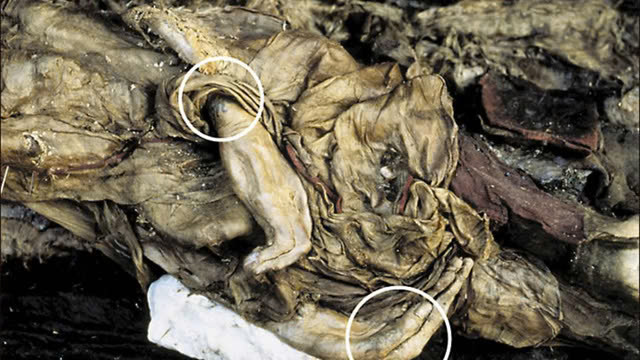
Modern scientific studies have added remarkable depth to what was once just legend. CT scans and genetic analysis revealed that she was in her mid-twenties at the time of her death and likely suffered from a painful illness, possibly breast cancer.
Traces of cannabis residue found in a vessel near her body led researchers to theorize that she may have used it for medicinal or ritualistic purposes — an early example of pain management in ancient medicine.
DNA sequencing further connected her lineage to modern indigenous Altai populations, confirming a continuity of ancestry that spans thousands of years.
Between Reverence and Controversy
While the scientific world celebrated the find, the discovery ignited controversy among the Altai people, who regard the Ukok Plateau as a sacred burial ground. Many believed that disturbing her grave had spiritual consequences, linking her removal to a series of natural disasters that followed in the region.
After years of dispute and negotiation, the Ice Maiden was returned to the Altai Republic in 2012 and placed in a climate-controlled museum in Gorno-Altaisk — a symbolic reconciliation between science and indigenous belief.
Her remains now rest in a custom-built sarcophagus that balances preservation with cultural respect, ensuring that her legacy continues to educate without erasing her spiritual significance.
The Enduring Legacy of the Ice Maiden
More than just an archaeological marvel, the Ice Maiden stands as a bridge between eras — a frozen messenger from a civilization that blended art, faith, and survival in one of the world’s harshest landscapes.
Her tattoos, preserved beneath centuries of ice, still tell stories of transformation, courage, and transcendence. They remind us that long before modern nations or borders, ancient peoples expressed their deepest beliefs through beauty, symbolism, and the enduring language of art.
From her icy tomb, she continues to whisper across 25 centuries — her skin inked with myths, her silence echoing the resilience of those who came before us.
Sources:
National Geographic – “The Ice Maiden of Siberia”
Smithsonian Magazine – “Tattooed Princess of the Altai”
Archaeology Magazine – “Frozen in Time: The Pazyryk Culture”
The Siberian Times – “Return of the Princess of Ukok”
