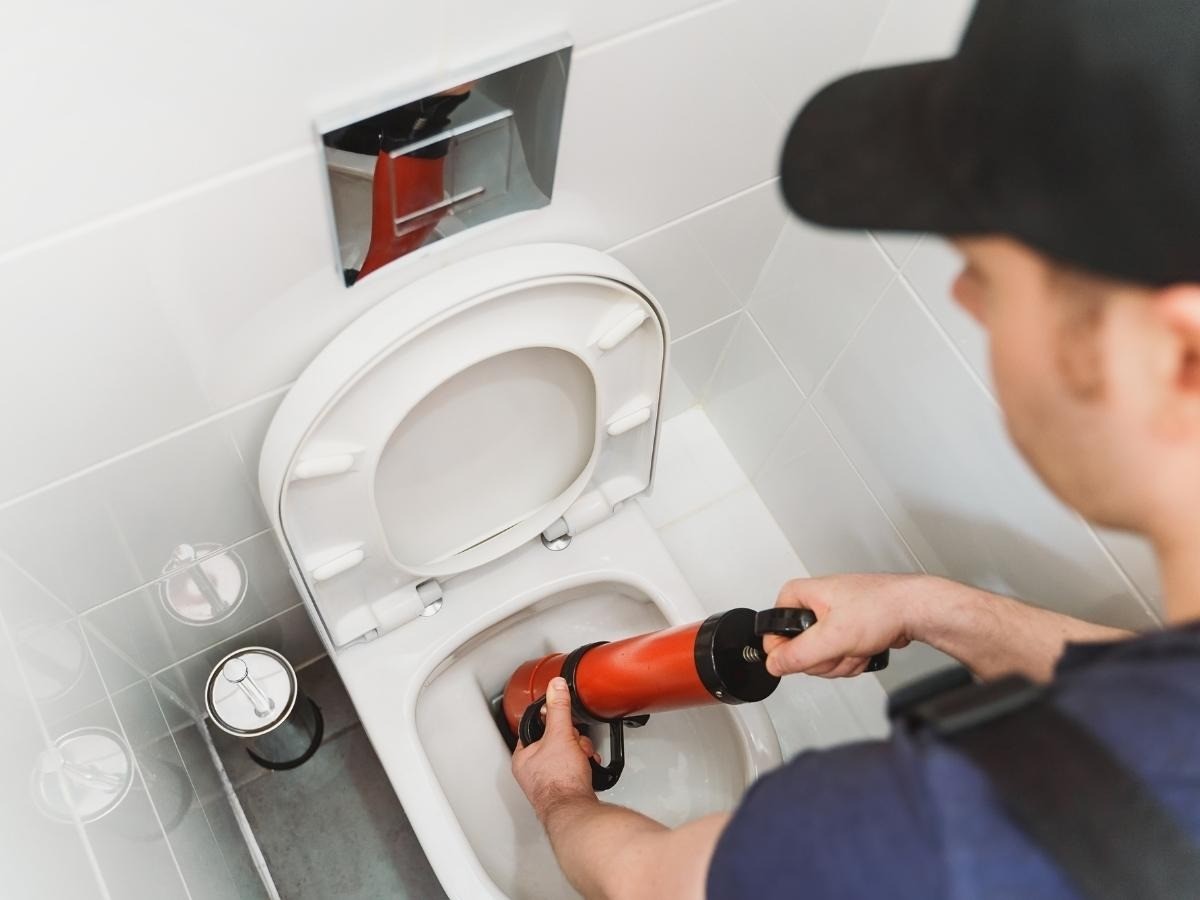

A Clogged Toilet Can Ruin Your Day, but You May Not Need a Plunger
Few household problems are as inconvenient as a clogged toilet. It often happens at the worst possible moment, and the situation can become stressful when you reach for the plunger only to discover that you do not have one.
Your first instinct might be to search for a strong chemical cleaner or call a plumber immediately. However, before taking more complicated steps, there is a simple household method that may help with certain minor blockages.
The trick involves two common items: liquid dish soap and hot water.
Most kitchens already have a bottle of dishwashing liquid, making this approach inexpensive and relatively easy to try. The soap can help lubricate the blockage, while warm water may soften some of the material and encourage it to move through the toilet’s drain.
Although this method does not work for every type of clog, it can be worth trying when the blockage is relatively soft and caused by ordinary waste or excess toilet paper.
Here is how to do it safely.
Why Can Dish Soap Help Unclog a Toilet?
Dish soap is designed to help remove grease, food residue, and other materials from dishes. Its cleaning properties also make it useful in certain household plumbing situations.
When added to a clogged toilet, liquid dish soap can act as a lubricant. It helps reduce friction between the blockage and the surrounding surfaces, potentially making it easier for soft material to move through the toilet’s curved drain passage.
Warm water can provide additional assistance by softening some organic material and helping the soap spread through the bowl.
However, it is important to understand what this combination can and cannot do.
Dish soap does not dissolve every kind of blockage. It is unlikely to remove a solid object such as a toy, plastic item, sanitary product, or other material that has become lodged inside the toilet.
The method is most suitable for relatively minor clogs involving waste or toilet paper. A deep obstruction or a problem farther down the plumbing system may require a toilet auger or professional assistance.
How to Unclog a Toilet Without a Plunger Using Dish Soap
If the toilet is clogged but not close to overflowing, you can try the following method.
Step 1: Check the Water Level First
Before adding anything, look at the water level in the toilet bowl.
If the water is already rising or sitting close to the rim, do not add more water or flush again. Doing so could cause the toilet to overflow.
If the bowl is at risk of overflowing, turn off the water supply using the shutoff valve near the base of the toilet. If necessary, remove some excess water carefully while wearing rubber gloves.
Protect the floor with old towels or absorbent materials before continuing.
Step 2: Add Liquid Dish Soap
Pour approximately half a cup of ordinary liquid dish soap into the toilet bowl.
You do not need an expensive brand or a specialized cleaning product. A standard dishwashing liquid is generally sufficient for this household method.
Allow the soap to settle and move toward the blockage.
The idea is to let the slippery liquid reach the material causing the obstruction rather than immediately forcing more water into the bowl.
Step 3: Wait for 15 to 30 Minutes
Patience is important.
Leave the dish soap in the toilet for approximately 15 to 30 minutes. This gives it time to spread through the standing water and potentially lubricate the blockage.
During this period, avoid flushing the toilet repeatedly.
If the water level begins to decrease naturally, that may indicate that the blockage is loosening. However, it does not necessarily mean the drain is completely clear.
Step 4: Add Warm Water Carefully
Next, prepare a bucket of hot tap water or comfortably hot water.
The water should be warm enough to help loosen soft material, but it must not be boiling. Pouring boiling water into a porcelain toilet can cause sudden temperature changes that may crack the ceramic.
Slowly pour a moderate amount of warm water into the bowl, watching the water level carefully.
Do not pour a full bucket if the bowl is already nearly full. The goal is to provide enough water to help move the loosened blockage without causing an overflow.
Allow a few minutes for the water and soap to work.
Step 5: Check Whether the Blockage Has Cleared
Observe the water level.
If it gradually returns to its normal level, the blockage may have loosened. Before attempting a full flush, make sure the bowl is draining normally.
If the water continues to rise, stop adding water and do not flush again.
If the method does not work after a reasonable attempt, avoid repeatedly pouring in more soap and water. A stubborn obstruction may require a different approach.
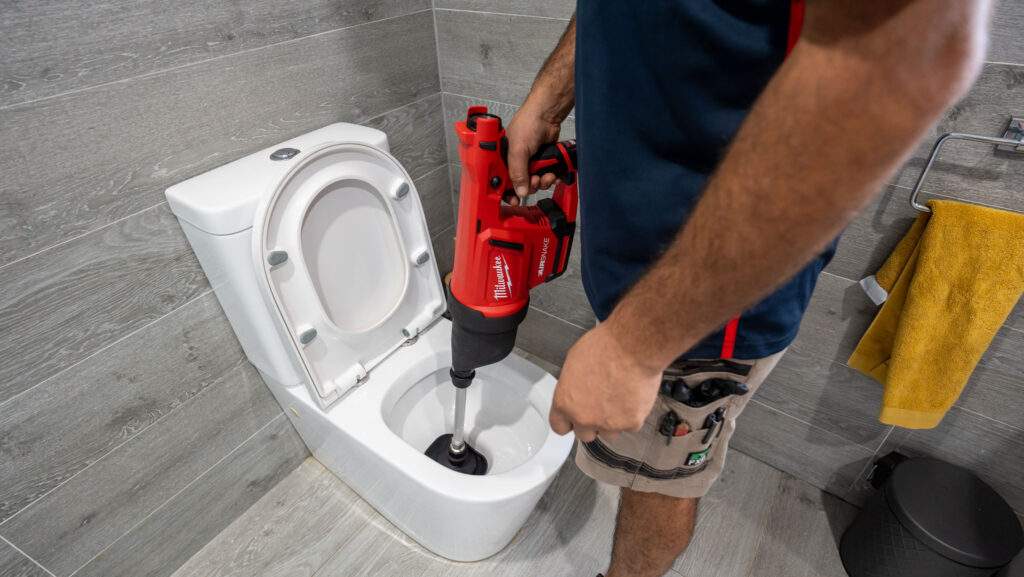
What If the Dish Soap Method Does Not Work?
Not every clogged toilet can be cleared with household ingredients.
If the water remains blocked, consider whether the problem may involve something other than ordinary waste or toilet paper.
A small object may have become lodged in the toilet trap, or the obstruction may be deeper in the drainage system.
A toilet plunger designed for toilets is usually a better next step for many ordinary blockages. Its rubber cup creates a seal around the outlet and uses pressure to help dislodge material.
A toilet auger, sometimes called a closet auger, is another useful tool. It is specifically designed to pass through the curved section of a toilet and reach obstructions that a plunger may not remove.
If you suspect a foreign object is lodged inside the toilet, avoid pushing it farther into the plumbing with improvised tools.
You should also contact a plumber if several drains are backing up, water appears in the bathtub or shower when the toilet is flushed, or the problem keeps returning. These symptoms may indicate a larger drainage issue rather than a simple toilet blockage.
Important Mistakes to Avoid When Unclogging a Toilet
A quick household fix can become a much bigger problem if it is used incorrectly. Keep these precautions in mind.
Never use boiling water. Extreme heat can damage porcelain and may affect the toilet’s seal. Warm or hot tap water is a safer choice.
Do not keep flushing a blocked toilet. Each flush can add more water to a bowl that is already struggling to drain. If the level rises, stop immediately and shut off the water supply if necessary.
Avoid mixing cleaning chemicals. Never combine dish soap with bleach, drain cleaners, or other chemical products unless their manufacturers explicitly confirm that the combination is safe. Mixing household chemicals can produce dangerous reactions.
Do not use ordinary drain cleaners casually. Many chemical drain products are not designed for toilets and may damage plumbing or create a hazard if someone later needs to work on the blockage.
Do not force sharp objects into the drain. Metal coat hangers and other improvised tools can scratch porcelain, become stuck, or damage parts of the toilet.
If the blockage is stubborn, using the correct plumbing tool or contacting a professional is usually a better choice than experimenting with increasingly aggressive methods.
How to Prevent Your Toilet From Getting Clogged Again
Once the toilet is working normally, a few simple habits can help reduce the chance of another blockage.
The most important rule is to flush only human waste and toilet paper. Items such as wet wipes, paper towels, cotton pads, sanitary products, dental floss, and disposable cleaning materials should go into an appropriate waste bin rather than the toilet.
Even products labeled as flushable may not break down as easily as ordinary toilet paper.
Using excessive amounts of toilet paper can also contribute to blockages, particularly in older plumbing systems or toilets with limited flushing performance.
If your toilet frequently drains slowly, makes unusual gurgling sounds, or requires repeated flushing, do not ignore the signs. There may be a developing obstruction or a problem with the drainage system.
Regular attention can help prevent a small inconvenience from becoming an expensive plumbing repair.
A Simple Kitchen Item That May Help With a Bathroom Problem
A clogged toilet is never pleasant, especially when the usual tools are unavailable.
Fortunately, a bottle of liquid dish soap and some warm water may provide a simple first attempt for certain minor blockages. The soap helps lubricate soft material, while warm water can assist in loosening it.
The method is inexpensive, requires very little preparation, and may save time when the problem is relatively small.
Still, it is not a guaranteed solution. Solid objects, deep blockages, and recurring drainage problems require more appropriate tools or professional attention.
The most important thing is to work carefully, avoid boiling water, prevent overflow, and never mix cleaning chemicals.
Sometimes, the simplest household solutions are worth knowing. And when your toilet suddenly stops draining, that ordinary bottle of dish soap in the kitchen may be more useful than you expected.