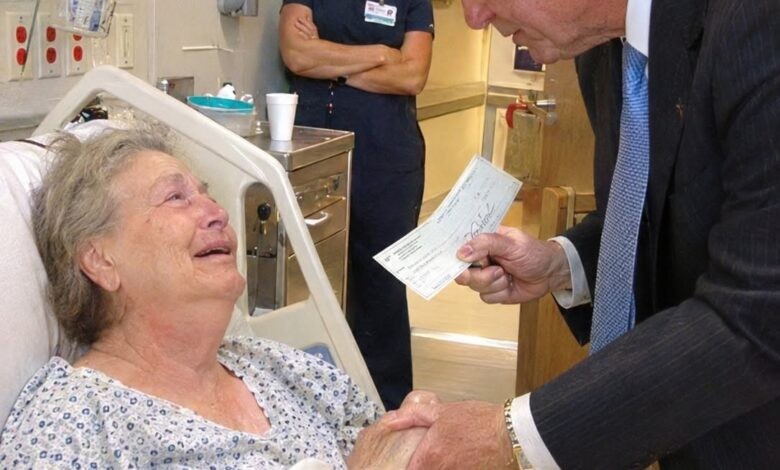

The Three Empty Chairs
I woke up from heart surgery alone.
The first thing I saw was the ceiling. White tiles, each one dotted with tiny holes. The second thing was the window, where a gray Seattle sky pressed against the glass. The third thing was the row of three chairs beside my hospital bed.
All three were empty.
I turned my head slowly. My neck felt heavy, my throat was painfully dry, and a collection of tubes and wires connected me to machines I didn’t fully understand. A heart monitor beeped steadily beside me, its green line rising and falling across the screen.
“Hello?” I whispered.
My voice sounded like it belonged to someone else.
A nurse entered a moment later. She was young, perhaps twenty-five, with a dark ponytail and pink scrubs. Her name tag read Kayla, RN.
“There you are, Mrs. Davis. How are you feeling?”
“Thirsty.”
She helped me take a small sip of water through a straw. It was the best thing I had tasted in weeks.
Then I looked toward the empty chairs.
“Where are my children?”
Her expression changed.
She placed the cup on the tray table and adjusted my blanket, although it was already perfectly straight.
“They were here during your surgery,” she said carefully. “All three of them waited in the family room.”
“That’s good.”
“Yes.”
She paused.
“But they left about an hour ago.”
I stared at her.
“Did something happen? Is somebody sick?”
Kayla looked down at the tablet in her hands.
“They said the parking was getting too expensive.”
For a moment, I thought the anesthesia was still affecting me.
“The parking?”
She nodded.
“The garage charges eight dollars an hour. After four hours, it becomes a flat thirty-two dollars. Your son said they’d already been here for almost five hours. He didn’t think there was any reason to pay for another day when you would still be sleeping.”
I couldn’t find an answer.
I was sixty-four years old. That morning, I had undergone major heart surgery to replace a damaged valve. My doctors had explained the risks. I had signed the consent forms, made arrangements for my recovery, and quietly accepted that there was a possibility I might not wake up.
My children had promised to stay.
David, my oldest, had told me he would take the entire day off from his accounting office.
“Mom, don’t worry. I’ll be right there. You’ll see my face as soon as you wake up.”
Sarah had promised to bring yellow roses, my favorite.
“We’ll make your room look beautiful.”
Michael, my youngest, had said he would come straight after his morning sales calls.
“Wouldn’t miss it, Ma.”
But now the chairs were empty.
And according to the nurse, the reason was thirty-two dollars.
I turned toward the window.
I didn’t want Kayla to see me cry, but the tears came anyway. They slipped across my temples and disappeared into the pillow.
The monitor began beeping faster.
“Mrs. Davis,” Kayla said gently, reaching for a tissue box. “Please try to stay calm. Your heart needs time to recover.”
I tried.
But how was I supposed to explain that the pain in my chest wasn’t the only thing hurting?
I had raised three children mostly alone after my husband, Frank, died. I had worked for thirty-one years as a school secretary in the Seattle Public Schools. I had paid for braces, college applications, car repairs, family holidays, and one wedding.
I had spent most of my life making sure they never felt the insecurity I had known as a child.
And now, after waking from surgery, I was lying in a hospital bed wondering whether I had become so unimportant that my own children couldn’t justify another few hours in a parking garage.
That was when I heard footsteps outside my room.
They were heavy but unhurried.
A tall man appeared in the doorway. He wore a dark suit, wire-rimmed glasses, and polished shoes. His salt-and-pepper hair was neatly trimmed, and he carried a leather briefcase.
He looked at the empty chairs before turning toward me.
“Excuse me,” he said. His voice was deep and gentle. “Is this Adrienne Davis?”
I wiped my face.
“Yes. That’s me.”
He stepped inside.
“Mrs. Davis, I don’t think you remember me.”
I studied his face.
“I’m sorry. Have we met?”
He placed his briefcase on one of the empty chairs.
“You paid for my lunch every day when I was in third grade.”
The room seemed to become very quiet.
The Boy at the End of the Cafeteria Table
I searched his face.
He looked to be in his fifties. His suit was expensive, his posture confident, and his voice carried the calm authority of someone accustomed to being listened to.
Nothing about him immediately reminded me of a little boy.
Then he said his name.
“Malcolm Peterson. I became Malcolm Chen after I was adopted.”
And suddenly, I remembered.
Franklin Elementary School.
South Seattle.
A thin little boy with dark hair that always stuck up at the back. He wore a plaid shirt several sizes too large and sneakers with holes worn through the toes.
He sat at the end of the cafeteria table.
Every day, while the other children opened their lunch boxes, Malcolm sat with his hands in his lap.
He never brought food.
Not once.
I had been sixteen that year. My father had injured his back at the shipyard, and my family needed extra money. I had taken a part-time job as a teacher’s aide, helping in classrooms and supervising the cafeteria.
I earned very little, but I noticed things.
I noticed the children who forgot their lunches. I noticed the ones who ate slowly because they were afraid there wouldn’t be enough. And I noticed Malcolm.
He never asked for anything.
He simply watched the other children eat.
On the second day, I went to the cafeteria office and bought a strip of lunch tickets with my own money.
After that, I walked past Malcolm’s table every day and quietly slipped one beneath his elbow.
“The cafeteria made extra meals today,” I told him. “Someone needs to eat them before they go to waste.”
He always looked at me with those big brown eyes.
Then he would take the ticket and get in line.
I never told him the truth.
I didn’t tell my parents, my friends, or anyone at school. I spent almost half my small paycheck on those tickets for the rest of the school year.
It wasn’t a grand act of charity. I didn’t consider myself a generous person. I simply couldn’t stand the thought of a child going hungry while I had enough money to help.
I looked at the man beside my bed.
“Malcolm?”
He smiled.
“Yes, Miss Adrienne.”
I felt tears gathering again.
“I remember you.”
He pulled one of the empty chairs closer.
“I kept the last ticket you gave me.”
From his briefcase, he took a small piece of yellow cardboard.
It was faded and soft around the edges. The words FRANKLIN ELEMENTARY were still visible across the top.
“I saved it from the last day of school,” he explained. “You gave me two tickets that afternoon. I used one and kept the other.”
He placed it carefully in my hand.
I couldn’t believe it.
Forty-six years.
He had kept a tiny lunch ticket for forty-six years.
“Why?” I whispered.
Malcolm looked down at his hands.
“That summer, my mother left. I entered foster care in August. I lived in three different homes over the next two years. Some were kind. One wasn’t.”
He paused.
“I carried that ticket inside my shoe. Whenever I felt like nobody cared whether I ate or whether I existed, I took it out and looked at it.”
His eyes met mine.
“It reminded me that one person had noticed.”
I held the ticket between my fingers.
For the first time since waking up, I cried without feeling entirely alone.
Then Malcolm reached toward the nurse’s station.
“Before I forget, I should introduce myself properly. I’m Dr. Malcolm Chen.”
Kayla, who had returned to check my monitor, looked up.
“Dr. Chen?”
He nodded.
“I own this hospital.”
Her expression changed immediately.
“Oh. I’m sorry, Dr. Chen. I didn’t recognize you.”
Malcolm smiled.
“There’s nothing to apologize for.”
After Kayla left, I looked at him in disbelief.
“You own this hospital?”
“One of four hospitals in the Pacific Northwest that I helped build and manage.”
I shook my head.
“The little boy from Franklin Elementary?”
“That same little boy.”
He explained that he had been adopted at ten by Robert and Grace Chen. Robert was a pharmacist, and Grace taught piano. They gave him a stable home, a bedroom of his own, and the chance to study without worrying about where his next meal would come from.
He attended the University of Washington and eventually went to medical school.
He became an internist, then moved into hospital administration. Years later, he partnered with other physicians and investors to help turn around struggling hospitals.
“Four hospitals,” I repeated.
He nodded.
“And every one of them has a program to make sure children who come through our doors don’t go hungry.”
He described meal assistance for children receiving treatment, families staying overnight, and parents who had spent so long in emergency departments that they had forgotten to eat.
“No complicated forms. No embarrassing questions. If a child needs a meal, we find a way to provide one.”
I looked at the yellow ticket.
“Because of that?”
“Because of you.”
For a moment, the hospital room felt warmer.
Then Malcolm looked at the empty chairs.
“Where are your children, Adrienne?”
The warmth disappeared.
“They left.”
“Why?”
I hesitated.
“They said the parking was too expensive.”
Malcolm’s expression became serious.
He reached across the bed and gently held my hand.
“I’ve been looking for you for years,” he said. “I wanted to thank you. But I also wanted to make sure you were doing well.”
“What do you mean?”
He released my hand and reached into his briefcase again.
This time, he removed a thick manila folder.
A rubber band held it closed.
“Adrienne, there are some things I need to tell you. And I’m afraid some of them will be difficult to hear.”
The Folder He Had Been Afraid to Show Me
I looked at the folder.
“How did you find me?”
“It took a long time. I only knew your first name. I remembered you as Miss Adrienne, but I didn’t know your surname.”
He explained that he had contacted Franklin Elementary several times over the years. Many of the old records were no longer available, so he eventually hired a researcher to examine archived school district payroll records from 1978.
There had been only one Adrienne working as a teacher’s aide.
“Adrienne Kowalski,” he said.
I nodded.
“That was my maiden name.”
He had traced my marriage to Frank Davis, my three children, and my thirty-one years working as a school secretary.
“Once I found you, I wanted to know how you were doing before I appeared at your door.”
“Why?”
“I didn’t want to embarrass you. If you were doing well, I planned to write a letter. If you were struggling, I wanted to help without making you feel uncomfortable.”
He tapped the folder.
“The researcher found some financial information in public records and reviewed documents connected to several matters involving your family.”
I felt uneasy.
“What kind of information?”
Malcolm spoke slowly.
“I know you live on a relatively modest school district pension and Social Security. Together, they provide about thirty-one hundred dollars a month.”
I said nothing.
It was accurate.
“I also learned that you lent David sixty thousand dollars two years ago when his accounting practice was struggling. There is a promissory note connected to the business loan, but no payments have been recorded.”
My face grew warm.
“I know you’ve been helping Sarah with her credit card bills. Around eight hundred dollars a month for nearly three years.”
I looked down.
“And Michael?”
“You co-signed his truck loan. A Ram pickup worth approximately forty-one thousand dollars. The lender has sent notices because several payments were missed.”
I closed my eyes.
All of it was true.
I had never discussed those arrangements with my friends or relatives. I didn’t consider them anyone else’s business.
They were my children.
When David needed money, I helped him.
When Sarah struggled to manage her bills, I sent what I could.
When Michael wanted a truck for work, I signed the paperwork because I believed he would keep up with the payments.
I had always told myself that helping my children was part of being a mother.
“They’re my kids,” I said quietly. “That’s what mothers do.”
“I understand,” Malcolm replied.
Then he opened the folder.
“But there’s something else.”
His voice had changed.
“Three weeks ago, David met with an attorney named Bradley Voss. His office is in Bellevue. He specializes in elder law.”
I frowned.
“Why would David need an elder law attorney?”
“Two weeks ago, Sarah visited three assisted-living facilities. She asked about long-term placement for her mother, including memory care.”
I stared at him.
“Memory care? I don’t need memory care. I do the crossword in pen.”
“I know.”
“And Michael?”
Malcolm hesitated.
“He has reportedly been asking questions about the process for having an older parent declared unable to manage personal affairs.”
My fingers tightened around the blanket.
“No.”
The word came out before I could stop it.
“They wouldn’t do that.”
Malcolm didn’t argue.
He simply looked at me.
“I hoped I was wrong.”
“They’re my children.”
“I know.”
“They love me.”
He lowered his voice.
“I’m sure they would say they do.”
That answer frightened me more than anything else.
The Real Reason They Left the Hospital
Rain began tapping against the window.
I looked at the folder, then at the empty chairs.
“Why are you telling me this today?”
Malcolm took a slow breath.
“Because I was planning to visit you months ago. I found your name in August. I wanted to bring flowers, introduce myself, and tell you how much that lunch ticket meant to me.”
“Then why didn’t you?”
“Because I received information that made me concerned about your children’s intentions.”
He explained that he had been unsure how to approach the situation.
He was a stranger to me. If he had arrived at my house and immediately accused my children of trying to take control of my finances, I would probably have asked him to leave.
“I needed to understand whether the information was accurate,” he said. “Then I learned you were scheduled for surgery here.”
I looked at him.
“And?”
“I thought that if your children were simply worried about you, they would stay. They would wait until you woke up. They would want to see that you were safe.”
He glanced at the empty chairs.
“I hoped I was wrong.”
Then he removed a document from the folder.
It carried the letterhead of Voss Elder Law Group.
My name appeared near the top.
I couldn’t read the smaller print without my glasses, so Malcolm moved the paper closer.
One sentence had been highlighted in yellow.
It said that the petitioners intended to seek emergency appointment of a guardian and conservator while I remained hospitalized, using my post-operative condition as supporting evidence for a finding of incapacity.
I read it once.
Then again.
“The afternoon of my surgery,” I whispered.
Malcolm nodded.
“They intended to file while you were recovering.”
I felt a cold sensation spread through my body.
“That’s why they left?”
“According to the document, the timing was connected to your surgery.”
I looked at the clock.
It was 3:47 in the afternoon.
“Where are they now?”
“Possibly at the attorney’s office.”
I stared at the highlighted sentence.
The parking fee had been a convenient explanation.
But the document suggested something far more serious.
My children might have left the hospital not because they were tired of waiting, but because they had somewhere else to be.
Somewhere they believed my condition would help them gain control over my affairs.
My heart monitor began beeping rapidly.
Kayla hurried into the room.
“Mrs. Davis? Are you all right?”
Malcolm stood immediately.
“She’s distressed. Please help her regulate her breathing.”
He placed one hand gently on my shoulder.
“Adrienne, look at me. Breathe slowly. In for four, out for four.”
I tried to follow his instructions.
Kayla checked the monitor and adjusted my equipment.
After a few moments, my heartbeat began to settle.
When I could speak again, I looked at Malcolm.
“How did you get that document?”
“It was sent to our hospital’s records department this morning. The request asked for a physician to evaluate your capacity after surgery. Because it involved a current patient and a possible guardianship matter, our legal and risk management teams reviewed it.”
“Did anyone evaluate me?”
“No. Nothing was performed simply because someone requested it. Any assessment must follow appropriate medical and legal procedures. Your records also cannot simply be handed over because a family member asks.”
He paused.
“You are the patient. You have rights. I wanted you to know what was happening.”
I looked at the paper again.
“What did they want from me?”
What My Children Had Been Planning
I asked Malcolm to explain the rest of the folder.
He didn’t rush.
He read each page carefully and stopped whenever I needed a moment.
The documents described several steps that appeared to have been discussed among my children and their attorney.
The first involved a proposed guardianship and conservatorship petition.
In general terms, guardianship can involve authority over certain personal decisions, while conservatorship can involve financial matters. The exact rules and procedures depend on the jurisdiction and the circumstances. Neither arrangement should be automatic simply because someone is older, hospitalized, or recovering from surgery.
The petition described concerns about my ability to manage my affairs.
But the examples were strange.
One involved a missed appointment at my bank.
Another mentioned a late utility payment.
A third referred to an occasion when I had forgotten where I had placed my car keys.
I stared at the pages.
“Everyone forgets their keys.”
Malcolm nodded.
“That is why individual examples need to be considered in context. They do not, by themselves, establish that someone lacks decision-making capacity.”
I read another page.
There were notes about my home, my savings, and the money I had lent my children.
Then I saw something that made my hands shake.
A proposed financial arrangement listed David as the person who would manage my accounts.
Sarah was named as the preferred contact for residential decisions.
Michael was listed as a supporting family member.
I looked up.
“They had already decided who would control everything.”
“That’s what the paperwork appears to suggest,” Malcolm said. “But a proposed arrangement is not the same as a court order.”
I felt sick.
“Did they know I would wake up today?”
“They knew you were undergoing surgery. The document specifically referred to your post-operative condition.”
I looked toward the chairs.
David’s chair.
Sarah’s chair.
Michael’s chair.
I remembered each of their promises.
The flowers. The first face I would see. The assurance that they wouldn’t miss it.
I had believed they were coming because they loved me.
Now I wondered whether they had been waiting for something else.
The First Call
Malcolm asked whether I wanted him to contact the hospital’s legal department.
“Yes,” I said.
He also suggested that I speak with an independent attorney who could represent my interests rather than those of my children.
I agreed.
Before leaving, he made sure Kayla had his contact information and that the appropriate hospital staff knew I had raised concerns about the medical-record request.
“I don’t want anyone making decisions for me without asking,” I told him.
“That’s exactly what you should say,” he replied.
After he left, I asked Kayla to bring my phone.
My hands were still weak, so she placed it beside me.
I called David first.
He answered after four rings.
“Mom? You’re awake?”
His voice sounded surprised.
“Yes.”
“That’s good. That’s really good. How are you feeling?”
I looked at the empty chairs.
“Where are you?”
There was a pause.
“We had to take care of something.”
“At the attorney’s office?”
Silence.
“Who told you that?”
“Is it true?”
“Mom, you’re recovering from major surgery. You shouldn’t be worrying about paperwork right now.”
“What paperwork, David?”
He sighed.
“Look, we just want to make sure everything is handled properly. You know how things have been lately.”
“How have things been?”
“You’re getting older. You live alone. We can’t always be there.”
I closed my eyes.
“I asked you to be here today.”
“We were there, Mom.”
“Until you decided the parking was too expensive.”
“That’s not fair.”
I could hear movement on his end.
“David, did you meet with Bradley Voss?”
He didn’t answer immediately.
Then he said:
“We’ll talk when you’re feeling better.”
“No. Answer me now.”
“Mom, I have to go.”
The call ended.
I stared at the phone.
I called Sarah next.
She answered almost immediately.
“Mom! Oh my goodness. You’re awake!”
“Yes, Sarah.”
“How are you? Did the doctor say everything went well?”
“Where were you?”
“We had to leave for a little while.”
“Did you visit assisted-living facilities?”
A long pause followed.
“Who told you that?”
“Is it true?”
“Mom, don’t get upset. We were only looking at possibilities.”
“Possibilities for what?”
“Your future.”
“My future?”
She lowered her voice.
“We’re worried about you living alone.”
I looked at the monitor.
“I have lived alone for years.”
“Things are different now.”
“Because I had surgery?”
“Because you’re not getting any younger.”
I couldn’t believe what I was hearing.
“I needed my daughter today.”
Sarah began to cry.
“Mom, we’re trying to help.”
“Then why didn’t you stay?”
She didn’t answer.
I ended the call.
Michael was the last.
He didn’t answer.
I left a message.
“Michael, it’s Mom. I know about the paperwork. I want you to call me when you’re ready to tell me the truth.”
Then I put the phone down.
For the first time in my life, I didn’t feel the need to chase after them.
A Different Kind of Family
Malcolm returned the following morning.
He brought flowers, a small box of fruit, and the name of an attorney who had no connection to my children.
He also brought a copy of the yellow lunch ticket in a protective sleeve.
“I thought you might like to keep it,” he said.
I smiled faintly.
“You’ve kept the original for forty-six years.”
“I’ll keep it. You can have this copy.”
We spoke for nearly an hour.
He explained that he had asked his legal team to preserve the documents received by the hospital and to make sure my concerns were recorded through the proper channels.
He had also arranged for me to speak privately with an independent attorney.
I was grateful, but I didn’t want him to become responsible for every decision in my life.
“You’ve already done more than enough,” I told him.
He shook his head.
“You gave me lunch when I had nothing. I don’t consider helping you a burden.”
“That was a long time ago.”
“Some things stay with a person.”
He told me that he still remembered the way I had placed the lunch tickets beneath his elbow.
He remembered the exact words I used.
He remembered that I never asked him to explain why he had no food.
“I didn’t feel like a charity case,” he said. “I felt like somebody had noticed me.”
I looked at the ticket in its plastic sleeve.
“Then perhaps that’s what we should keep doing.”
He smiled.
“Noticing people?”
“Yes.”
The Legal Steps I Took for Myself
My recovery took time.
I needed help getting out of bed, walking down the corridor, and learning how to manage my medications. The doctors gave me instructions about rest, follow-up appointments, and gradually returning to ordinary activities.
I followed them carefully.
But I also began dealing with the situation involving my children.
With the help of an independent attorney, I reviewed my financial records, loan agreements, bank arrangements, and the documents connected to the proposed petition.
The attorney explained that I should not sign anything simply because a relative insisted it was for my own good.
She also helped me understand the difference between receiving assistance and surrendering control.
If I needed support, I could choose a trusted person to help with specific tasks. I could review my estate documents and make sure they reflected my wishes. I could ask questions about any legal process involving my capacity or property.
Most importantly, I had the right to be heard.
The attorney also explained that any guardianship or conservatorship proceeding would require appropriate evidence and judicial review. A hospital stay or recovery period did not automatically mean someone was incapable of making decisions.
I requested copies of all relevant documents and asked that any future communication about my affairs be sent directly to me and my attorney.
I also reviewed the loans I had made to my children.
The sixty thousand dollars David had borrowed was still outstanding.
Sarah’s recurring credit-card assistance had become a monthly habit that neither of us had properly discussed.
Michael’s missed truck payments had placed my own credit at risk because I had co-signed the loan.
For years, I had told myself that setting limits would make me a bad mother.
Now I understood that helping my children should not require putting my own future in danger.
I contacted each of them in writing.
I explained that I would no longer make recurring payments on their behalf, lend additional money, or agree to financial arrangements without independent advice.
I did not demand immediate repayment of everything.
I simply made it clear that the old arrangement was over.
It was one of the hardest letters I had ever written.
But when I finished, I felt something I hadn’t felt in a long time.
I felt in control of my own life.
When My Children Finally Came Back
David visited me several days later.
He arrived with a small bouquet of flowers and an expression that seemed carefully prepared.
“Mom.”
I looked up from my book.
“Hello, David.”
He placed the flowers on the table.
“How are you feeling?”
“Better.”
He sat down.
For a while, neither of us spoke.
Then he said:
“Why are you making this so difficult?”
I closed my book.
“What do you mean?”
“We were trying to make sure you would be taken care of.”
“By filing paperwork while I was in surgery?”
He looked away.
“We were worried.”
“Then you should have talked to me.”
“You don’t always listen.”
“I listened when you needed sixty thousand dollars.”
His expression tightened.
“That’s different.”
“Is it?”
He rubbed his forehead.
“Mom, I have a business to run. Sarah has her own problems. Michael is struggling financially. We can’t spend every day worrying about whether you’re okay.”
I looked at him.
“I didn’t ask you to spend every day with me. I asked you to stay while I was having heart surgery.”
He didn’t answer.
I continued.
“And I didn’t ask you to manage my money. I didn’t ask you to choose where I live. I didn’t ask you to decide whether I’m capable of making my own decisions.”
David sighed.
“We thought it would be easier if one of us handled everything.”
“For whom?”
He stared at the floor.
I knew the conversation was not going to resolve everything that day.
So I told him something I had never said before.
“I love you, David. But I am not going to confuse being your mother with being responsible for every problem in your life.”
He looked up.
“I don’t want to lose my relationship with you,” I said. “But if we’re going to have one, it has to be based on honesty and respect.”
He left without arguing.
Sarah came the next afternoon.
She cried almost immediately.
She said she had been frightened about my health and had only wanted to find a safe place for me to live.
I asked her why she hadn’t discussed it with me.
She said she thought I would refuse.
“Then you already knew it wasn’t my decision to make.”
She wiped her face.
“I didn’t think you would understand.”
“I understand more than you think.”
We spoke for a long time.
I told her I wasn’t ready to resume the monthly credit-card payments. I also told her that if she wanted to help me, she could begin by asking what I actually needed.
Michael called that weekend.
He apologized for not visiting.
He said he had been overwhelmed by his own financial problems and had believed his older siblings knew what they were doing.
I listened.
Then I asked him one question.
“Did you know they were planning to file those papers?”
He was quiet.
Finally, he admitted that he had heard discussions about it but had not asked enough questions.
I told him that silence had consequences, too.
He cried.
I didn’t tell him everything was forgiven.
I told him we could begin again, but only if he was willing to be honest.
The Visit That Meant More Than a Thank-You
A few weeks later, I was discharged from the hospital.
Malcolm came to see me before I left.
He didn’t arrive with an expensive gift or a grand speech. He brought a small framed photograph.
It showed a cafeteria table at Franklin Elementary School.
The picture had been recreated from an old school photograph, with a little yellow lunch ticket placed in the foreground.
“I thought you might like this,” he said.
I held it carefully.
“You really didn’t have to.”
“I know.”
He looked toward the doorway.
“Would you consider visiting the children’s meal program sometime?”
I smiled.
“Why?”
“Because the people who work there would love to meet the woman who inspired it.”
I wasn’t sure what to say.
I had never imagined that something I did as a teenager would reach so many people.
“I’d like that,” I replied.
A few months later, once my recovery allowed it, I visited the program.
I saw children sitting with their parents, eating sandwiches and fruit while they waited for appointments.
Some were nervous. Some were tired. Others were laughing over something on a phone screen.
A volunteer placed a meal in front of a little boy who looked no older than eight.
He glanced up.
“Is this really for me?”
The volunteer smiled.
“Of course it is.”
I had to look away for a moment.
Malcolm stood beside me.
“That’s what your lunch ticket became,” he said.
I watched the boy take his first bite.
“Then I suppose it was worth keeping.”
He nodded.
The Three Chairs Were No Longer Empty
My relationship with my children did not become perfect overnight.
David still struggled to accept that I would no longer provide money whenever his business ran into trouble.
Sarah needed time to understand that my home was not a problem she could solve by choosing a facility for me.
Michael had to take responsibility for his own financial commitments.
There were difficult conversations. There were apologies that felt incomplete. There were moments when I wondered whether our family would ever return to the way it had been.
But I stopped measuring love by how much I was willing to sacrifice.
I began making plans that belonged to me.
I returned to my crossword puzzles. I met friends for lunch. I attended my medical appointments and followed my recovery plan. I even began volunteering once a week when my health allowed it.
And Malcolm remained in my life.
Sometimes he called to ask how I was feeling. Sometimes we talked about the hospital program. Sometimes he simply wanted to hear stories about Franklin Elementary.
One afternoon, he asked whether I still remembered the little boy who sat at the end of the cafeteria table.
“Of course,” I said.
He smiled.
“I sometimes wonder what would have happened if you hadn’t noticed me.”
I looked at him.
“You would have found another way.”
“Maybe.”
“But I’m glad you didn’t have to find it alone.”
He nodded.
Then he placed the old yellow ticket on the table between us.
It had traveled through nearly half a century, through a childhood marked by uncertainty, an adoption, years of education, and a successful career.
It had survived because a hungry little boy needed proof that someone cared.
I had once believed that my most important achievements were raising three children, keeping a home together, and working for decades without asking anyone for help.
Now I understood that kindness could travel much farther than we ever expected.
A forty-cent lunch ticket had become a hospital meal program.
A small act of attention had become a friendship that returned when I needed it most.
And the three empty chairs beside my hospital bed had taught me something I should have learned long before I turned sixty-four.
Being a mother does not mean surrendering your dignity.
Being a good child does not mean simply promising to help. It means showing up when someone needs you.
And sometimes, the person who remembers your kindness is not the person you raised.
Sometimes, it is the little boy you once fed without expecting anything in return.
I still think about the morning I woke up after surgery.
I remember the empty chairs.
But I also remember the man who walked through the door carrying a yellow lunch ticket.
My children had left me waiting.
A former student had come back.
And in that moment, I discovered that the family we build through kindness can sometimes reach places our own family never learned to go.