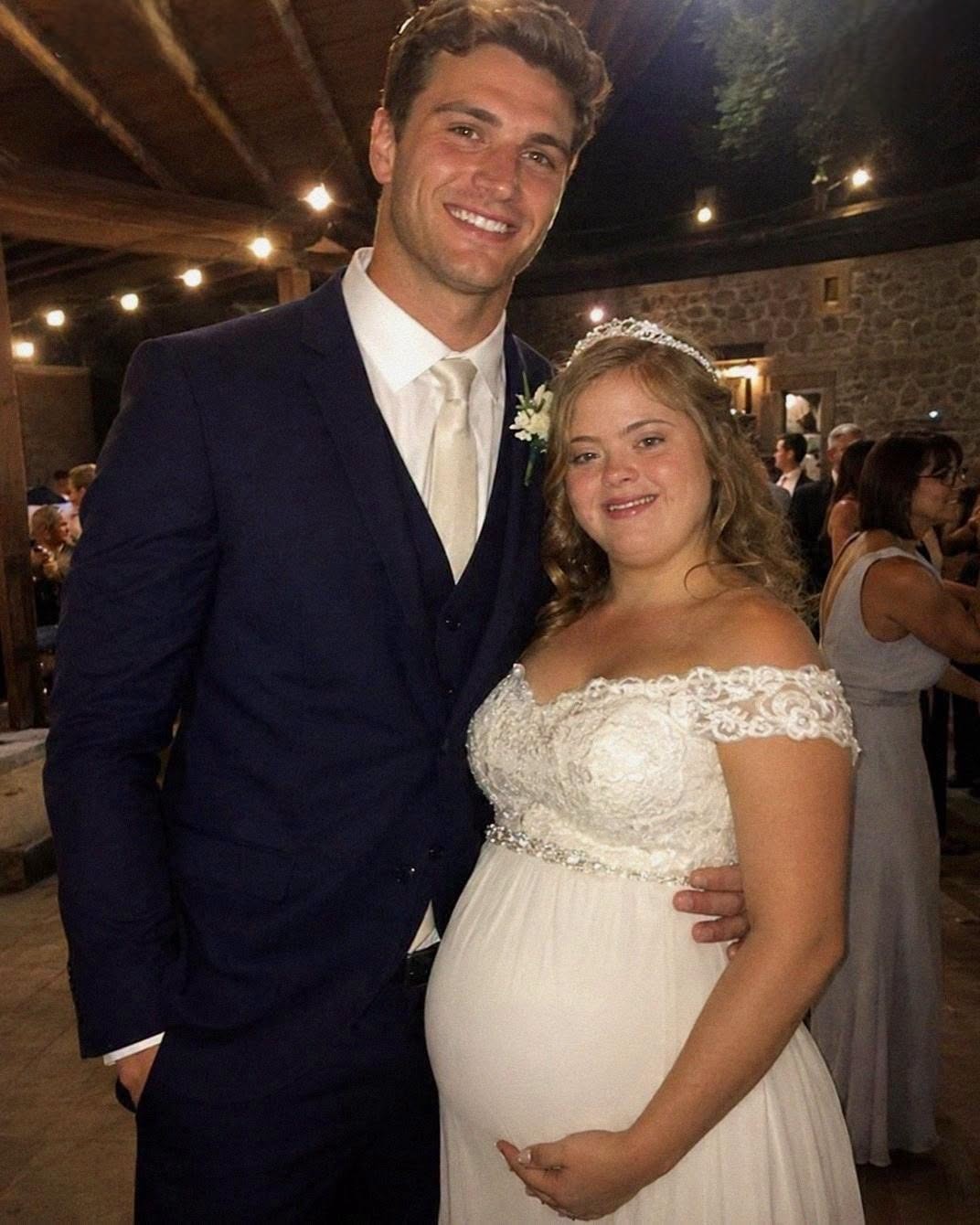

Growing up, Rosie was often treated differently because she had Down syndrome.
Her sister always tried to protect her, making sure she was included and reminding others that she deserved the same kindness, friendship and opportunities as everyone else. But there was one person who seemed to understand this without needing to be asked: Ben, her sister’s best friend.
From childhood, Ben became a familiar and trusted presence in both sisters’ lives. He included Rosie in games, stood beside her when other children excluded her and treated her with the same warmth he showed everyone else.
At one point, he even jokingly promised that he would take Rosie to prom when they were older.
Nobody thought much of the promise at the time.
As the years passed, however, Ben’s relationship with Rosie became deeper and more meaningful. Their friendship developed naturally, while family members assumed that Ben and Rosie’s sister might eventually become a couple.
But life had a different plan.
Ben’s Feelings Took Everyone by Surprise
As Rosie grew older, Ben began to realize that his feelings toward her were not simply those of an old family friend.
He had come to appreciate her personality, humor and outlook on life.
For Rosie, Ben was someone who had never made her feel as though she needed to prove herself.
Eventually, Ben made a decision that surprised almost everyone around them.
He asked Rosie to marry him.
Rather than focusing on what made their relationship unusual in the eyes of other people, Ben and Rosie focused on what mattered to them: companionship, affection, trust and the life they wanted to build together.
Their families celebrated the relationship.
For Rosie’s sister, the news was understandably complicated. Ben had been her best friend for years, and she had always considered Rosie someone she needed to protect.
Yet she also understood that Rosie deserved the opportunity to make important choices about her own life.
A Relationship That Challenged Assumptions
Stories involving people with disabilities are sometimes told primarily through the perspective of their families.
But Rosie’s story raises an important question about independence.
Having Down syndrome does not automatically mean that someone cannot form meaningful relationships, make decisions or have dreams for the future.
People with Down syndrome have individual personalities, abilities, interests and aspirations.
The National Down Syndrome Society emphasizes that people with Down syndrome can lead fulfilling lives and participate in education, employment, relationships and their communities.
Of course, every individual is different.
Some people may need significant support with certain decisions, while others may live highly independently.
That is why it is important to avoid assuming that one person’s experience represents everyone with Down syndrome.
Then Rosie Shared Unexpected News
The couple’s happiness grew when Rosie announced that she was expecting twins.
For the family, the news transformed their wedding story into something even more significant.
A new chapter was beginning.
But pregnancy can involve additional medical considerations for women with Down syndrome, just as it can for any pregnancy where there are individual health factors to consider.
As Rosie’s pregnancy progressed, however, complications began to emerge.
What had started as a joyful announcement gradually became a period of uncertainty for Rosie, Ben and everyone who loved them.
When Happiness Meets Uncertainty
Pregnancy is often imagined as a straightforward journey toward meeting a new baby.
Real life can be considerably more complicated.
Some pregnancies require additional monitoring, specialist appointments or changes in daily routines.
For Rosie, the pregnancy reportedly became difficult enough to place both her and the unborn twins under significant medical attention.
Ben remained by her side.
The same person who had spent years treating Rosie with patience and respect was now supporting her through an entirely different challenge.
And it was during this difficult period that he said the words that changed how Rosie’s sister viewed their entire relationship.
The Words That Changed Everything
Rosie’s sister had spent much of her life believing that she needed to protect her younger sister.
That instinct was understandable.
When someone you love has a disability, it can be tempting to become their advocate in every situation.
But advocacy and protection are not always the same thing.
Protection can sometimes unintentionally become overprotection.
Ben’s actions helped Rosie’s sister see the difference.
He did not view Rosie as someone whose life should be defined by her diagnosis.
He saw her as a person.
A woman with her own preferences, emotions, ambitions and capacity to build relationships.
That perspective eventually changed something fundamental in the way her sister understood both Rosie and Ben.
Looking Beyond a Diagnosis
Down syndrome is a genetic condition caused by an extra copy of chromosome 21.
It is associated with characteristic physical features and differences in development, but there is considerable variation between individuals.
According to the Centers for Disease Control and Prevention, people with Down syndrome can experience differences in learning, communication and physical development, while also having a wide range of individual strengths and abilities.
This distinction matters.
A diagnosis provides medical information.
It does not describe an entire person.
Rosie is not simply “a woman with Down syndrome.”
She is also a daughter, sister, wife, friend and, in this story, an expectant mother.
Those identities can coexist.
Why Family Relationships Can Become Complicated
Rosie’s sister’s reaction also highlights something many families experience.
When one sibling has additional support needs, another sibling may naturally become protective.
That role can begin during childhood and continue into adulthood.
The older sister may become accustomed to making sure everything is okay.
But adulthood changes the relationship.
At some point, the person who was once a child being protected becomes an adult who deserves space to make decisions for herself.
Finding that balance can take time.
It may require family members to rethink assumptions they have carried for years.
Ben’s Role Was More Than Simply Being a Caregiver
One important distinction in the story is the way Ben’s relationship with Rosie developed.
He was initially described as someone who consistently included and supported her.
But their relationship eventually became romantic.
Those two things should not automatically be confused.
A healthy relationship should be based on mutual respect rather than the idea that one person exists solely to care for another.
Ben’s story, as presented, is significant because he appears to have valued Rosie for who she was rather than reducing her identity to the support she might need.
What This Story Says About Love
Romantic relationships are rarely as simple as outsiders imagine.
People meet through friendships, workplaces, schools, communities and shared experiences.
Sometimes affection develops gradually.
Sometimes people who appear unlikely to become partners discover that they have more in common than anyone expected.
Rosie and Ben’s relationship challenges the assumption that a person’s disability should determine whether they are viewed as a potential romantic partner.
At the same time, relationships involving people with disabilities should be approached with the same emphasis on consent, communication and mutual respect as any other relationship.
Pregnancy and Down Syndrome
Rosie’s reported pregnancy also raises questions about reproductive health.
Women with Down syndrome can become pregnant, although pregnancy requires individualized medical care.
Healthcare providers may recommend additional monitoring depending on the circumstances of the pregnancy.
Genetic counseling can also help prospective parents understand possible genetic considerations.
The American College of Obstetricians and Gynecologists provides guidance on prenatal screening and diagnostic testing, emphasizing that patients should receive individualized counseling when making decisions about pregnancy care.
In Rosie’s case, the reported twin pregnancy made the situation even more complex.
Multiple pregnancies can require closer monitoring because carrying two babies presents additional medical considerations.
The Bigger Lesson About Disability
Perhaps the most meaningful part of this story is not the wedding or even the unexpected romance.
It is the reminder that disability does not erase individuality.
People with disabilities can have friendships.
They can fall in love.
They can marry.
They can pursue careers and hobbies.
They can form families.
And they can surprise the people closest to them.
The most supportive families are often those that learn to distinguish between helping someone and making every decision for them.
A Different Kind of Family Protection
Rosie’s sister began the story believing that protecting Rosie meant standing between her and anything that might hurt her.
By the end, she had learned something more complicated.
Sometimes protecting someone means giving them the freedom to experience life.
That does not mean abandoning support.
It means recognizing that support should help a person exercise their own abilities rather than automatically replacing their choices.
Ben’s relationship with Rosie reportedly helped the family understand that distinction.
Conclusion: Seeing the Person Before the Diagnosis
Rosie’s story began with a childhood in which she was sometimes excluded because she had Down syndrome.
Her sister tried to shield her.
Ben did something slightly different.
He included her.
He treated her as a person rather than a diagnosis.
Years later, that friendship became a relationship, and eventually a marriage.
When Rosie announced that she was expecting twins, the family entered another unexpected chapter, one that reportedly became increasingly difficult as the pregnancy progressed.
Whatever happens next, the broader lesson remains powerful.
People are more complicated than labels.
A medical diagnosis can explain certain aspects of someone’s life, but it cannot tell us whom they will love, what dreams they will have or what kind of person they will become.
Perhaps that is what changed Rosie’s sister’s perspective most of all.
She had spent years asking how she could protect her sister.
Ben helped her see another question: What if Rosie does not always need someone to protect her, but someone who believes in her?
That distinction can change the way families understand disability, independence and love.
And it reminds us that human beings are rarely defined by the assumptions others make about them.
Sources
- National Down Syndrome Society — About Down Syndrome
- CDC — Down Syndrome
- ACOG — Prenatal Genetic Screening Tests
