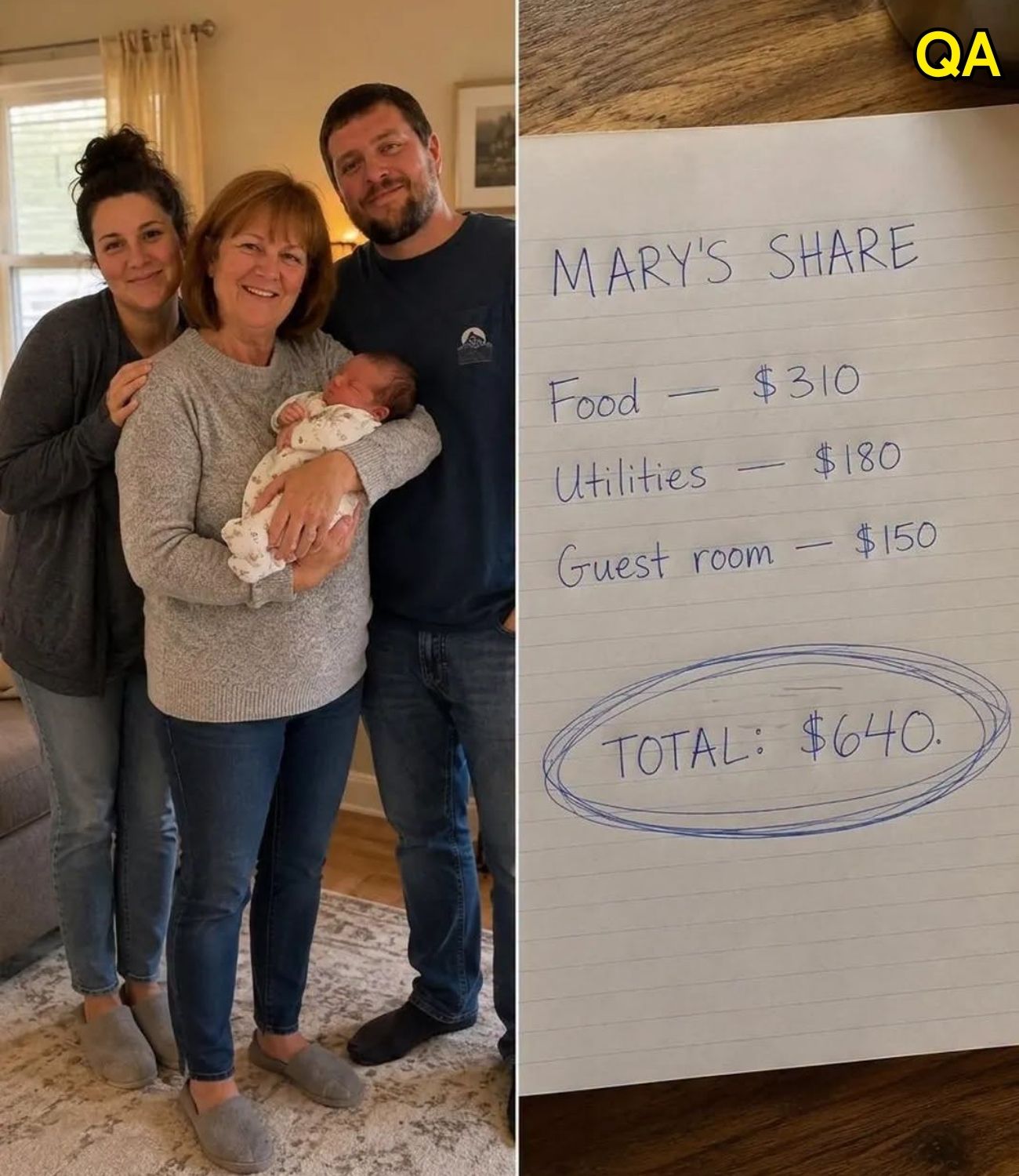

Chapter 1: The Invoice
The $640 bill was sitting beside my coffee cup on the morning I was supposed to drive home.
For two exhausting weeks, I had poured everything I had into helping my daughter Casey and her husband, Derek, adjust to life with their newborn. I cooked warm meals, washed mountains of laundry, sanitized endless bottles, bought groceries with my own money, and took on late-night feedings so Casey could recover from a difficult childbirth.
Now, my son-in-law Derek stood across the kitchen counter while I stared down at his neatly handwritten charges: $310 for food, $180 for utilities, and $150 for the guest room.
I actually waited for him to laugh, assuming it was some kind of bizarre joke. But he didn’t crack a smile. Instead, he calmly explained that money was tight with hospital expenses and Casey being on unpaid maternity leave. He acted as though running a business transaction with family was completely normal.
I had originally planned to leave another $700 envelope on the counter to help with the baby’s upcoming needs. Instead, I quietly counted out exact cash for his bill, placed the $640 down on the table, picked up my suitcase, and looked him in the eye.
“I understand,” I said softly.
Chapter 2: Walking Out
Derek looked visibly relieved, as if he had successfully navigated a difficult corporate negotiation, until he realized I was walking toward the front door.
I had intended to spend that entire morning filling their refrigerator and freezer with homemade casseroles, nutritious soups, and breakfast burritos to make their lives easier over the coming weeks. Instead, I closed the refrigerator door, hoisted my suitcase, and walked right out of the house.
Four hours later, while I was halfway down the highway, my phone rang. It was Casey, sounding bewildered and hurt, asking why I had left so abruptly without saying goodbye.
“Ask your husband,” I told her simply.
When she hung up and discovered the handwritten bill on the kitchen table, her confusion instantly turned into blinding fury. She remembered every single night I had gotten up with the baby so she and Derek could sleep undisturbed. The reality of what her husband had done set in like a cold splash of water.
By six o’clock that evening, another phone call came through. It wasn’t angry this time—it was desperate and exhausted.
Casey had barely eaten anything all day, the kitchen sink was overflowing with dirty bottles, the baby was overtired and wouldn’t stop crying, and Derek was completely overwhelmed. Finally, Derek took the phone from his weeping wife. His voice was quiet, stripped of all arrogance, as he asked me to please come back.
For the very first time, he was beginning to understand exactly what his $640 invoice had actually cost them.
Chapter 3: The Reality of Burden
The front door clicked shut behind me, but the silence inside my own house felt heavy and suffocating. For the past two weeks, my days had been measured by the rhythmic, frantic cries of a newborn, the smell of warm formula, and the constant hum of the washing machine. Now, sitting alone at my kitchen table, the quiet felt less like rest and more like an emptiness I hadn’t anticipated.
My phone lit up with a text message from Casey. Her words were sharp, born of shock and sudden realization.
“Did Derek really charge you $640? How could you just leave us like this?”
I stared at the screen for a long moment before replying.
“I didn’t leave you, Casey. I paid what I owed for occupying space and consuming resources in your home, exactly as your husband calculated. When a relationship is reduced to an invoice, the transaction is complete.”
She didn’t text back immediately. I knew the weight of what I had said was sinking in. Back at their house, the illusion that everything was effortless had just shattered. For two weeks, Derek had slept soundly through the night, woken up to a clean kitchen, and walked into a home where meals magically appeared on the table, all while believing that parental exhaustion was something you could simply outsource or manage like a corporate spreadsheet.
Chapter 4: The Collapsing Routine
Back at Casey and Derek’s house, the evening routine was descending into utter chaos. Without my quiet, invisible presence handling the behind-the-scenes machinery of their household, the fragile system they took for granted began to crumble within hours.
By seven o’clock, the baby had entered a cycle of relentless colic. Casey, still physically recovering and mentally drained, was sitting on the living room floor in tears, trying simultaneously to soothe the infant and wash a mountain of sterilized bottles because every single clean one had been used up by afternoon feeding sessions.
Derek, meanwhile, stood in the middle of the kitchen staring down at an empty refrigerator. The frozen casseroles and prepared meals I had planned to cook that morning remained unmade in my grocery bags at home. When he tried to heat up a quick frozen dinner, he realized the kitchen counters were piled high with unwashed dishes, and the trash bin was overflowing.
The corporate efficiency he prized so much was completely useless here. You could not bill a crying baby for overtime, and you could not negotiate a timeline with an infant refusing to sleep. For the first time, Derek looked around the messy, loud, chaotic room and realized that my labor hadn’t just been an inconvenience or a favor—it was the structural foundation holding their entire daily sanity together.
Chapter 5: The Cost of Family
When Derek picked up the phone to call me back, his voice lacked every ounce of the cold arrogance he had worn that morning over the kitchen counter.
“Please come back,” he murmured, the sound of the baby wailing loudly in the background. “Casey is a wreck, I’m completely overwhelmed, and we… we made a massive mistake. We didn’t realize how much you were actually doing.”
I closed my eyes for a second, listening to the genuine remorse in his voice. I didn’t gloat, and I didn’t scold him. Wisdom comes at a price, and sometimes people have to feel the exact weight of their own foolishness before they can understand the value of grace.
“Derek,” I said calmly, my voice steady. “Love isn’t a ledger, and family isn’t a business arrangement. You can’t put a price tag on someone’s devotion, because if you try, you’ll find out you can’t afford the actual cost of losing it.”
There was a long, heavy pause on the other end of the line.
“I know,” he whispered. “We’ll tear up the invoice. Just… please tell us what we need to do to make this right.”
I packed my car back up that evening and drove back through the dark highway. When I walked through their front door, Casey ran into my arms sobbing, and Derek stood awkwardly by the kitchen island, holding the baby with a look of profound humility. The $640 bill was gone from the counter, thrown into the trash where it belonged. We didn’t speak of money again. Instead, we sat down together around the kitchen table, ate a simple meal in silence, and finally understood that the true currency of a family is care, patience, and love given freely without keeping score.
