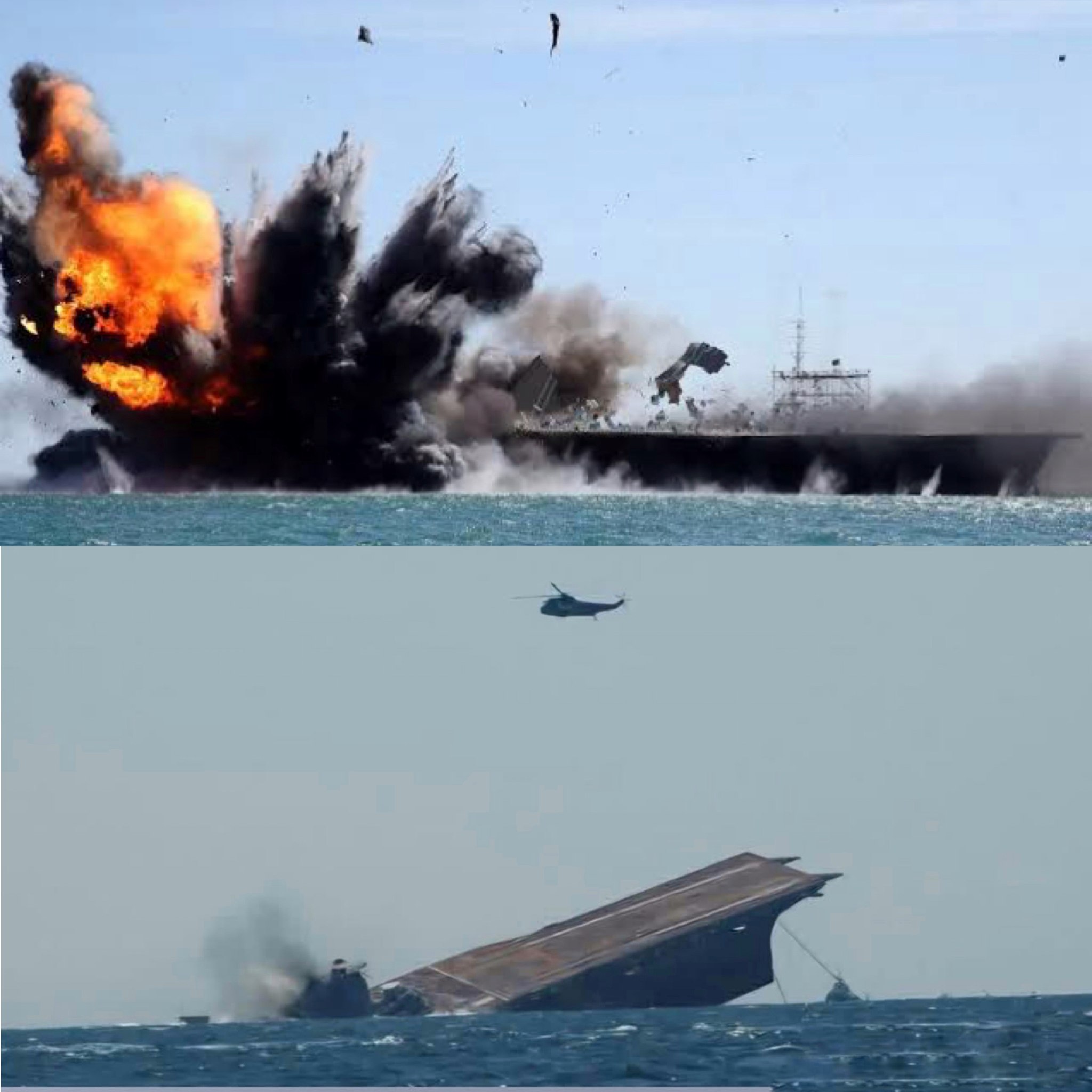

The Persian Gulf, a perennial chokepoint for global energy and a stage for geopolitical theater, became the center of a high-stakes narrative battle this past Sunday. On March 1st, the Islamic Revolutionary Guard Corps (IRGC) issued a startling claim that sent ripples through international security circles: they asserted that the USS Abraham Lincoln, one of the United States’ most formidable naval assets, had been successfully targeted in a missile strike.
The claim, which initially surfaced via state-affiliated channels and was reported by outlets such as European Pravda and Euronews, suggested a dramatic escalation in the ongoing friction between Washington and Tehran. However, the fog of information warfare quickly settled as U.S. Central Command (CENTCOM) issued a sharp and unequivocal denial, setting the stage for a classic confrontation of “he-said, she-said” in the world of military intelligence.
The IRGC’s Assertion: A “Graveyard” Warning
In a formal statement released on Sunday, the IRGC claimed that the USS Abraham Lincoln had been struck by four ballistic missiles while navigating the waters of the Persian Gulf. The rhetoric accompanying the announcement was predictably fierce, reflecting the heightened animosity that has defined the region’s atmosphere for months.
“The land and sea will increasingly become the graveyard of the terrorist aggressors,” the IRGC statement warned, utilizing the inflammatory language often directed at Western forces stationed in the Middle East.
For the IRGC, such claims serve multiple purposes: they act as a domestic signal of strength, a deterrent to regional rivals, and a challenge to the perceived invincibility of American naval power. In a period marked by economic hardship within Iran and external diplomatic pressure, a perceived “victory” against a symbol of U.S. military might carries significant propaganda weight.

CENTCOM’s Counter-Narrative: “The Claim is a Lie”
The American response was swift. Taking to social media, specifically X (formerly Twitter), U.S. Central Command moved to dismantle the IRGC’s narrative before it could gain further traction in global markets or among the public. CENTCOM did not just offer a correction; they offered a total rebuttal, describing the Iranian claim as a complete fabrication.
“The Lincoln was not hit. The missiles launched didn’t even come close,” CENTCOM stated. “The Lincoln continues to launch aircraft in support of CENTCOM’s relentless campaign to defend the American people by eliminating threats from the Iranian regime.”
The U.S. military’s stance was clear: not only was the ship unharmed, but its operational capacity remained at 100%. By emphasizing that the carrier was still “launching aircraft,” CENTCOM sought to project a sense of business-as-usual, dismissing the Iranian missiles as ineffective and poorly aimed.
A Titan of the Seas: The USS Abraham Lincoln
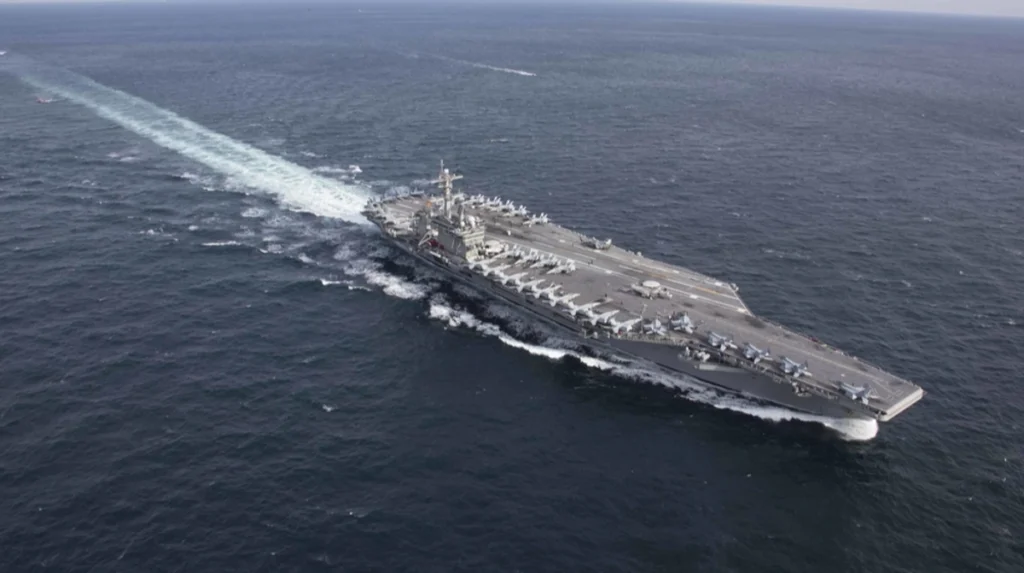
To understand why a potential strike on the Lincoln is such a monumental claim, one must look at the sheer scale and symbolic value of the vessel. The U.S. Navy often describes the Abraham Lincoln as “the largest warship in the world,” a title shared by its siblings in the legendary Nimitz class.
The Lincoln is more than just a ship; it is a floating city and a sovereign piece of American territory. Consider the following specifications that define this nuclear-powered behemoth:
-
Size and Scope: Nimitz-class carriers span roughly 333 meters (nearly 1,100 feet) in length.
-
Massive Displacement: These vessels can carry approximately 100,000 tonnes of equipment, armor, and supplies.
-
Air Power: A single carrier can house upwards of 65 aircraft, ranging from advanced fighter jets like the F/A-18 Super Hornet to electronic warfare planes and helicopters.
-
Defense Systems: The ship is equipped with multiple missile mounts and Phalanx Close-In Weapon Systems (CIWS) designed to intercept incoming threats—the very types of threats the IRGC claimed to have bypassed.
The presence of such a vessel in the Persian Gulf is intended to be the ultimate deterrent. It is a visible reminder of the United States’ ability to project power anywhere on the globe within a matter of days.
The “Armada” Strategy: Context of the Deployment
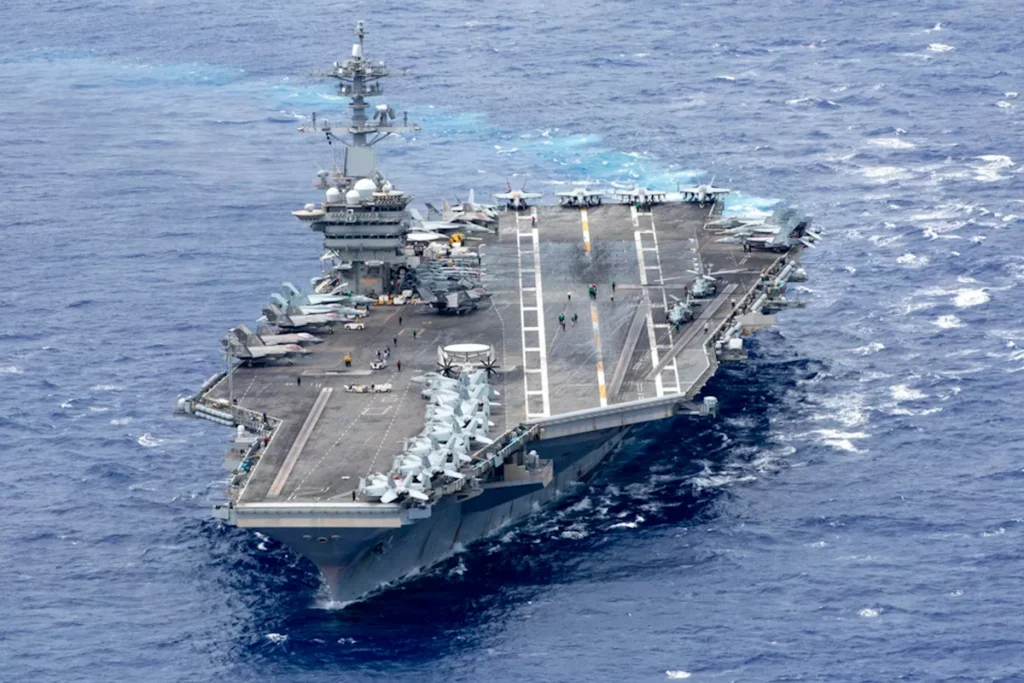
The deployment of the USS Abraham Lincoln to the Persian Gulf was not an isolated event. It was part of a broader strategic shift initiated in late January. At the time, President Donald Trump referred to the surge of naval and air assets to the region as an “armada,” a term intended to convey overwhelming strength.
The deployment was framed as a “just in case” measure, a response to rising internal and external pressures. Domestically, Iran had been facing significant unrest as citizens protested against the country’s dire economic situation. The U.S. administration, fearing that the Iranian government might attempt to deflect internal pressure by instigating a foreign crisis, sent the Lincoln to serve as a watchdog over the vital shipping lanes of the Strait of Hormuz.
The Reality of Ballistic Missile Threats
The claim that ballistic missiles could strike a moving aircraft carrier is a subject of intense debate among military analysts. While Iran has invested heavily in its missile program—developing the Khalij Fars (Persian Gulf) anti-ship ballistic missile specifically for this purpose—the technical challenge of hitting a carrier at sea is immense.
-
Moving Targets: A carrier is rarely stationary. Ballistic missiles typically follow a predetermined arc, making it difficult to hit a target that is actively maneuvering at high speeds.
-
The Layered Defense: A U.S. carrier never travels alone. It is the centerpiece of a Carrier Strike Group (CSG), which includes guided-missile destroyers and cruisers equipped with the Aegis Combat System. These ships are specifically designed to track and intercept ballistic missiles mid-flight.
-
Sensor Technology: U.S. forces utilize satellite imagery, long-range radar, and airborne early warning systems to detect a launch the moment it occurs, providing precious minutes to engage defensive measures.
Given these factors, CENTCOM’s assertion that the missiles “didn’t even come close” aligns with the technological reality of modern naval warfare. For a ballistic missile to successfully strike a Nimitz-class carrier, it would need to penetrate multiple layers of the most sophisticated defense network ever devised.
The Information War: Why Claims Matter
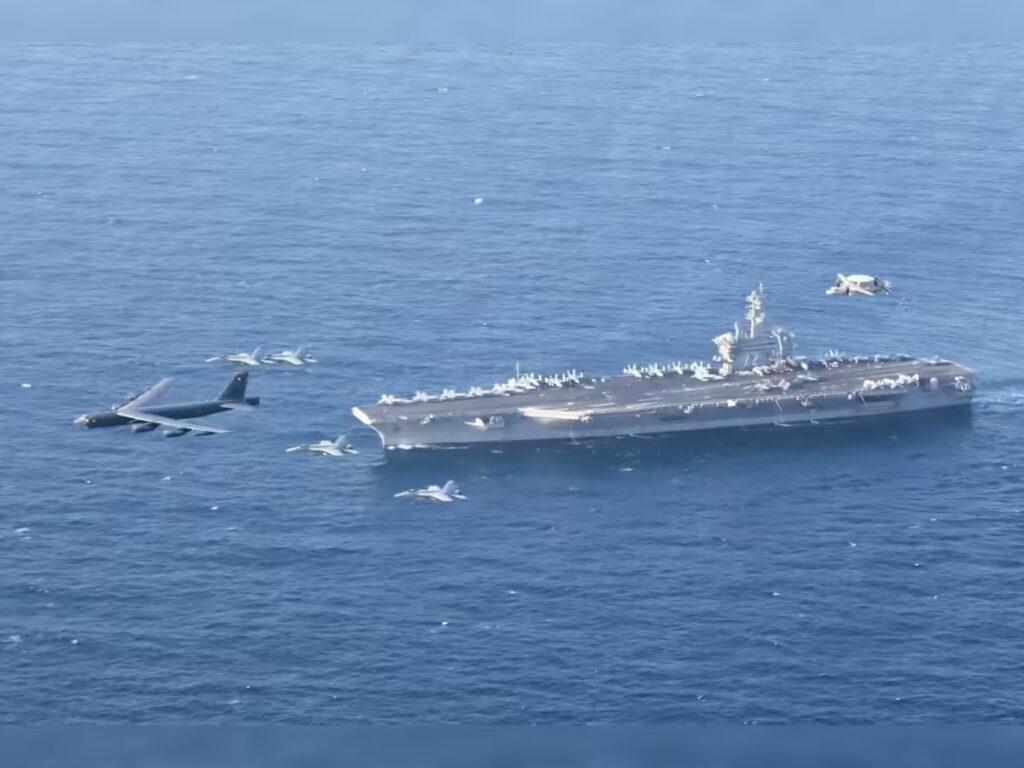
In modern conflict, the “narrative” can be as important as the kinetic reality. Even if the IRGC did not hit the USS Abraham Lincoln, the mere act of claiming they did serves several strategic goals:
-
Internal Morale: For a government facing economic sanctions and internal dissent, projecting an image of defiance against a superpower can rally nationalist sentiment.
-
Asymmetric Pressure: By claiming they can hit a carrier, Iran keeps the risk premium high for shipping and insurance companies, exerting pressure on the global economy.
-
Testing Responses: Every launch and subsequent claim allows the IRGC to observe how U.S. forces react, which sensors are activated, and how quickly the information is countered.
Conversely, the U.S. must respond with total transparency and speed. Any hesitation in denying such a strike could be interpreted by allies and adversaries alike as a sign of vulnerability. By utilizing platforms like X, CENTCOM ensures that its version of events reaches the global audience simultaneously with the initial reports of the claim.
The Humanitarian and Economic Backdrop
The tension in the Gulf does not exist in a vacuum. The Iranian people have been navigating a difficult economic landscape, characterized by high inflation and limited access to global markets. The “armada” deployment was, in part, a response to the way the Iranian government handled internal protests related to these economic struggles.
The U.S. position has been that its presence in the Gulf is to ensure the freedom of navigation. Approximately one-fifth of the world’s oil passes through the Strait of Hormuz. Any actual conflict—or even the sustained threat of one—could send oil prices soaring, impacting every corner of the global economy.
Conclusion: A Precarious Balance
As of this update, the USS Abraham Lincoln continues its patrol. Despite the IRGC’s “graveyard” warnings and their claims of a successful strike, there is no physical evidence—satellite, photographic, or otherwise—to suggest the carrier suffered any damage.
The incident serves as a stark reminder of the volatility of the Persian Gulf. In a region where a single miscalculation or a misinterpreted signal could spark a broader conflict, the battle over the truth is constant. For now, the “largest warship in the world” remains a silent, steel sentinel in the Gulf, while the world watches the digital and diplomatic fallout of a missile launch that, according to the U.S., was never even close to its mark.
The global community remains on high alert, understanding that while the missiles may have missed their target, the underlying tensions remain as locked-on as ever. The march of 2026 continues with the world hoping that the “armada” remains a deterrent rather than a participant in a conflict that neither side can truly afford.
The story of the USS Abraham Lincoln is not just a story of a ship, but a story of the modern world—where the line between a “strike” and a “lie” is navigated in real-time under the watchful eyes of a global audience.
