
On a cold December morning in Ireland, the world briefly paused to admire something astonishingly simple yet deeply moving: the bright, unmistakable smile of a donkey named Mike. His expression—warm, trusting, almost glowing—spread across social media, inspiring countless people. To many, it was a reminder of the emotional richness animals can share when compassion meets courage.
The story of Mike’s rescue during a severe flood touched hearts everywhere. Yet beyond the emotional moment lies a larger narrative about the symbolic meaning of donkeys throughout history, their cultural presence, and the scientific understanding of their emotional intelligence. This article explores how one uplifting moment resonates so deeply with people across cultures and what science reveals about the expressive world of donkeys.

The Story Begins: A Donkey Caught in Rising Waters
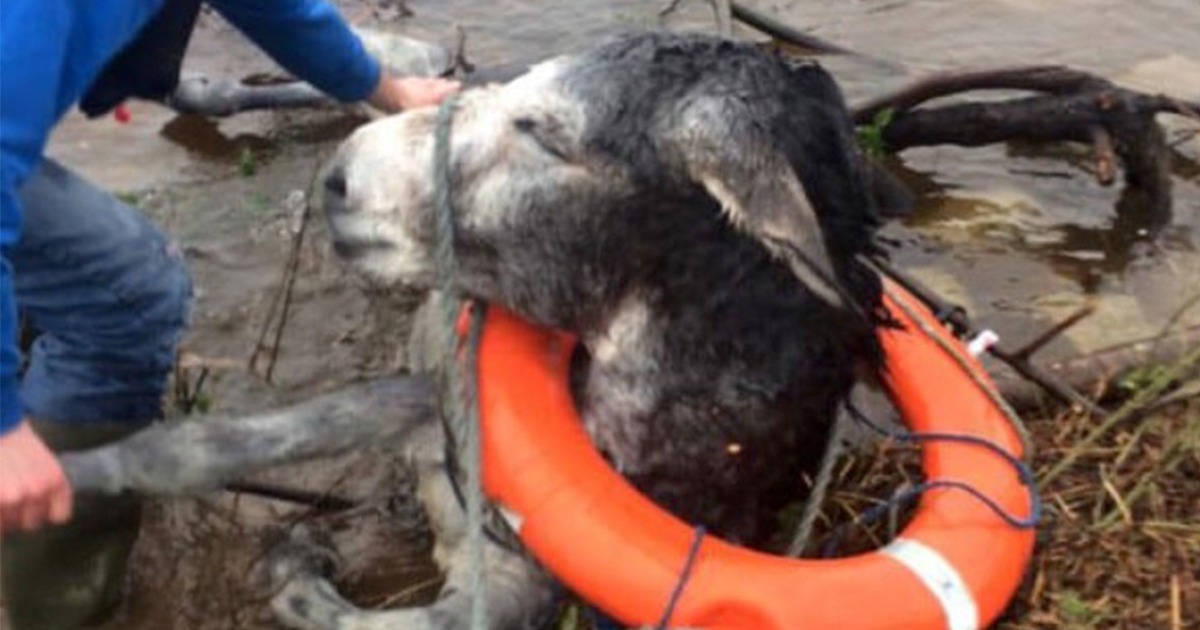
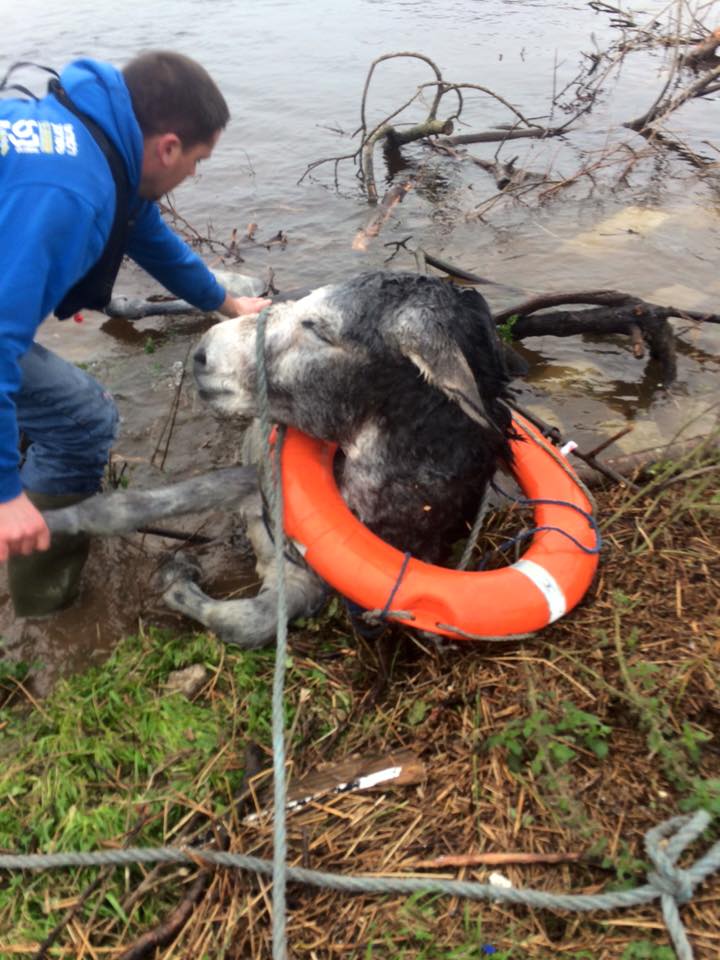
In 2015, Storm Desmond brought record rainfall to Ireland and parts of the United Kingdom. Entire landscapes were submerged under deep, cold water, transforming familiar green terrain into uncertain, flooded plains. Amid this unusual scene, a donkey named Mike found himself trapped in water that reached his belly.
The rising river had broken its banks, and strong winds had pushed over the fencing around his field. Lost and frightened, Mike wandered into the flooded area near his home in County Kerry. By the next morning, he needed help—and quickly.
That help came from Suzanne Gibbons, founder of Animal Haven Ireland (AHI). When she found Mike, the water was still rising. Time was slipping away, and she knew she could not pull him to safety alone. She posted a call for assistance on Facebook, asking for a boat and volunteers who could brave the waters.
Her message reached the right person. A local rowing coach, Mike Fleming, arrived with a boat. Together, they guided the craft toward the stranded donkey, using a life ring to gently support his head above water and guide him toward safety.
When Mike finally stepped onto dry land, cold but safe, something remarkable happened. His face softened, his ears tilted back, and he stretched his lips into what looked exactly like the biggest smile anyone had ever seen on a donkey.
That smile would soon travel around the world.

A Viral Smile That Captured Global Attention
The image of Mike standing beside Suzanne, wearing a brilliant and unmistakable grin, spread quickly across social media. Some viewers described the smile as heartwarming, while others saw it as a symbol of gratitude or relief. Comments poured in from around the world, celebrating the rescuers’ kindness and marveling at Mike’s expressive face.
At AHI, Mike received warmth, comfort, and the gentle care he needed. He slept under a heat lamp, enjoyed soft food, and explored his unfamiliar but safe surroundings. Even during recovery, he charmed volunteers and online followers alike. A video shared by AHI showed him snacking happily, occasionally lifting his head as if responding to the chatter of a talkative bird nearby.
It was a gentle, peaceful scene—one that reinforced his newfound online identity as “the donkey who smiles.”

Donkeys in Myth and Culture
Mike’s story resonated far beyond the rescue itself. The donkey is a figure woven throughout global culture and history, often symbolizing resilience, loyalty, humility, and quiet strength. Understanding this cultural backdrop helps explain why one donkey’s smile captured such widespread affection.
A Symbol of Patience and Devotion
Across many traditions, donkeys appear as symbols of perseverance. Their steady pace and remarkable endurance have long represented reliability and calm determination. Unlike more spirited or imposing animals, the donkey’s strength lies in its steady presence and willingness to carry burdens without complaint.
In folklore, donkeys are frequently portrayed as wise, observant, and more perceptive than their humble appearance might suggest. Stories from Europe, the Middle East, Africa, and Asia often cast donkeys as gentle guides who understand situations better than their human companions.
Cultural Respect Across Civilizations
In several ancient cultures, donkeys were associated with prosperity and good fortune. Their ability to carry goods, help with farming, and navigate rugged terrain made them indispensable partners in daily life.
In literature, donkeys have often been used to symbolize quiet intelligence, sometimes misunderstood but deeply valued once their true nature is recognized. Over centuries, they have appeared in art, poetry, and legends as steady companions whose loyalty enriches human lives.
With this legacy, it is no surprise that Mike’s expressive smile resonated so strongly. People across cultures already see donkeys as gentle creatures with rich personalities, making his joyful expression feel almost poetic.
What Science Says About Donkey Emotions
While cultural stories give donkeys symbolic meaning, scientific research helps explain what these animals may actually feel and express. Studies in animal behavior and cognition shed light on why Mike’s smile felt so genuine and relatable.
Donkeys Are Deeply Social and Emotionally Expressive
Modern research shows that donkeys form strong emotional bonds with both animals and humans. They build long-lasting memories and respond thoughtfully to familiar faces. Their social intelligence has been documented in studies exploring communication, problem-solving, and emotional signaling.
Unlike some animals that mask their feelings for survival, donkeys often display their emotions openly. Their ears, vocalizations, and facial expressions all communicate their mood. This helps them interact effectively within herds and collaborate with humans in daily tasks.
Facial Expressions as Communication
Scientists who study equine facial expressions have noted that donkeys possess a surprisingly wide range of subtle cues. Movements of the ears, lips, and eyes can indicate curiosity, excitement, uncertainty, or contentment.
While interpreting animal expressions always requires caution, researchers agree that donkeys use their faces actively to communicate. Mike’s widely shared smile may not be identical to a human smile in meaning, but it does reflect a moment of comfort, relaxation, and positive engagement after a stressful experience.
Emotional Recovery After Stress
When animals experience fear or uncertainty, supportive care from humans can help restore a sense of calm. Donkeys respond particularly well to gentle voices, slow movement, and consistent reassurance. In Mike’s case, the warmth, care, and food he received after his rescue may have helped ease his stress quickly, leading to the relaxed, expressive moment captured in photographs.
Why Stories Like Mike’s Matter
Mike’s rescue illustrates something humans have felt for generations: the connection between people and animals is powerful, meaningful, and mutually beneficial. Stories like his remind us of the compassion communities can share and the deep emotional world animals possess.
Inspiring Kindness
Many people who commented on Mike’s viral photo expressed renewed trust in compassion. The dedication of Suzanne, AHI volunteers, and the rowing coach demonstrates how simple acts of teamwork can change a life—whether human or animal.
Reminding Us of Shared Emotion
Mike’s expressive face invited viewers to see the world through his eyes. His moment of relief and comfort reflected something universal: the need for safety, warmth, and understanding.
Connecting Modern Life With Ancient Symbolism
For thousands of years, donkeys have represented patience and goodwill. Mike’s story brought those ancient themes into the modern world, giving people a moment of peace and inspiration in a digital landscape filled with distractions.

Reflection: What Mike Teaches Us About Human Curiosity
At the heart of Mike’s story is something profoundly human: the instinct to care and the desire to understand. People are drawn to expressive animals because they remind us of our shared emotional language, even across species. Mike’s smile—regardless of whether it matched human meaning perfectly—sparked joy and comfort around the world.
As we continue learning about animal cognition and cultural symbolism, stories like Mike’s encourage us to look closer, think deeper, and treat every creature with empathy. Human curiosity drives us to explore the mysteries of nature, and every now and then, a single bright smile reminds us how connected we truly are.
Sources
en.newsner.com
Animal Haven Ireland (AHI)
Research from equine behavior and cognition studies published in peer-reviewed animal science journals
