
The world can change in a single moment. For one small dog, that moment arrived on a quiet stretch of highway where the day seemed to blur into the sound of rushing traffic. Cars streamed past in flashes of color and noise, while the dog lay barely moving beside the road, his body tired and trembling. It looked as if he had been there for a long time, waiting without knowing what he was waiting for.
Drivers slowed, unsure of what to do. Some hesitated, worried about stopping near passing vehicles. A few tossed pebbles gently in the dog’s direction, a misguided attempt to encourage him to leave the roadside and move toward safety. But each small stone startled him. His legs trembled whenever he tried to rise, and he could only manage to drag himself a short distance.
At first, it was easier to look away. But something about his quiet struggle held my attention. It felt impossible to keep driving.
I pulled over.
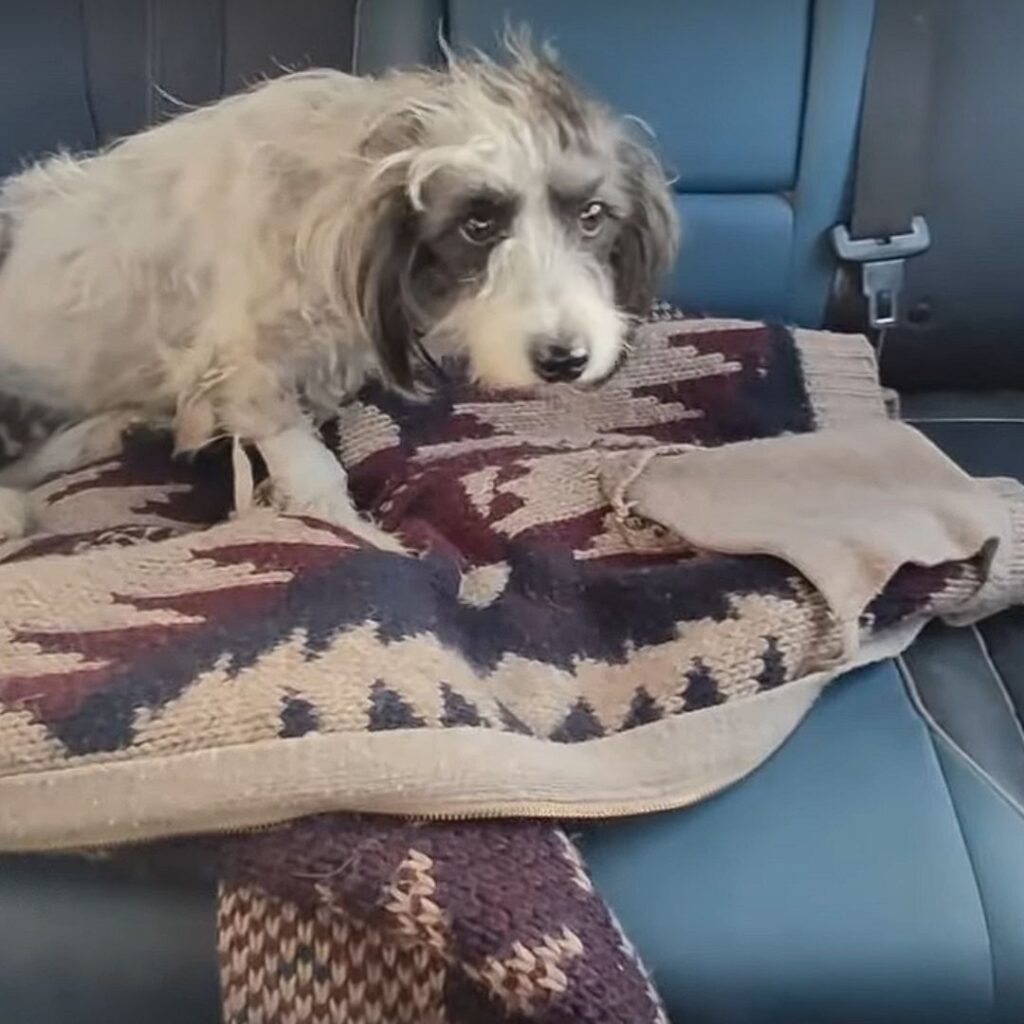
My friend beside me whispered, “He’s probably been living on scraps.” We watched him attempt to crawl again, his effort showing both fear and determination. The blanket in my trunk suddenly felt like the most important thing I owned. I stepped out, speaking softly, approaching slowly so he wouldn’t be afraid.
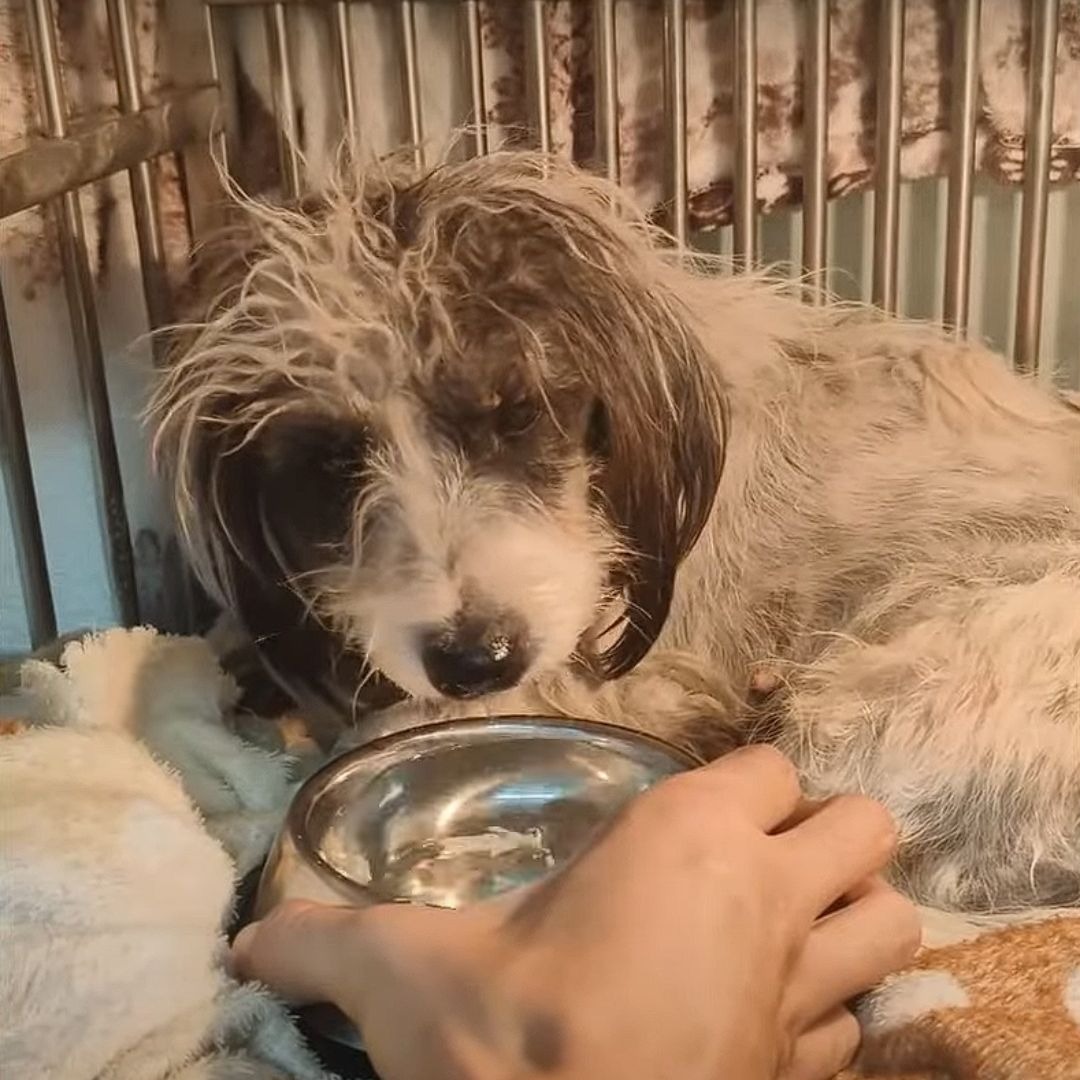
He didn’t resist. His energy was too low for that. When I wrapped him in the blanket, he felt weightless, as if his small frame carried more memories than strength. We took him to a veterinary clinic, not knowing what the future held, but hoping this would be the start of something better.
The Beginning of Trust
Inside the clinic, the air carried the familiar scent of antiseptic—sharp yet somehow reassuring. The staff welcomed the dog with calm efficiency, and we gave him the name Sheep, inspired by the soft curl of his fur. Sheep, however, wasn’t ready to trust. Each sound made him flinch, and he kept his gaze low as if expecting something to go wrong.
The veterinarian’s early examinations suggested he had experienced a difficult time living outdoors. His body needed rest, nutrition, and gentle care. The team explained that with enough attention, patience, and medical support, Sheep had an excellent chance at recovery. Their optimism felt like a breath of fresh air.
That first night, after he received treatment, Sheep slept more deeply than I imagined he could. His breathing steadied, his body relaxed, and a quiet sense of relief seemed to fill the room. I stayed for as long as the clinic allowed. It felt important for him to know he wasn’t alone.
Over the next few days, Sheep’s progress unfolded slowly but surely. He began eating small portions of food. His eyes softened when he saw familiar faces. On the third day, something small but significant happened—his tail gave a tiny wag. It was a simple gesture, yet it felt like a breakthrough.
Each visit became a lesson in patience. Some days, Sheep would lean gently into my hand when I reached out to him. Other days, he preferred more distance. But no matter what, I kept coming back, letting him decide the pace of our growing bond.
A New Beginning at Home
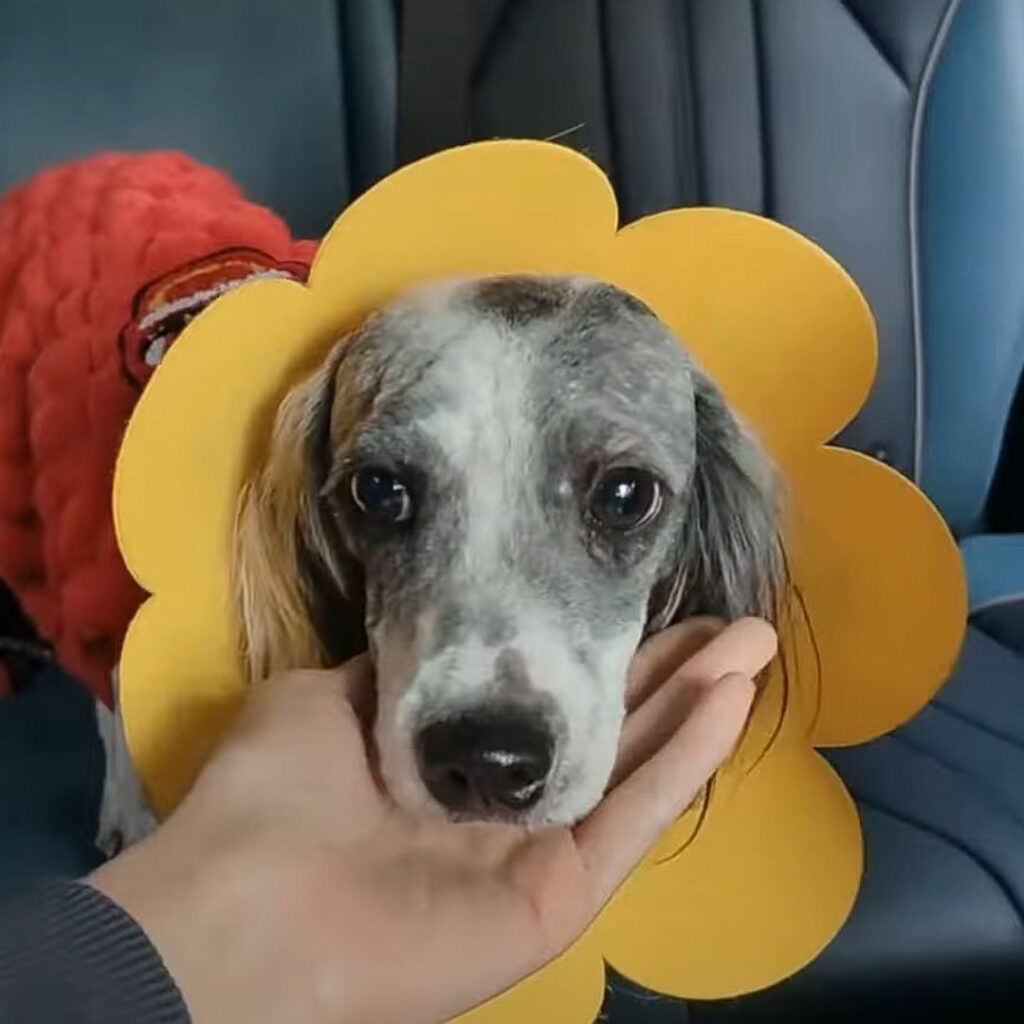
Sheep came home on a quiet afternoon, stepping away from the sterile walls of the clinic and into a space filled with warmth and calm. He hesitated at the doorway, as if uncertain whether he belonged. But once inside, something shifted. He sniffed the air, nudged my hand gently, and took a tentative step forward.
Then another.
Soon, he discovered his new bed—a soft one placed near my older dog, who watched him with patient curiosity. Together, they formed an unspoken agreement: this house was a place of peace, a space where they could rest without worry.
Sheep adapted quickly, surprising us with his intelligence. He learned simple cues in days, sometimes hours. He watched the household routines with focus, his head tilting slightly each time he encountered something new. The other dogs in the home seemed to catch his enthusiasm. Their play became livelier, their naps more companionable. Sheep, despite his small size, became the center of energy and curiosity.
He even developed a habit of gathering toys. He’d gently collect them, one by one, carrying them to a corner as if forming a playful treasure. Whenever another dog approached, he would prance away with exaggerated steps, inviting a game of chase. It became one of his many joyful quirks.

Steps Toward Strength
Walking was difficult for Sheep in the beginning. His legs needed time to regain their strength. But with each day, he grew sturdier and more confident. Outdoor time became an essential part of his healing.
The beach turned out to be his favorite place. The softness of the sand supported his steps, giving him freedom without strain. He explored everything—driftwood, tiny shells, the warm air that blew in gentle waves. The ocean fascinated him. He darted toward small waves and then ran back, barking with excitement as they rolled in again.
Those moments felt like watching a sunrise break through clouds. Every small achievement reminded us how far he had come.
By the time he began taking longer trips with us, Sheep’s transformation felt complete. What once seemed fragile and uncertain had become lively and bold. On open fields, he ran with more speed than expected for a dog his size, his movements full of confidence. Each stride felt like a celebration of the new life he had discovered.
A Family Formed Through Patience and Love
Looking back, it’s easy to remember the difficult parts—the moments of fear, the uncertainty of recovery, the quiet hours of waiting. But those moments now feel small compared to what followed.
Sheep became family.
Not in the traditional sense of lineage or ownership, but through trust earned over time. His presence filled the house with softness. He curled up for naps beside the older dog as if they had always belonged together. He followed me around the house, watching, listening, learning. He seemed to understand routines before they were taught, responding to even the gentlest cues.
His trust changed me too. Caring for him created a deeper appreciation for the quiet strength and resilience animals carry. It taught me to notice the subtler gestures—the hesitant tail wag, the soft nudge, the moment he rested his head on my knee.
Sheep didn’t arrive in my life under ideal circumstances. His journey began with uncertainty, but it led to a home where he could thrive. In return, he offered companionship, comfort, and a sense of peace that felt both grounding and uplifting.
He wasn’t born into our family, but he became part of it in every way that matters.

The Heart of the Story: What Sheep Teaches Us About Second Chances
Sheep’s transformation is a reminder of how powerful patience and care can be. His journey reflects something universal: the capacity for individuals—whether human or animal—to heal when given understanding and support.
This story also highlights the important role animal welfare organizations play. Through their ongoing efforts, many animals receive the medical attention and stability they need to begin again. The story of Sheep, though not tied to a single documented account, echoes countless real-life rescues conducted every day around the world.
His journey encourages us to extend kindness wherever possible, to recognize potential in the moments that others overlook, and to appreciate the strength that emerges when fear gives way to trust.
In the end, Sheep offered more than companionship. He provided lessons in resilience, gratitude, and the quiet beauty of a second chance.
Reflection: Why Stories Like Sheep’s Inspire Us
Stories like Sheep’s resonate because they remind us of our shared connection with the animals who live alongside us. Humans are naturally drawn to narratives of growth, transformation, and hope. These stories encourage empathy and highlight the simple truth that compassion creates change—sometimes slowly, sometimes unexpectedly, but always meaningfully.
Sheep’s journey is not just about a dog finding a home. It is about the gentle power of trust, the quiet steps of healing, and the way small acts of kindness ripple outward. They inspire us to look a little closer, act a little softer, and appreciate the bonds that shape our lives.
Sources
-
PetMaximalist (petmaximalist.com)
-
American Society for the Prevention of Cruelty to Animals (ASPCA) – Animal Welfare Resources
-
Humane Society International – Companion Animal Care
-
American Veterinary Medical Association (AVMA) – Pet Health Guidelines
