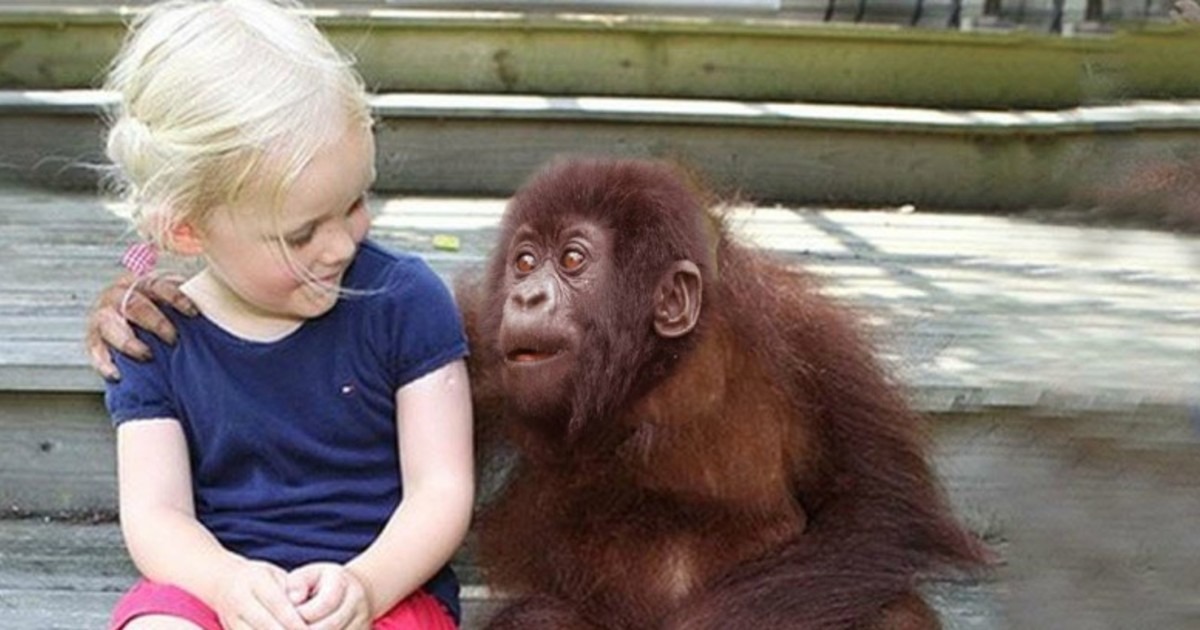

There are moments in life that feel almost too cinematic to be real. They unfold quietly, without an audience, until someone captures them and the entire world pauses in shared wonder. One such moment occurred when a young woman named Tansy returned to Africa after twelve years to search for two gorillas she had grown up alongside during her childhood. What followed was a reunion so heartwarming that it continues to inspire millions.
The journey behind that reunion stretches far beyond a single visit to the forest. It began in Kent, England, inside a conservation park dedicated to protecting endangered wildlife. It continued across continents into the dense green landscapes of West Africa, where the two gorillas—Bimms and Djalta—had been reintroduced to their natural environment. Their story is one of connection, memory, cultural meaning, and scientific curiosity. It invites us to consider not only how humans influence wildlife conservation but also how our relationships with other species shape our understanding of the world.
This article explores the cultural and scientific significance of gorillas, the emotional power of reunions like Tansy’s, and the broader questions such events raise about animal memory, empathy, and the human desire to connect with the natural world.
The Beginning: A Childhood Surrounded by Wildlife
Tansy Aspinall grew up in an environment unlike that of most children. Her family was deeply involved in wildlife conservation through The Aspinall Foundation, an organization dedicated to rehabilitating gorillas and eventually releasing them into protected ecosystems in West Africa. The Howletts Wild Animal Park in Kent, where the family worked, became a place where daily tasks included observing gorillas, learning their behaviors, and supporting efforts to prepare them for life beyond captivity.
Among the gorillas living there were Bimms and Djalta, two young individuals who soon became part of the family’s conservation story. For Tansy, their presence was simply part of her childhood. She interacted with them under supervised, responsible conditions as part of the family’s mission to support gorilla rehabilitation. These early experiences planted the seeds of a bond she would later rediscover as an adult.
Twelve years after Bimms and Djalta were released into the forests of Gabon, Tansy and her father made a journey few families will ever experience: they traveled across continents not to create a reunion for publicity, but to understand how the gorillas had adapted to their new environment. What happened next surprised even them.

The Reunion That Captured the World’s Imagination
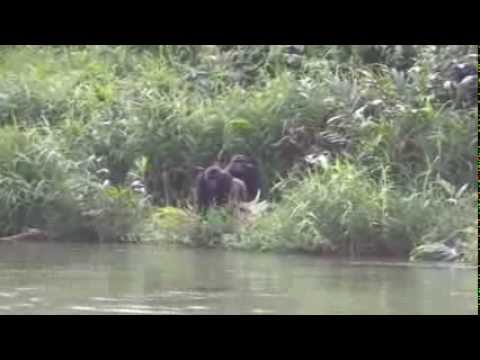
When Damian and Tansy arrived in Gabon in 2014, they hoped to locate Bimms and Djalta using responsible tracking techniques. Rewilded gorillas often live in large, forested areas, making encounters unpredictable. The team navigated rivers, climbed through forests, and communicated with conservation workers who had monitored the gorillas’ progress since their release.
According to the original reports, it was Damian’s voice that first drew the gorillas out of the forest canopy. What happened next seemed astonishing, though scientists and conservation experts often describe such moments as rare rather than impossible. The gorillas responded to familiar cues, and the scene that unfolded revealed how strong early experiences can be—both for humans and, potentially, for animals.
When Tansy approached, their reactions were gentle and curious. Observers later described the moment as moving because it highlighted the possibility that the gorillas recognized something familiar about the young woman who had once been part of their early lives. While scientists continue to explore the extent of long-term memory in great apes, events like this reunion provide meaningful stories that nourish our curiosity and encourage ongoing research.
The video of the meeting quickly spread across the internet, not because of dramatic claims, but because of the quiet, genuine connection it represented. Many viewers described feeling inspired or hopeful, emotions often associated with conservation stories that highlight harmony between humans and wildlife.

Gorillas in Culture and Myth: Guardians of the Forest
Gorillas have long held symbolic meaning in the cultures of Central and West Africa. Although traditions vary among communities, several themes appear consistently across oral histories and folklore. Gorillas are often portrayed as peaceful guardians of the forest, beings of strength, dignity, and calm presence. In some communities, they are associated with wisdom and patience, qualities that contribute to their respectful treatment in storytelling traditions.
These cultural narratives emphasize coexistence rather than fear. Instead of being depicted as threatening, gorillas are often recognized as important participants in the ecosystem, shaping the forest through their movement, diet, and behaviors.
Beyond Africa, gorillas have also appeared in global culture as symbols of quiet strength and deep emotion. Films, books, and documentaries often portray them as gentle giants who possess a profound capacity for connection. While such depictions may sometimes simplify their true biological complexity, they also contribute to a growing global appreciation for gorilla conservation.
In the context of Tansy’s reunion, these cultural themes remind us that the relationship between humans and gorillas has always been more than strictly biological. It involves storytelling, values, respect, and shared history—elements that continue to shape conservation efforts today.

Scientific Perspectives on Gorilla Memory and Social Bonds
The emotional impact of the reunion raises natural questions: How do gorillas form memories? Do they recognize individuals after long periods? How do scientists interpret interactions like this one?
Great apes, including gorillas, are known for their advanced cognitive abilities. Studies have shown that they can remember individuals within their group, understand social dynamics, and exhibit long-term recognition of companions. However, the extent to which rewilded gorillas remember humans after many years is still an area of ongoing research. Experts generally describe such cases as possible but unusual, depending on the gorilla’s early experiences and the quality of interaction.
Some factors that may support recognition include:
Early-life bonding. Gorillas that have positive and calm experiences with humans during rehabilitation may associate those individuals with safety, familiarity, or routine.
Vocal cues. Gorillas respond strongly to sound, and familiar voices may trigger memories of earlier stages of life.
Contextual familiarity. Encounters that occur in peaceful settings—with no stressors or threats—allow animals to behave more naturally.
It is important to frame these insights as scientific exploration rather than definitive conclusions. Researchers continue to learn more about gorilla cognition through observation and non-invasive research methods. While reunions like Tansy’s may offer rare examples, they serve primarily as inspiration for further study rather than proof of universal behavior.
What experts do agree on is that gorillas demonstrate strong social intelligence, empathy within their groups, and the ability to form enduring relationships. These traits reflect the depth and complexity present across primate species, including humans.
Conservation, Collaboration, and Hope for the Future
The story of Bimms, Djalta, and Tansy highlights the importance of long-term commitment in wildlife conservation. Reintroducing gorillas into protected ecosystems requires immense collaboration, including habitat preservation, scientific monitoring, community partnerships, and strong ethical guidelines.
Organizations like The Aspinall Foundation work alongside local governments and communities to ensure that conservation programs support both wildlife and regional development. The release of gorillas born in captivity into West African habitats is a task that requires careful planning, ecological knowledge, and commitment to sustainable practices.
Stories like this one help raise awareness about conservation without relying on sensational language or unrealistic expectations. Instead, they celebrate the small victories—moments of connection, evidence of adaptation, and the simple joy of seeing wildlife flourish in environments where they belong.
When viewers around the world watched Bimms and Djalta’s reunion with Tansy, many expressed a sense of hope. Such reactions can inspire future support for conservation programs and remind us that the efforts of individuals and communities truly matter.
Reflection: What This Story Teaches Us About Human Curiosity
The reunion between Tansy and the two gorillas invites us to reflect on the nature of memory, connection, and the human desire to understand the world more deeply. Whether we approach the story from a cultural lens, a scientific perspective, or a place of personal emotion, one thing remains clear: humans are naturally drawn to moments that reveal harmony between species.
Perhaps this is because such encounters reflect something universal—our shared existence on a planet filled with diverse life, each species holding its own wisdom and rhythms. Stories like this encourage us to continue learning, observing, and participating in efforts that protect the natural world. They remind us that curiosity is one of humanity’s greatest strengths. It pushes us to explore, to ask questions, and to appreciate the wonder around us.
In the end, the reunion is more than a single moment captured on film. It is a testament to compassion, continuity, and the enduring relationships that shape our understanding of the natural world.
Sources
-
Newsner (en.newsner.com)
-
The Aspinall Foundation – Official Publications
-
International Union for Conservation of Nature (IUCN)
-
National Geographic – Great Ape Behavioral Research
-
Smithsonian National Zoo – Gorilla Species Information
