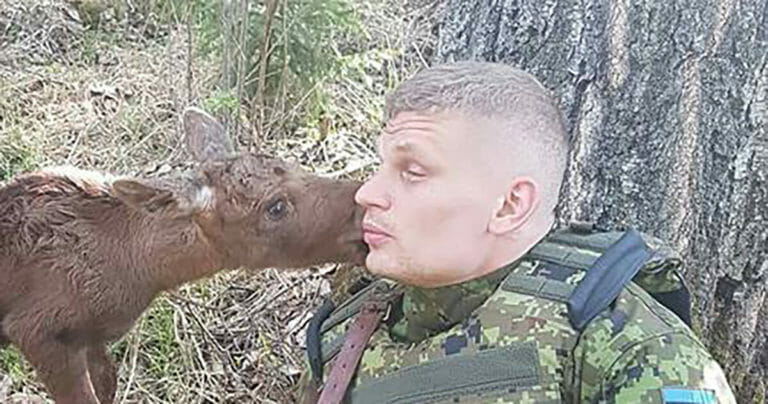

Encounters between wildlife and humans are not uncommon in forested regions, but they often require calm decision-making and responsible action. One memorable example comes from Estonia, where a soldier serving in the Estonian Defence Forces encountered a young moose calf that appeared to be separated from its mother. His response has since been highlighted online as an example of compassion and proper wildlife-safety behavior.
A Routine Walk Turns into an Unusual Wildlife Encounter
The event took place near Lake Võrtsjärv, the largest lake located entirely within Estonia. This region is known for its forests, wetlands, and diverse wildlife, including moose, which are native to Northern Europe. According to Estonia’s Environmental Board, moose calves are typically born in late spring and remain close to their mothers for protection and nourishment.
While stationed in the area, soldier Prikko Erich Jyri took a brief walk into the nearby woods. During his walk, he heard movement in the distance. At first, he thought it might be a dog, a common sight in rural areas. However, as the animal approached, it became clear that it was a moose calf—small, unsteady, and alone.

The Moose Calf Shows Curiosity
Young moose sometimes explore their surroundings, but wildlife experts emphasize that calves rarely wander far from their mothers during the early weeks. When a calf is seen alone, the mother is often nearby and may return after a short period. Following guidance commonly shared by wildlife agencies, including the Estonian Environmental Board and similar organizations across Europe, the safest response is to avoid sudden movements and allow the animal space.
Prikko remained still so he would not frighten the calf or disrupt the natural situation. The young moose cautiously approached him, showing curiosity typical of young animals that are still learning about their environment.
Seeking Guidance from Wildlife Professionals
When the calf continued to stay close instead of returning to the forest, Prikko grew concerned that it might be hungry or temporarily separated from its mother. Instead of intervening directly, he followed recommended wildlife-safety practices: he contacted the military’s veterinary office for advice.
Veterinary professionals advised him to stay calm and observe the calf from a safe position. This approach aligns with widely accepted guidelines from wildlife agencies, which state that feeding wild animals or attempting to move them without expert assistance can create dependency or interfere with their ability to reunite with their mothers.

Support Arrives from Wildlife Specialists
To ensure the animal’s welfare, the military’s veterinary team sent a specialist to the area. The expert brought a bottle of appropriate milk formula to assist the calf if necessary. Supplemental feeding is sometimes used by licensed professionals in cases where a young animal shows signs of weakness or has been alone for an extended period.
After the professional provided care, the team left the area undisturbed so the calf’s mother would feel safe returning. Wildlife experts note that adult moose may stay hidden for long periods if people are nearby. Creating a quiet environment increases the likelihood of reunion.
Signs of a Successful Reunion
The following morning, Prikko returned to the location to check for signs of the calf. The young moose was no longer in the area, but what he found instead reassured him: fresh tracks from both a calf and an adult moose. This outcome is consistent with natural behaviors documented by wildlife biologists. Mother moose typically return to retrieve their calves once the environment is quiet and free from human activity.
Seeing the tracks gave Prikko confidence that the calf had safely reunited with its mother—a positive result supported by the evidence left behind.

A Reminder of the Importance of Responsible Wildlife Behavior
Moose are an important part of Estonia’s ecosystem, and their populations are monitored by the country’s environmental authorities. Encounters with young wildlife can happen anywhere moose are present, especially in spring and early summer. Organizations such as the Estonian Environmental Board and wildlife agencies in other regions consistently issue guidelines that emphasize:
1. Do not touch or pick up young wild animals.
Many species leave their young temporarily while foraging or observing their surroundings.
2. Keep a safe distance.
Adult animals may be nearby and can be protective of their offspring.
3. Contact local wildlife authorities if an animal appears injured or abandoned.
Professionals have the training and equipment needed to assess the situation.
4. Avoid feeding wild animals.
Improper feeding can affect their natural behavior and diet.
Prikko’s actions aligned with these widely recommended practices—he avoided unnecessary interaction, sought expert advice, and allowed trained professionals to take over when needed.

Positive Reactions to the Soldier’s Actions
The story gained attention after being shared online, where many viewers expressed appreciation for the calm, responsible way the situation was handled. The focus on collaboration with wildlife professionals and support for the animal’s natural behavior reflects best practices endorsed by environmental organizations across Europe.
Although the encounter was unexpected, it resulted in an outcome that aligns with what wildlife experts consider ideal: the calf received temporary assistance from trained personnel and then successfully reunited with its mother.

Understanding Moose Behavior in Estonia
Moose (Alces alces) are the largest species in the deer family and are common in Estonia’s forests. According to the Estonian Environment Agency, moose calves typically stay with their mothers for about one year. Calves depend on maternal care for nutrition and protection, especially during their first weeks of life. When humans encounter calves during this stage, the animals may appear alone even when the mother is close.
Studies published by Scandinavian and Baltic wildlife researchers note that human presence can delay a mother’s return, which is why experts recommend limiting activity and allowing time for natural reuniting. Tracks found near the encounter site strongly suggested that the mother moose returned once the area was quiet.
A Thoughtful Response Leads to a Positive Outcome
This encounter serves as an encouraging example of how responsible human behavior can support wildlife conservation. By staying calm, avoiding interference, and contacting trained professionals, Prikko helped ensure the calf’s safety without disrupting the natural ecological process.
His experience also highlights how important it is for anyone living near or visiting wildlife areas to understand basic guidelines for interacting with young animals. Following expert advice increases the chances of a successful reunion between wildlife parents and their offspring.

Conclusion
The story of the lost moose calf and the Estonian soldier underscores the importance of patience, responsible decision-making, and cooperation with wildlife experts. Thanks to these actions, the young moose received appropriate care and appeared to reunite safely with its mother. The positive outcome reflects the value of respecting natural wildlife behaviors and seeking guidance from trained professionals whenever unexpected encounters occur.
