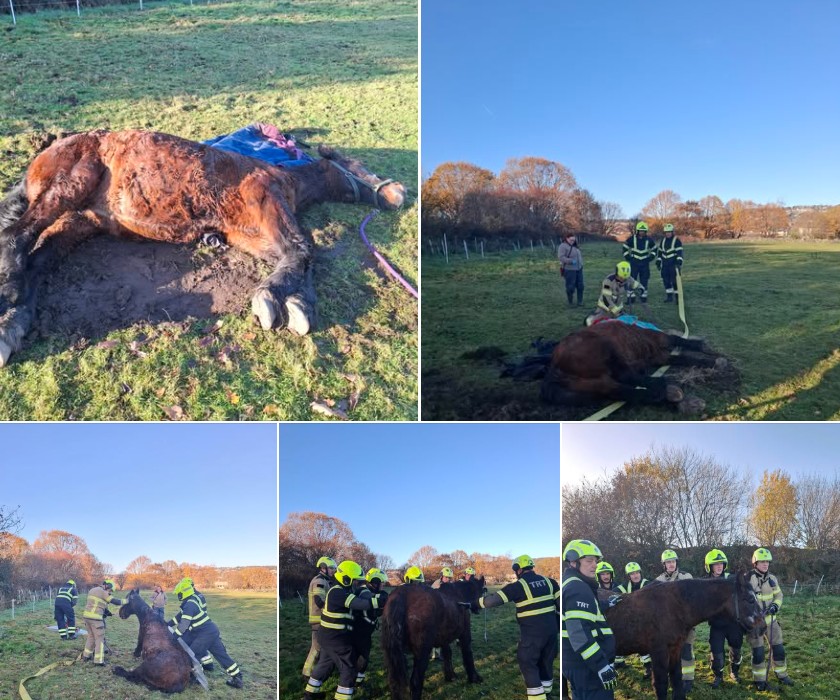

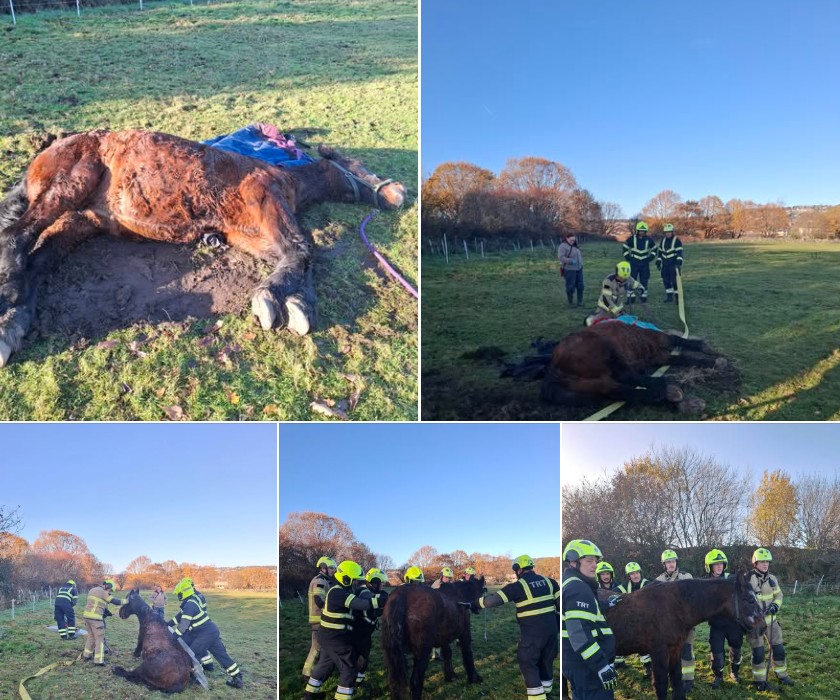
The winter morning was quiet when the call came. A thin layer of frost covered the field, turning every blade of grass into a glimmering shard of silver. The sun had barely risen. In the middle of the pasture, Tiggy—a gentle 30-year-old horse known for her calm presence—lay still. She had spent the entire night on the ground, unable to rise despite her owner’s attempts to help her stand.
For anyone who loves animals, moments like this bring a mix of worry and determination. Horses are creatures of movement, and lying down for long periods can leave them tired, disoriented, and struggling to regain their footing. Tiggy’s owner stayed by her side through the cold hours, hoping each shift of weight meant she was ready to stand again. But every attempt left Tiggy more exhausted.
And so the call was made—not just for assistance, but for a team effort built on skill, patience, and compassion.
A Morning of Hope and Urgency
When Everyday Heroes Step In
Fire crews arrived with the steady calm that comes from years of training. They walked the field, evaluating the safest way to help Tiggy without overwhelming her. Horses may be strong, but they are also sensitive; their comfort matters just as much as their physical support.
It was quickly clear that more help was needed, not because anyone lacked expertise, but because Tiggy deserved the gentlest and safest approach possible. That is when technical rescue specialists joined the team, carrying equipment across the field with careful steps—and quiet optimism.
Before any lifting devices were used, the rescuers tried the simplest method first. By gently rolling Tiggy, they hoped to shift her weight just enough to help her rise on her own. Sometimes, a small adjustment is all a tired horse needs.
But Tiggy, drained from the long night, stayed down. Her breaths were steady but weary. The team paused, reassessed, and made sure she remained calm. The bond between humans and animals often shows itself most clearly in moments of patience, and this morning was full of it.

When Science and Skill Meet Compassion
Understanding Why Horses Sometimes Struggle to Stand
Although Tiggy’s experience was unique to her, science helps explain why some horses occasionally need assistance. Horses rely on coordinated muscle movement and strong limbs to stand, and age can make this process slower. Soft ground, slippery surfaces, and fatigue can further complicate the effort.
Veterinary experts note that when a horse has been lying down for many hours, muscles may temporarily lose some function due to pressure. Circulation slows, joints stiffen, and the horse may need gentle support to rise safely. None of this is unusual, especially in older horses. It simply requires informed care.
That is why a veterinarian was called to Tiggy’s side. While the firefighters and rescue specialists provided strength and equipment, the veterinarian offered medical insight, monitoring Tiggy’s breathing, stress levels, and readiness to stand. This combination—technical skill plus scientific guidance—is what makes modern large-animal rescue uniquely effective.

Preparing for the Lift
A Plan Built on Safety and Teamwork
With Tiggy showing signs of fatigue, the team prepared for a mechanical lift. This method is designed not to force a horse upward, but to support them gently while their muscles remember the rhythm of standing.
A padded strop was positioned carefully under Tiggy, placed in a way that would protect her body while giving her the help she needed. The firefighters moved with coordination that could only come from trust and training.
Ten firefighters stepped into position. They did not rush. They breathed together, counted together, and lifted together—slowly, steadily, and respectfully.
Tiggy rose.
Her legs trembled at first, as though the ground beneath her felt unfamiliar after so many hours. But the crews stayed with her, steadying her on all sides. For several minutes, they walked with her, gently encouraging her muscles to engage again.
Carrots and mint treats offered by the vet added comfort and positivity to the moment. These small gestures can be surprisingly powerful, helping an animal regain confidence.
Then, like a quiet sunrise after a long night, Tiggy found her strength again.

The Cultural Symbolism of Helping Animals Stand
What Stories Like Tiggy’s Mean Across the World
Throughout history, many cultures have viewed the horse as a symbol of vitality, partnership, and resilience. Stories of horses regaining their strength—especially with the help of humans—often represent themes of courage, unity, and renewal.
In folklore, a horse rising after a long struggle is sometimes interpreted as a sign of perseverance. In other traditions, the act of people working together to help an animal is seen as a reflection of community values. It shows respect for life, compassion for animals, and the belief that cooperation leads to positive outcomes.
Although Tiggy’s story is grounded in real events, its emotional impact echoes these cultural themes. Some might view her ability to stand again as a quiet symbol of hope. Others may interpret the teamwork surrounding her as an example of shared purpose.
These interpretations are rooted in cultural tradition rather than scientific fact, yet they enrich the experience for many who hear stories like Tiggy’s.

The Science Behind Large Animal Rescue
Why Technique and Calmness Matter
Modern large-animal rescue is guided by a blend of engineering, biology, and safety science. The techniques used for Tiggy are part of internationally recognized best practices designed to reduce stress and maximize the comfort of the animal.
Key principles include:
Maintaining Calm
Because horses respond strongly to their environment, keeping voices gentle and movements predictable helps reduce stress.
Using Supportive Equipment
Padded straps and mechanical lifts are designed to distribute weight safely, preventing strain on muscles or joints.
Monitoring Vital Signs
A veterinarian’s involvement ensures the horse remains stable throughout the process.
Encouraging Movement After Standing
Light walking helps improve circulation and allows the horse to regain confidence.
All these steps work together to create a process that is guided not just by strength, but by knowledge and empathy.
Why Tiggy’s Story Resonates
A Blend of Reality, Connection, and Symbolism
People connect deeply with stories of animals receiving care, and Tiggy’s experience is a reminder of how strong that connection can be. Her story contains multiple layers:
A real rescue
A community effort
A positive outcome
A reflection of human dedication
A moment of compassion expressed through teamwork
It also taps into something universal: the desire to see resilience triumph over difficulty, even in the gentlest ways.
While the practical steps taken by the firefighters and veterinarian were rooted in science, the emotional response they inspired comes from a place beyond technical skill. It comes from the timeless relationship between humans and animals—a relationship built on trust, respect, and kindness.

A Gentle Reminder About Aging Animals
Caring for Seniors With Understanding
Tiggy’s age made her more vulnerable to fatigue and stiffness, but her recovery shows that older animals can thrive with attentive care. Veterinarians often encourage owners of senior horses to provide:
Soft, supportive bedding
Regular checkups
Balanced nutrition
Safe footing and shelter
Observation during colder seasons
Gentle movement to maintain flexibility
These recommendations do not prevent every challenge, but they help create the best environment for a long and comfortable life.
Tiggy’s ability to stand again, enjoy her treats, and return home with her owner is a beautiful example of how compassionate care can support aging animals through difficult moments.
Conclusion: What Tiggy Teaches Us About Human Curiosity and Compassion
Tiggy’s long night and inspiring recovery remind us of the profound connection humans share with animals. Her story blends practical rescue techniques with cultural interpretations and a touch of wonder. It demonstrates how science, teamwork, and empathy can come together to create a positive outcome.
Most of all, it highlights something essential about human nature: our curiosity about the world and our desire to help those who depend on us. Stories like Tiggy’s encourage us to keep learning, keep observing, and keep nurturing the relationships that make life richer—whether they involve people, animals, or the communities that bring them together.
