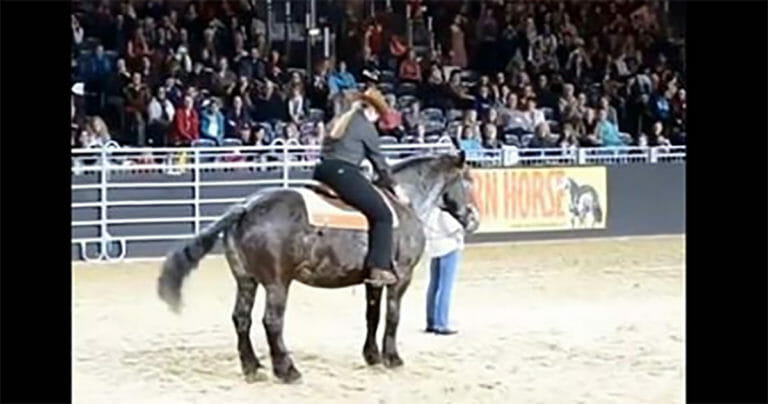

Horses have long been admired for their intelligence, strength, and ability to learn complex movements. From dressage to therapeutic riding programs, these animals demonstrate remarkable coordination and responsiveness. A recent viral video has captured global attention by showing a horse performing a rhythm-based routine that aligns with the dancers around him. The clip has been widely shared online, and viewers continue to praise the horse’s impressive sense of timing.
The Horse’s Crowd-Pleasing Performance
The viral moment takes place in an arena where a group of line dancers begins their routine. At first, the horse stands quietly, fully attentive to its handlers and surroundings. As the music starts, the horse begins moving in tandem with the dancers—stepping, turning, and shifting its weight in a rhythm that matches the choreography. The performance has been celebrated across social media platforms for its entertaining and unexpected display of coordination.
While the video has reached millions of viewers, the behavior can be understood through well-documented equine training methods. Horses respond strongly to cues from their handlers, body language, and environmental signals. Their participation in dance-style routines is often achieved through positive reinforcement and consistent training techniques used in disciplines such as dressage and liberty work.

How Music Affects Horses: What Research Shows
The idea that horses may react differently to certain types of music is supported by studies published in reputable equine-science outlets. Research summarized by The Horse, a well-known horse-care and veterinary resource, indicates that musical genres such as classical and country music may have a calming effect on horses.
One study conducted at Hartpury College in the United Kingdom evaluated how horses behaved while listening to different styles of music. Observations showed that horses tended to display more relaxed behaviors when exposed to slower, rhythmically consistent genres such as classical and country music. These findings align with what many trainers report anecdotally: some horses appear more settled when exposed to steady, soothing melodies.
The same body of research suggests that signs of relaxation can include slower eating patterns, relaxed ears, and a calm posture. Although not all horses respond the same way, the studies provide insight into how music can be integrated into training environments to reduce stress and support focus.

A Closer Look at the Routine
In the viral video, the horse’s movements appear well-coordinated with the dancers’ steps. The animal crosses its feet, pivots in place, and follows along with visible enthusiasm. While the display seems spontaneous, equine specialists note that these behaviors often result from training that encourages horses to follow rhythmic cues or respond to handlers’ signals that may not be immediately visible to the audience.
Horses trained for liberty work—where they perform without a rider—often learn to follow subtle cues involving body language, positioning, and voice commands. This style of training is common in live shows, exhibitions, and educational demonstrations. The performance showcased in the video fits within what is achievable through humane, positive training methods used in many equestrian disciplines.
Online Reaction to the Performance
Viewers across multiple platforms have expressed admiration for the horse’s coordination and calm presence. The combination of music, dance, and the horse’s clear engagement makes the performance especially appealing. Online reactions highlight the animal’s gentle nature and the entertaining quality of the synchronized routine.
Social-media conversations often focus on the talent required for a horse to stay focused in a busy environment. Many experienced riders note that maintaining calmness in a setting with music, movement, and an audience reflects strong training and a solid bond between the horse and its handlers.

Why Horses Excel in Rhythm-Based Activities
Horses possess several natural traits that make them capable of performing synchronized routines:
1. Strong Sensitivity to Human Cues
Horses are highly responsive to body language. Trainers often use small shifts in posture or movement to guide them.
2. Ability to Learn Through Repetition
Consistent practice helps horses understand patterns and sequences, making them well-suited for activities like dressage, reining, and choreographed demonstrations.
3. Herd Instinct and Natural Synchronization
In the wild, horses move as a group, naturally syncing their steps and speed. This instinct can translate into coordinated routines when trained appropriately.
4. Comfort With Rhythm
While horses do not perceive music in the same way humans do, they respond to rhythmic cues and repeated signals. This helps them match movement to timing patterns.
Training Behind the Scenes
For a horse to participate confidently in a public routine, trainers typically use techniques such as:
-
Positive reinforcement
-
Voice cues
-
Repetition and gradual progression
-
Desensitization to sound and movement
These methods help horses build trust and confidence, enabling them to remain calm even in dynamic environments.
Professional trainers emphasize the importance of welfare-centered practices. Reputable equestrian organizations, including the American Association of Equine Practitioners (AAEP), stress that training should prioritize safety, humane treatment, and the horse’s physical and emotional well-being.

A Memorable Display of Coordination
The video continues to circulate widely because it showcases the remarkable bond between humans and horses. Whether participating in sports, therapy programs, or entertainment exhibitions, horses demonstrate a unique ability to connect with people through movement and communication.
Their capacity to learn complex behaviors is well documented across equine disciplines. Performances like the one shown in the video highlight how training, trust, and calm exposure to music can result in an enjoyable and engaging moment for audiences around the world.
Conclusion: A Heartwarming Example of Equine Talent
This viral performance offers a delightful reminder of how intelligent and adaptable horses can be. Through structured training and a supportive environment, horses can participate in coordinated routines that demonstrate their responsiveness and natural grace. The widespread positive reaction to the video reflects the enduring admiration people have for these extraordinary animals.
