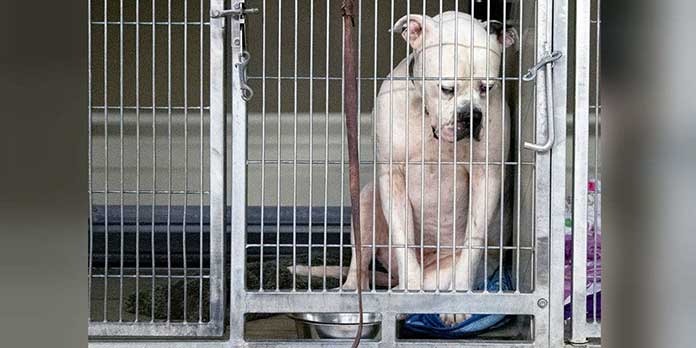

On a quiet morning in Indiana, a dog named Ritter sat pressed against the wall of his kennel, watching the world from behind gentle eyes. His posture revealed a longing that many shelter workers instantly recognized. It was the look of a dog who once had a family, a familiar home, and a routine he understood. Suddenly separated from everything he knew, Ritter found himself in an unfamiliar place, unsure of what the future might hold.
Ritter’s story, while rooted in one shelter’s daily efforts, touches a universal theme: the deep emotional bond between humans and dogs. It is a connection celebrated in folklore, expressed in modern science, and felt in the everyday interactions shared between people and their companions. As Ritter waited for someone new to believe in him, his experience became a reminder of how compassion can transform lives. His journey from uncertainty to joy illustrates both the cultural meaning and scientific understanding of hope, trust, and emotional resilience in animals.

A Family Forced to Say Goodbye
Ritter and his canine companion, Corky, arrived at the Humane Society for Hamilton County after their family faced a difficult life change. Losing their home meant they could no longer provide the care the dogs needed, and with heavy hearts, they entrusted both pets to the shelter. Although the decision was made out of responsibility rather than neglect, Ritter did not understand why his familiar life had changed so suddenly.
Like many dogs who experience major transitions, Ritter reacted with confusion. According to shelter staff, he seemed unsure of his surroundings and responded quietly to the new environment. This type of reaction is common, especially when a dog has formed strong bonds with a previous family. Animal behavior specialists often explain that dogs perceive changes in routine and environment through emotional cues, and sudden shifts can leave them feeling uncertain.
The Shelter’s Efforts to Comfort Him
The staff at the Humane Society for Hamilton County immediately recognized Ritter’s sensitive nature. He spent much of his time near the back of his kennel, looking toward the floor, appearing unsure about approaching visitors. Shelter workers made consistent efforts to reassure him, speaking gently, offering treats, and encouraging small moments of play whenever he stepped outside his kennel.
Despite his hesitance, Ritter showed a completely different side once he was taken out of the enclosed space. According to the team members, he became energetic, affectionate, and eager to interact. This contrast demonstrated a key aspect of canine behavior: the environment plays a major role in how dogs express themselves. While a kennel may feel overwhelming to some pets, open spaces and kind people often help them relax and rediscover their natural personalities.

The Photo That Captured Hearts Everywhere
Recognizing how special Ritter was, shelter staff decided to share his photo and story on Facebook. The image showed a gentle, expressive dog who simply needed a home where he could feel secure. His story resonated quickly, reaching thousands of people who shared his post in hopes of helping him.
What happened next demonstrated the power of community and the positive impact of social media in animal adoption efforts. Within hours, Ritter’s story had gained significant attention. Among the many people who saw the photo was a woman named Sophie Spenia.
A Dream of a Big Dog Finally Comes True
Sophie had dreamed of adopting a dog for years. She hoped for a large companion and planned to wait until she had her own home before making such an important commitment. When she finally moved into her first house, she began checking the Humane Society’s website and social media pages every morning, waiting for the dog who would capture her heart.
The day Ritter’s photo appeared was the day Sophie knew her search was over. His expression, filled with sensitivity and hope, spoke directly to her. Without hesitation, she contacted her sister, shared the post, and decided she needed to meet him. As the post continued circulating online, she realized that many others might also be interested. Wanting to act quickly, she asked her workplace for permission to leave early. Her boss, an animal lover, encouraged her to go.

A Connection Felt Instantly
When Sophie arrived at the shelter, she felt a mix of excitement and concern. She knew Ritter had been through a major shift in his life and wanted to approach gently to avoid overwhelming him. But the moment he walked into the visitor center, something incredible happened.
Ritter moved straight toward her, placing his head on her lap as though he had known her for years. This gesture, simple yet full of trust, told Sophie everything she needed to know. In that moment, she felt a genuine connection forming. Many people describe these moments as instinctive or intuitive, and while they feel magical, science offers some insight as well.
Research on human-animal bonding shows that dogs are highly attuned to body language, tone of voice, and emotional cues. When they sense kindness or calm energy, they often respond with affection. Ritter’s gentle gesture reflected both his personality and his ability to sense safety.
A New Beginning for Ritter
Sophie wasted no time completing the adoption process. When the day arrived for Ritter to go home, he showed a completely different energy from the shy dog in the shelter. During the car ride, his tail moved happily, and he gazed around with curiosity. It was as if he understood that this journey represented a fresh start.
Shortly after arriving at his new home, Ritter began to settle in. Dogs often adjust quickly when surrounded by consistent care and reassurance. With patience, routine, and positive interaction, they can develop confidence even after emotionally challenging transitions.
Ritter’s new environment offered all the elements he needed to thrive: space to play, a caring owner, and the stability he had been longing for. Over time, he showed more joy, more playfulness, and a renewed sense of comfort.

The Cultural Significance of Stories Like Ritter’s
Tales of dogs finding new homes have been told for centuries. They appear in ancient writings, children’s stories, and modern media. Cultures often use these narratives to celebrate trust, hope, and companionship.
Dogs symbolize loyalty in many traditions, and their willingness to connect with humans is seen as a reminder of the importance of kindness and empathy. Ritter’s story echoes the themes found in countless folktales where a devoted animal finds the home it deserves. Although these stories may differ in time and place, they carry the same message: compassion has the power to change lives.
The Science of Emotional Resilience in Dogs
Beyond cultural meaning, Ritter’s transformation aligns with scientific understanding of canine emotions. Studies from leading research organizations reveal that dogs experience stress relief when surrounded by familiar caregivers or calming environments. Their emotional responses often mirror those of humans, demonstrating joy, anticipation, and comfort when they feel safe.
Ritter’s shift from uncertainty in the kennel to confidence in Sophie’s home reflects this natural adaptability. With supportive environments, dogs often regain their playful behavior, strengthen their bonds, and develop a stable sense of trust.
A Reflection on Human Curiosity and the Bonds That Inspire Us
Ritter’s story is more than an adoption tale. It is a window into the deep relationship shared between humans and dogs, shaped by history, culture, personal experience, and scientific insight. His journey from uncertainty to joy reminds us that acts of compassion often create lasting impact, and that animals respond to kindness in profound ways.
Human curiosity about the emotional lives of animals continues to grow as people learn more about their intelligence, sensitivity, and ability to form connections. Ritter’s story invites us to keep exploring, keep caring, and keep believing in the power of second chances.
Sources
secbuzz.com
The Dodo
Humane Society for Hamilton County
American Kennel Club (AKC) – Canine Behavior and Adoption Research
National Institutes of Health – Human-Animal Bond Studies
