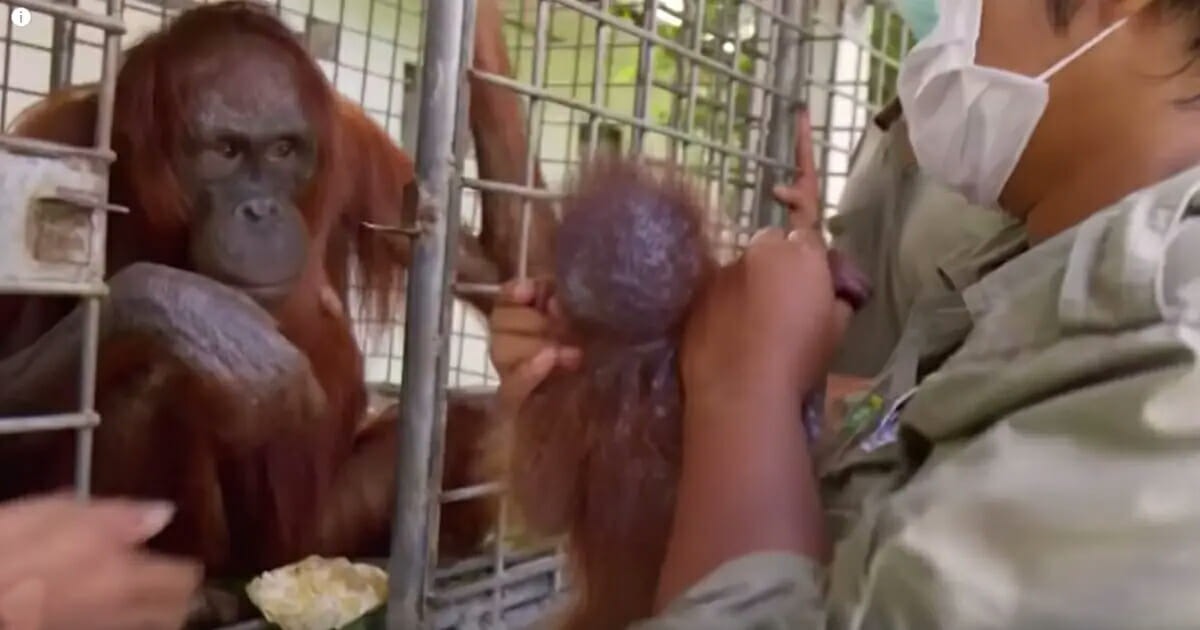

Some stories remind us how deeply emotional the animal world can be. They reveal how nurturing instincts, resilience, and quiet determination can shape the lives of species beyond our own. One such moment unfolded at the Nyaru Menteng Orangutan Rescue Center in Borneo, where caregivers witnessed the powerful reunion of an orangutan mother and her baby after several tense days apart.
The story of Clara and her daughter Clarita is not only heartwarming—it also offers a window into how sanctuaries protect vulnerable animals and support their natural bonds.

A Quiet Sanctuary in the Heart of Borneo
Deep within Borneo’s tropical landscape lies the Nyaru Menteng Orangutan Rescue Center, one of the world’s most recognized facilities dedicated to rehabilitating orangutans who have been displaced or left without families. The center’s mission is rooted in compassion: to provide rescued orangutans with a safe environment where they can learn, grow, and eventually return to the forest.
Among the many residents at the center were Clara and her newborn daughter, Clarita. Caretakers observed Clara immediately embracing motherhood with a calm, nurturing presence. She tended to Clarita with great patience, as first-time orangutan mothers often do, ensuring her baby felt secure from the very beginning.
A Sudden and Distressing Separation
One day, however, an unexpected situation unfolded. Reports from the center indicated that Clarita had been taken by an adult male orangutan within the larger forested area. Such incidents, while rare, can occur among wildlife communities when group dynamics shift or when individuals assert dominance. Caretakers responded quickly, searching for Clarita while maintaining safety for all the animals involved.
Although details of these interactions are not always fully understood, experts often explain them through natural behavioral patterns rather than intentional harm. Still, the separation created a stressful situation for both Clara and the caregiving team.
Days passed as the staff worked carefully and patiently to locate Clarita. During that time, they continued to monitor Clara, who showed signs of concern but also trust toward the humans who had helped her before.

A Hopeful Search and a Long-Awaited Discovery
After nearly a week of monitoring and searching, the team located Clarita and immediately shifted to reunification planning. The Borneo Orangutan Survival Foundation (BOSF), which oversees the rescue center, coordinated a safe and gentle recovery process. Their goal: to return the baby to her mother while ensuring both animals felt calm and secure.
Clarita was healthy but understandably in need of her mother’s comfort. Caregivers prepared carefully for the reunion, knowing that the first moments would be crucial.
A Reunion Filled with Careful Steps
When the time finally came for the reunion, it was handled with utmost sensitivity. A trained caregiver slowly brought Clarita toward Clara, allowing the mother to see, hear, and smell her baby from a safe distance. Caretakers explain that orangutan mothers rely heavily on sensory cues to recognize their young, especially after periods of separation.
At first, there was quiet tension. Caregivers were hopeful but also cautious. In wildlife rehabilitation, reunifications must be approached with patience. Some animals may need extra time to reestablish familiarity, particularly after days of uncertainty.
With careful observation and gentle pacing, Clara was given the opportunity to reach out toward her daughter. Her movements were slow but purposeful, guided by her instincts and memories.

Recognition and Relief: Clara Reaches for Clarita
As soon as Clara touched Clarita, caregivers observed immediate signs of recognition. Clara’s demeanor shifted—her gestures became more confident, her posture relaxed, and she reached out again, this time more eagerly. It was a moment of meaningful reassurance not only for Clara but also for the entire team who had worked tirelessly to ensure the reunion happened safely.
Caretakers described the atmosphere as hopeful and emotional, filled with quiet relief and joy as the mother gently pulled her baby close.
Soon after, Clara began nursing Clarita, a clear indication that their maternal bond had not diminished despite the separation. The caregivers’ thoughtful approach had worked: the reunion was successful, and the two orangutans were ready to continue their journey together.
Navigating Motherhood in the Sanctuary
With Clarita safely back in her mother’s arms, the next step for the pair was returning to their rehabilitation program. At Nyaru Menteng, young orangutans go through a structured learning process designed to prepare them for life in the forest. This includes climbing skills, foraging practice, social interaction, and learning how to navigate natural environments.
Having a strong maternal bond significantly helps this development. Mother orangutans are essential teachers, providing guidance that no human caretaker can fully replicate.
Clara’s attentive caregiving meant Clarita would receive natural instruction as she grew. Caregivers continued to support the mother-daughter pair by giving them space, monitoring their progress, and ensuring they always had access to nutritious food and a peaceful environment.
Understanding the Social World of Orangutans
From a scientific perspective, orangutans are known for having particularly close ties between mothers and their young. A baby orangutan typically stays with its mother for six to eight years, learning essential survival skills. This makes the mother-child connection among the strongest found in the primate world.
Researchers have long studied the emotional depth of orangutans. While interpretations vary, many observations highlight their capacity for affection, learning, and strong memory. Clara and Clarita’s reunion aligns with these natural patterns, demonstrating how instinct and experience shape their interactions.
Culturally, orangutans have often symbolized gentleness and introspection. Their expressive eyes, deliberate movements, and nurturing behavior have inspired stories and traditions in regions throughout Southeast Asia. Though symbolic interpretations should not be taken as scientific fact, they illustrate how humans have always been fascinated by the intelligence of this species.
Rehabilitation: A Path Back to the Forest
The ultimate goal for Clara and Clarita is to return to the forest once they are ready. Rehabilitation programs for orangutans involve several stages, beginning with basic comfort and progressing toward independent forest living.
This process includes:
• strengthening climbing and nest-building skills
• learning how to identify safe foods
• practicing movement along branches and canopy paths
• developing confidence in natural surroundings
Mother-infant pairs often progress together, with the young learning directly from their mothers’ examples. Clara’s experience as a nurturing parent makes her an ideal guide for Clarita’s journey toward eventual independence.
Why Stories Like This Matter
Stories of animal reunions resonate across cultures for a simple reason: they reflect universal themes of connection, perseverance, and care. When humans witness these moments, whether firsthand or through shared media, they are reminded of the emotional richness found in the natural world.
These experiences also highlight the essential work done by rescue centers and conservation groups. Organizations like BOSF protect wildlife habitats, care for displaced animals, and promote long-term solutions to help orangutans thrive.
By supporting these efforts, communities contribute to a broader mission: preserving one of the world’s most intelligent and gentle species for future generations.
A Gentle Reminder About Compassion in Conservation
The reunion between Clara and Clarita serves as a powerful example of why compassionate care matters in wildlife protection. Through thoughtful methods, trained staff, and a deep understanding of orangutan behavior, a potentially distressing situation became a story of resilience and reunion.
As mother and daughter continue their rehabilitation journey, their bond remains a testament to the importance of giving animals the time, space, and support they need to heal.
Conclusion: A Reflection on Human Curiosity
Humans have always been fascinated by stories of animal families. When we observe moments of recognition, comfort, and tenderness in the natural world, our curiosity deepens. We look for meaning, draw connections, and feel inspired by the universal themes these interactions reveal.
The reunion of Clara and Clarita reminds us that the natural world is filled with stories of hope—stories that encourage us to understand wildlife with empathy and respect. Through these moments, we discover more about animals, but also more about ourselves and the values we hold dear.
Sources
www.theanimalclub.net
Borneo Orangutan Survival Foundation (public information)
General primate behavior resources from reputable wildlife organizations
