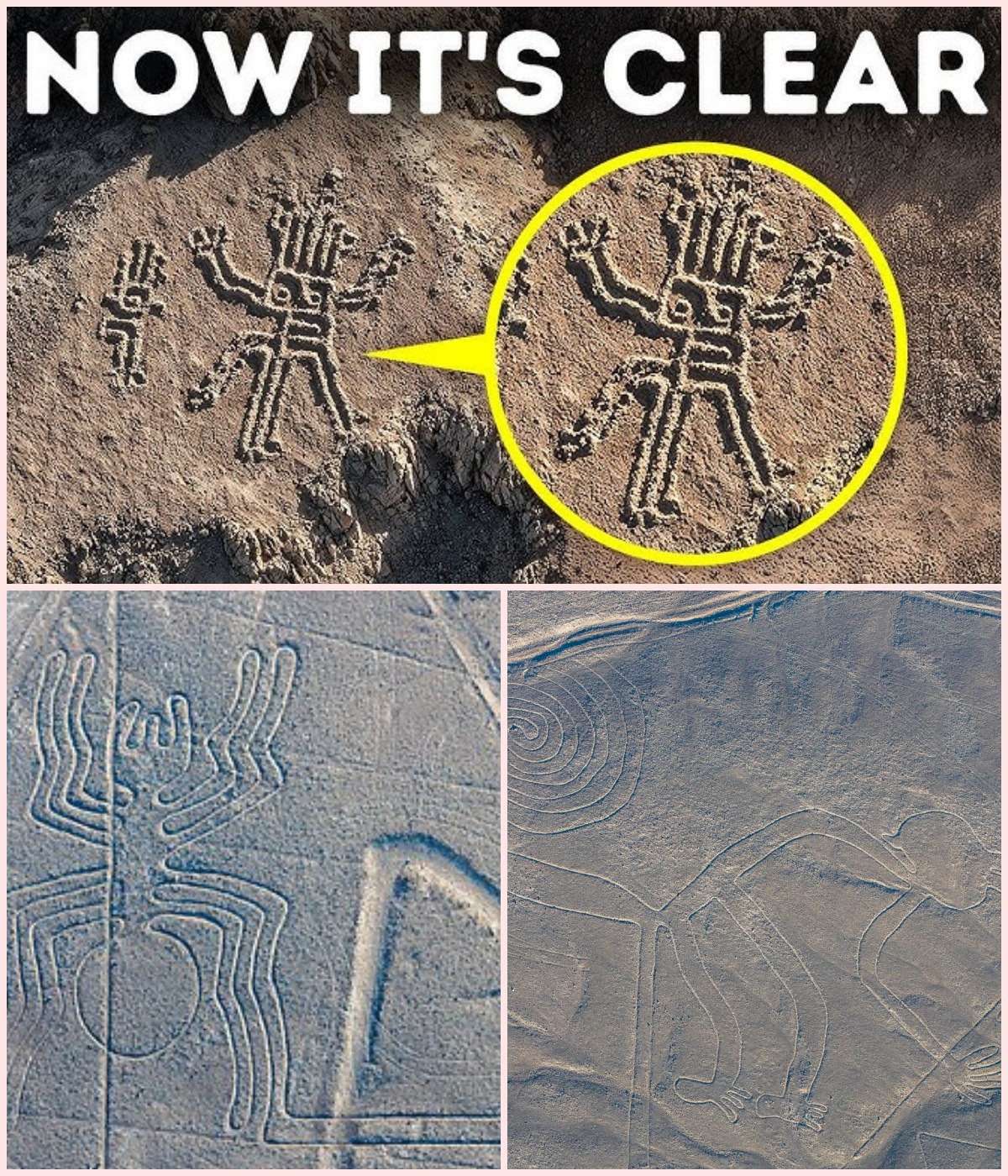

Archaeologists working in Peru and Europe have announced two major discoveries that are reshaping how researchers understand ancient cultures and early human behavior. In southern Peru, more than 300 newly identified Nazca geoglyphs have been mapped with the help of AI-assisted drone surveys. Meanwhile, in northern Spain, scientists have analyzed a Paleolithic pebble bearing a red ochre mark and a preserved fingerprint that may offer new insights into symbolic expression among Neanderthals.
Although these findings come from opposite sides of the world and represent vastly different time periods, both point to a shared theme: early humans and our evolutionary relatives left behind more sophisticated forms of communication, symbolism, and artistic expression than previously recognized.
The Nazca Lines: A Landscape of Symbols Revealed Through Technology
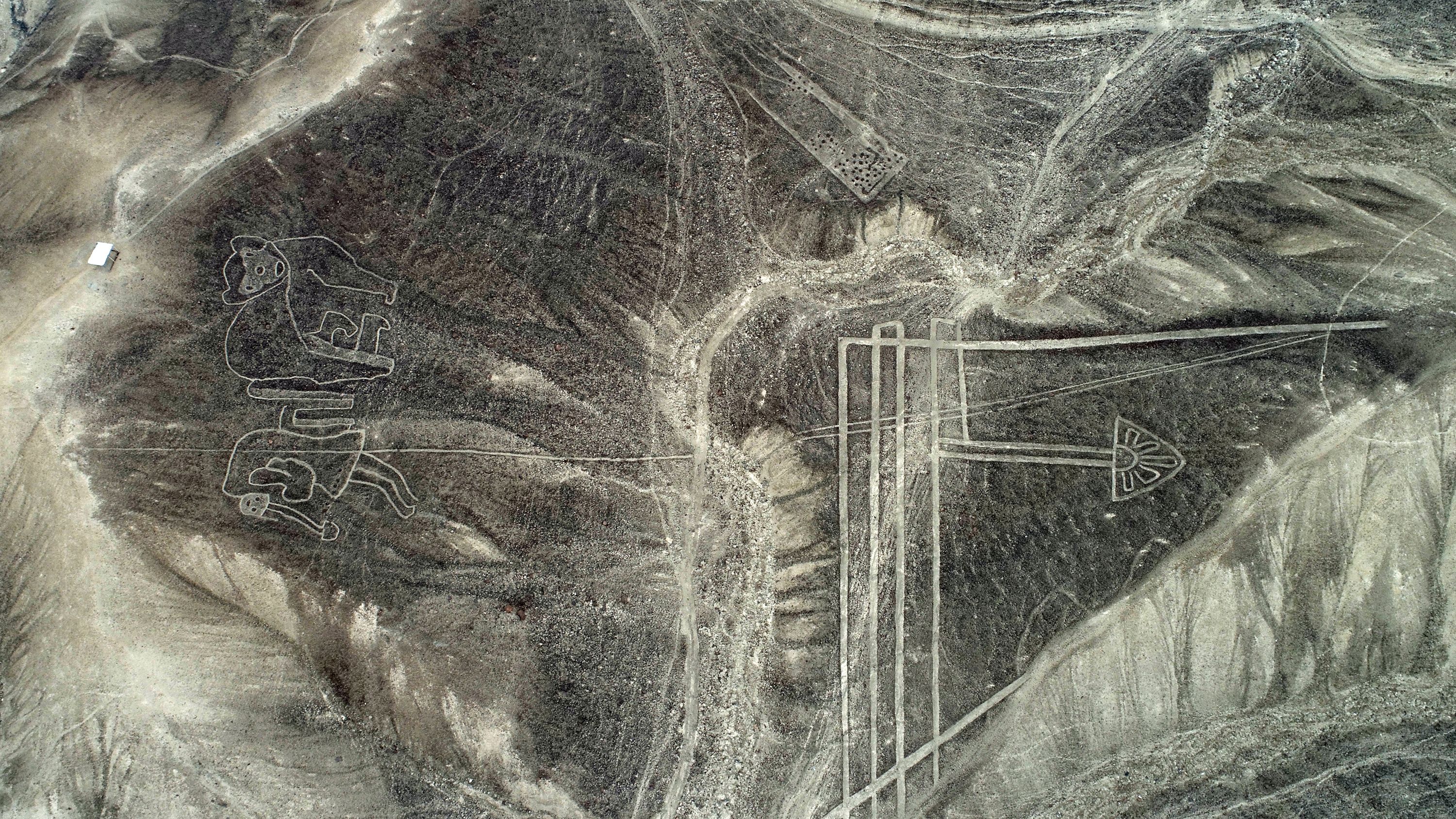
For nearly a century, the Nazca Lines have fascinated researchers, travelers, and historians. These large geoglyphs—created by removing the dark surface stones of the desert to expose the lighter soil beneath—form images that can only be fully appreciated from above. The symbols range from geometric shapes and straight pathways to animals such as hummingbirds, monkeys, and marine creatures. Many date to roughly 2,000 years ago, created by the Nazca culture in a desert environment stretching across about 150 square miles.
Traditionally, archaeologists documented new geoglyphs by walking across the desert terrain or studying aerial photographs. These approaches, though effective over time, were slow and limited in the detail they could provide. That changed when a Japanese research team deployed drones equipped with high-resolution imaging technology to systematically survey the landscape. Those images were then analyzed by a deep-learning model trained to detect subtle patterns and shapes difficult for the human eye to spot.
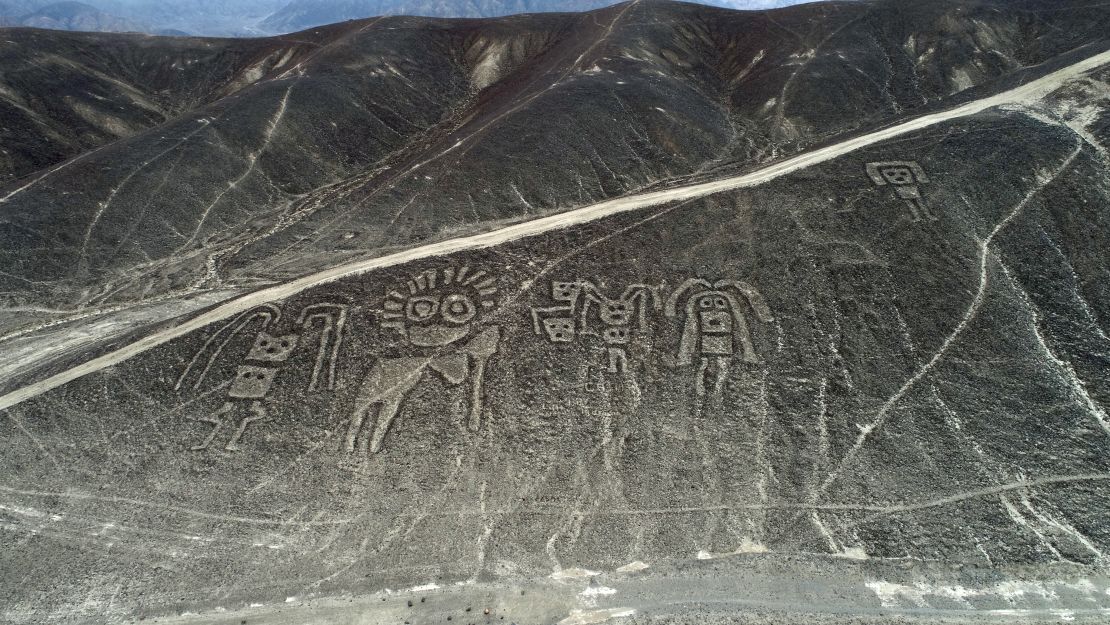
Within months, the team identified more than 300 previously unrecorded geoglyphs. Many were small, shallow, and created with a technique known as “relief-type” carving. Instead of enormous figures stretching across the desert floor, these new discoveries consist of compact and often highly detailed images, including human figures, animals, and geometric forms.
Newly Identified Figures Raise Questions About Nazca Culture
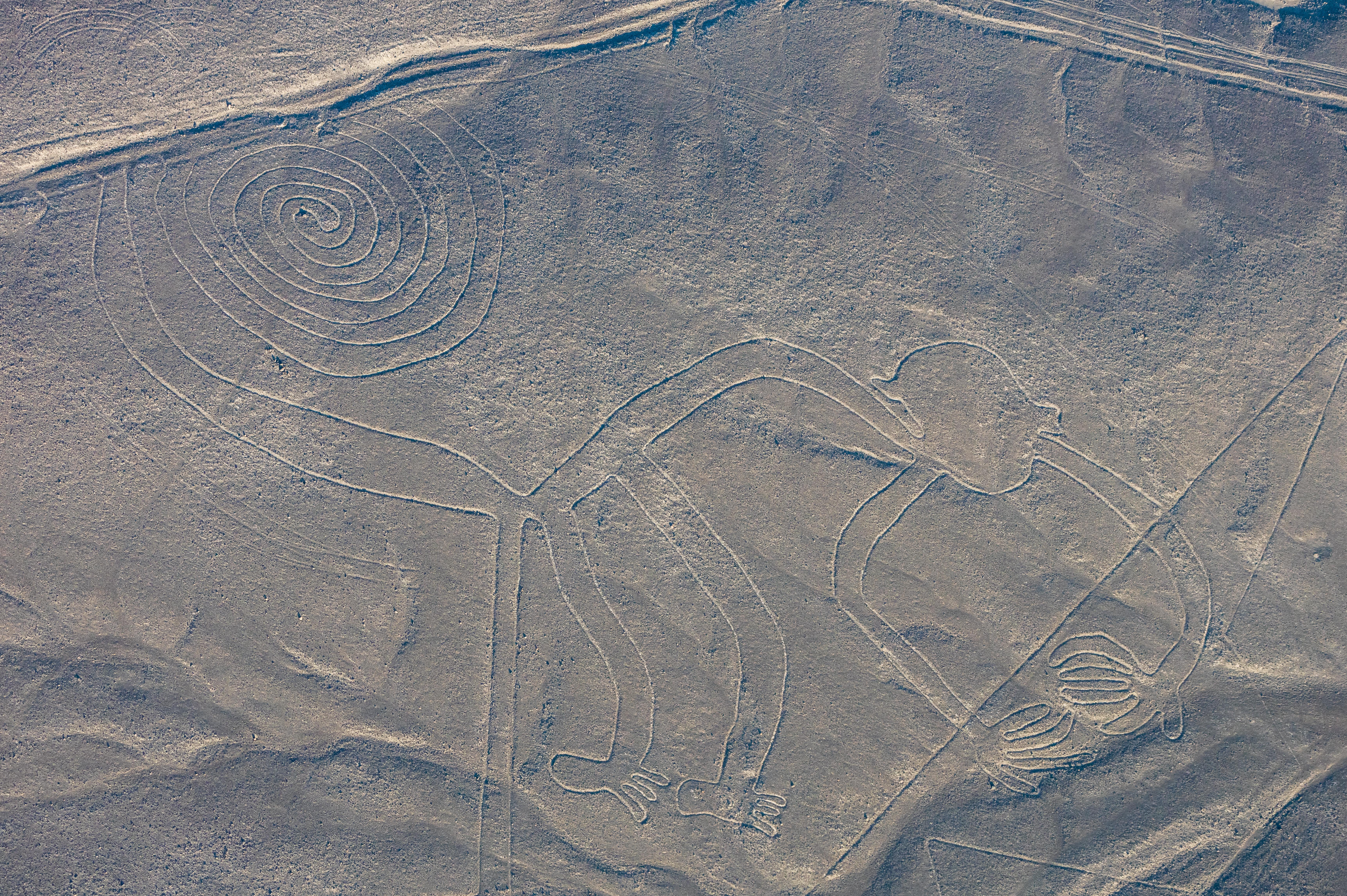
Among the newly documented glyphs are depictions that vary from the better-known monumental designs. One figure appears to be a stylized human holding an object resembling a club. Another shows a long, stretched fish more than 60 feet in length. One especially striking new find features a bird with exceptionally long legs, extending more than 250 feet across the ground.
These updated classifications have led ornithologists and archaeologists to re-examine earlier assumptions. For example, one bird depicted in the geoglyphs was long believed to represent a hummingbird. New research suggests it may instead resemble a hermit, a hummingbird subgroup native to tropical forests rather than desert regions. Another bird previously considered “unidentified” now appears to resemble a coastal pelican.
These reclassifications have opened a broader question: why did the Nazca people choose to represent animals from distant ecosystems? Some researchers suggest that the images may reflect pilgrimage journeys, trade connections, or symbolic associations rather than literal depictions of local wildlife.
A Ritual Landscape Connected to Cahuachi
Many researchers believe the Nazca Lines were integrated into a ceremonial landscape centered around Cahuachi, a major religious complex consisting of a large stepped platform and surrounding structures. Cahuachi was not a permanent residential settlement. Instead, archaeological evidence indicates it served as a pilgrimage center where people brought offerings such as pottery, textiles, and food.
The geoglyphs may have been part of ritual pathways, helping guide participants across the desert or marking symbolic boundaries. Their huge scale and visibility from above also suggest a worldview in which the gods were believed to observe human activity from the sky.
With the discovery of hundreds of additional glyphs, researchers now have more context to study how these designs may have functioned within ceremonial movement and spiritual practice.
A Second Major Discovery: A Neanderthal Mark Encoded in Stone
While drone technology transformed archaeological work in Peru, a separate breakthrough unfolded in Europe, where researchers used digital imaging tools to analyze a small pebble found in a rock shelter in Spain. The pebble features a natural shape resembling a human face. On its surface, scientists detected a red ochre stain placed precisely where a nose might appear.
Using multispectral imaging and forensic techniques, specialists identified the ridge patterns of a fingerprint embedded within the pigment. The fingerprint belonged to an adult Neanderthal and is estimated to be around 43,000 years old—possibly the oldest confirmed fingerprint on record.
Symbolism and the Cognitive Abilities of Neanderthals
The discovery has prompted considerable discussion because the placement of pigment suggests the mark may have been intentional. If so, it represents a form of symbolic behavior—something scholars historically associated primarily with Homo sapiens.
Over the last several decades, however, new findings have steadily challenged the idea that Neanderthals lacked symbolic thought or artistic abilities. Archaeological evidence now suggests:
-
Neanderthals made pigment-based markings
-
They crafted ornaments such as eagle talon pendants
-
They arranged stalagmites into circular structures
-
They cared for injured group members and practiced burial rituals
This pebble adds another layer to the growing picture of Neanderthal cognition. Whether the ochre mark represented a playful gesture, a ritual symbol, or a simple experiment with pigment, it demonstrates purposeful interaction with natural shapes and surfaces.
The Importance of Context and Methodology in Archaeology

What connects these discoveries—separated by tens of thousands of years and thousands of miles—is the role of modern technology in uncovering new details about ancient life. In both Peru and Spain, advances such as AI-based image recognition and multispectral scanning have allowed archaeologists to detect subtle patterns that earlier generations could not see.
These methods also create more accurate digital archives, helping preserve fragile cultural heritage sites for future study. The success of these tools may inspire broader adoption in archaeological surveys around the world, from desert landscapes to cave environments and forested regions.
Rethinking What We Know About Ancient Expression
Both the Nazca geoglyphs and the Neanderthal ochre pebble highlight humanity’s long-standing desire to create symbols, record ideas, and leave meaningful marks. The Nazca designs demonstrate how ancient societies used vast landscapes as canvases for spiritual concepts or ceremonial journeys. The Neanderthal fingerprint represents something far more intimate—a single touch preserved for tens of thousands of years.
Together, these discoveries encourage researchers to re-examine long-held assumptions about cultural evolution, artistic expression, and the origins of symbolic behavior.
Looking Ahead: What Future Research May Reveal
As researchers analyze the newly discovered Nazca figures and examine the pebble in Spain in more detail, additional insights may emerge. Future studies may focus on:
-
The relationship between smaller Nazca glyphs and larger geoglyph networks
-
New classifications of bird and animal figures
-
How pigments were used in Neanderthal communities
-
The role of symbolism in early human and pre-human societies
What remains clear is that ancient cultures—whether living in the deserts of Peru or the Paleolithic shelters of Europe—engaged with their environments in thoughtful and expressive ways. Their marks endure not only as artifacts of the past but as reminders of the creativity and curiosity that connect all human societies.
