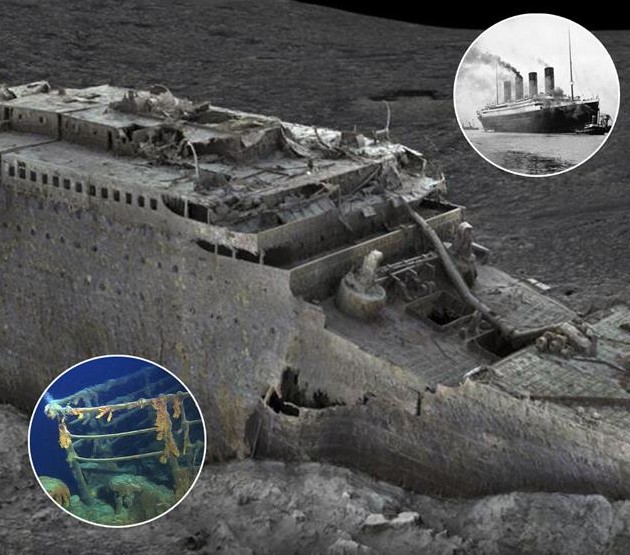

More than a hundred years after the RMS Titanic sank in the icy waters of the North Atlantic, the tragedy continues to capture global attention. Countless books, documentaries, expeditions, and academic studies have tried to piece together every detail of the disaster, from the ship’s design to the final moments of its passengers. Yet one question still quietly unsettles many people who learn about the wreck:
Why were no human skeletons found on the ocean floor, despite over 1,500 lives lost?
When the wreck was finally discovered in 1985, researchers expected to encounter at least some preserved remains. Instead, the ocean floor held objects, clothing, shoes, luggage, and fragments of the ship—but no human bones.
To understand why, it is necessary to look at the unique and extreme environment where the Titanic rests, more than 12,000 feet below the surface.
The Discovery of the Titanic Wreck

The Titanic’s location was long known in a general sense—roughly 400 miles off the coast of Newfoundland. But pinpointing its exact resting place took decades. It was only on September 1, 1985, that oceanographer Robert Ballard and his team confirmed the wreck’s location.
Using deep-sea technology and a method that involved following the ship’s debris trail, they located the bow section first, resting upright on the seabed. Soon after, the stern was found nearly 2,000 feet away, shattered by the force of its descent.
Ballard famously said he felt a responsibility to treat the site with respect, viewing it as a grave rather than an archaeological treasure. Despite that early intention, later expeditions did recover hundreds of artifacts. These items have allowed historians to better understand the ship’s final hours, but they also revealed how fragile certain materials were after decades in deep water.
Missing from all the findings, however, was the one thing many expected: preserved human remains.
Why No Human Remains Were Found at the Wreck

Multiple crews and explorers—including filmmaker James Cameron, who has visited the wreckage more than 30 times—have all confirmed the same observation:
They saw clothing.
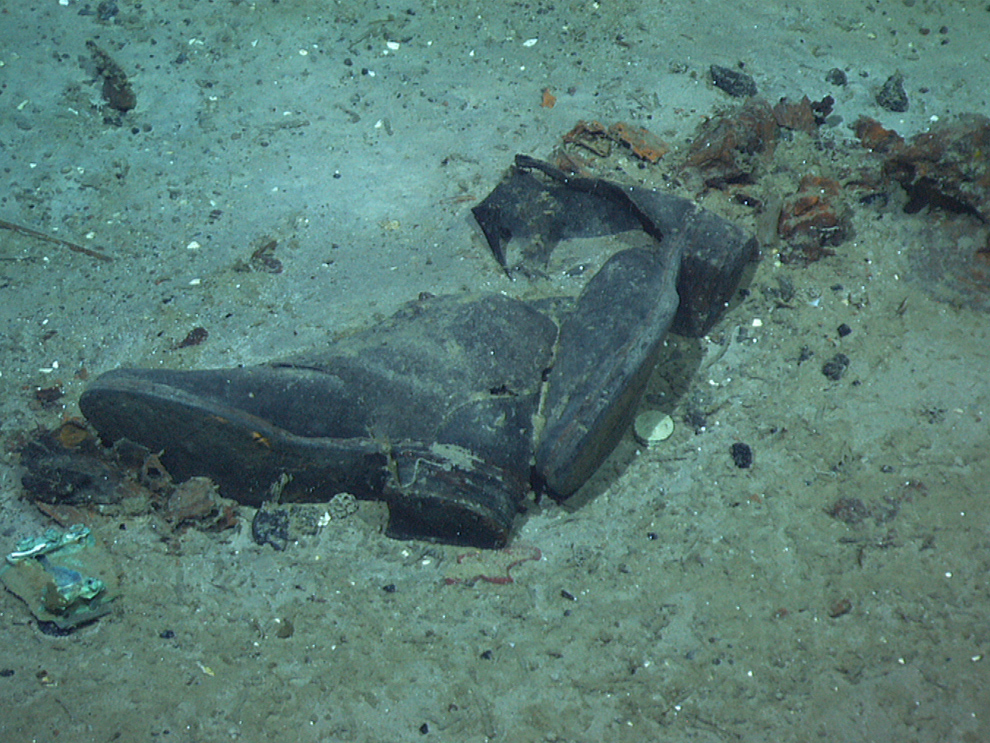
They saw pairs of shoes.
They saw personal belongings.
But they saw no bones.
The explanation is not mysterious. It is scientific.
1. Deep-Sea Creatures Consume Soft Tissue
At 12,500 feet below the surface, the Titanic wreck lies in a world of nearly freezing water, crushing pressure, and complete darkness. In this environment, scavenging marine organisms can break down soft tissue efficiently.
As time passed, natural biological processes removed the organic material left behind.
2. Dissolution of Bones in Deep Ocean Water
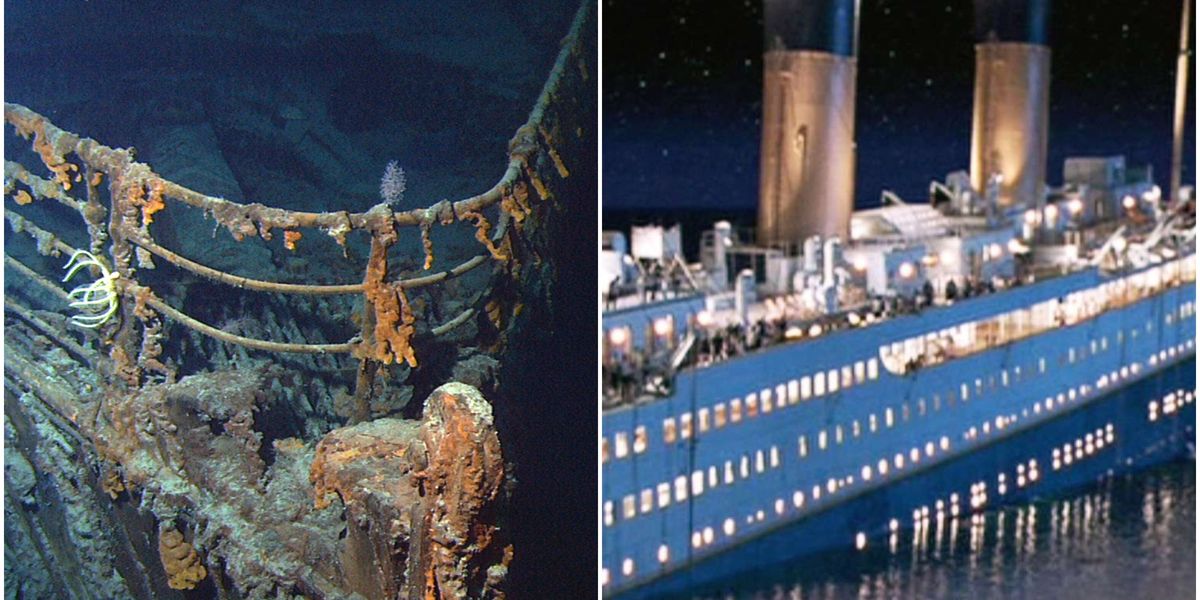
The disappearance of bones is the most surprising element to many people. Deep-sea explorer Robert Ballard has explained this phenomenon clearly in interviews and scientific discussions.
Below about 3,000 feet, the ocean environment changes. The Titanic lies far below that threshold.
At these depths, seawater is:
• under-saturated in calcium carbonate,
• extremely cold,
• exposed to immense pressure.
Because human bones are largely composed of calcium phosphate and calcium carbonate, they gradually dissolve in water that lacks sufficient mineral saturation.
Ballard notes that in the Black Sea—a very different environment, lacking many deep-sea organisms—bones can survive for centuries. But in the deep Atlantic, the chemistry simply does not allow bones to remain intact.
The conclusion is straightforward:
After soft tissue was consumed, the skeletal remains dissolved over time, leaving behind clothing, shoes, and other durable items as the only evidence of where bodies once lay.
Photographs of Shoes and Clothing Tell the Silent Story

James Cameron has spoken publicly about what he witnessed on the seabed:
He describes pairs of shoes lying side by side, spaced in a way that suggests the original position of a body. Sometimes a coat or fragment of fabric is nearby. These items remain because leather and woven textiles do not dissolve or degrade in the same way organic tissue does.
These quiet arrangements—empty clothing surrounded by drifting sediment—offer a symbolic reminder of those who were lost, even if their physical remains are gone.
Why Some Bodies Were Found While Others Were Not
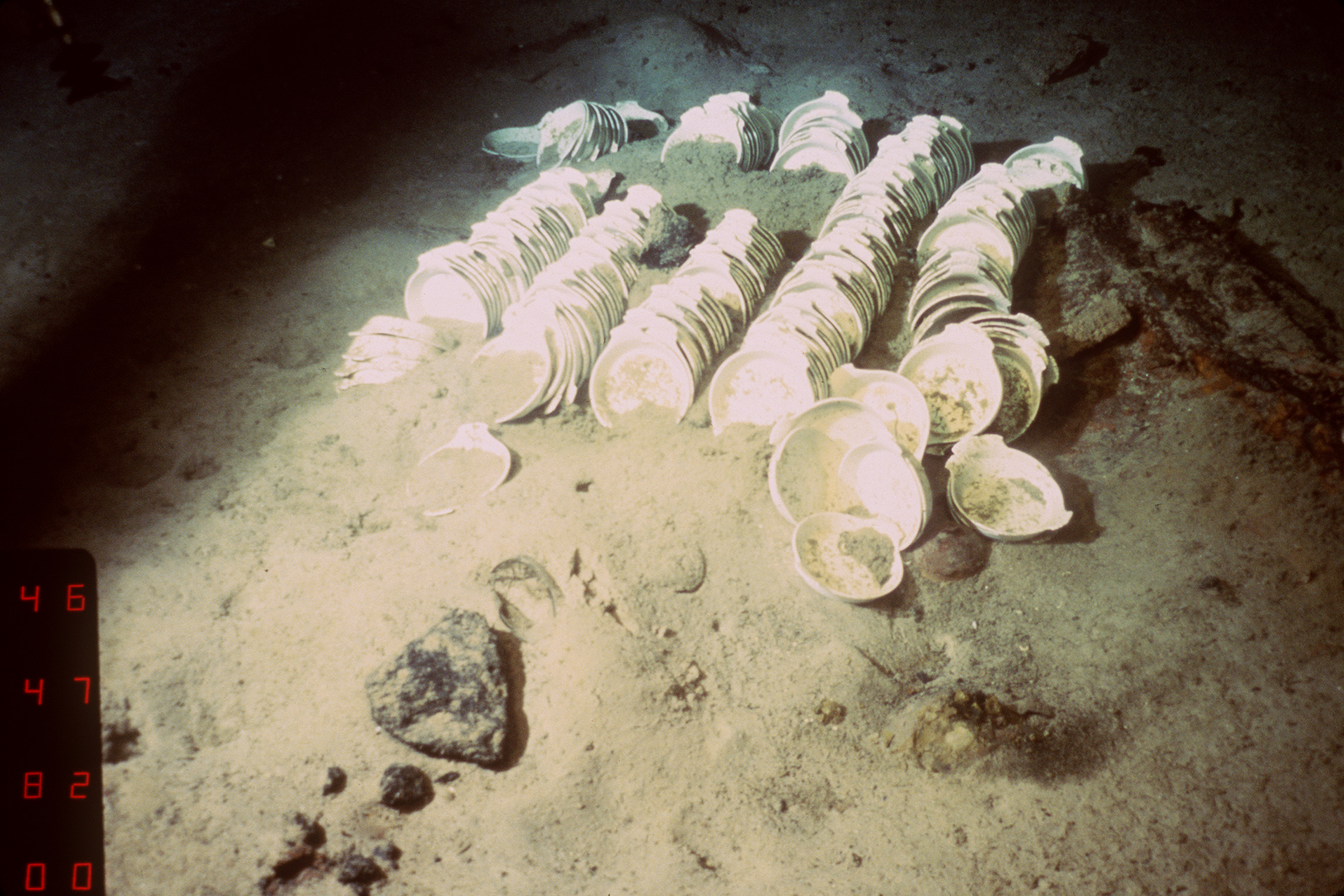
In the weeks following the sinking, ships recovered 337 bodies from the surface of the ocean.
Of those:
• 209 were brought to Halifax, Canada,
• 119 were buried at sea,
• the rest were claimed by families or funeral homes.
This means more than 1,100 people sank with the ship.
Those who remained on the surface were exposed to different conditions than those who descended into the deep. On the surface, colder temperatures and ocean currents slowed decay, allowing some remains to be recovered before marine life consumed them.
Below 12,000 feet, however, the physical and chemical environment guaranteed a very different fate.
The Titanic’s Slow Transformation Underwater
Even the ship itself is changing. Since 1985, researchers have observed:
• structural collapse due to corrosion,
• damage caused by early submersibles,
• rapid decay from bacteria that consume iron, sometimes called “rust-eating bacteria”.
These microorganisms, including Halomonas titanicae, are gradually weakening the ship’s steel structure. Scientists estimate that within the next 40 to 50 years, large sections of the Titanic may collapse entirely.
The environment that dissolves bones is the same environment slowly erasing the ship itself.
A Modern Tragedy Echoing the Past
In 2023, the Titanic site was again in the public eye when the Titan submersible, operated by the company OceanGate, imploded during a dive to the wreck. The crash killed all five people onboard, including the pilot, two explorers, and a father-and-son pair of passengers.
The incident underscored how dangerous deep-sea exploration remains—even with modern technology. It also reignited questions about how the Titanic should be visited, whether for science, tourism, or remembrance.
Human Response: A Blend of Grief and Reflection

Learning that the victims of the Titanic left no physical remains on the ocean floor can feel unsettling. For some, it evokes sadness. For others, it raises deeper questions about memory and loss. Many readers who learn this fact express mixed emotions—part sorrow, part acceptance.
There is a quiet dignity in knowing that nature reclaimed the victims gently and over time. Their belongings endure, but the environment absorbed their bodies in a way that is natural, though difficult to imagine.
One observer captured the feeling well:
“Everything the sea took, it returned to itself.”
What This Teaches Us About the Deep Ocean
The mystery of the missing skeletons is not a mystery at all once viewed through the lens of ocean science. Instead, it highlights:
• the extreme chemical conditions of the deep ocean,
• the powerful role of marine microorganisms,
• the limitations of human expectations when confronting environments so different from those on land.
The Titanic’s resting place is not simply the location of a wreck—it is a dynamic, living ecosystem shaped by pressure, chemistry, biology, and time.
Conclusion: A Tragedy Remembered, A Mystery Explained
More than a century after the Titanic sank, the lack of human remains at the wreck site continues to attract attention. But science provides a clear, respectful explanation.
At a depth of 12,500 feet:
• scavengers remove soft tissue
• bones dissolve in calcium-poor water
• pressure and cold prevent long-term preservation
What remains are the objects that tell the story—shoes, clothing, debris, and the ship itself, slowly fading into the ocean floor.
The absence of skeletons does not erase the memory of those who died. Instead, it reminds us that even the harshest environments follow natural processes that shape what survives and what disappears.
The Titanic’s story endures not because of what was found on the seabed, but because of the lives, families, hopes, and histories carried aboard a ship that never reached its destination.
