
In the field of archaeology and ancient DNA research, few discoveries have had the impact of a small burial uncovered in Montana more than half a century ago. What seemed at first to be a well-preserved Ice Age grave has now become one of the most important pieces of evidence in understanding the origins of the first peoples of the Americas. Through modern genetic sequencing, scientists have retrieved the oldest complete human genome ever found in the Western Hemisphere, offering new clarity on how the earliest populations migrated, settled, and formed the foundations of today’s Indigenous communities.
This discovery does not rewrite history through shock or surprise; instead, it brings scientific insight to long-held understandings among Native American communities and provides a clearer, more complete picture of human presence in North America nearly 13,000 years ago.
A Burial Discovered by Chance
The story begins in 1968, when construction workers in central Montana unexpectedly uncovered a burial site beneath layers of compacted earth. Archaeologists who later examined the find identified the remains as belonging to a child approximately two years old. The burial was accompanied by carefully placed artifacts: Clovis-style spear points, antler tools, and a significant amount of red ochre, a mineral pigment used in ritual and ceremonial practices worldwide.
The arrangement of the burial suggested that the community who laid the child to rest held deep cultural traditions, symbolic behaviors, and a strong sense of ritual care — evidence of a socially complex Ice Age society.
The Long Wait for DNA Analysis
For decades, researchers refrained from attempting DNA extraction. The remains were too fragile, and available techniques in the mid-20th century were too invasive. Any attempt to gather genetic material risked damaging the bones.
It was not until advances in genome sequencing in the early 21st century — particularly methods that require only microscopic samples — that scientists revisited the Montana child’s remains. In a controlled lab environment, geneticists successfully retrieved DNA from one of the child’s bones without causing harm.
What they found exceeded expectations.
The genome was so well preserved that scientists could reconstruct an almost complete genetic profile, making it the oldest known, fully sequenced genome from the Americas.
The Findings That Changed Everything

For years, many textbooks and scientific models proposed that the Clovis people — characterized by their distinctive spear points — represented the first major population of the Americas, arriving after the last Ice Age and spreading widely across the continent.
Some researchers speculated they were a separate migration wave, unrelated to the ancestors of today’s Native American communities.
But the DNA told a different story.
Instead of belonging to a lost or isolated lineage, the Montana child was genetically connected to the earliest branch of Ancestral Native Americans, the population from which nearly all Indigenous peoples in the Americas descend.
This meant:
• The Clovis culture was not a separate or replaced population.
• Clovis people were part of the direct ancestral lineage of modern Indigenous communities.
• Indigenous presence in North America is older and more deeply rooted than many previous models suggested.
The Significance for Indigenous Communities
:focal(727x429:728x430)/https://tf-cmsv2-smithsonianmag-media.s3.amazonaws.com/filer_public/99/71/99710149-e5dc-46d4-82a7-59c990c6dd5e/2025-05-28_checua_skeletons.jpg)
For many Native American tribes who were consulted during the research, the results were affirming, not surprising. Oral histories from numerous Indigenous nations describe long-standing roots in the Americas stretching back far beyond the timelines once proposed by Western scholars.
The DNA findings support a cultural continuity that extends over thousands of years, reinforcing the understanding that Indigenous identities and traditions are not only ancient but interconnected across vast regions.
A More Complex Story of Migration
The genetic data also offered insight into migration pathways. Traditional models suggested that early peoples crossed into North America from Siberia via the Bering Land Bridge, then moved south through an interior ice-free corridor.
However, the new data implies a more nuanced scenario:
• The ancestors of Indigenous peoples were likely present in the Americas earlier than the final retreat of Ice Age glaciers.
• Early populations may have traveled along the Pacific coastline, taking advantage of rich marine ecosystems.
• Groups spread inland and diversified, forming northern and southern genetic branches.
These findings support the emerging view that early human presence in the Americas was dynamic, adaptive, and far earlier than previously recognized.
Understanding Clovis Culture Through Genetics
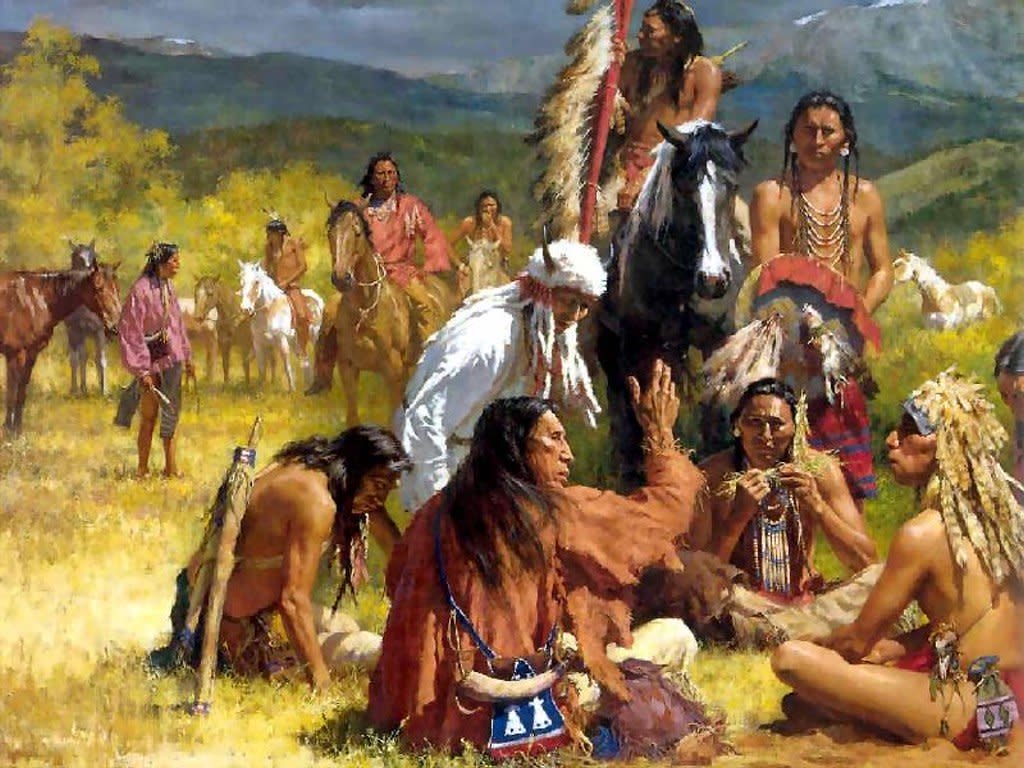
The tools found in the Montana burial — especially the Clovis-style spear points — have long been a defining feature of the earliest known widespread culture in North America. But until now, their makers’ origins were uncertain.
The DNA sequencing revealed that:
• Clovis culture developed within the first ancestral population of Native Americans.
• It was not introduced by a later migration from another continent.
• The technological innovations of Clovis people arose within an Indigenous tradition that later diversified into hundreds of distinct cultures.
This shifts Clovis culture from a separate category into a part of a broader, long-term cultural evolution across the Americas.
A Time Capsule Into Ice Age Life
The Montana burial — often referred to by researchers as a “time capsule” — provides a rare glimpse into early cultural practices.
• The careful placement of tools indicates ceremonial behavior.
• The use of red ochre reflects symbolic expression common across Paleolithic societies worldwide.
• The presence of high-quality Clovis points suggests the community held specialized knowledge and craft traditions.
The child’s burial, positioned with care and respect, highlights the emotional and social richness of these early populations.
Broader Implications for North American Archaeology
The Montana genome has become a reference point for comparison with other ancient DNA samples across both North and South America. Its influence extends beyond Montana, shaping research in Alaska, Canada, Mexico, and as far south as Chile.
It provides:
• A baseline for understanding the earliest genetic branches in the Americas.
• Evidence of early population expansion across the continent.
• A framework for examining how ancient groups adapted to changing environments.
The genome’s significance is not solely in its age but in its clarity — a rare window into Ice Age ancestry.
Scientific Respect and Cultural Responsibility
Throughout the research process, scientists collaborated closely with regional tribal nations. The remains were eventually returned and reburied in accordance with cultural protocols, ensuring that the study honored both scientific inquiry and Indigenous sovereignty.
This collaboration set a model for future research involving ancient remains, highlighting the importance of ethical partnership.
A New Chapter in American Prehistory
The sequencing of the Montana child’s genome has reshaped our understanding of early human history in the Americas. It demonstrates that:
• Indigenous communities today share deep ancestral connections reaching back nearly 13,000 years.
• Early populations were culturally sophisticated and geographically widespread.
• The peopling of the Americas was a complex and dynamic process, not a single linear migration.
Conclusion
The discovery of the 12,900-year-old child’s DNA in Montana is more than a scientific milestone. It is a bridge between past and present — a connection linking ancient ancestors to modern Indigenous communities and offering new insights into the earliest chapters of human life in North America.
As researchers continue exploring ancient sites and sequencing new samples, the story of the first Americans grows richer, more detailed, and more interconnected. What once seemed like a distant Ice Age world now feels closer, revealing a continuity of identity and heritage that has endured for thousands of years.
