

The archaeological site of Metropolis, located in western Türkiye, has long been a window into daily life during the Roman Empire. Excavations in this region typically reveal theaters, mosaic-covered baths, marble columns, bustling commercial districts, and public buildings reflecting centuries of urban development. For decades, historians believed they had a firm understanding of Metropolis as a typical Roman city: elegant, organized, and built according to well-documented architectural traditions.
But a discovery made in 2016 challenged that assumption.
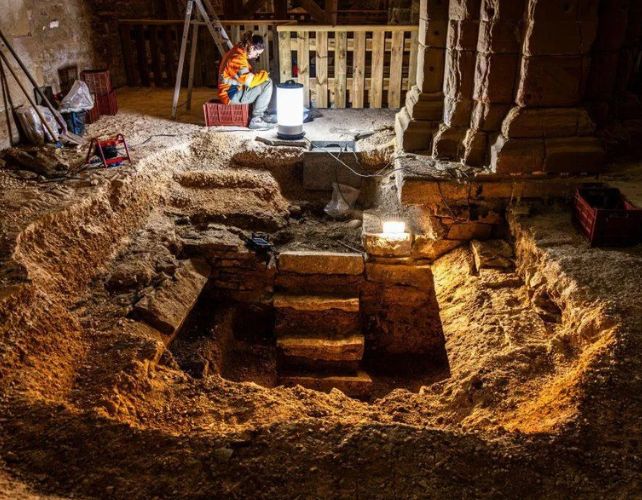
What began as a routine excavation of a lower terrace unexpectedly led archaeologists to a sealed underground vault — a structure untouched since antiquity and remarkably preserved. Though roughly 1,900 years old based on the stratigraphy surrounding it, the vault did not resemble known Roman construction. Instead, it hinted at an architectural lineage far older and more technically sophisticated than researchers expected.
While the finding has not “rewritten history,” it has opened an important academic debate: How much knowledge did ancient civilizations inherit from older regional traditions that are still poorly understood today?
Unearthing the Vault
During routine clearing of soil layers beneath a terrace, excavators noticed a rectangular stone formation that did not match the surrounding Roman masonry. When workers removed the upper slab, they discovered a sealed chamber filled with cool, dry air — an unusual sign of long-term isolation.
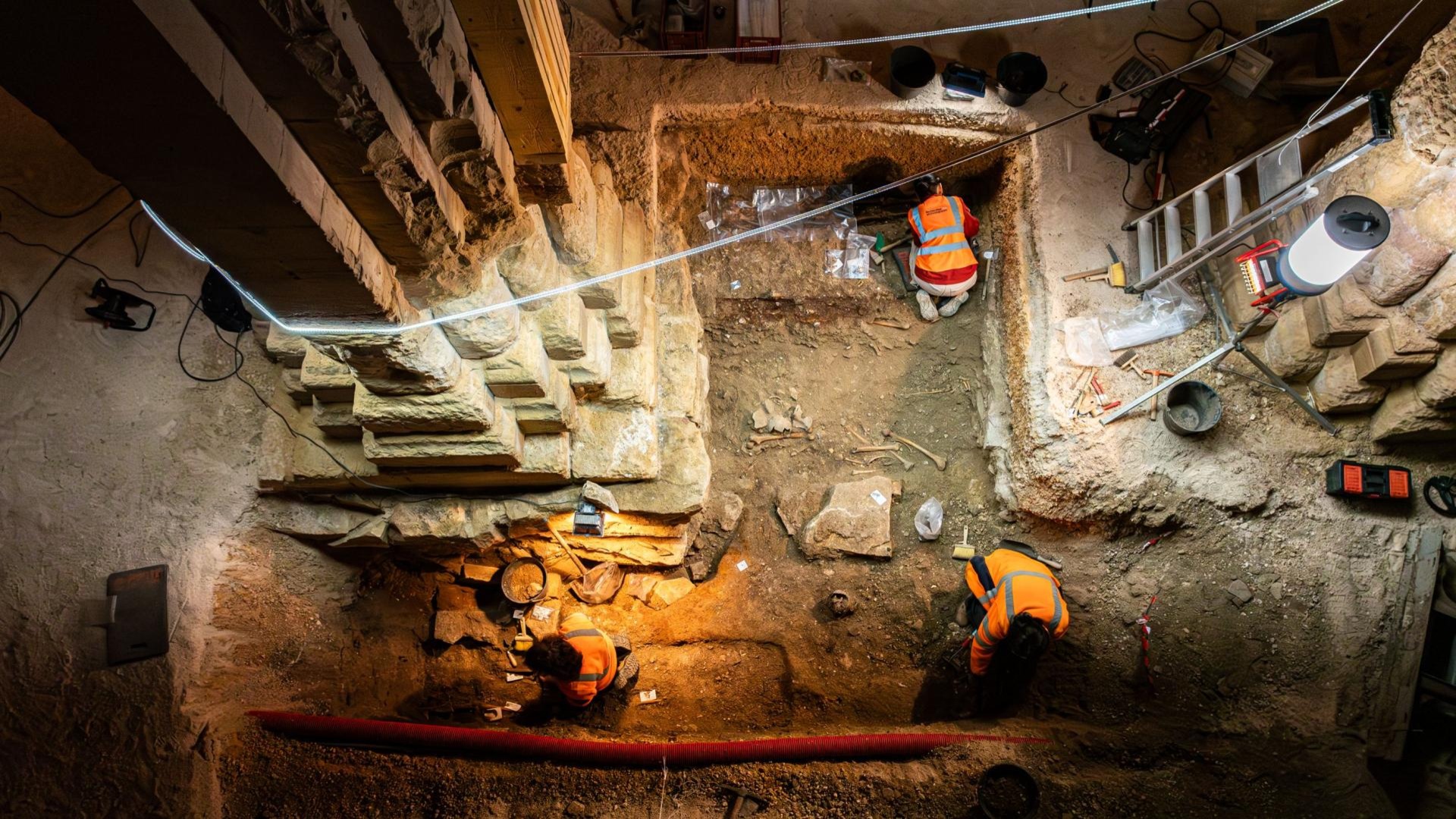
The interior lacked organic material, suggesting the chamber had remained undisturbed and well-protected. Light reflected oddly off the surfaces inside, not due to mystique but because the vault’s walls were coated with extremely smooth layers of mortar and clay-based material. The structure was symmetrical, built with consistent precision that drew immediate attention.
Although some early descriptions circulated online portrayed the vault as containing “anomalies” or “advanced technology,” the team clarified that the features, while impressive, fit within the realm of ancient engineering traditions yet to be fully understood, not science-fiction.
A Structure Unlike Other Roman Buildings
As archaeologists examined the chamber in greater detail, they noticed several unexpected features.
1. Precision Masonry
The stones forming the vault were unusually uniform in size. While Romans were capable builders, this level of uniformity is rare in everyday construction and is more commonly seen in ceremonial or high-status structures.
2. Consistent Alignment
Digital scans showed that the angles, curves, and joints between materials aligned within extremely tight tolerances. That accuracy suggests careful planning and possibly a ritual or symbolic purpose rather than simple storage.
3. Materials Not Typical for Roman Utility Buildings
The bricks appeared to have been fired at higher temperatures than standard Roman bricks. Additionally, traces of unusual minerals in the mortar — including compounds naturally occurring in the region — indicated that the builders may have used local innovations or inherited techniques not well documented in written sources.
These details led researchers to a measured, evidence-based conclusion: Although the vault dates to the Roman period, its construction techniques reflect knowledge that may predate Roman influence in the region.
This interpretation aligns with a growing trend in archaeology: understanding how Roman cities often incorporated, repurposed, or built atop earlier Anatolian cultural traditions.
A Possible Link to Pre-Roman Anatolia

Western Türkiye is rich with ancient civilizations older than Rome — including the Hittites, Luwians, and earlier Neolithic cultures such as those associated with Göbekli Tepe. Over thousands of years, architectural ideas, ritual spaces, and construction methods were passed down, adapted, and reinterpreted.
The discovery in Metropolis suggests that the region may have retained building practices rooted in long-standing cultural memory.
One notable detail supporting this idea was the vault’s orientation. When archaeologists mapped the chamber astronomically, they found that its central axis aligns not with typical Roman orientations but with a specific celestial position that matched alignments found in earlier Anatolian sites.
This doesn’t imply lost civilizations or forgotten technology but rather shows:
Architectural continuity may have spanned more generations than previously documented.
Communities often preserve symbolic orientations or ritual alignments long after the original meaning fades from written history.
What Lies Beneath: More Structures Found
Using ground-penetrating radar, the team detected a second chamber beneath the vault. This lower space appeared carved directly into bedrock with highly smoothed surfaces — likely the result of long-term polishing, mineral processes, or careful workmanship.
The second chamber’s purpose remains unknown, but archaeologists believe it may have functioned as:
• a ritual space
• a water-collection or purification chamber
• a sealed deposit area for goods
• or a structure with symbolic significance
Careful analysis is ongoing. Importantly, the team emphasizes that all findings remain within the boundaries of known historical processes — geologic, cultural, and architectural — without invoking speculative explanations.
Interpreting the Purpose of the Vault
As the study progressed, archaeologists proposed several hypotheses grounded in evidence.
1. A Ritual or Ceremonial Chamber
The precision, isolation, and orientation of the vault suggest a ceremonial function. In many ancient Anatolian cultures, underground spaces were used for rites of purification, offerings, or symbolic transitions.
2. A High-Status Storage or Archive Room
Romans and earlier cultures occasionally built sealed chambers for storing valuable or sensitive items: scrolls, ritual objects, or items reserved for religious officials.
3. A Foundation Layer for a Lost Superstructure
Some underground vaults served structural functions, supporting large monuments or temples above them — structures that may not have survived.
4. An Early Example of Pre-Roman Engineering Influence
Rather than representing “technology beyond its time,” the vault might be an exceptional example of engineering traditions from earlier Anatolian cultures carried into the Roman era by local craftsmen.
Engravings and Markings in the Chamber
Inside the vault, researchers found geometric patterns carved into the walls. These were not written language but mathematical and decorative motifs commonly found in Anatolian art. Their presence suggests:
• symbolic meaning
• aesthetic design
• or a form of ritual geometry
Some motifs resembled early Near Eastern symbols related to balance, symmetry, or cosmic order — themes widely present in ancient societies.
Why the Discovery Matters
The vault beneath Metropolis does not overturn our understanding of history, but it does illustrate an important truth:
Civilizations rarely emerge in isolation.
They inherit knowledge, methods, and symbolic systems from earlier cultures — sometimes across thousands of years.
This vault demonstrates:
• a blending of Roman urban design with local Anatolian craftsmanship
• possible preservation of much older building traditions
• a level of precision suggesting that ancient builders placed intentional importance on geometry and durability
The Metropolis vault invites researchers to reconsider how architectural knowledge spread long before formal documentation existed.
What Comes Next for the Metropolis Excavation?
Archaeologists are continuing their investigations with caution. Future steps include:
• microscopic analysis of building materials
• testing mineral composition of bricks and mortar
• environmental studies to understand the chamber’s preservation
• comparison with other Anatolian underground structures
• historical research into earlier settlements beneath Roman Metropolis
These efforts aim to reveal how this structure fits within the broader timeline of ancient engineering.
A Window Into Forgotten Traditions
Far from revealing a civilization with advanced tools beyond history, the Metropolis vault does something more valuable: it provides a tangible connection to how knowledge persisted through generations.
It stands as a reminder that ancient builders, working with stone, clay, and earth, developed solutions that combined practicality with finely tuned craftsmanship.
Conclusion
The 1,900-year-old vault discovered in Metropolis is not a technological anomaly nor a hidden secret meant to “shock” the world. Instead, it is a remarkable archaeological find that highlights the sophistication of ancient craftsmanship and the deep cultural layers underlying Roman-era cities.
The structure’s precision, materials, and orientation point to a long and complex legacy of engineering traditions in western Anatolia — traditions shaped by countless generations whose skills have rarely been preserved in written form.
As researchers continue exploring the site, the vault encourages modern science to look not for lost civilizations, but for the threads of continuity woven through human history. It stands as a testament to ancient ingenuity, cultural memory, and the enduring human desire to build structures that outlast time.
