
When natural disasters strike, people often remember the dramatic skies, the urgency of evacuation, and the uncertainty that follows. Yet alongside the human experience, animals—both wild and domesticated—have their own quiet stories of courage and survival. One such story emerged from California in 2018, capturing global attention and reminding us of the extraordinary moments of compassion that can occur even during challenging circumstances.
This is the story of a horse who found herself in an unexpected place, a backyard pool, and the man who helped her return to safety. Beyond its simple narrative, the moment inspired conversations about instinct, cultural symbolism, and the deep bonds human beings often feel toward animals.
In exploring this remarkable event, we can look at both the emotional impact of stories like this and the scientific understanding of animal behavior during stressful situations. As we unpack each layer, the tale becomes not only heartwarming but also a reminder of how curiosity and empathy guide us to better understand the world around us.

The Day a Horse Found Shelter: A Story Begins
A Scene of Confusion and Instinct
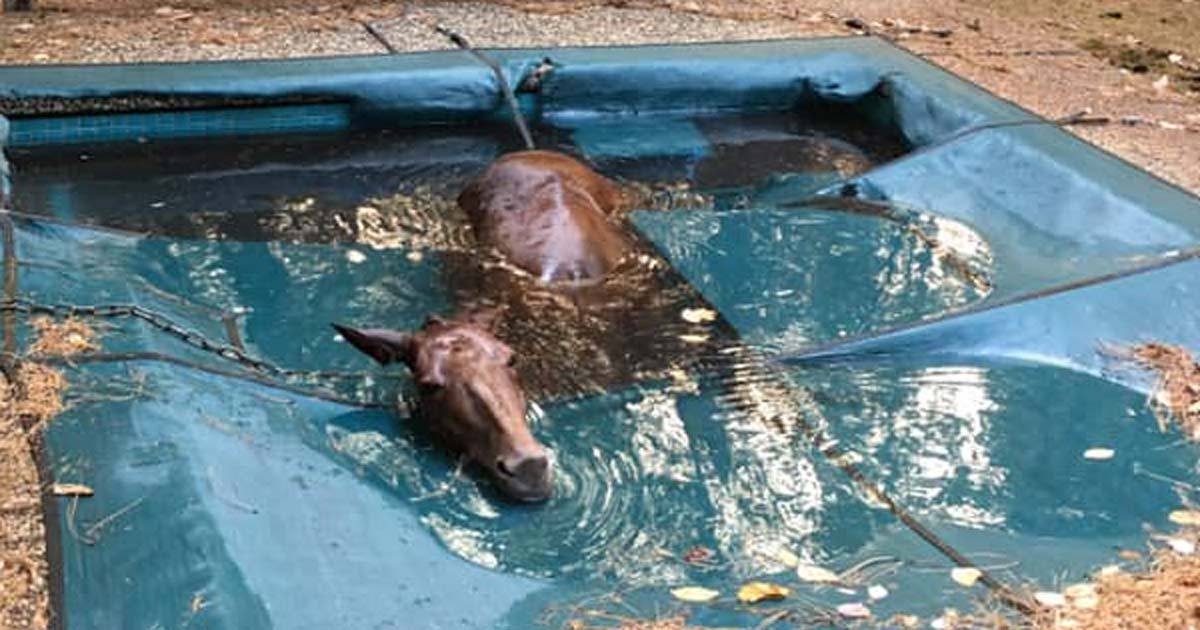
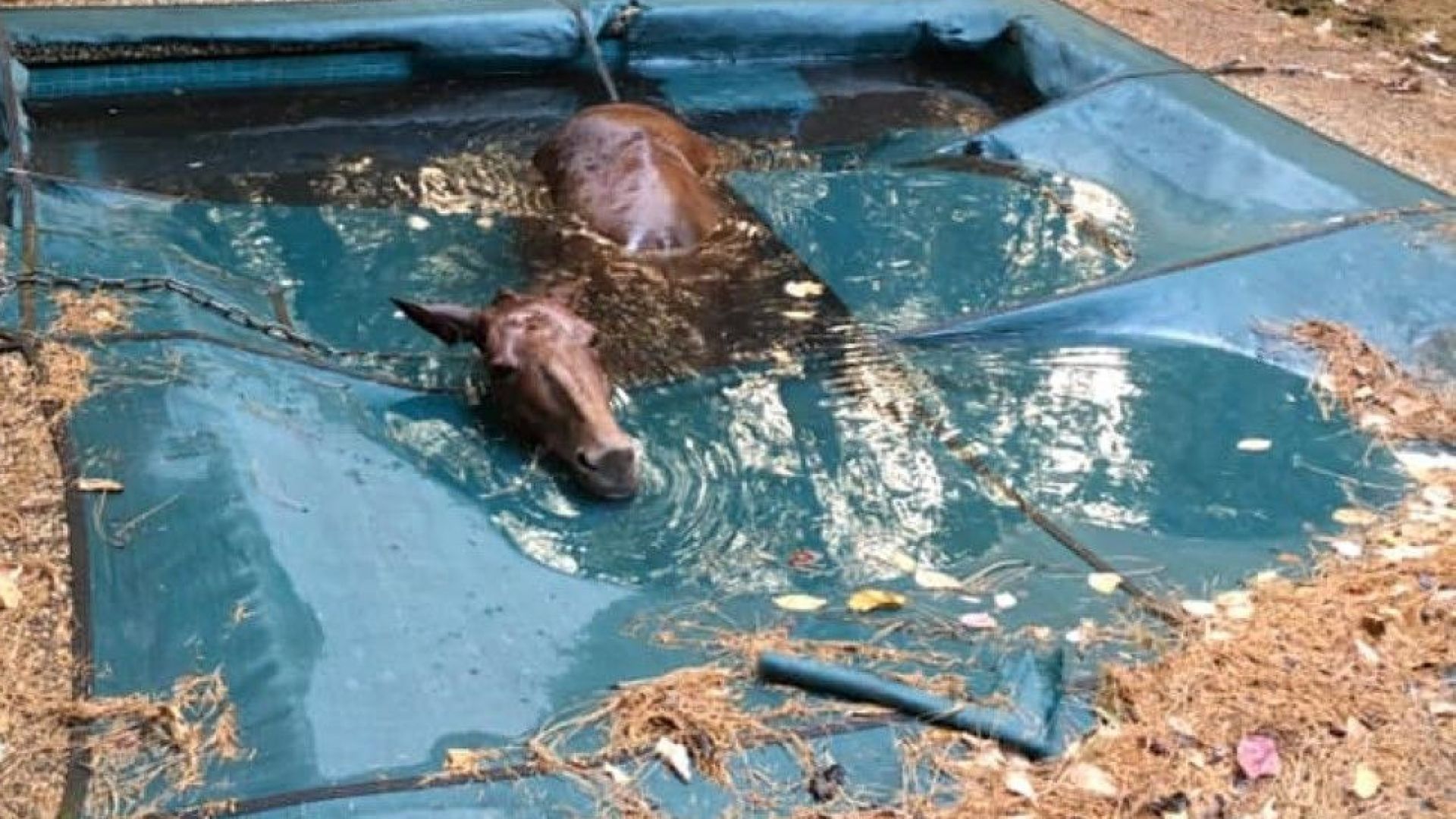
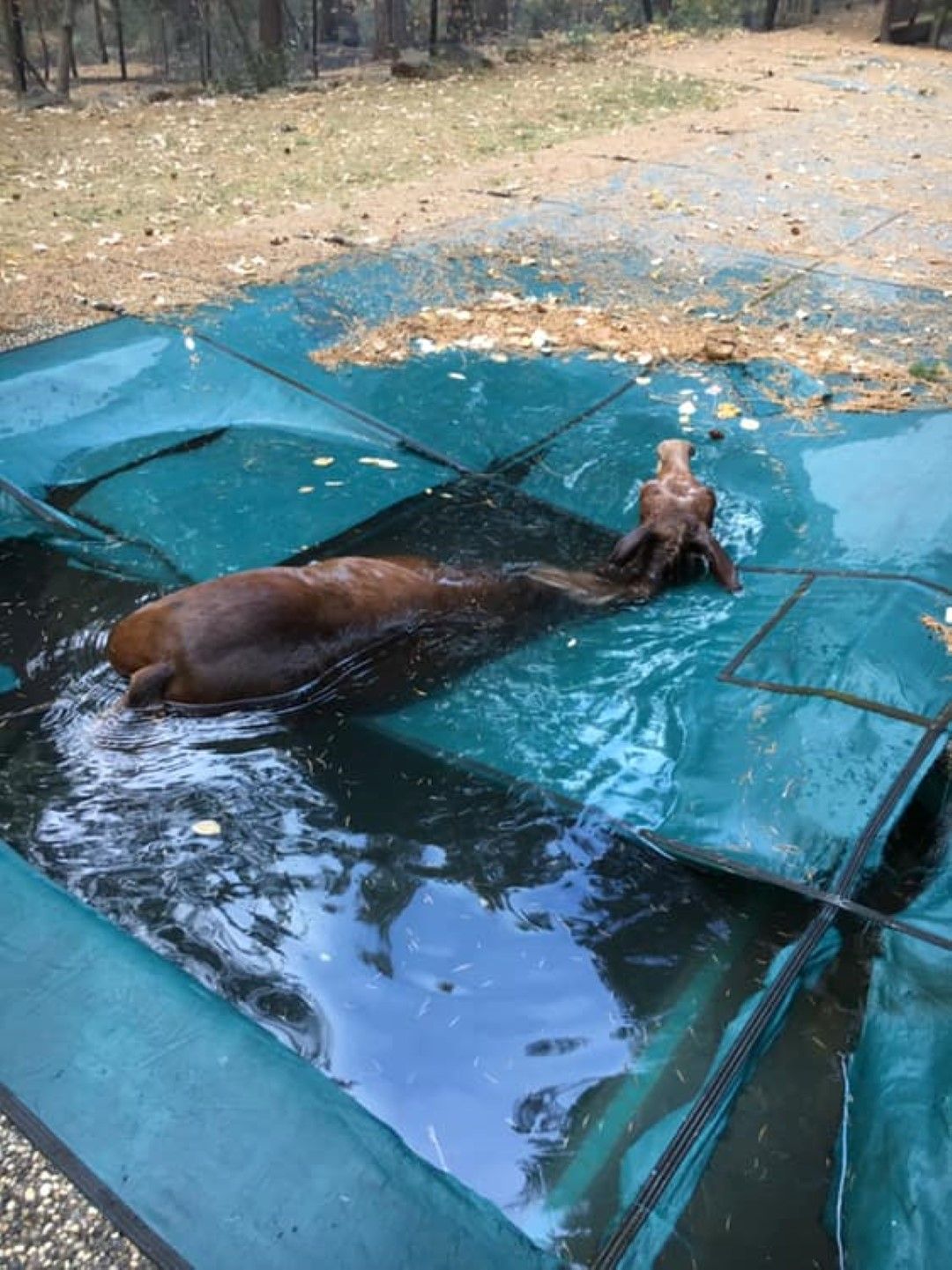
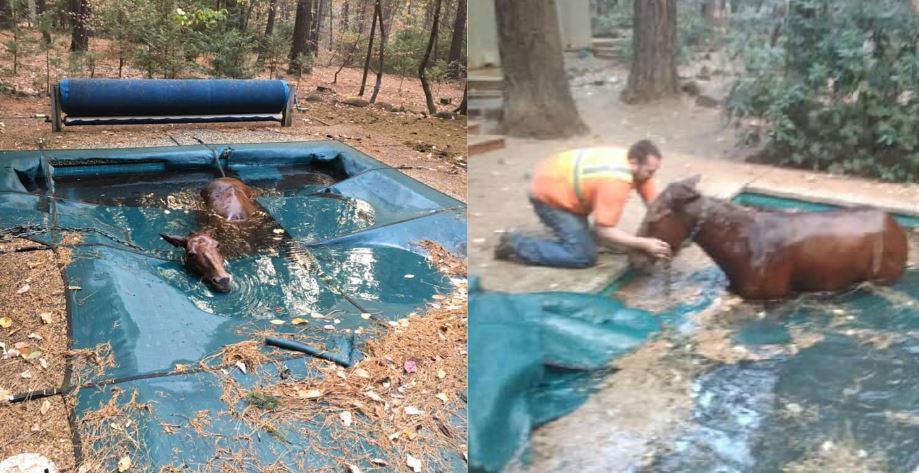
In 2018, communities across California faced fast-moving wildfires that created difficult circumstances for residents and displaced many animals. Among the countless images shared during this period, one stood out: a horse resting inside a backyard pool, surrounded by quiet stillness.
The photo quickly circulated online. It showed a moment of exhaustion but also a moment of hope. While the exact details of how long the horse remained there were unclear, many speculated that she may have sought shelter from the heat and smoke in the cool water, relying on instinct to guide her to the safest available spot.
The image resonated deeply. It invited people to imagine how animals perceive emergencies and how their natural responses may mirror our own need to seek refuge.
A Rescuer’s Unexpected Discovery
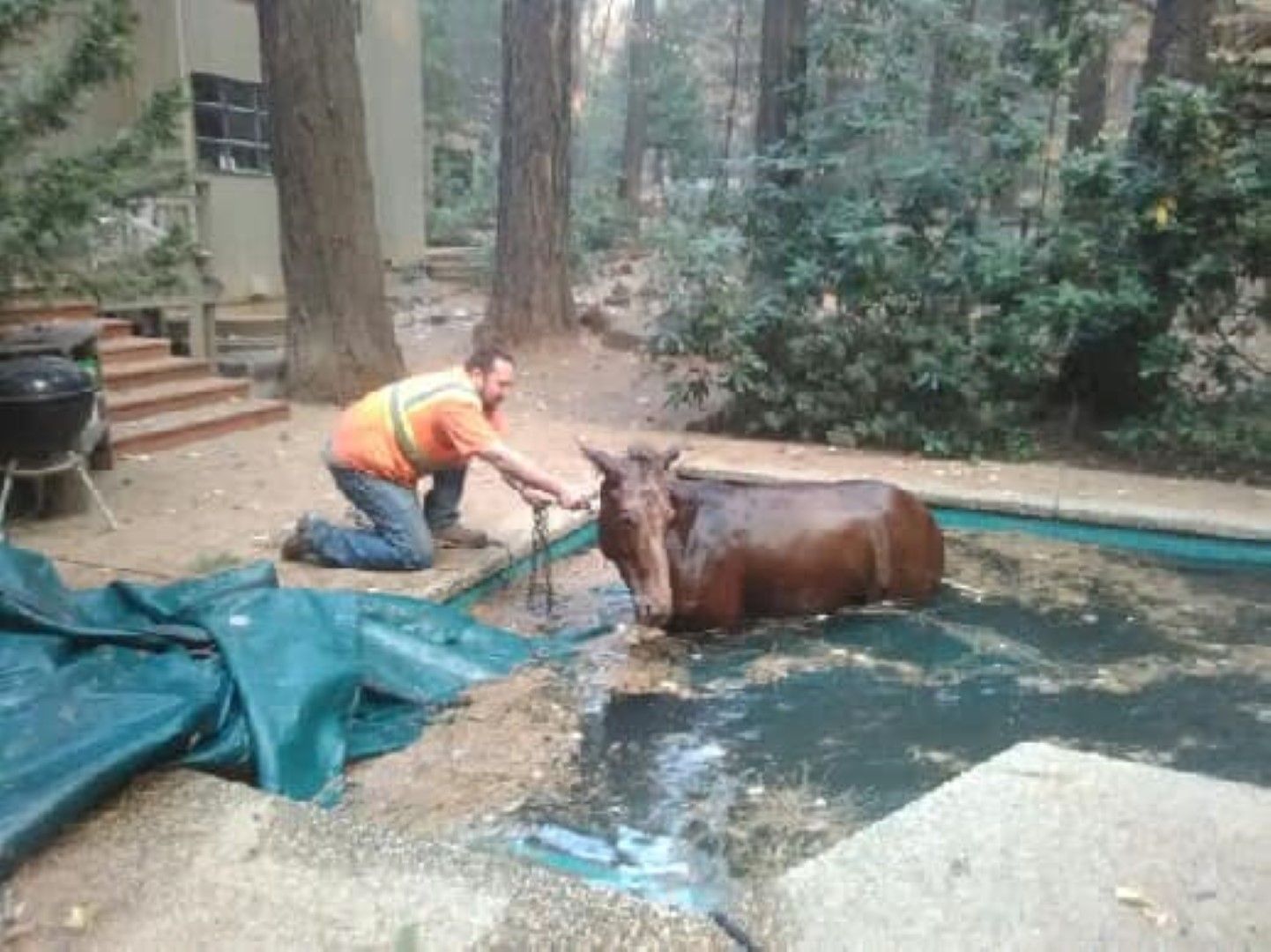
One resident, Jeff Hill, had returned to the area to check on homes and offer help. While driving through his neighborhood, he spotted what appeared to be a pool cover partially displaced. Something beneath it caught his attention.
Upon approaching the pool, he realized a horse was resting there, partially secured under the cover, too tired to move. Though the situation looked alarming at first glance, the horse was alive, alert, and simply in need of gentle assistance.
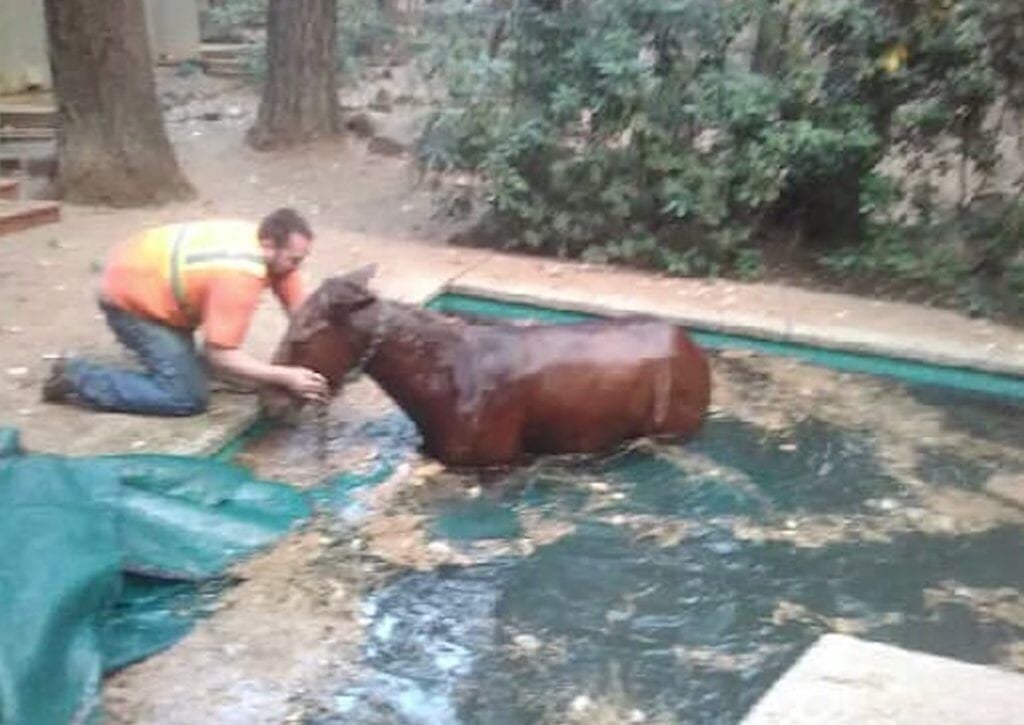
Jeff cautiously pulled back the cover, encouraging the horse to regain her footing. Guided slowly toward the pool steps, she found the strength to climb out. For a moment she stood still beside her rescuer, as if acknowledging his presence and support.
While it is always difficult to interpret animal behavior precisely, many observers felt her calm pause suggested relief or gratitude. Scientists often explain such interpretations as anthropomorphism, the tendency to attribute human emotions to animals. Still, even within scientific conservatism, it is widely accepted that animals can form strong associations, recognize helpful behavior, and respond with peaceful body language when they feel safe.
Cultural Symbolism: Horses as Symbols of Strength and Renewal
Horses in Myth and Storytelling Traditions
Throughout history, horses have carried symbolic significance across civilizations. Their roles in mythology reflect how humans perceive strength, resilience, and connection to nature.
In many cultures:
Horses symbolize freedom. Their ability to run, roam, and move with grace has long represented independence.
They embody endurance. Myths often depict horses carrying travelers across great distances, surviving challenges along the way.
They represent transformation. Scenes involving horses and water—rivers, lakes, even ocean waves—appear in folklore as metaphors for renewal, cleansing, and new beginnings.
Against this backdrop, the image of a horse resting in water during a difficult moment feels almost poetic, as if echoing centuries of storytelling where horses emerge from challenges with renewed spirit.
The Human–Horse Relationship Across Time
Horses have lived alongside humans for thousands of years, shaping transportation, agriculture, and even emotional well-being. Many people feel a special bond with them, often describing horses as intuitive animals that respond to human energy and emotional cues.
While such perceptions are emotional rather than scientific, there is evidence supporting the idea that horses are sensitive to facial expressions, tone of voice, and body language. This sensitivity helps explain why stories of equine rescue resonate so strongly with the public.
In the case of the California horse, the simple act of her pausing beside Jeff after leaving the pool created a moment that looked almost symbolic—an interaction that invited reflection on trust, relief, and gratitude.
Scientific Perspectives: Animal Behavior During Emergencies
How Animals React Instinctively
Scientists studying animal behavior during environmental stress note that animals rely on natural instincts to navigate danger. Horses, in particular, may seek open spaces or safe enclosures and may move toward water sources during heat or smoke.
Possible explanations for the horse entering the pool include:
-
Temperature regulation: Water provides cooling during periods of extreme warmth.
-
Shelter seeking: Animals sometimes move toward familiar backyard features when they feel unsure.
-
Visual cues: Shiny or reflective surfaces may look safe from a distance during stressful conditions.
These interpretations are speculative but grounded in known patterns of behavior.
Exhaustion and Recovery
Horses can become overwhelmed during stressful events, not out of weakness but because they rely heavily on environmental cues for decision-making. When those cues are disrupted, they may temporarily freeze or rest until conditions feel safer.
The horse’s stillness in the pool may simply reflect a need for rest after navigating unfamiliar terrain. Water can also provide buoyancy, allowing tired muscles to relax temporarily.
This perspective highlights that the horse’s behavior was not unusual or mysterious, but rather a natural response to stressful circumstances.
The Emotional Impact of Rescue Stories
Why These Stories Spread Online
When Jeff shared the story and photo, it quickly reached thousands of people. What made this moment so captivating?
-
A surprising image: A horse in a pool is uncommon and immediately invites curiosity.
-
A peaceful resolution: The horse was safely guided out, creating a sense of relief.
-
A human–animal connection: The calm interaction between Jeff and the horse evoked empathy and warmth.
-
A symbol of hope: Stories of compassion often offer comfort during difficult times.
Psychologists suggest that uplifting stories provide emotional balance when people experience uncertainty or stress. They create a space where human kindness becomes the central theme.
The Power of Nonverbal Communication
Many viewers commented that the horse seemed to “thank” Jeff. While scientists caution that such interpretations may blend human emotion with animal behavior, it is still true that horses show subtle social signals:
-
Relaxed ears
-
Soft facial expressions
-
Calm posture
-
Slow, steady breathing
These signals often reflect comfort and trust. Whether or not the horse intended to communicate appreciation, the interaction created a moment humans naturally perceived as meaningful.
A Symbolic Story of Resilience
Stories like this often extend beyond the literal events. The image of a horse emerging from water with the help of a passerby inspires broader reflection:
-
Nature’s unpredictability reminds us of how quickly circumstances can change.
-
Human kindness shows that individuals can make a positive difference even during uncertain times.
-
Animal resilience demonstrates the instinctive strength creatures possess.
While the exact journey of the horse after her rescue remains unknown, the moment continues to resonate as a symbol of endurance and care.

What This Story Teaches Us
The Importance of Compassion
Acts of assistance, even small ones, can create lasting impressions. Whether helping a neighbor, supporting an animal, or simply sharing encouragement, compassion often shapes the stories that stay with us.
The Role of Curiosity
This event also illustrates how curiosity drives understanding. People naturally wondered:
-
Why did the horse enter the pool?
-
How do animals make decisions under stress?
-
What might she have felt in that quiet moment after her rescue?
Such questions demonstrate our desire to connect with the natural world and make sense of behaviors that may seem mysterious at first glance.
A Shared Journey Between Humans and Animals
Across cultures and scientific fields, one idea remains constant: humans and animals share the world in ways that interconnect our experiences. Whether through symbolic meaning, emotional interpretation, or biological instinct, stories like this remind us of the ongoing relationship between people and the creatures around them.
Conclusion: A Reflection on Human Curiosity
The story of the horse in the pool is more than a single moment captured in a photograph. It represents a blend of instinct, resilience, compassion, and the profound ways humans interpret the world around them. While some parts of the event can be explained scientifically and others remain speculative, the impact is undeniable.
We are drawn to stories that illuminate courage and kindness. We seek to understand how animals navigate challenges and how humans respond. And, perhaps most importantly, we continue to be inspired by the quiet, unexpected moments where compassion transforms uncertainty into hope.
This story encourages us to stay curious, empathetic, and attentive to the world—because sometimes, the most meaningful lessons appear in the most surprising places.
Sources
-
en.newsner.com
-
University of California Agriculture & Natural Resources – Animal Behavior Studies
-
American Veterinary Medical Association (AVMA) – Equine Stress and Safety Research
-
National Park Service – Wildlife Behavior During Environmental Stress
